Baalbek: The Impossible Ruins Built by Gods or Ancient Aliens?
Forget everything you think you know about the ancient world. Tear up the history books. Because deep in the Beqaa Valley of modern-day Lebanon lies a stone scar on the face of the Earth that defies all explanation. A place that laughs at our modern engineering. A place called Baalbek.
They call it one of the great “Power Places” of the ancient world. For thousands of years, its secrets have been hidden in darkness, or worse, bathed in the artificial light of simplistic, sanitized explanations. But the stones don’t lie. And at Baalbek, the stones scream a story so profound, so paradigm-shattering, that mainstream history refuses to listen.
They want you to believe the Romans built this.
They are wrong.

The Official Story: A Roman Temple on Steroids?
Walk into any museum, open any textbook, and you’ll get the same tired story. The Romans, in their boundless ambition, conquered this region and decided to build a colossal temple complex to honor their god, Jupiter. They called the city Heliopolis, the “City of the Sun,” and for over two centuries, they toiled to create one of the most sacred sanctuaries in their entire empire.
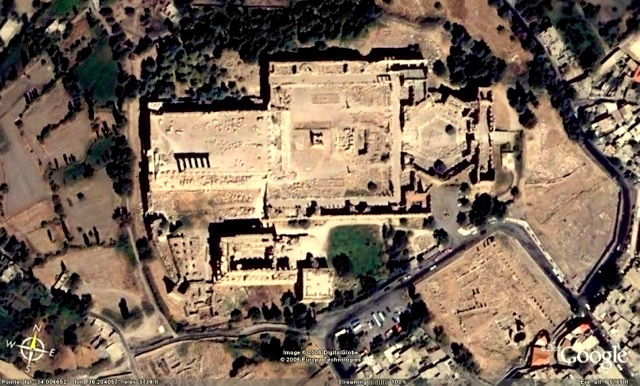
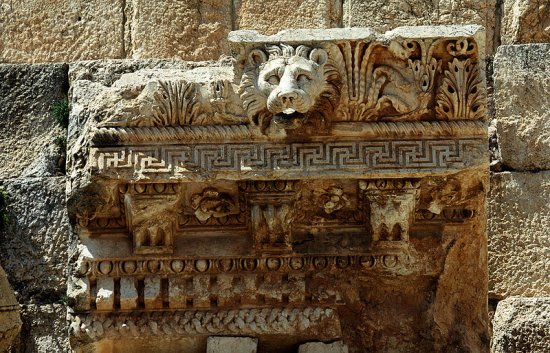
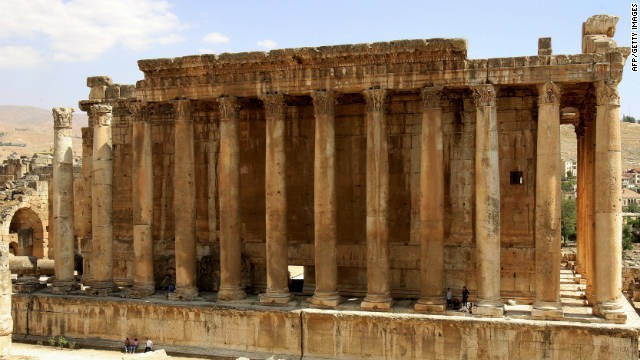
And yes, the Roman work here is breathtaking. The Temple of Jupiter was one of the largest in history. Its surviving columns stand over 60 feet tall, giants of granite that touch the sky. The nearby Temple of Bacchus is one of the best-preserved Roman temples on the planet, a masterpiece of intricate carving and architectural genius.
But that’s where the comfortable story ends. Because the Romans, for all their skill, built their magnificent temples *on top of something else.*
Something far older. Something far bigger. Something… impossible.

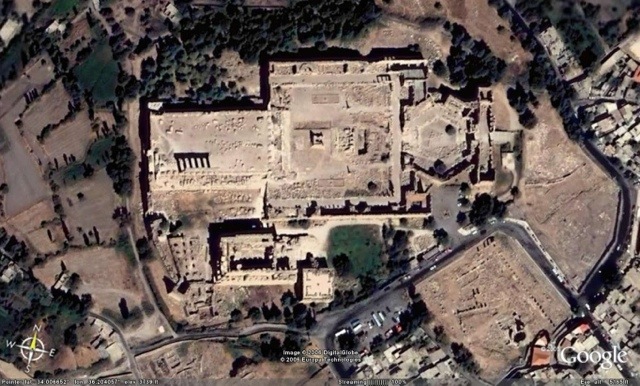
The real mystery of Baalbek isn’t in the soaring Roman columns. It’s in the foundation they stand upon. A platform of such monstrous scale that it makes the Roman temple look like a model sitting on a giant’s coffee table.
Deep Dive: The Trilithon, A Middle Finger to Physics
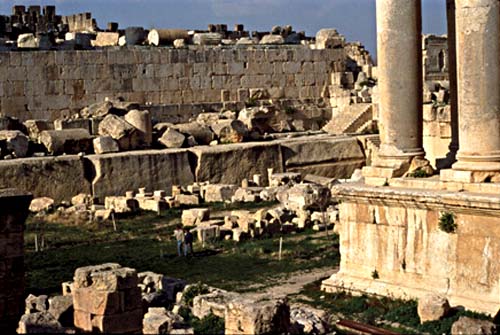
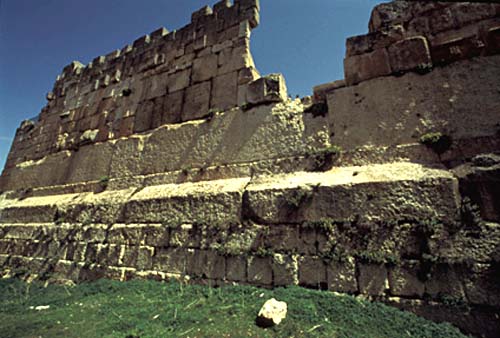
Let’s talk about the platform. Specifically, let’s talk about the western retaining wall. It’s here that we find a row of stones that simply should not exist. They are known as the Trilithon.
Three. Single. Blocks. Of. Stone.
Each one is estimated to weigh around 800 tons. That’s 1.6 million pounds. Each. They are cut with laser-like precision, fitted together so perfectly you can’t slip a piece of paper between them, and hoisted more than 20 feet into the air to form part of the foundation wall.
Stop and think about that. Don’t just read the number. Picture it.
An adult blue whale, the largest animal on Earth, weighs about 200 tons. Each of these stones weighs the same as FOUR blue whales. The Statue of Liberty weighs 225 tons. The Trilithon stones are more than three times heavier. A modern M1 Abrams battle tank is about 70 tons. You could stack 11 of them, and you’d still be short of the weight of ONE of these blocks.
The Problem of “How?”
The mainstream explanation? The Romans did it with ropes, ramps, and a whole lot of manpower. They propose a complex system of cranes and capstans, powered by thousands of men and animals, slowly, painstakingly dragging and lifting these monsters into place.
Does that sound plausible to you? Our largest modern mobile cranes, the pinnacle of 21st-century engineering, would buckle under this strain. To lift 800 tons requires a specialized crane, a behemoth of a machine that takes weeks to assemble on-site. And even then, lifting is one thing. Maneuvering it into a precise position, 20 feet off the ground, snug against its neighbors? That’s another challenge entirely.
How did a civilization using bronze and iron tools, with no engines, no hydraulics, and no high-tensile steel, achieve something that would make a modern construction foreman break out in a cold sweat?
The Bigger Question of “Why?”
But let’s pretend for a moment they could. Let’s say the Romans had some secret technique we’ve lost to time. The next question is even more damning: Why would they bother?
The Temple of Jupiter that sat atop this platform was massive, yes, but it didn’t *require* a foundation of 800-ton blocks. The Romans were brilliant but practical engineers. They didn’t do things the hard way just for fun. They could have achieved the same structural stability using hundreds of smaller, more manageable blocks. It would have been faster, cheaper, and safer.
Building a foundation this absurdly over-engineered is like using solid steel girders to build a garden shed. It makes no logical sense. Unless… the foundation wasn’t built for the Roman temple. Unless the foundation was already there, a silent remnant of a much older, much more powerful civilization.

The Quarry of the Gods: The Stones Left Behind
If you think the Trilithon is mind-bending, take a ten-minute walk from the temple complex. There, in the ancient quarry, the mystery deepens into a chasm of disbelief. For here lie the “spares.” The stones that never made it to the construction site.
For decades, the most famous of these was the “Hajjar al-Hibla,” or the Stone of the Pregnant Woman. For a long time, it was considered the largest worked monolith on Earth. It lies at an angle, partially submerged in the earth, as if its creators just… walked away mid-job. Its estimated weight? Not 800 tons. Not 1,000 tons. Modern scans put it at a staggering 1,242 tons. The weight of three Boeing 747s.
But the story doesn’t end there. This is where it gets truly wild, and this is the part the guidebooks often leave out.
Recent Finds That Shatter the Narrative
In 2014, German and Lebanese archaeologists decided to dig around the Stone of the Pregnant Woman. What they found right underneath it sent shockwaves through the alternative history community. Another block. A bigger one. Perfectly carved, perfectly squared. Its weight is estimated at a soul-crushing 1,650 tons.
One thousand, six hundred, and fifty tons.
Why was it abandoned? Why was this project, the most ambitious construction in human history, simply dropped? What could possibly stop builders who could quarry and move 1,650-ton blocks of solid stone? The work just… ceased. The tools were put down. The workers vanished from history, leaving behind a silent testament to their impossible power.


What If? Exploring the Forbidden Theories
When the “official” explanation is more fantastic than the fringe theories, you know you’re onto something big. If the Romans didn’t build the foundation, who did? Here’s where we step off the map of accepted history.
Theory 1: An Ancient Alien Launchpad
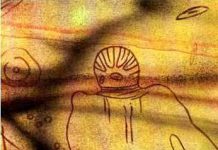
This is the theory that made Baalbek famous in modern times. Proponents argue that the massive stone platform was never intended for a temple. It was a launchpad. A landing strip for extraterrestrial spacecraft. Think about it. The platform is huge, flat, and built with materials that could withstand unimaginable heat and thrust. Local legends have long spoken of this place as a gateway for sky gods. The name itself, Baalbek, is tied to the ancient sky and storm god Baal. Was this a place where beings from another world came and went, and did they build this durable platform to accommodate their technology? Perhaps the Romans came later, saw this incredible, indestructible structure, and simply built their own place of worship on top, dedicating it to their own sky god, Jupiter.
Theory 2: A Lost Human High-Tech Civilization
What if the builders weren’t alien, but human? A civilization so ancient it predates the last Ice Age. A culture that rose and fell long before Sumeria or Egypt, leaving behind only a few enigmatic clues like Baalbek and Puma Punku. This theory suggests that this “antediluvian” civilization possessed technology that we are only now beginning to understand. Not ropes and rollers, but something more advanced. Acoustic levitation? Sonic drills that could soften stone? Some form of antigravity? It sounds like science fiction, but is it any more fictional than the idea of men in sandals moving 1,650-ton blocks with nothing but muscle power?
Theory 3: The Work of Giants
Before you dismiss this, remember that nearly every ancient culture on Earth has legends of giants. The Bible speaks of the Nephilim, “giants in the earth in those days.” The Epic of Gilgamesh describes giant heroes. Could these stories be more than myths? Could they be a distorted memory of a time when a different race of beings walked the Earth? For beings 30 or 40 feet tall, moving an 800-ton block would be the equivalent of a modern human moving a large piece of furniture. The scale of Baalbek’s foundation suddenly makes a terrifying kind of sense if you assume the builders were not our size.
The Conspiracy of Silence
So why isn’t this the biggest archaeological mystery in the world? Why isn’t every university scrambling to figure out how the Baalbek foundation was built?
The simple, uncomfortable answer is that it doesn’t fit the story. It’s an anomaly. An “out-of-place artifact” of such immense size it cannot be hidden away in a museum basement.
To acknowledge that the Romans didn’t build the platform is to admit that our understanding of the past is fundamentally broken. It opens the door to questions that academia is not prepared to answer. Questions about lost technologies, pre-human civilizations, or even extraterrestrial contact. It’s easier, safer, to simply focus on the beautiful Roman temples on top. Talk about the Corinthian columns. Admire the carvings of Bacchus. And quietly, deliberately, ignore the impossible foundation everything is sitting on.

Baalbek is more than a ruin. It’s a challenge. It’s a question carved into the bedrock of the Earth, written in a language of stone and weight. We don’t have the answers. Maybe we never will. But one thing is certain: the story we are being told is not the whole truth.
The stones are waiting. They have been for millennia. Waiting for us to finally be ready to listen to their impossible story. What do you think they are trying to tell us?