The McPherson Tape: The Alien Abduction Home Video That Broke the Internet
Some tapes should never be found. Some doors should never be opened. And some home videos capture more than just a family’s happy memories. They capture the end of everything.
It’s a ghost story for the digital age. A grainy, chaotic piece of footage that surfaced from the murky depths of the pre-internet world. A video that claims to show the final, terrifying hour of a family that simply vanished. They call it the McPherson Tape. For decades, it has been passed around on bootleg VHS, whispered about on late-night radio shows, and dissected frame-by-frame on shadowy internet forums. The official story? It’s a movie. A clever, low-budget indie film from 1989.
But that’s the official story.
The truth, as always, is far more disturbing, far more complex, and it refuses to die. Because when you watch the tape, a cold part of your brain starts to ask a question you don’t want the answer to. What if it’s real?
The Night It All Went Wrong: Deconstructing the Tape
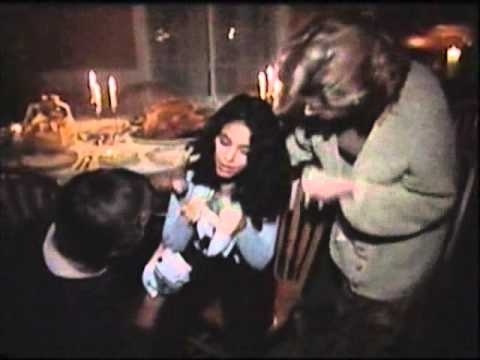
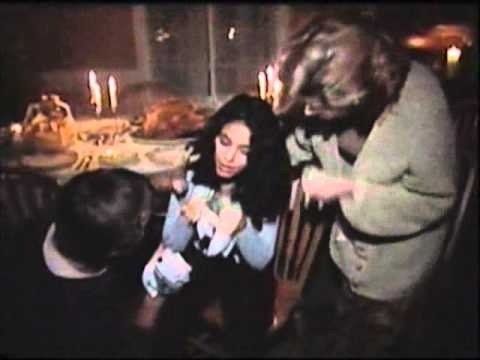
To understand the myth, you have to watch the tape. You have to put yourself in that living room on that fateful night in 1983. The video opens with pure, uncut family chaos. It’s the 5th birthday party for Michelle, the youngest of the Van Heese clan (in the original film version). The camera, held by one of the adult brothers, bounces around, capturing cake, presents, and the easy laughter of a family at ease. It feels authentic. Too authentic. There’s no script, just people talking over each other, teasing, living.
And then it happens.
The lights flicker. They die. The house is plunged into a sudden, shocking darkness, pierced only by the weak beam of the camera’s light. A collective groan. Probably a transformer, one of the brothers mutters. But then, through the window, a flash. Not lightning. A series of brilliant, pulsating red and blue lights paint the woods outside in an alien glow. Followed by a boom that shakes the house to its foundations.
Curiosity overtakes fear. The three adult brothers—Michael, Eric, and Jason—decide to investigate, grabbing flashlights and the camera. “Stay here,” they tell the women and children. The camera follows them out into the pitch-black Connecticut woods. The air is electric. You can hear their heavy breathing, the crunch of leaves under their boots. They crest a small hill and what they find stops them dead.
It’s not a plane. It’s a craft. A small, metallic saucer, half-buried in the dirt, glowing with an otherworldly energy. And there are figures moving around it.
They aren’t human. They are small, grey, with spindly limbs and massive, black, insect-like eyes. The classic Greys of abduction lore. One of the beings turns, its head tilting in an unnatural way. It holds a strange, metallic device. A weapon? It fires. A high-pitched whining sound rips through the air, and a laser-like beam zaps a tree right next to them.
Panic. Pure, animal panic.
The men scream, a torrent of profanity and terror, and scramble back towards the house. The camera whips around wildly, a nauseating blur of darkness and running feet. They slam the door, locking it, barricading it, their minds reeling from what they just saw. They try to explain it to the others, their words tumbling out in a frantic, unbelievable mess. “They’re not from around here! They’re aliens!”
The Siege Begins
The rest of the tape is a masterclass in claustrophobic terror. The family is trapped. The creatures are outside, their shadowy figures seen scurrying past windows. Strange, chirping, electronic noises surround the house. They try the phone. Dead. The power is still out. They are completely and utterly cut off from the world.
The family’s sanity begins to fray. Arguments erupt. Accusations fly. But the threat outside is real, and it’s getting bolder. A high-frequency sound paralyzes them, bringing them to their knees, clutching their heads in agony. One of the brothers, armed with a shotgun, decides to fight back. He fires blindly into the dark, and a creature shrieks.
In a moment of insane bravery or sheer stupidity, they drag the wounded alien inside. It’s small, frail, and appears to be dying. The camera lingers on its strange, non-human form. But as they turn their backs for a moment, the body vanishes. It’s just… gone. How?
The end is abrupt. It is chaos. The aliens breach the house. The camera captures a horrifying glimpse of a spindly hand reaching for the 5-year-old girl. Screaming. Utter pandemonium. The camera is dropped, falling to the floor, but it keeps recording. We see feet scrambling. Then, one by one, the family members are seemingly lifted into the air by an unseen force, their legs kicking as they are dragged out of frame towards a blinding white light. Finally, a grey alien steps into the frame, looks directly into the lens, and the tape cuts to static.
Silence.
Fact from Fiction: The Man Behind the “Hoax”
The man who unleashed this nightmare fuel on the world is Dean Alioto. In 1989, with a shoestring budget of just $6,500, he set out to make a movie. Not a documentary. A movie. Titled *UFO Abduction*, it was shot in a single, continuous take, with the actors completely improvising their lines based on a simple outline. This is the secret to its terrifying realism. There are no polished Hollywood lines, just the raw, overlapping, panicked speech of real people in a state of terror.
The film was so effective, so raw, that its own mythology swallowed it whole. The legend goes that after a small distribution deal, the warehouse containing the master tapes and all promotional materials burned to the ground. The film was lost. Officially, it ceased to exist.
But copies had already leaked. Grainy, multi-generational VHS dubs began circulating in the UFO community. Stripped of its opening and closing credits, it was no longer a film. It was evidence. It was presented at UFO conferences as the real deal: the recovered home video of the McPherson family, who were abducted from their home in Northwoods, Connecticut in the early 80s. The legend of the McPherson Tape was born.
The Remake That Fueled the Fire: *Alien Abduction: Incident in Lake County*
For years, the McPherson Tape was an underground phenomenon. Then, in 1998, everything exploded. UPN aired a television special, a slick, made-for-TV movie called *Alien Abduction: Incident in Lake County*. It was, in fact, a remake, directed by Dean Alioto himself, the man behind the original.
This new version, following the story of the “Martin” family, was bigger, had better special effects, and featured recognizable actors. But UPN did something incredibly clever, and incredibly irresponsible. They framed the entire broadcast as a potential reality. Hosted by Robert Urich, the show presented the “found footage” and then cut to “experts”—ufologists, psychologists, and special effects artists—who debated its authenticity.
Millions watched, utterly convinced. The broadcast caused a firestorm. People flooded the network with calls, believing they had just witnessed a real family’s abduction on national television. Ironically, the polished, scripted nature of the remake made the raw, chaotic energy of the 1989 original seem *even more authentic* by comparison. The remake, intended to set the record straight, only poured gasoline on the conspiracy fire, cementing the McPherson Tape as a cornerstone of modern UFO lore.
A Deep Dive: The Found Footage Pioneer
When people think of “found footage” horror, they almost always think of 1999’s *The Blair Witch Project*. It was a cultural juggernaut that redefined the genre. But Dean Alioto and *UFO Abduction* did it a full decade earlier. It is arguably the true godfather of the modern found footage movement.
The power of the genre lies in its ability to break the fourth wall. It erases the line between audience and film. The shaky camera, the imperfect sound, the naturalistic dialogue—it all tricks our brains into processing it not as a movie, but as a recording of a real event. We feel like we are *witnesses*, not viewers. We are seeing something private, something we were never meant to see. This psychological trick is why the McPherson Tape continues to terrify people, even after they’ve been told it’s fake. The feeling it creates is too real to simply shake off.
It’s the same principle that made Orson Welles’ 1938 *War of the Worlds* radio broadcast cause a national panic. When media perfectly mimics reality, it can bypass our logical filters and tap directly into our primal fears.
The Believers: Why Does the Legend Persist?
Even with the creator himself confirming it’s a work of fiction, a passionate and vocal community of believers remains. Go to any UFO forum or Reddit thread on the topic, and you’ll find fierce debate. Their arguments often center on a few key points.
First, the performances. The raw terror displayed by the family, especially during the final moments, feels too genuine. Could actors, especially in a low-budget, improvised film, really convey that level of pure, unadulterated fear? Believers argue that you are not watching a performance; you are watching a genuine reaction to an unbelievable event.
Second, the suppression myth. The story of the warehouse fire that destroyed the original masters is seen by many not as a coincidence, but as a deliberate act. A government cover-up. An attempt by the Men in Black to erase a piece of evidence that was too dangerous for the public to see. The rarity of the original 1989 tape only adds to this mystique. It’s forbidden knowledge.
Finally, there are the details within the tape itself. The appearance of the Grey aliens, the strange high-frequency sounds causing paralysis, the laser-like weapons, the abduction itself—these elements align perfectly with thousands of other alien abduction accounts from around the world. To believers, the McPherson Tape isn’t just a single story; it’s a powerful corroboration of a much wider, terrifying phenomenon. It’s the missing link. The smoking gun.
What If It *Were* Real? A Chilling Thought Experiment
Let’s step through the looking glass for a moment. Let’s ignore Dean Alioto. Let’s dismiss the logical explanations. What if that tape, that flickering, chaotic record of a family’s last party, is 100% real? What are the implications?
It means that we are not alone. And that our visitors are not friendly. It means that beings with technology far beyond our comprehension can land in our backyards, disable our power, and take us for reasons we cannot possibly understand. It means the strange lights people see in the sky are not weather balloons, and the stories told by “abductees” are not dreams or delusions.
If the tape is real, it means our governments know. They know, and they are powerless to stop it, or worse, are complicit in it. They have decided we can’t handle the truth. The fabric of our society—our religions, our science, our sense of security—would unravel. The tape would become the most important piece of evidence in human history, proof that we are cosmic property, specimens to be collected and studied by forces from the dark spaces between the stars.
Is that a truth you’re prepared to accept?
In the end, the McPherson Tape remains a fascinating paradox. It is both a confirmed work of fiction and a persistent, unkillable urban legend. It’s a testament to the power of filmmaking and a reflection of our deepest fears about the unknown. Dean Alioto set out to make a scary movie. He ended up creating a modern myth, a piece of viral folklore that took on a life of its own.
So, is it just a movie? A clever hoax that spiraled out of control? Or did a young filmmaker in 1989 accidentally create something so chillingly close to the truth that it became indistinguishable from reality? Watch the tape. Watch it alone, in the dark. And then try to tell yourself it’s only a movie.