Friday, April 10, 2026
HomeConspiraciesTop political conspiracy theories

Top political conspiracy theories

The Inconvenient Dead: When Knowing Too Much Becomes a Death Sentence

There are some stories that just won’t die. They fester. They linger in the dark corners of the internet and in hushed conversations, refusing to accept the neat, tidy bows that officials try to wrap them in. They are the stories of inconvenient people. People who knew too much. People who saw too much. People who were about to say too much.

And then they died.

We’re talking about deaths that leave a permanent stain on the official record. Deaths that, despite convictions and inquiries, scream “cover-up” to anyone willing to look closer. Today, we’re prying open the cold case files on two of Britain’s most disturbing modern mysteries. The brutal murder of a 78-year-old rose grower and the lonely death of a world-renowned weapons expert. Two different people. Two different decades. One chilling pattern.

Get ready. Because the official stories are not the whole story. Not even close.

Part One: The Rose Grower, The Warship, and The Nuclear Shadow

March 21st, 1984. A quiet lane in Shropshire, England. A car, a white Renault, is found abandoned, crashed into a grass verge. The driver is missing. This wasn’t just any driver. This was Hilda Murrell. And her disappearance was the first tug on a thread that would unravel a conspiracy reaching into the highest echelons of power, war, and state secrets.

An Unlikely Enemy of the State

Who was Hilda Murrell? The papers at the time called her a “spinster.” A “rose grower.” They painted a picture of a frail, elderly woman, a victim of a random, tragic crime. That was the first deception.

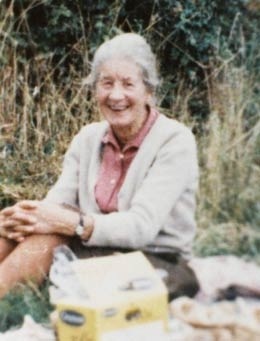
Hilda was a force of nature. Cambridge-educated. A brilliant mind. She wasn’t just *a* rose grower; she was a world-renowned horticulturalist, responsible for cultivating new breeds, including the “Hilda Murrell” rose. But behind the genteel exterior was a fierce intelligence and an unshakeable conviction. In her later years, she had turned that powerful intellect toward a new enemy: the civil nuclear power industry.

She wasn’t just a protestor holding a sign. She was preparing a complex, deeply researched paper to present at the public inquiry for the new Sizewell B nuclear power station. She was digging into the terrifying details of radioactive waste disposal, something the government and the powerful nuclear lobby did not want under a public microscope. She was, in short, a huge problem.

But that was only one of her secrets.

20131028-221632.webp

A Burglary That Makes No Sense

When police entered her home, they found a scene of chaos. The house was turned upside down. Drawers emptied. Papers scattered everywhere. The official theory quickly formed: a burglary gone wrong. A petty thief, surprised by Hilda’s return, panicked, abducted her, and killed her.

It sounds plausible. For about five seconds.

Then the questions start. And they don’t stop.

  • Why was almost nothing of value taken? Cash was left in plain sight.
  • Why would a common burglar abduct a 78-year-old woman, drive her miles into the countryside, and murder her? It’s an insane risk for zero reward.
  • The phone lines to her house had been cut. Does that sound like a panicked amateur? Or a professional operation?

Three days later, they found her body. She had been beaten and stabbed. The official cause of death was hypothermia. The “botched burglary” theory was already in tatters. Someone hadn’t been looking for her money. They were looking for something else. Something she had. Something they were desperate to find.

Deep Dive: The Belgrano Secret

To understand the biggest theory, we need to rewind two years to 1982. The Falklands War. A pivotal, bloody moment in that war was the sinking of the Argentine cruiser, the *General Belgrano*. It was torpedoed by a British submarine, the HMS Conqueror, resulting in the loss of 323 lives. A tragedy.

But was it a war crime?

The government, led by Margaret Thatcher, insisted the Belgrano was a direct threat to the British fleet. But whispers emerged immediately. Whispers that the ship was sailing *away* from the British exclusion zone. Whispers that it was sunk to torpedo a Peruvian peace plan and commit Britain to a full-scale war.

Now, here’s the connection. Hilda Murrell’s nephew was Commander Robert Green. A high-ranking Royal Navy intelligence officer who worked in the command center during the war. He knew the truth. He knew exactly what signals were sent and when. He knew if the official story was a lie.

The theory is terrifyingly simple. Green, disgusted by the cover-up, passed a secret dossier of evidence to his trusted aunt, Hilda, for safekeeping. Evidence that could bring down the government. And someone found out.

Were the men who tore her house apart not burglars, but MI5 agents? Were they on a frantic search for the “Belgrano papers”? Did they grab Hilda, trying to torture the location of the documents out of her, and did it all go horribly, violently wrong?

The late Labour MP Tam Dalyell certainly thought so. He stood up in the House of Commons and declared, with parliamentary privilege protecting him, “There are persons in Westminster and Whitehall who know a great deal more about the violent death of Miss Hilda Murrell than they have so far been prepared to divulge.”

He was pointing the finger directly at the secret state.

A Convenient Conviction?

The case went cold for 19 years. A lingering embarrassment. Then, a breakthrough. In 2003, cold case investigators matched DNA found at the scene to a man named Andrew George. A builder’s labourer who was just 16 at the time of the murder. He was a petty thief, a local lad. The perfect fit for the original “botched burglary” theory.

In 2005, he was convicted and sentenced to life in prison. Case closed. The system worked.

Or did it?

The conviction has never satisfied those who looked at the case. George’s DNA was a partial match, and his defenders argue it could have come from a separate, earlier break-in he committed. He had an alibi. The sheer professionalism of the crime—the cut phone lines, the abduction—seems far beyond the capabilities of a lone, teenage burglar. Was Andrew George the perfect patsy? A convenient solution to close the book on a very inconvenient murder?

Was his conviction the final act of the cover-up?

The questions surrounding Hilda Murrell’s death refuse to be buried. But nearly 20 years after her murder, another British citizen with dangerous knowledge would be found dead in a quiet English wood, sparking a firestorm of conspiracy that burns to this day.

20131028-221824.webp

Part Two: The Weapons Inspector’s Impossible Suicide

July 17th, 2003. Dr. David Kelly, a man at the heart of a political earthquake, told his wife he was going for a walk. He never came back.

The next morning, his body was found in a wood near his Oxfordshire home. The government announced a suicide. A tragic end for a man under immense pressure. But for millions, it was something else entirely. It was an execution.

The Man Who Knew There Were No WMDs

Dr. David Kelly was not just a scientist. He was one of the world’s most respected experts on biological warfare. A former UN weapons inspector in Iraq. If anyone on the planet knew what weapons of mass destruction Saddam Hussein possessed, it was him.

In 2003, the UK and US governments were banging the drums of war, built on the terrifying claim that Saddam had WMDs ready to deploy, some within 45 minutes. This was the justification for the invasion of Iraq.

Dr. Kelly knew this was a lie. Or, at the very least, a catastrophic exaggeration.

In an off-the-record conversation with BBC journalist Andrew Gilligan, Kelly voiced his concerns. He was the source for Gilligan’s bombshell report claiming the government had “sexed up” the Iraq dossier, knowingly inserting intelligence they knew was questionable.

The story exploded. Tony Blair’s government was furious, desperate to find the leak. The media frenzy was intense. And then, the government made a fateful decision. They outed Dr. Kelly. They threw him to the wolves. He was forced to testify before two parliamentary committees, grilled under the full glare of the world’s media. The pressure was unimaginable.

Days later, he was dead.

The Official Story: A Suicide That Defies Logic

The official inquiry, led by Lord Hutton, concluded that Dr. Kelly took his own life. The narrative was simple: Overwhelmed by stress and shame, he walked to a favorite spot, swallowed a number of Co-proxamol painkillers, and cut his left wrist with a small pruning knife he’d owned since his youth.

It’s a neat story. It’s also, according to a large group of medical professionals, medically preposterous.

Deep Dive: The Medical “Miracle”

Let’s break down the “impossible” suicide. A group of Britain’s most eminent doctors and forensic experts have publicly stated the official cause of death is unbelievable. Here’s why:

  • The Wrong Artery: The autopsy found Kelly had severed his ulnar artery. This is a small artery, difficult to cut deeply, and one that retracts when severed. Doctors argue it is almost impossible to bleed to death from this wound alone, especially in a man with coronary artery disease, which would have reduced his blood pressure. There was remarkably little blood at the scene.
  • The Wrong Pills: Co-proxamol is a notoriously ineffective drug for suicide. It’s far more likely to cause liver failure days later than a rapid death. Furthermore, the toxicology report showed levels in his stomach that were not fatal. How could a man swallow 29 of these powerful pills without vomiting?
  • The Wrong Knife: The knife was a small, blunt pruning knife from his home. There were no fingerprints found on it. None. Not even his own. How is that possible?

One doctor involved in the campaign to reopen the inquest put it bluntly: for this to be a suicide, you have to “believe in miracles.”

The Gathering Storm of Doubt

The medical impossibilities are just the beginning. The scene itself was filled with bizarre inconsistencies.

Witnesses reported hearing helicopters in the area that night. The search teams were, according to some reports, directed *away* from the area where his body was eventually found. And then there’s the question of who might have wanted him dead.

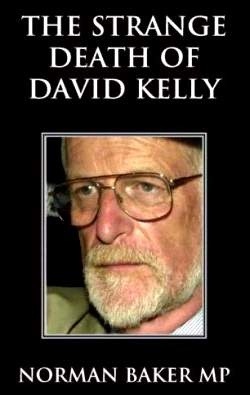
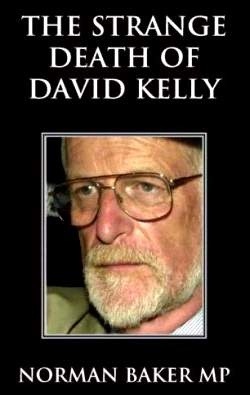
Norman Baker, a respected MP at the time (who later, in a stunning twist, became a Home Office Minister overseeing MI5), wrote a book arguing that Kelly was murdered. He didn’t point the finger at the British state, but at a “dark actor”—perhaps pro-war Iraqi exiles or a rogue element within the intelligence community who wanted to silence Kelly before he could do any more damage to the case for war.

The man at the center of the story, journalist Andrew Gilligan, dismissed the murder theory, arguing it was too complex. He stated: “For Dr Kelly to have been murdered… it would have needed someone to force 29 pills down his throat… Then they would have had to get him to sit on the ground without any restraint… while they had sawn away at his wrist with a knife.”

But what if it wasn’t like that? What if he was assassinated by professionals using more subtle means—a forced injection, perhaps—and the scene was staged to look like a suicide? A clumsy, unbelievable suicide, but one that the establishment would be all too willing to accept.

The 70-Year Secret

Here is the single most damning piece of information. The key evidence from the Hutton Inquiry—including the full, unredacted post-mortem report and witness statements—has been sealed from the public. For 70 years.

Read that again. Seventy. Years.

Why? In what world does the evidence from a straightforward, non-suspicious suicide need to be locked away until the year 2073? It’s a move that goes beyond simple procedure. It feels like a desperate act of concealment. What is in those files that is so explosive it cannot be seen by the public for generations?

It is the ultimate red flag. It’s the government putting a giant, flashing neon sign over the case that reads: “NOTHING TO SEE HERE. MOVE ALONG. (AND DON’T COME BACK FOR 70 YEARS).”

Two Lives, One Disturbing Question

Hilda Murrell, the brilliant rose grower who stood up to the nuclear state and may have held the secrets to a war crime. Dr. David Kelly, the principled scientist who stood up to a government determined to drag his country into a war based on a lie.

Two very different people. Two very different lives. But their deaths are linked by a chilling thread of doubt and the unmistakable shadow of the state. In both cases, the official verdict serves a powerful purpose: it closes the book. It tidies up a messy, inconvenient narrative. It silences the questions.

But the questions refuse to be silenced.

Are these just two separate, solved tragedies, their mysteries fueled only by the overactive imaginations of conspiracy theorists? Or are they two of the most chilling examples of what can happen when you become an inconvenience to people in power?

We’re told the case is closed. We’re told to accept the official story. But when the stories make no sense, and the evidence is locked away for a lifetime, maybe it’s time to stop listening and start asking… what are they really hiding?

Previous article
Next article
Amit Ghosh
Amit Ghoshhttps://coolinterestingnews.com
Aloha, I'm Amit Ghosh, a web entrepreneur and avid blogger. Bitten by entrepreneurial bug, I got kicked out from college and ended up being millionaire and running a digital media company named Aeron7 headquartered at Lithuania.
RELATED ARTICLES
- Advertisment -

Most Popular

Recent Comments

Warren Pan Abbott on The legend of the Devil Monkey !
chris davies on The McPherson Tape Mystery
Reed Reedly on ET has Internet!
Bea Houseoffashion on Proof Of Time Travellers – Gallery
Marcus2012 on ET has Internet!
Reed Reedly on ET has Internet!
LaughsAtConspiracyNuts on The 9/11 Conspiracy – Myths and Facts
Alex Sliverman on Did the ancients fly?
Doctor Wholigan on Time Traveler in 1938 film
chris davies on The McPherson Tape Mystery
Archie1954 on 10 secret UFO hideouts
chris davies on Ghosts of flight 401
Marcus2012 on ET has Internet!
jason Macdonald on Proof of Time Travel? – China
chris davies on Long-Lost Pyramids Found?
Reed Reedly on ET has Internet!
Milkman on Connected Universe
Tenmiles on Baigong Pipes Mystery
Simon Foster on Sirius – The Documentary
From the 1st April on 2013 – Alien Contact date ?
SkyWatcher on Is ET ignoring us?
I Come From The Future on Obama to make UFO Alien disclouser soon ?
Just another person on 2013 – Alien Contact date ?
Malcolm Windowcleaner on The strange case of Rudolph Fentz
Mason Servio on Strange Things on Mars
Marke Wisdom Seeker on What will we find as arctic melts?
Andrea A Elisabeth Levyne on Aliens Captured in Varginha, Brazil
Mitch Grouyeki on Amazing Space Shuttle pictures