Saturday, June 6, 2026

The Hinterkaifeck Mystery

The True Story of the Hinterkaifeck Murders: A Nightmare That Never Ended

Imagine living in a house where you know, deep in your gut, that you are not alone. You hear the floorboards creak above you while you try to sleep. You find keys missing. You see footprints in the snow leading to your front door, but none leading away. And then, one night, the darkness finally comes for you.

This isn’t the plot of a Hollywood slasher movie. This is history. This is Hinterkaifeck.

In the spring of 1922, a small farmstead in Bavaria, Germany, became the setting for one of the most chilling, baffling, and downright terrifying crimes in human history. Six people were brutally slaughtered. But the murder itself isn’t what keeps internet sleuths and historians awake at night a hundred years later. It’s what happened before the attack. And even worse? What happened after.

Strap in. We are going back to 1922 to look at the cold case that refuses to die.

The Gruber Family: Isolation and Secrets

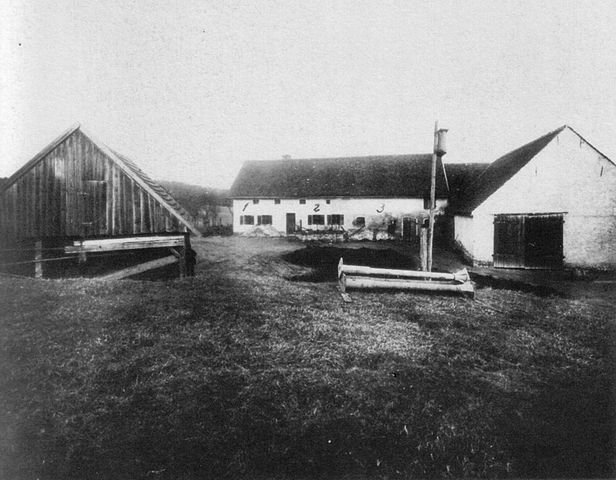
To understand the horror of Hinterkaifeck, you have to understand the place itself. It was isolated. The farm, known as Hinterkaifeck, sat about a kilometer away from the main village of Kaifeck, nestled near a dense forest. It was a lonely place. A quiet place. The kind of place where no one can hear you scream.

The occupants were the Gruber family. At the head was Andreas Gruber, a stern, arguably tyrant-like figure, and his wife Cäzilia. Living with them was their adult widowed daughter, Viktoria Gabriel, and her two children: seven-year-old Cäzilia and little Josef, who was only two.

They weren’t exactly the most popular family in town. Rumors swirled around them like flies. Dark whispers about the true parentage of little Josef and the strange, insular nature of the household kept neighbors at arm’s length. They were rich, they were hardworking, but they were alone. And being alone out there, next to the woods, was dangerous.

On the afternoon of March 31, 1922, a new maid named Maria Baumgartner arrived at the farm. It was her first day on the job. It would also be her last. She had arrived to replace a previous maid who had fled the farm in a panic six months prior.

Why did the first maid leave? This is where the story starts to get under your skin.

The Prologue to Terror: “The House Is Haunted”

Six months before the massacre, the previous maid packed her bags in a hurry. She told anyone who would listen that she couldn’t stay at Hinterkaifeck another night. Why? She was convinced the farm was haunted.

She spoke of strange sounds. Voices in the night. Footsteps in the attic when no one was up there. The Grubers laughed it off. They told her she was crazy. But was she? Or was she sensing something biological, something human, watching her from the shadows?

Retrospect is a terrifying thing. Looking back, we know it wasn’t a ghost. It was almost certainly the killer (or killers) scouting the location, learning the layout, and perhaps even living inside the walls long before the first blow was struck.

The Impossible Footprints

Fast forward to March 1922. The days leading up to the murders were filled with events that should have sent the family running for the hills. Andreas Gruber, the father, began noticing things. Weird things.

A few days before the end, a snowstorm blanketed the region. Andreas went outside to check the property and found something that froze his blood. There were footprints in the fresh snow. They came out of the dense forest, marched straight across the field, and led directly to the farmhouse.

That’s not the scary part. The scary part is that there were no footprints leading back out.

Someone had walked into his home. And they hadn’t left.

Andreas searched the barn. He checked the shed. He didn’t find anyone. But the tracks were undeniable. Someone was there. He told his neighbors about it, but—in a move that frustrates everyone who reads this case—he refused to call the police. He was a stubborn man. He didn’t want the authorities poking around his business.

The Stranger in the Attic

The footprints were just the beginning. The psychological torture ramped up. Andreas told neighbors that he had lost a set of house keys. They just vanished. He couldn’t find them anywhere. This meant that whoever was watching them now had full access to every door in the house.

Then came the noises. In the dead of night, the family heard footsteps in the attic. Thumping. Creaking. Andreas checked. He found nothing. But in the morning, they found a Munich newspaper in the house that none of them had bought.

Think about that. A stranger was living in their attic, reading the paper, waiting for the right moment. Scratches were later found on the lock of the tool shed, as if someone had tried to pick it.

The trap was set. The predator was inside.

March 31, 1922: The Night of the Pickaxe

We don’t know the exact sequence of events, but forensic reconstruction paints a grim picture. It was a Friday evening. One by one, the family members were lured out of the warm farmhouse and into the freezing barn.

Why? Did they hear a noise? Did someone call for help? Was the cattle restless?

First, it was likely the parents, Andreas and Cäzilia. They walked into the dark barn. As they crossed the threshold, they were struck down. The weapon was a mattock—a heavy farming tool similar to a pickaxe. Brutal. Efficient.

Next came Viktoria, the daughter. Then, seven-year-old Cäzilia. One by one, they were piled on top of each other in the hay, their heads crushed.

The killer wasn’t done. The bloodlust was still high. The perpetrator walked into the farmhouse, moving through the kitchen and into the bedrooms. Little Josef, the two-year-old, was sleeping in his cot in his mother’s room. He was killed while he slept. The new maid, Maria, who had only been there a few hours, was murdered in her bedchamber.

Six people. Gone.

The Detail That Breaks Your Heart

The autopsies later revealed a detail so horrific it’s hard to type. The young girl, Cäzilia (7), did not die instantly. She survived the initial blow. Lying in the dark barn, surrounded by the bodies of her parents and grandparents, she likely woke up.

The coroner found clumps of her own hair in her hands. In her final agony and terror, she had torn it from her own head. She lay there for hours, slowly dying in the cold, while the killer was just a few yards away inside the house.

The Weekend with the Dead

If you think the murders are the climax of this horror story, you’re wrong. The aftermath is what makes Hinterkaifeck truly unique and truly disturbing.

The murders happened on a Friday night. The bodies weren’t discovered until the following Tuesday. That’s a gap of four days.

During those four days, the house was not empty.

Neighbors reported seeing smoke rising from the chimney all weekend. That means someone was keeping the fire going. Someone was cooking.

The cattle were fed. The investigation later showed that the cows and chickens had been tended to. The killer didn’t just slaughter the family and run; he stayed. He (or they) treated the farm as a weekend getaway.

There was evidence that someone had eaten from the pantry. Bread and meat were consumed. The killer slept in the beds. Imagine the mindset required to smash a family’s skulls in, then sit in their kitchen, eat their food, and sleep in their sheets while their corpses rot in the barn next door.

On Sunday, two days after the murders, neighbors actually came to the house. They stopped by for coffee. They knocked on the door and windows. No one answered. But they felt like someone was inside watching them. The killer was likely standing just on the other side of the wall, holding his breath, waiting for them to leave.

The Discovery and the Botched Investigation

On April 4th, a mechanic arrived to fix an engine. He wandered around the yard, shouting for the Grubers. Nothing. He fixed the engine and left. Finally, neighbors became too suspicious to ignore the silence. A search party led by Lorenz Schlittenbauer (we will get to him in a minute) went to the farm.

They pushed open the barn door. They found the stack of bodies.

The police investigation that followed was a disaster, even by 1922 standards. The crime scene was trampled by dozens of villagers who came to gawk at the bodies. Evidence was destroyed. Footprints were smeared.

The police were desperate. They were so stumped that they actually cut the heads off the victims. Why? They sent the skulls to Munich to be examined by “clairvoyants” (psychics) to see if the spirits could identify the killer. Spoiler alert: They couldn’t. To add insult to injury, the skulls were lost during the chaos of World War II and were never reunited with the bodies.

Who Did It? The Suspects and Theories

Over 100 suspects were questioned. No one was ever charged. But there are theories. Oh, are there theories.

Suspect #1: Lorenz Schlittenbauer

Schlittenbauer was the neighbor who led the search party. He had a complicated history with the family. He had been romantically involved with Viktoria and was rumored to be the father of little Josef (though others whispered that Viktoria’s own father, Andreas, was the parent—a dark incestuous angle that clouds the whole case).

Why him?

  • He knew the layout of the farm perfectly.
  • When the bodies were found, witnesses said he wasn’t shocked. He reportedly started moving the bodies around, disturbing the scene before police arrived.
  • He had a key to the house.
  • He was known to be furious about the alimony payments he might have to pay for Josef.

However, he claimed he moved the bodies to look for his son, Josef. The police never had enough concrete evidence to pin it on him, but the locals believed he did it until the day he died.

Suspect #2: The Husband Who Never Died

Viktoria’s husband, Karl Gabriel, was reportedly killed in the trenches of World War I in France. But his body was never properly identified. It was just a “missing in action” assumption.

A persistent theory suggests Karl didn’t die. Instead, he deserted, changed his identity, and eventually returned home. Upon arriving, he saw his wife with a new child (Josef) that couldn’t be his. Enraged by the infidelity (or the incest), he wiped out the family. Witnesses in later years claimed to have met a man in Russia who bragged about being the “Murderer of Hinterkaifeck,” claiming he returned to find his wife pregnant by her own father.

Suspect #3: Robbery Gone Wrong (Or Right?)

Initial thoughts went to drifting thieves. Germany was in hyperinflation; poverty was everywhere. But this theory holds no water. Why? Because the Grubers had huge amounts of cash and gold hidden in the house. The killer didn’t take it. A thief doesn’t kill six people and then leave a fortune on the table. This was personal. This was hate.

The Mystery That Won’t Fade

In 2007, a class of students at the German Police Academy took on the case using modern profiling techniques. They analyzed the data with 21st-century eyes. They concluded that one suspect had a significantly higher probability of being the killer than the others (widely believed to be Schlittenbauer).

However, out of respect for the suspect’s living descendants, the report was kept classified. They solved it, but they won’t tell us the name.

The farm was demolished a year after the murders. The neighbors couldn’t stand looking at it. Today, only a simple shrine stands in the middle of a flat, green field.

Hinterkaifeck remains the ultimate locked-room mystery, but on a farm scale. It combines paranormal vibes with brutal reality. It forces us to ask: How well do we know our neighbors? And when the floorboards creak at night… are you sure it’s just the house settling?

The footprints led in. They never led out. And in a way, the killer is still there, waiting in the snow of our collective memory.

Amit Ghosh
Amit Ghoshhttps://coolinterestingnews.com
Aloha, I'm Amit Ghosh, a web entrepreneur and avid blogger. Bitten by entrepreneurial bug, I got kicked out from college and ended up being millionaire and running a digital media company named Aeron7 headquartered at Lithuania.
RELATED ARTICLES

1 COMMENT

- Advertisment -

Most Popular

Recent Comments

Warren Pan Abbott on The legend of the Devil Monkey !
chris davies on The McPherson Tape Mystery
Reed Reedly on ET has Internet!
Bea Houseoffashion on Proof Of Time Travellers – Gallery
Marcus2012 on ET has Internet!
Reed Reedly on ET has Internet!
LaughsAtConspiracyNuts on The 9/11 Conspiracy – Myths and Facts
Alex Sliverman on Did the ancients fly?
Doctor Wholigan on Time Traveler in 1938 film
chris davies on The McPherson Tape Mystery
Archie1954 on 10 secret UFO hideouts
chris davies on Ghosts of flight 401
Marcus2012 on ET has Internet!
jason Macdonald on Proof of Time Travel? – China
chris davies on Long-Lost Pyramids Found?
Reed Reedly on ET has Internet!
Milkman on Connected Universe
Tenmiles on Baigong Pipes Mystery
Simon Foster on Sirius – The Documentary
From the 1st April on 2013 – Alien Contact date ?
SkyWatcher on Is ET ignoring us?
I Come From The Future on Obama to make UFO Alien disclouser soon ?
ÛñK?øWn on 2013 – Alien Contact date ?
Just another person on 2013 – Alien Contact date ?
Malcolm Windowcleaner on The strange case of Rudolph Fentz
Mason Servio on Strange Things on Mars
Marke Wisdom Seeker on What will we find as arctic melts?
Andrea A Elisabeth Levyne on Aliens Captured in Varginha, Brazil
Mitch Grouyeki on Amazing Space Shuttle pictures