A Shadow Over Pune: The Legend of the Residency Club Ghost
There are places in this world that are… wrong. Places where the air is heavy, where silence screams, and where the past refuses to die. Forget what you see in the movies. The most terrifying spots on earth aren’t grand, gothic castles. They are often quiet, forgotten, and crumbling right in the middle of a bustling city.
And in Pune, India, near the manicured lawns and colonial charm of the Residency Club, there is such a place.
A house. A bungalow, to be exact.
It’s not just abandoned. It feels malevolent. Locals whisper its story in hushed tones, a story of a woman wronged, of a spirit bound to the decaying brick and mortar, and of an evil that seeps from its very foundation. They say a woman’s spirit, twisted by tragedy, has claimed this ruin as her own. And she does not like visitors.
This isn’t just another ghost story. This is a warning.
The House That Breathes Evil
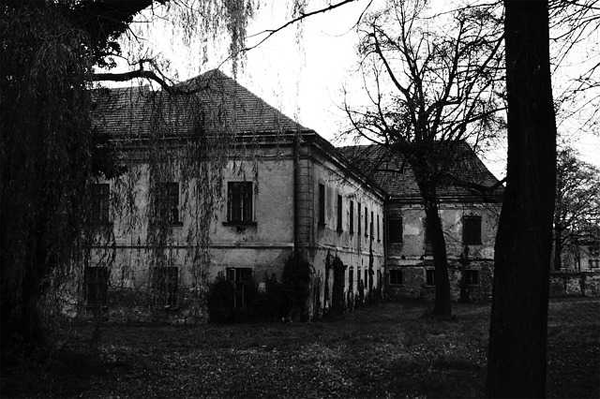
You can feel it before you even see it. A sudden drop in temperature, even on a sweltering Pune afternoon. The cheerful sounds of the city seem to mute, replaced by an unnerving quiet. Then, it comes into view. The bungalow is a skeleton. A wreck. Its roof has collapsed in places, creating jagged teeth that bite at the sky. Vines and creepers, thick as a man’s arm, choke the walls, trying to pull the structure back into the earth. Windows are dark, empty sockets, like the eyes of a skull.
No one goes in.
Not even during the brightest hours of the day. The fear is that palpable. Delivery drivers will take long detours to avoid the street. Children are warned never to chase a stray ball past its rusted, broken gate. A palpable sense of dread hangs over the property, a constant, oppressive feeling that you are being watched by something unseen and deeply hostile.
It is a place of profound sorrow and rage. A place where something terrible happened. Something that stained the very ground it was built on.

The structure itself is almost a complete ruin now. Years of neglect and the relentless Indian monsoon have done their work. But the energy within? Locals say it’s stronger than ever. They say the decay of the physical house only feeds the power of the spiritual one. The ghost within doesn’t need walls and a roof. She has the memory. And the hate.
Deep Dive: The Blood-Soaked Soil of Pune’s Cantonment
To understand the ghost, you have to understand the ground she walks on. The area around the Residency Club is known as the Pune Cantonment, or Camp. This wasn’t always just another neighborhood. It was established by the British in the early 19th century after they defeated the Peshwas. It was a military garrison, a hub of colonial power, and a place of immense cultural collision.
Think about it. This was a slice of England dropped into the heart of India. Grand bungalows were built for high-ranking officers and their families. There were polo grounds, exclusive clubs (like the Residency Club), and formal balls. But beneath this veneer of civilized garden parties and military parades, there was a dark undercurrent. This was occupied territory. Tensions were always simmering.
The history of the Cantonment is filled with stories of intrigue, forbidden love affairs, disease, and sudden, violent death. Young officers died of cholera. Families were torn apart by duty and distance from home. And many, many secrets were buried. It’s the perfect breeding ground for a haunting. A place where intense emotion—love, betrayal, loneliness, despair—was concentrated for over a century. The spirits of the Cantonment are not ancient; they are modern ghosts, born from the turmoil of a recent and often painful history.
So when people talk about a female spirit in a ruined bungalow here, it’s easy to imagine who she might have been. A British wife, perhaps, who couldn’t handle the isolation? An officer’s daughter involved in a scandalous affair? Or maybe an Indian woman betrayed by a powerful colonial lover? The possibilities are as numerous as they are chilling.
Witness Accounts: What Lurks in the Ruins?
The stories aren’t just vague feelings of dread. Over the decades, specific, terrifying encounters have cemented the bungalow’s reputation as a focal point of paranormal activity. These aren’t just rumors; they are eyewitness accounts that share disturbingly similar details.
The Woman on the Roof
This is the most infamous sighting. The story that turned a spooky old house into the stuff of legend. The account has been passed down, but the core details remain the same. A few young men were passing by the bungalow late one night. Maybe on a dare, maybe just on their way home. They were joking, making noise, full of the bravado of youth. Then, one of them stopped. He pointed up.
And there she was.
Sitting on the jagged edge of the broken roof, legs dangling into the abyss. They couldn’t make out her features in the darkness, only the silhouette of a woman in what looked like an old-fashioned dress. She was perfectly still, her head tilted as if she were listening to them. Then she looked directly at them. Even from that distance, they felt the ice-cold intensity of her stare. It wasn’t a curious look. It was a look of pure hatred. It froze the blood in their veins and stole the air from their lungs.
One of them managed to scream. A raw, primal sound of terror. For a split second, they looked away, reacting to their friend’s cry. When they instantly snapped their heads back up to the roof… she was gone. Vanished. There was no way anyone could have climbed down that quickly or that silently from the treacherous, crumbling structure.
They didn’t wait around. They ran. And they never forgot the feeling of that stare boring into their very souls.
Whispers, Screams, and Maniacal Laughter
The visual encounters are rare. The auditory phenomena? That’s a nightly event. People who live in the vicinity have learned to tune it out, to treat it as a part of the night’s ambient sound. But for anyone new or anyone who stops to listen, it’s horrifying.
It begins with soft sobbing. The heart-wrenching sound of a woman weeping in utter despair. It seems to come from the heart of the house, a mournful echo that tugs at your sympathy. But then, the sound changes. The sobs might twist into a high-pitched, terrifying scream that rips through the night, a sound of pure agony or terror. It lasts for a few seconds and then cuts off abruptly, leaving a ringing silence in its wake.
And perhaps the most disturbing sound of all is the laughter. It’s not a sound of joy. It’s described as unhinged, maniacal. The cackling of someone whose mind has completely shattered. What could cause a single spirit to display such a violent spectrum of emotion? From profound sadness to rage to absolute madness? It suggests a story of unbelievable trauma.
That Crushing Feeling…
Over the years, paranormal investigators and psychics—the “experts” mentioned in the original whispers of this tale—have attempted to explore the property. Few have stayed long. They report a powerful “negative energy” that is actively hostile. It’s not just a cold spot or a strange feeling. They describe it as a physical force.
Investigators speak of a crushing pressure on their chests, making it hard to breathe. They report sudden, crippling waves of nausea and dizziness. But most frightening is the mental attack. They describe a feeling of a consciousness trying to push its way into their own minds, flooding them with feelings of intense despair and suicidal thoughts. It’s as if the spirit isn’t just haunting the house; it’s trying to infect anyone who gets too close with its own misery, to pull them down into the same darkness.
Is This Real? Separating Fact from Terrifying Fiction
The skeptic’s mind races for explanations. The woman on the roof? A trick of the light, a shadow, maybe a real-life trespasser. The sounds? The wind whistling through a ruined structure. Animals. The imagination running wild in a spooky setting. The “negative energy”? Simple fear and the power of suggestion.
These are all plausible. Of course, they are.
But they don’t quite explain everything. They don’t explain the sheer consistency of the reports over many decades, from different people who have never met. They don’t explain why *this* particular abandoned house, in a city with many old buildings, has become such a nexus of fear. The power of suggestion is strong, but is it strong enough to make multiple people see the same silhouette on a roof? Is the wind capable of producing sounds that mimic sobbing, screaming, *and* laughter?
The most compelling argument for the haunting is the emotion. Every single person who has had an experience near the bungalow reports the same feelings: overwhelming sadness, followed by intense fear and a feeling of being hated. That emotional signature is too specific to be a coincidence.
The Digital Ghosts: Modern Theories and Online Chatter
In the age of the internet, the legend has found new life. On forums like Reddit and in the comment sections of paranormal blogs, new stories—or at least new versions of old ones—have emerged. Some claim to have seen a “white figure” floating in the dark windows. Others have posted supposed audio clips, filled with static, that they claim contain Electronic Voice Phenomena (EVPs) captured from outside the gate. The alleged messages are often single words, whispered in Hindi or English: “Leave,” “Mine,” “Help.”
One popular online theory suggests the ghost isn’t just one woman, but two. A mother and child who perished in a fire, which would explain the different types of cries heard from the house. Another, more elaborate theory, ties the bungalow to a secret society during the British Raj, suggesting the haunting is not a simple spirit but a deliberately created guardian, a “tulpa” designed to protect something hidden within the ruins.
While these modern theories are impossible to verify, they show that the bungalow’s power to capture the imagination is stronger than ever. It has become an open-source horror story, a mystery that people are still trying to solve from the safety of their keyboards.
The Unwritten History: What If We Knew Her Story?
Let’s speculate. Let’s build the story that history forgot to write. What if she was a young English woman, brought to Pune in the late 19th century, betrothed to a high-ranking officer? She was vibrant and full of life, but lonely in this new, strange land. She fell in love, but not with her fiancé. She fell for a charismatic junior officer, a man with ambition but no title.
Their affair was passionate and secret, carried out in the shadowed gardens of the Cantonment. He promised her everything. He promised he would leave the army, that they would run away together and live a simple life. She believed him. She broke off her official engagement, causing a massive scandal that ruined her family’s name.
And then, the man she loved betrayed her. It was all a game to him, a way to climb the social ladder. He never intended to leave the army. He used her, then cast her aside, publicly denying he ever knew her. Humiliated, heartbroken, and disowned by her family, she was left with nothing. Her grief turned to madness. The sobbing in her room turned to manic laughter, and then to screams. One night, in that very bungalow, she ended her own life.
A story like that would create the kind of spirit the legends describe. A spirit trapped in a loop of its own trauma. The sobbing is for her lost love. The screaming is for the moment of ultimate betrayal. And the laughter? That’s the sound of a mind that has completely broken, forever reliving its own destruction.
The Question That Remains…
The bungalow near the Residency Club still stands. Or rather, it still rots. It is a monument to a forgotten tragedy, a festering wound on the landscape. The city of Pune grows and changes around it, but the house remains stuck in time, held captive by its permanent resident.
The stories continue. The fear is real. And the spirit inside continues her cycle of sorrow and rage. She waits in the darkness, staring out of hollowed-out windows at a world that has forgotten her name but will never forget her pain.
What does she want? Is it revenge? Peace? Or does she simply want to be left alone in her crumbling kingdom of misery? Perhaps the most frightening possibility is that she wants nothing at all. She is simply an echo. A psychic scar. A terrible, screaming reminder that some stories don’t have an ending.
Originally posted 2015-08-09 05:17:46. Republished by Blog Post Promoter