
Monday, August 10, 2026
HomeSpace & ScienceSpaceTiny satellites developed to patrol Earth's orbit and monitor space junk

Tiny satellites developed to patrol Earth’s orbit and monitor space junk

The Secret Space Cops Policing Our Skies: Are They Protecting Us or Watching Us?

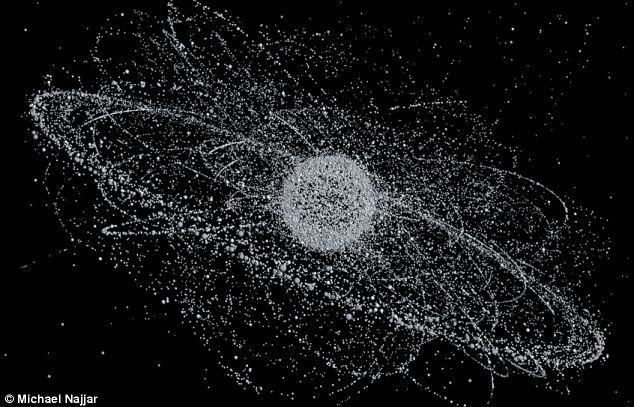
You look up at the night sky. You see stars. Maybe a planet. The moon. But what you don’t see is the storm. A silent, invisible hurricane of metal and shrapnel whipping around our planet at unthinkable speeds. A junkyard orbiting Earth.

And now, they tell us, they’re deploying the cops.

Not just any cops. Tiny, autonomous satellites. A swarm of robotic patrol cars in the void, tasked with monitoring the cosmic highway above our heads. The official story is that they’re here to prevent accidents. To stop a multi-billion dollar communications satellite from being obliterated by a stray bolt from a 1970s rocket.

But is that all they’re doing?

When you peel back the layers of this government-funded project, you start to see the shadows. The unanswered questions. The chilling possibilities. Are these “cop-sats” a benign traffic management system? Or are they the first step toward something else entirely? A system of control. A weapon in a war we can’t even see. A net designed to catch more than just space junk.

Strap in. Because the truth about what’s happening in Low Earth Orbit is far more complex, and far more terrifying, than you’ve been told.

20140208-230307

The Kessler Cascade: Earth’s Self-Made Prison

Before we dive into the conspiracy, you need to understand the threat. It has a name. It’s called the Kessler Syndrome.

It’s not a movie plot. It’s a very real theory proposed in 1978 by a NASA scientist named Donald J. Kessler. The idea is simple, and it’s a vision of absolute chaos.

Imagine two satellites colliding. The crash creates a cloud of thousands of new pieces of debris. Each of those pieces is now a bullet. Each one flies off and hits another satellite. That collision creates *more* debris. A chain reaction. A cascade of destruction that spreads through orbit like a virus. Within a few years, Low Earth Orbit could become an impassable, perpetually grinding debris field. A wall of metal shards, encasing our planet. A self-made prison.

Sound familiar? The movie *Gravity* showed us a Hollywood version of this. But the reality is less about astronauts and more about the technology that runs our entire world.

No more GPS. No more satellite TV. No more international banking transfers. No more accurate weather prediction. No more spy satellites keeping nations in check. And worse? No more getting off the planet. We would be trapped here. The final frontier, closed for business, littered with the ghosts of our own technology.

This isn’t a distant “what if” scenario. It’s already starting.

  • The 2009 Iridium-Kosmos Collision: This was the big one. An operational American commercial satellite, Iridium 33, slammed into a defunct Russian military satellite, Kosmos-2251. The impact occurred at a combined speed of over 26,000 miles per hour. It instantly created over 2,000 pieces of trackable, car-sized debris and countless smaller fragments. That junk is still up there. A permanent cloud of danger.
  • The 2007 Chinese Anti-Satellite Test: China decided to show off its military muscle by launching a missile to destroy one of its own old weather satellites. It worked. And in doing so, it created the single largest debris event in history. Over 3,000 trackable pieces. A deliberate act of orbital pollution that endangered every single nation’s assets in space.

This is the problem they tell us they need to solve. And their solution sounds… almost too good to be true.

The Official Story: Tiny “Cop-Sats” on Patrol

Enter the team from the Lawrence Livermore National Laboratory. These are the guys who work with nuclear weapons and bleeding-edge science. When they turn their attention to a problem, you know it’s serious. Their project is called STARE, which stands for Space-Based Telescopes for Actionable Refinement of Ephemeris. A mouthful, right? Let’s just call them Space Cops.

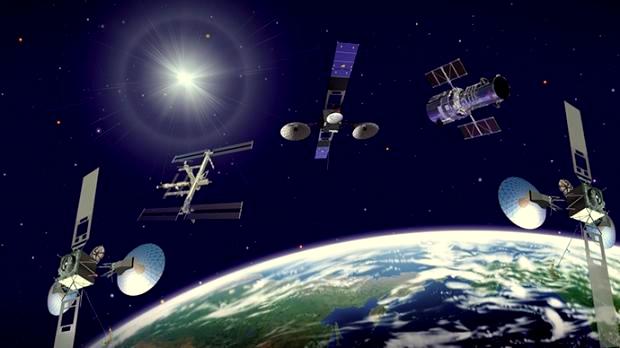
The concept is to launch a whole fleet—a constellation—of tiny nano-satellites. We’re talking about machines the size of a loaf of bread, packed with sophisticated optics and processors. They’re cheap, they’re small, and they can be deployed in massive numbers.

Lance Simms, one of the lead authors on the project, put it plainly: “Eventually our satellite will be orbiting and making the same sort of observations to help prevent satellite-on-satellite and satellite-on-debris collisions in space.”

The goal of the STARE mission is to refine the orbital data of known objects—satellites and debris—down to an accuracy of less than 100 meters. That’s a huge leap. Ground-based radar can tell you a piece of junk is in a certain massive box of space. These little cop-sats are meant to tell you exactly which corner of the box it’s in, and where it will be tomorrow.

article-2523271-1A14F53C00000578-723_634x407

How Do These Robo-Cops Actually Work?

It’s clever. Instead of one giant, expensive telescope like Hubble, you launch dozens of cheap ones. They form a distributed network. As a piece of junk flies by, multiple STARE satellites get a look at it from different angles. This is called stereoscopic vision, the same way your two eyes give you depth perception.

They take their pictures, crunch the numbers on board, and beam the refined orbital path down to Earth. Satellite operators then get a much clearer warning: “ALERT: Debris object 86753 will pass within 75 meters of your satellite in 4 hours. Recommend orbital burn.”

It works. In ground-based tests, the team proved their concept. They tracked a satellite called NORAD 27006 and, within 24 hours, they could predict its location over the next day and a half to within 50 meters. That’s the difference between a near miss and a catastrophic impact.

On the surface, this is a brilliant solution to a growing problem. A necessary step to keep our orbital highways clear. But the road to hell is paved with good intentions. And when you give someone the power to watch everything, you have to ask yourself: what else will they do with it?

The Conspiracy Deep Dive: Is Debris Tracking Just a Cover Story?

This is where we leave the press releases behind. Let’s think like an intelligence analyst. Let’s think about dual-use technology. A hammer can build a house, or it can break a window. A technology that can track a dead satellite with pinpoint accuracy can also track a *live* one. A secret one. An enemy one.

Motive 1: The Ultimate Orbital Weapon

The STARE system is presented as a defensive shield. A way to avoid collisions. But what if you flip the script? What if you wanted to *cause* a collision?

Imagine you’re a rogue state or a clandestine agency. You want to take out an enemy’s spy satellite. Firing a missile, like the Chinese did, is messy. It’s obvious. Everyone knows who did it. It’s an act of war.

But what if you had a perfect, real-time map of every piece of significant space junk? What if you knew the exact trajectory of a ten-pound chunk of a Russian rocket body from 1985? With a system like STARE, you could calculate the precise moment that junk and your enemy’s satellite would have a near-miss. All you’d have to do is give your enemy’s satellite a tiny, almost imperceptible nudge with a laser or a high-powered microwave burst. Just enough to alter its course ever so slightly.

Days or weeks later, it collides with that piece of junk. Boom. Satellite gone. Who’s to blame? No one. It was an accident. A tragic, unpredictable, but ultimately unavoidable consequence of our cluttered orbits. Plausible deniability. The perfect crime.

A “cop-sat” network isn’t just a traffic monitoring system; it’s the targeting computer for a weapon that uses the environment itself as ammunition.

Motive 2: The Coming Turf War in Space

Who controls the cops? Who owns the data? The Lawrence Livermore National Lab is a US Department of Energy facility. The data they collect will belong to the US government. What happens when a Chinese or Russian satellite is on a collision course with a piece of debris?

Do we warn them? Do we share this incredibly precise tracking data, which could also reveal details about our own tracking capabilities?

Or do we let it happen?

Now, what happens when China and Russia inevitably launch their *own* versions of STARE? You’ll have competing networks of cop-sats. An orbital turf war. The US network might flag a piece of debris as a threat to a SpaceX Starlink satellite. The Chinese network might see that same piece of debris as no threat at all, but instead notice the US satellite is making a small, unannounced maneuver. Is it dodging junk? Or is it moving to a new spying position?

This technology creates a new layer of espionage and suspicion. Every move, every orbital burn, will be scrutinized. It turns Low Earth Orbit into a high-stakes game of orbital chess, where one wrong move could be interpreted as an act of aggression.

Motive 3: The Secret Space Program and… Something Else

Let’s go deeper. What if the “junk” isn’t the primary target? For decades, there have been whispers and theories about a secret space program. A parallel civilization in orbit, with technologies far beyond what the public sees. Breakaway civilizations. Covert military platforms. Things that are not on the official satellite registry.

Maybe this swarm of tiny satellites isn’t looking for old rocket boosters. Maybe it’s a fine-toothed comb, designed to map *everything* up there. To find the assets that aren’t supposed to exist. A planetary surveillance grid to see who else is playing in our backyard.

And what about the recent explosion of interest in UAPs, or UFOs? The government now openly admits there are objects in our skies that they cannot identify. If they’re in our skies, why wouldn’t they be in our orbit? Could this network of watchful eyes be designed not just to track man-made debris, but to get the first real, undeniable, multi-angle look at something… not from here?

Perhaps tracking space junk is the perfect, logical, and publicly acceptable cover story for building a system whose true purpose is far more profound: to finally figure out who, and what, we’re sharing the space around our planet with.

The Coming Cleanup: Harpoons, Nets, and Lasers

While the “cop-sats” focus on tracking, a whole new industry is emerging to tackle the cleanup. Because watching the junk is one thing; getting rid of it is another. The ideas being tested sound like they’re straight out of a sci-fi movie.

  • Space Harpoons and Nets: The European RemoveDEBRIS mission successfully tested this. A satellite shot a harpoon into a target panel and also deployed a giant net to capture a simulated piece of junk. It’s orbital fishing, but for dead satellites.
  • Kamikaze Tugs: The Japanese company Astroscale is a leader here. Their plan is to launch “tug” satellites that can magnetically dock with a piece of junk, and then fire their own thrusters to push both themselves and the junk into the atmosphere to burn up on reentry. A noble sacrifice.
  • Giant Lasers: Some scientists propose building massive, ground-based lasers. The idea isn’t to blast the junk to bits (which would just create more junk). Instead, you hit one side of it with a powerful laser beam. The beam vaporizes a tiny layer of the surface, creating a small puff of gas that acts like a micro-thruster, gently nudging the object into a lower orbit where it will eventually burn up.

All of these technologies are amazing. And all of them have the same dual-use problem. A tug that can push a dead satellite into the atmosphere can also push a *live* one. A laser that can nudge debris can also be used to blind a spy satellite’s camera. Every solution to the junk problem is also, potentially, a weapon.

The Stakes Are Everything

This isn’t just an abstract problem for rocket scientists and generals. The storm of debris above our heads threatens the very fabric of our 21st-century lives. Your phone’s GPS, the credit card transaction at the gas station, the weather report you check before a holiday weekend, the Netflix show you stream at night—all of it is utterly dependent on a fragile network of satellites operating in an increasingly hostile environment.

We’ve surrounded our world with a technological cocoon that gives us our modern way of life. And now, the ghosts of that same technology are threatening to tear it all down.

The space cops are coming. The cleanup crews are building their nets and harpoons. But the game being played in the silent darkness above is about more than just trash collection. It’s about control. It’s about surveillance. It might even be about weapons we can’t comprehend.

So the next time you look up at the night sky, remember what’s really there. Not just stars, but a battlefield. A junkyard. And a swarm of tiny, watching eyes. And ask yourself: who are they really watching for?

Amit Ghosh
Amit Ghoshhttps://coolinterestingnews.com
Aloha, I'm Amit Ghosh, a web entrepreneur and avid blogger. Bitten by entrepreneurial bug, I got kicked out from college and ended up being millionaire and running a digital media company named Aeron7 headquartered at Lithuania.
RELATED ARTICLES
- Advertisment -

Most Popular

Recent Comments

Warren Pan Abbott on The legend of the Devil Monkey !
chris davies on The McPherson Tape Mystery
Reed Reedly on ET has Internet!
Bea Houseoffashion on Proof Of Time Travellers – Gallery
Marcus2012 on ET has Internet!
Reed Reedly on ET has Internet!
LaughsAtConspiracyNuts on The 9/11 Conspiracy – Myths and Facts
Alex Sliverman on Did the ancients fly?
Doctor Wholigan on Time Traveler in 1938 film
chris davies on The McPherson Tape Mystery
Archie1954 on 10 secret UFO hideouts
chris davies on Ghosts of flight 401
Marcus2012 on ET has Internet!
jason Macdonald on Proof of Time Travel? – China
chris davies on Long-Lost Pyramids Found?
Reed Reedly on ET has Internet!
Milkman on Connected Universe
Tenmiles on Baigong Pipes Mystery
Simon Foster on Sirius – The Documentary
From the 1st April on 2013 – Alien Contact date ?
SkyWatcher on Is ET ignoring us?
I Come From The Future on Obama to make UFO Alien disclouser soon ?
ÛñK?øWn on 2013 – Alien Contact date ?
Just another person on 2013 – Alien Contact date ?
Malcolm Windowcleaner on The strange case of Rudolph Fentz
Mason Servio on Strange Things on Mars
Marke Wisdom Seeker on What will we find as arctic melts?
Andrea A Elisabeth Levyne on Aliens Captured in Varginha, Brazil
Mitch Grouyeki on Amazing Space Shuttle pictures