
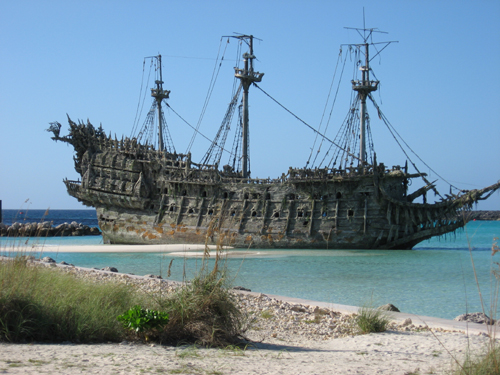
The Flying Dutchman ship is a legendary Ghost ship that can never make port, doomed to sail the oceans forever. It probably originates from 17th-century nautical folklore. The oldest story can be dated to the late 18th century.
Sightings in the 19th and 20th centuries reported the ship to be glowing with ghostly light. If hailed by another ship, the crew of the Flying Dutchman ship will try to send messages to land, or to people long dead.
The Dutchman Ship
Legend has it that around the mid-17th century a Dutch vessel was trying to round the Cape of Good Hope at the tip of Africa. The seas there are notoriously treacherous and storms can make conditions even worse. The Captain of the ship was anxious to get home and tried to round the Cape in bad weather.
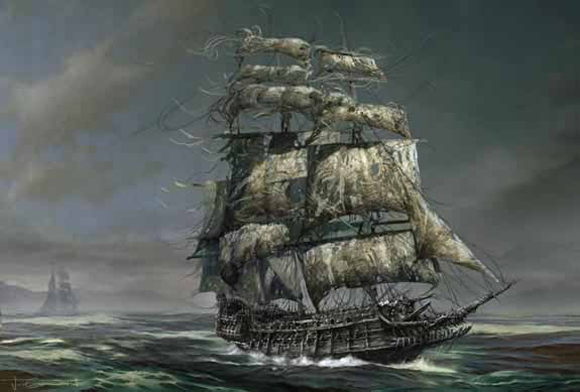 Despite facing the desperate conditions, the Captain would not turn back, cursing to the heavens that he would round the Cape “even if it took all of eternity.” He muttered that he would rather sail until doomsday than sit out the storm at anchor. Angrily, he announced that even the Almighty couldn’t stop him. When a heavenly figure appeared on deck, he shot at it. The divine visitor then proclaimed that the ship would never again find rest, and whoever sees it would also be stricken by disaster.
The Flying Dutchman has been seen by sailors in those waters for hundreds of years. Its appearance is considered a harbinger of doom.
Was the Flying Dutchman a real ship?
However, It is said that all legends have a basis in fact and the legend of the Flying Dutchman ship bears no exception to this. Of all the documented Ghost ship like The Russian Ghost ship, non are perceived to be as scary as the sighting of the Flying Dutchman ghost ship. Even today, the legend of the ship is one that intensifies the aspect of scariness and eeriness. Also there are versatile stories you can browse around .
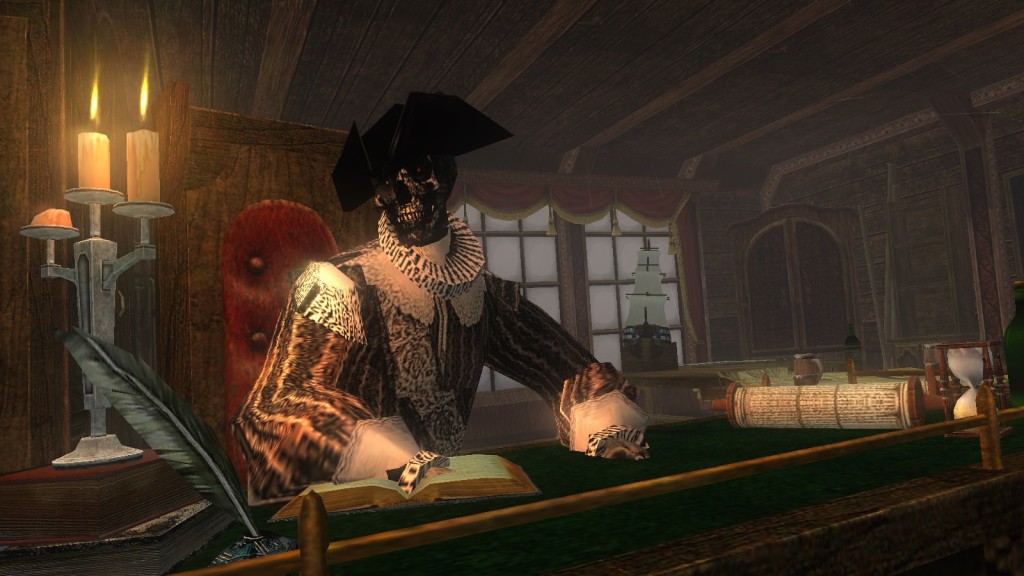
Accounts vary about the name of the skipper of the Flying Dutchman Ghost ship. According to some, the Captain was one Hendrick Van der Decken whose deep contemplation about the plight of his seamen and resultant oblivion to the approaching storm in the coast of the Cape led to the Ghostship being destroyed.
The Dutchman is called the harbinger of death and destruction for those vessels which have sighted it. It has also been retold countless times that letters and missives used to be passed onto those ships that passed the Dutchman Ghostship in their route. The opening of these letters and missives by the crew resulted in the ships getting destroyed and the crew parting with their lives.
The Flying Dutchman myths and legends
One German legend tells of Herr von Falkenberg, a Captain condemned to remain on the waves aboard a crewless vessel and playing at dice with the Devil for his soul. Thus the Flying Dutchman is a retold old myth, rekindled by the Dutch during an era when they were masters of the sea. The story typifies their personal battles against the sea, and centers at a place most feared by the sailors of old, a point at the

southern tip of Africa where it was almost always stormy and many a sailing ship was lost. While there is general agreement that the Lost Dutchman is merely a legend, there have been actual reported sightings of a 17th Century sailing ship battling the elements at the Cape of Good Hope over the years.
Perhaps the first officially reported sighting occurred in 1835 when a crew of a British ship was rounding the cape and observed a “phantom ship” approaching in the shroud of a severe storm. The British crew said the vessel appeared to be on a collision course, but then it suddenly vanished. Right from the time the myth emerged in the 1600s; various sightings of the ghost vessel were reported in the Cape of Good Hope. All these sightings happened when the weather was extremely stormy and the gales were lashing hard.
https://www.youtube.com/watch?v=pXSuD66_k4s
According to Admiral Karl Doenitz, U Boat crews logged sightings of the Flying Dutchman Ghost ship, off the Cape Peninsula. For most or all of these crews, it proved to be a terrible omen. The ghostly East India man was also seen at Muizenberg, in 1939. On a calm day in 1941, a crowd at Glencairn beach saw a ship with wind-filled sails, but it vanished just as it was about to crash onto the rocks. During the war years, there was plenty of room for bad omens.
That was the last sighting of the vessel which was reported in the 1940s by people who gave accurate description of a vessel of the 1600s without having any prior knowledge about the vessels of that era. At present, the oceanic realm seems to be quiet with respect to the sighting of the Dutchman though its allure has not lessened in any manner whatsoever
The Flying Dutchman is the most famous of South Africa’s hauntings, inspiring Wagner’s opera Der Fliegende Hollander. Wagner, however, calls the Captain himself “The Flying Dutchman”. The air miles club of Royal Dutch Airlines (KLM) is also, predictably, called “The Flying Dutchman”. A popular class of yacht is called “Flying Dutchman”. The ghost ship provides the name for traditional English pubs, and even a great American baseball star, Honus Wagner, was nicknamed “The Flying Dutchman”. You may have seen the old movie Pandora and the Flying Dutchman, starring Ava Gardner.
Origin of The Flying Dutchman
Today, the two most popular incarnations of the Flying Dutchmanare the character from Spongebob Squarepants and the Pirates of the Caribbean series, although the accuracy of these depictions compared to the original legends varies. In Spongebob Squarepants, the Flying Dutchman (referred to as “Dutchy” by the title character) is the Captain, although both he and the ship are ghosts and emit a strange green glow. In Pirates of the Caribbean, the Flying Dutchmanis the name of the ship, although the Captain (himself a Dutchman) is Davy Jones, an entirely separate sea legend. The ship is also crewed by fish-like pirate monsters, and the duty of the Flying Dutchman is to escort dead sailors to the afterlife. These have little bearing on the original legend, although Davy Jones (or whoever happens to be Captain of the Flying Dutchman) is permitted to step on dry land once every seven years.
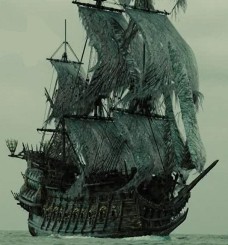
Perhaps the Flying Dutchman is merely a ghost story told by sailors, but it would seem strange that so many people, especially those in the Royal Navy, would report a similar ghost ship in the area where Van der Decken’s vessel sank.
For centuries, the Flying Dutchman has inspired novelists. Nicholas Monsarrat has already been mentioned. Captain Frederick Marryat, most famous for his classic novels The Children Of The New Forest and Mister Midshipman Easy, was also inspired to write The Phantom Ship. Like Monsarrat, Marryat wrote his fiction after experiencing the real ghost ship. In fact, it has been suggested that Captain Marryat invented the Van der Decken character. This is not possible, however. In any case, Marryat called his fictional captain Philip Vanderdecken, not Hendrick van der Decken.
Other famous authors inspired by the legend include Washington Irving (who called the Captain Ramhout van Dam) and Sir Walter Scott.
A movie was made about the Flying Dutchman which stared James Mason and Ava Gardner and it was very popular at the time. There is also an opera by Richard Wagner about the Dutchman.
Here comes the Flying Dutchman,
Comes fast through the hissing spray,
And proceeding by the tempest he heads for Table Bay.
With bird-like speed he’s borne along before the howling blast,
But he never can cast anchor there, for the Bay, alas, he’s passed.
– Traditional English Ballad












