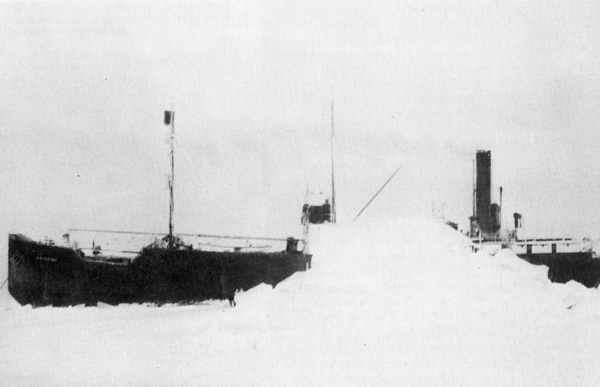
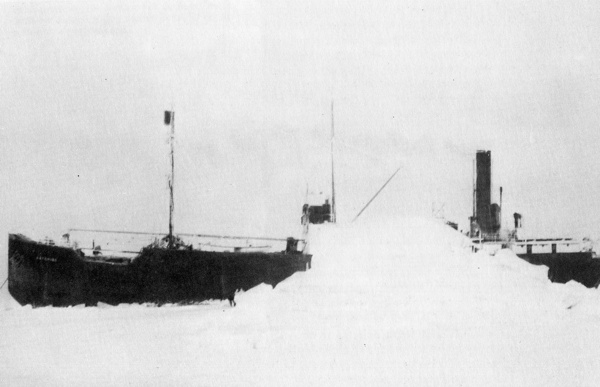
The Ghost Ship of the Arctic: The Unkillable Legend of the SS Baychimo
Some stories are just too strange to be true. And then there’s the story of the SS Baychimo. This isn’t just a ghost story whispered around a campfire. This is a documented, decade-spanning mystery of a 1,300-ton steel steamship that simply refused to die. A ship that was abandoned in the crushing Arctic ice, left for dead, only to embark on a phantom voyage that lasted for nearly 40 years. It sailed the frozen seas completely alone, a rusting specter seen by dozens, but caught by no one.
Forget what you think you know about maritime mysteries. The Baychimo makes the Mary Celeste look like a minor incident. How does a massive cargo vessel survive the world’s harshest environment for decades without a crew, without power, without a single soul at the helm? The official records stop in 1931. But the story… the real story… was just beginning.
The Final, Fateful Voyage
Our story starts not with a ghost, but with a workhorse. The SS Baychimo, built in Sweden in 1914, was a rugged, steel-hulled steamship owned by the legendary Hudson’s Bay Company. She wasn’t glamorous, but she was tough. For years, her job was to ply the unforgiving waters of the north, trading with Inuit communities along the coasts of Alaska and the Northwest Territories. Her cargo hold was a treasure chest of the north: animal pelts, provisions, and the goods that connected remote outposts to the rest of the world.
In the late summer of 1931, under the command of Captain John Cornwell, the Baychimo was doing what she did best. She had successfully completed her trading run, her hold packed to the brim with a priceless cargo of furs. The plan was simple: head south to Vancouver before the winter ice sealed the Arctic shut for the season.
But the Arctic doesn’t care about plans.
An Early Winter and a Closing Trap
Winter came early that year. Violently. On October 1, 1931, while off the coast near Barrow, Alaska, the weather turned. A sudden, vicious drop in temperature transformed the open water into a slushy, grasping monster. Within hours, the sea began to freeze solid around the ship. The Baychimo, for all her strength, was caught. She was stuck fast in the pack ice.
Captain Cornwell and his crew of 36 weren’t panicked. Not yet. They were experienced men of the north. This was a known risk. They would wait for a shift in the wind or a temporary thaw to break free.
And for a moment, it seemed like luck was on their side. The ice groaned, cracked, and a narrow channel opened. The Baychimo pushed forward, her engines straining. Freedom was in sight. But the hope was a cruel mirage. Just as quickly, the ice slammed shut again, this time with even greater force. The ship was trapped more securely than before. This happened again. And again. A torturous cycle of hope and despair. By the middle of October, the reality was grim. They weren’t going anywhere.
The Hudson’s Bay Company, fearing for the crew’s lives, sent in rescue planes. On October 15, two aircraft landed on the frozen sea, evacuating 22 of the men. But Captain Cornwell and 14 of his most seasoned crew members refused to leave. They would not abandon their ship. They built a small wooden shelter on the solid ice a short distance away, determined to wait out the winter and sail the Baychimo home when the spring thaw arrived.
The Vanishing
For over a month, the men held their lonely vigil. The ship stood silent and frozen, a dark shape against the endless white. They could hear the ice groaning and shifting around her hull, the constant, unnerving soundtrack of the Arctic winter.
Then came the blizzard.
On November 24, 1931, a storm of unimaginable fury descended upon them. A true whiteout. The wind screamed so loudly it was impossible to think, and the snow was so thick they couldn’t see their own hands in front of their faces. For two solid days, the men huddled in their small wooden shack, praying it would hold against the onslaught. Survival was their only thought.
When the storm finally broke, and the pale sun returned to the sky, they crawled out of their shelter to a world transformed. The landscape was a chaos of massive ice pressure ridges and freshly drifted snow. And where the Baychimo should have been… there was nothing. Just an empty expanse of white.
She was gone. The captain and his men searched, assuming the storm had broken the ship apart and sent her to the bottom. They found no wreckage, no oil slick, no sign of her at all. It was as if she had been plucked from the world. With a heavy heart, Captain Cornwell concluded the Baychimo was lost forever. The remaining men were airlifted to safety, carrying with them the story of the ship that vanished in a storm.
But that’s not where the story ends. It’s where the legend begins.
A Phantom on the Horizon: Four Decades of Sightings
A few days after the captain declared his ship lost, an Inuit seal hunter arrived in the men’s camp with astonishing news. He had seen the Baychimo. It was floating aimlessly about 45 miles (72 km) southwest of their position. The storm hadn’t sunk her; it had set her free.
Cornwell and his men found the ship. But she was in a bad way, battered by the ice and clearly unseaworthy. Believing she would surely sink in the next big storm, they salvaged the most valuable furs from her cargo hold and abandoned her for the final time. It was the last time any member of her crew would ever set foot on her decks.
It was a massive miscalculation.
The 1930s: The Ghost Becomes a Local Legend
The Baychimo didn’t sink. Instead, she began her solitary journey. For the next decade, sightings were shockingly frequent. She became a local celebrity, a ghost ship whispered about in every coastal village.
- March 1932: A dog-sledder named Leslie Melvin saw her drifting peacefully near the shore. He managed to travel to her by sled but was trapped by a sudden storm and had to be rescued.
- Summer 1933: A group of Inuit hunters, caught in a sudden storm, came across the Baychimo. They boarded the silent vessel and took shelter within her steel walls for 10 days until the storm passed. The ship that was once their trading partner had become their savior.
- July 1934: A group of explorers on a schooner spotted the ship. They managed to board her and were amazed to find her largely intact, with charts and logbooks still scattered about.
- September 1939: An attempt was made to salvage her. Captain Schooner Patsy, determined to claim the prize, managed to get a line on the Baychimo. But the ghost ship was uncooperative. The thick, unpredictable pack ice made a rescue impossible, and she was left to her wanderings once more.
The 1940s-1960s: The Lonely Wanderer
As the years turned into decades, the sightings became less frequent but more profound. The Baychimo was no longer just a derelict ship; she was a genuine myth of the sea. She was spotted by trading vessels, airplanes, and Inuit hunters who came to see her as a supernatural omen, a *iatag*, a ghost ship best left alone.
She drifted hundreds, possibly thousands, of miles. Each time she was spotted, she was farther from where she was last seen, a testament to the powerful, swirling currents of the Beaufort Sea. People would see her, report her position, and by the time anyone could mount an effort to reach her, she would be gone again, swallowed by the fog or the ice.
The last confirmed sighting of the SS Baychimo was in 1969. A group of Inuit hunters found her, for the final time, locked in the pack ice of the Chukchi Sea between Icy Cape and Point Barrow. She was a silent, rusting hulk, a lonely sentinel in a frozen wasteland. And then… she vanished for good.
The Great Unsolved Questions
For 38 years, a crewless ship drifted through the most hostile waters on Earth. How is that possible? This mystery has baffled mariners and scientists for decades, leading to a host of theories, from the scientific to the downright strange.
Theory 1: The Perfect Prison
The most widely accepted scientific theory centers on a massive ocean current called the **Beaufort Gyre**. Think of it as a gigantic, slow-motion whirlpool in the Arctic Ocean. This gyre moves in a huge, clockwise circle, carrying water and, more importantly, vast fields of sea ice along with it. It’s entirely possible the Baychimo was simply caught in this current.
For years, she could have just been a passenger on this immense, frozen carousel. The gyre would carry her in a massive loop, keeping her within the same general region of the Arctic for decades. The ice that trapped her also protected her, acting as a shield against the violent waves of the open sea that would have otherwise torn her apart.
Theory 2: The Unsinkable Hulk
Was there something special about the Baychimo herself? Her construction was exceptionally sturdy, designed to withstand the pressures of polar ice. When Captain Cornwell abandoned her, he took the most valuable—and heaviest—part of the cargo. This would have left the ship’s hull relatively empty and buoyant.
This buoyancy may have been the key. Instead of fighting the ice, the damaged but empty hull might have been lifted up *by* the ice when it pressed in, allowing her to “ride” on top of the crushing floes rather than being punctured by them. She may have been the perfect, accidental ice-rider, a design flaw that turned into an incredible survival mechanism.
Theory 3: A Ship With a Soul?
This is where the story drifts from science to folklore. To the Inuit who saw her materialize out of the fog, she was no ordinary ship. She was a ghost, a spirit of the sea. They told stories of her appearing and disappearing with uncanny timing, always just out of reach. Could there be something more to it?
Is it possible the ship developed a life of its own? A stubborn refusal to give up? Every attempt to board her, salvage her, or tie her down ended in failure, often thwarted by a sudden storm or a freak shift in the ice. It was as if the ship itself was actively resisting capture. It’s a chilling thought, one that can’t be proven, but one that persists in the whispers of the north.
The Hunt for the Baychimo Today
What happened after 1969? The silence is deafening. Did she finally succumb to the relentless pressure of the ice? Did she sink in a remote, uncharted patch of sea during a storm? Or is she still out there?
In 2006, the government of Alaska launched a project to find the “Ghost Ship of the Arctic.” The goal was to locate the Baychimo’s final resting place, whether on the seafloor or still encased in ice somewhere. But the Arctic is vast, and the search area is immense. The shifting seabed and constant ice cover make finding a shipwreck almost impossible. The search turned up nothing.
Modern internet theories have run wild. Some sleuths, using satellite imagery, claim to have found potential shapes on the sea floor that could be her. Others believe she’s not at the bottom of the sea at all, but entombed within a massive, permanent ice floe, a time capsule waiting to be discovered.
The fate of the SS Baychimo remains one of the greatest maritime mysteries of all time. She was a ship that was stronger in death than she ever was in life. A machine that outlived her masters and wrote her own, incredible story across the frozen top of the world.
So next time you look at a map of the vast, empty Arctic, remember the Baychimo. A ship that refused to die, sailing alone for nearly forty years. And ask yourself: could she still be out there, a ghost of rust and steel, waiting for the ice to release her for one final voyage?