The Leaky Roof That Could Expose The Ark of the Covenant
What if the greatest lost artifact in human history wasn’t lost at all? What if it was just… waiting? For centuries, treasure hunters, archaeologists, and nations have bled fortunes and lives into the sand, searching for the Ark of the Covenant. The golden chest that held the very words of God, a divine weapon, and a direct line to the heavens. It vanished from Jerusalem over 2,500 years ago, erased from the history books.
Or was it?
Forget dusty maps and forgotten tombs. The biggest clue, the most explosive claim in this ancient mystery, comes not from a new discovery, but from a problem plaguing homeowners everywhere. A leaky roof. In a small, unassuming chapel in the highlands of Ethiopia, rainwater is threatening to do what no army or explorer has ever managed: force the Ark of the Covenant out into the open.
This isn’t a movie plot. It’s a real-life situation unfolding in the holy city of Aksum, the spiritual heart of Ethiopia. The story goes that for millennia, the true Ark has been secretly guarded here. Not in a grand temple, but in a tiny, purpose-built structure called the Chapel of the Tablet. And now, that chapel is failing. Its roof is leaking. And the single, solitary monk tasked with protecting this sacred object may have no choice but to move it.
An event like that would be the first time it has seen the light of day in generations. The world is watching. The question is no longer *where* is the Ark. The question is… are we about to see it?
Aksum’s Secret: A Legend Hiding in Plain Sight
To understand the magnitude of this claim, you have to understand Aksum. This isn’t just any city. It was once the center of a global trading empire, a powerhouse that rivaled Rome and Persia. Today, it’s a city of whispers and faith, dominated by towering ancient stelae and the sprawling complex of St. Mary of Zion church.
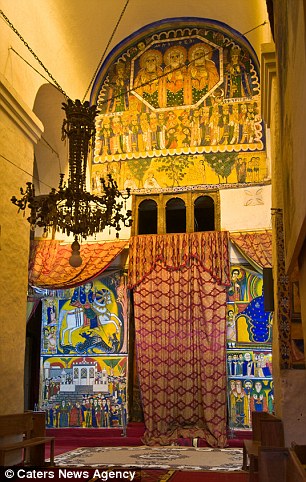
Adjacent to the main church, almost an afterthought, stands the Chapel of the Tablet. It’s a modest, almost bizarre-looking building from the 1960s, surrounded by a perimeter of spiked iron railings. It feels less like a holy place and more like a small, spiritual Fort Knox. And for good reason. According to the Ethiopian Orthodox Tewahedo Church, this little building houses the single most powerful and sacred object on Earth.
The rules are absolute. No one is allowed to see it. Ever. The only exception is one man: the Guardian of the Ark. He is a specially chosen, elderly monk who dedicates his entire existence to this sacred duty. He never leaves the chapel grounds. He eats, sleeps, and prays within a few feet of what he believes is the chest that holds the broken tablets of the Ten Commandments. When he dies, he names his successor with his final breath. For his entire life, he alone gazes upon the Ark. A life of total isolation, in service to a secret.
But how did it get here? Why Ethiopia? To answer that, you have to rewind the tape of history, back to the age of kings and legends.
Deep Dive: The Queen of Sheba and the Heist of the Millennium
The official history taught in schools tells us the Ark was kept in Solomon’s Temple in Jerusalem until the Babylonians, led by Nebuchadnezzar II, sacked the city in 587 BC. After that… poof. It vanishes. Historians assume it was either destroyed or carried off as loot and melted down.
But Ethiopia has a completely different story. A story so epic it forms the foundation of their national and religious identity. It’s all written down in their sacred text, the Kebra Nagast (“The Glory of Kings”).
The story begins with a legendary romance. The beautiful and intelligent Queen of Sheba, known in Ethiopia as Makeda, hears tales of the wisdom of King Solomon in Jerusalem. Intrigued, she journeys to his court with a massive caravan of gifts to test him with riddles. Solomon is captivated not just by her mind, but by her beauty. A relationship blossoms, and when she returns to her kingdom, she is carrying Solomon’s child.
That child was named Menelik I. He would become the first Emperor of Ethiopia. As a young man, Menelik traveled to Jerusalem to meet his famous father. Solomon welcomed him with open arms, educated him, and begged him to stay and rule after him. But Menelik was determined to return to his mother’s people. As a parting gift, Solomon commanded his priests to make a perfect replica of the Ark of the Covenant for Menelik to take back with him, so his people could have a piece of Zion’s holiness.
And here’s where the story takes a wild turn.
According to the Kebra Nagast, the son of the high priest, Azariah, had a dream where God told him it was the divine will for the *real* Ark to go to Ethiopia. So, in an act of pious theft, Azariah and the other sons of the Israelite elders who were tasked with accompanying Menelik, switched the replica with the real thing. They smuggled the genuine Ark of the Covenant out of Solomon’s Temple, right under the king’s nose. Menelik, depending on the version of the story you read, was either in on the plan or discovered it later and accepted it as God’s will. They traveled south, protected by the Ark’s immense power, all the way to Ethiopia. And there, the legend says, it has remained ever since.
More Than Just a Golden Box
It’s easy to get lost in the adventure, but what exactly *is* this object they were so desperate to possess? The Bible, in the Book of Exodus, gives startlingly specific instructions for its construction. It wasn’t just a container.
Think of it as part divine radio, part weapon of mass destruction, and part holy vessel.
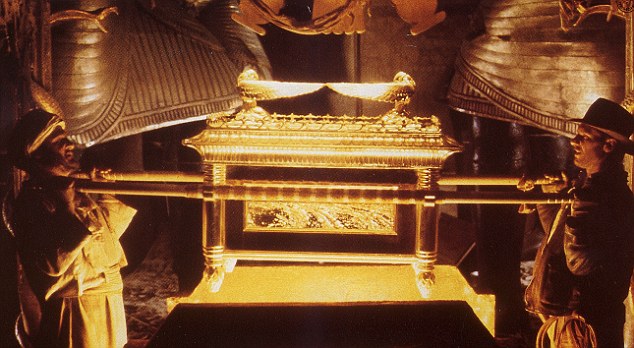
- The Construction: It was to be built from acacia wood, a dense and durable desert timber, and then completely overlaid, inside and out, with pure gold. It was roughly 4 feet long, 2.5 feet wide, and 2.5 feet high.
- The Contents: Inside were the two stone tablets inscribed with the Ten Commandments, a pot of manna (the mysterious food that sustained the Israelites in the desert), and the rod of Aaron that miraculously blossomed.
- The Mercy Seat: The lid, known as the Mercy Seat, was the most important part. It was solid gold and featured two golden Cherubim—angelic, winged figures—facing each other, their wings outstretched over the chest. It was said that between these two angels, the very presence of God would manifest.
Its power was legendary and terrifying. The walls of Jericho crumbled before it. The Philistines captured it once, and it inflicted plagues of tumors upon them until they sent it back in a panic. In one famous incident, a man named Uzzah reached out to steady the Ark when the ox cart carrying it stumbled. The moment his hand touched the gold, he was struck dead. You didn’t mess with the Ark.
This is the object Ethiopians claim is sitting in that tiny, fenced-off chapel.
A Crisis of Faith and Infrastructure
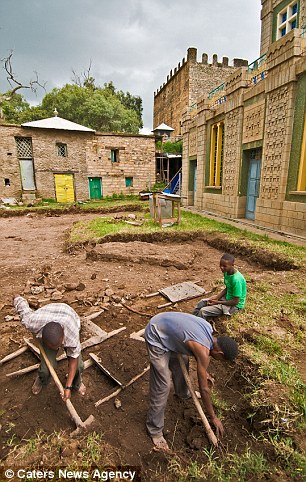
Which brings us back to the rain. Photographer Tim Makins, traveling through Ethiopia, was one of the first Westerners to notice something was wrong. He saw the chapel, a building he’d visited before, now partially covered by a crude tarpaulin. He saw workmen clearing a patch of land right next to it.

When he started asking questions, the answers he got sent a shockwave through the communities that follow these mysteries. The chapel, built by Emperor Haile Selassie in the 1960s, was poorly constructed. The roof had failed. Water was getting in, threatening the structural integrity of the building and, presumably, its priceless, holy contents.
The plan, he was told, was to build a *new* temporary chapel nearby. Then, in a sacred procession, the Guardian would move the Ark from the old, leaking building to the new, safe one while repairs were made. This is not a simple renovation. This is an event of biblical proportions for believers.
For the first time in over 50 years, the Ark would have to be moved in the open. What would that look like? Would it be shrouded in cloth? Would the Guardian carry it alone? The potential for the world to catch even a fleeting glimpse, to capture a photograph that could change history, is immense.

Skeptics, Believers, and the Man in the Middle
Of course, the mainstream academic and archaeological worlds are deeply skeptical. Their argument is simple: show us the proof. Without independent verification, without carbon dating, without a single photograph, the story of the Kebra Nagast remains just that—a story. A foundational myth, not historical fact.
They point out that dozens of churches across Europe claimed to have holy relics, like pieces of the True Cross, that were later proven to be fakes. Why should Aksum be any different? Other theories place the Ark’s final resting place under the Temple Mount in Jerusalem, hidden away by priests before the Babylonians arrived. Or maybe it was taken to Egypt by a rogue Jewish faction. Or, most likely, it was simply destroyed.
But the Ethiopian claim has a powerful persistence, one that was brought to a global audience by writer Graham Hancock in his bestselling book The Sign and the Seal. He spent years investigating the legend, concluding that it was not only possible, but probable.
The believers are unwavering. For them, the lack of evidence *is* the evidence. The object is too holy, too powerful to be subjected to scientific tests. Its sanctity is protected by faith, not by proof. To even ask to see it is a sign of disrespect.
And caught in the middle is the Guardian. A man whose name we may never know, living a life of utter devotion that is almost impossible for the modern mind to comprehend. He is the final link in an unbroken chain of guardians stretching back, they say, for thousands of years. He holds the truth. He knows what sits inside that chapel. Is it a medieval replica? An ancient, but man-made, artifact? Or is it the real thing—a direct link to the dawn of faith, humming with a power we have long forgotten?
The leaky roof is forcing the issue. This isn’t about an Indiana Jones-style adventure anymore. It’s about a clash between ancient faith and modern reality. The rains over Aksum care nothing for legend. Water seeps through stone and concrete, indifferent to the holiness of what lies beneath. And in its slow, steady drip, it may finally force a secret held for three thousand years out into the harsh light of the 21st century.
Will they move it? Will we see it? Or will the secret of the Ark of the Covenant remain exactly that… a secret, waiting for the next storm.