Sunday, June 7, 2026
HomeWeird WorldPhoto GalleriesSwitzerland’s Kaufdorf Vehicle Graveyard

Switzerland’s Kaufdorf Vehicle Graveyard

The Lost Car Forest of Kaufdorf: Switzerland’s Ghost Fleet and the Conspiracy It Left Behind

Some places shouldn’t exist. They feel like glitches in the matrix, pockets of time left to decay in a world obsessed with moving forward. Hidden in a quiet Swiss valley, there was once such a place. A forest not of trees, but of steel, chrome, and forgotten dreams.

They called it the Kaufdorf car graveyard.

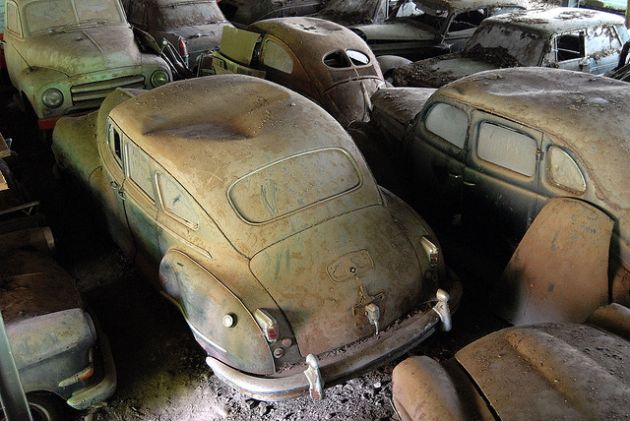
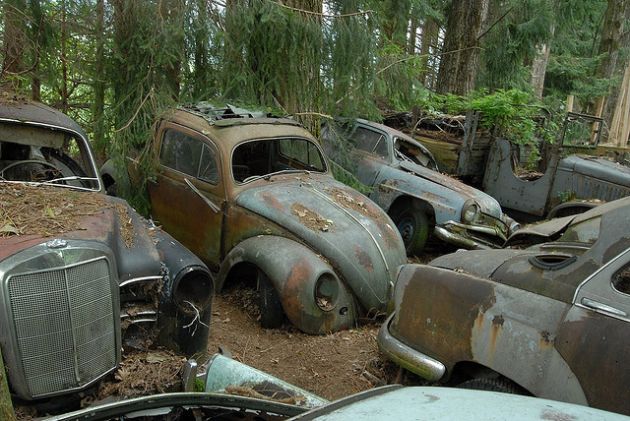
But it wasn’t a graveyard. That’s too simple. Too neat. This was a time capsule. A mechanical Pompeii where hundreds of vintage cars were frozen in their final moments, slowly being reclaimed by the earth itself. And like all great mysteries, its story is far stranger, and far more controversial, than you could ever imagine.

Its sudden, state-ordered destruction left a void. A scar on the landscape. But it also ignited a firestorm of questions that still burn on the dark corners of the internet today. Was this just a junkyard? Or was it something else entirely?

kaufdorf-car-graveyard-switzerland

The Official Story: One Man’s Hobby or a Secret Obsession?

Every legend has an official story, and Kaufdorf’s begins with a man named Walter Messerli. The year was 1933. Europe was a powder keg, the world was changing, and Messerli started a simple business on his family’s property: a vehicle scrapyard. The idea was practical. He’d acquire old cars, strip them for valuable parts, and sell them on. Simple. Profitable.

But then something changed.

Messerli didn’t scrap the husks. After he pulled the engines, the transmissions, the bits and pieces he could sell, he didn’t crush the bodies. He didn’t send them to a smelter. Instead, he towed the silent, empty shells to a patch of forest on his land and just… left them. One car became two. Two became a dozen. A dozen became a hundred.

He retired in the 1970s, and his son took over. The son, respecting his father’s strange tradition, did the same. He left the cars where they lay. He even added to the collection. The forest grew thicker, the rows of cars grew longer, and the legend of the “autofriedhof” began to spread.

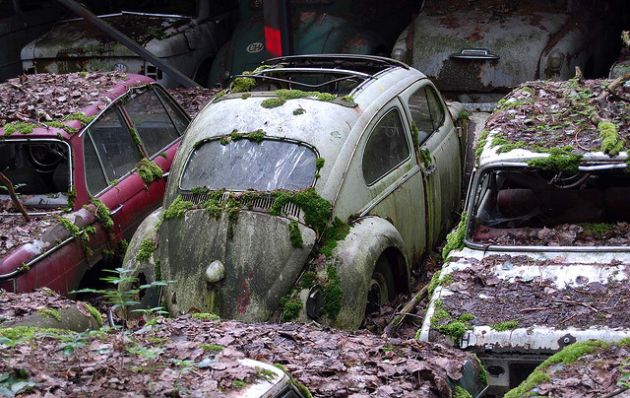
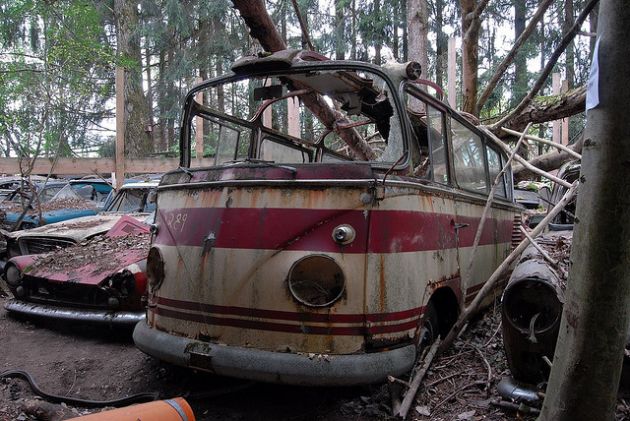
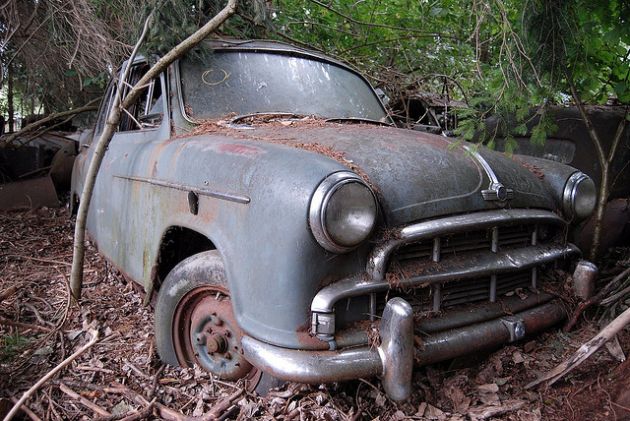
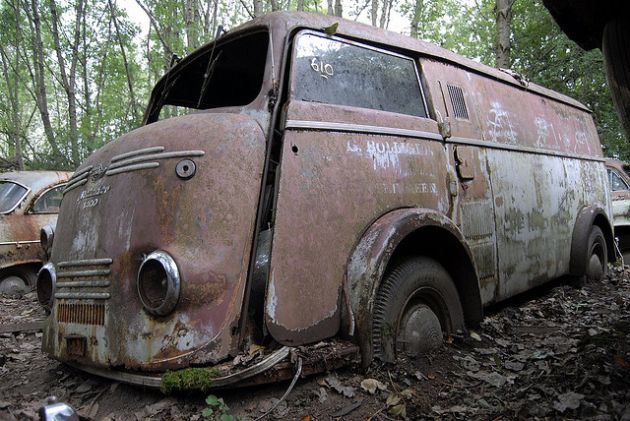
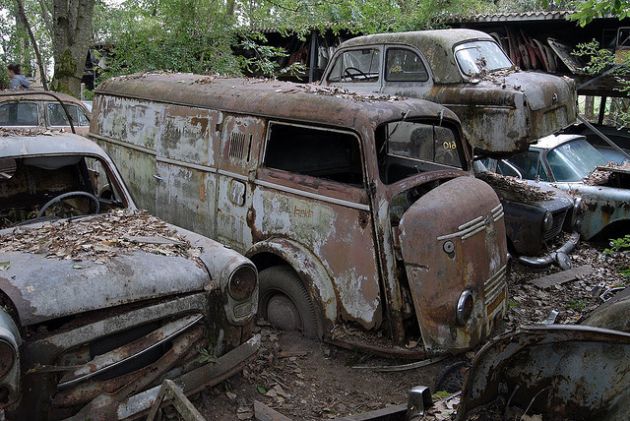
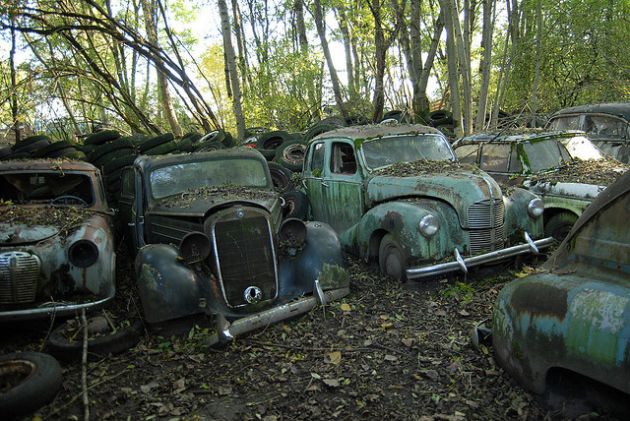
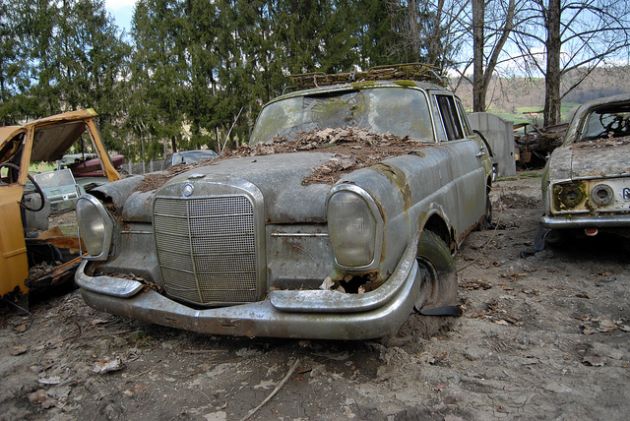
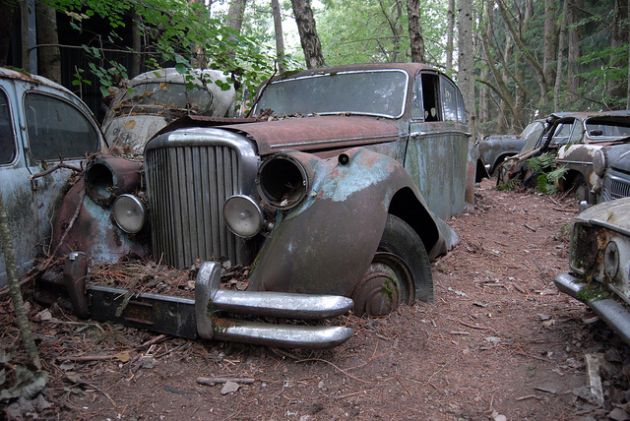
For decades, it was a local curiosity. A spectacular and melancholy sight. A place where photographers, artists, and classic car fans would make a pilgrimage to witness a scene straight out of a post-apocalyptic film. They saw a treasure trove of automotive history, spanning from the 1930s all the way through the 1970s, surrendering to nature’s slow, persistent embrace.

kaufdorf-car-graveyard-switzerland-17

Think about that. A small Swiss municipality, Kaufdorf, with a population barely topping 1,000 people. And yet, it was home to nearly as many dead cars. A one-to-one ratio of people to automotive ghosts.

Deep Dive: Walking Through the Forest of Rust

What was it like to actually be there? Imagine stepping out of your modern car and into a different dimension. The air is thick with the smell of damp earth, decaying leaves, and the faint, metallic tang of rust. There are no straight lines here. Everything is curved, bent, and collapsing.

You follow a faint path into the woods, and then you see it.

kaufdorf-car-graveyard-switzerland-18

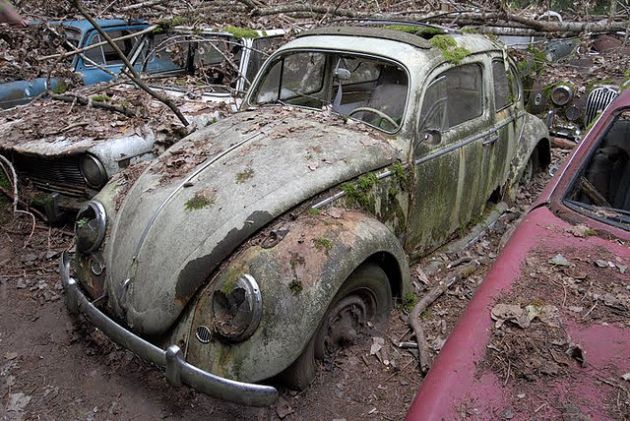
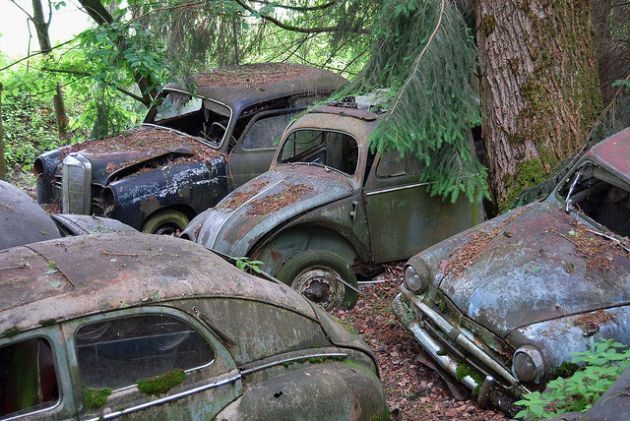
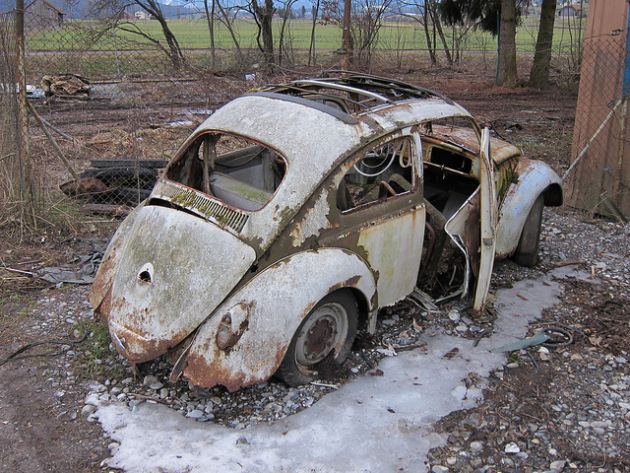
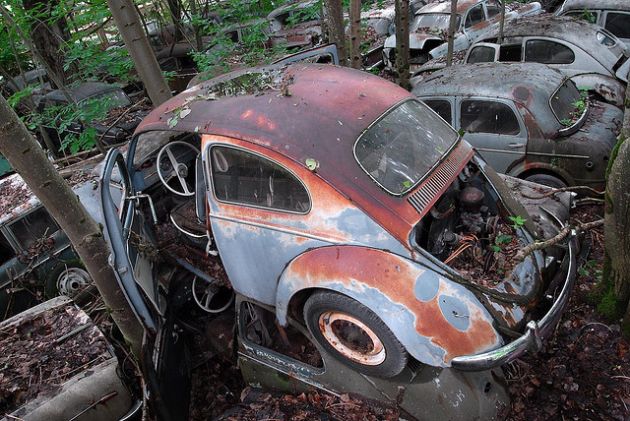
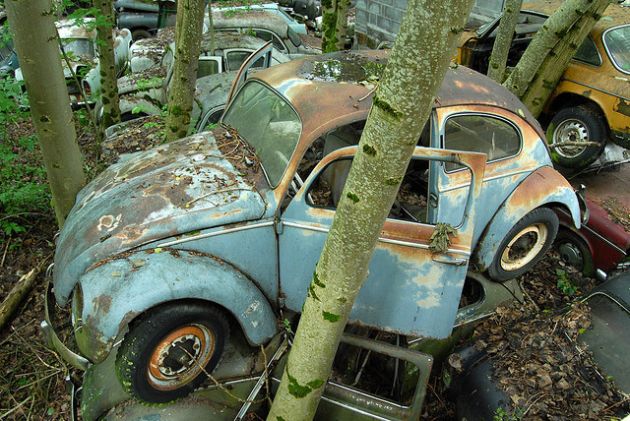
The first car is an old Volkswagen Beetle, its iconic shape still recognizable, but its floor has completely rotted away, allowing a small tree to grow right up through the cabin where a passenger’s feet would have been. Its headlights are vacant, empty eyes staring into nothing.

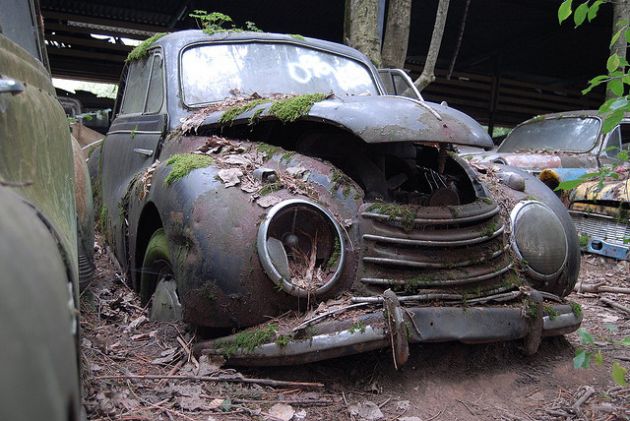
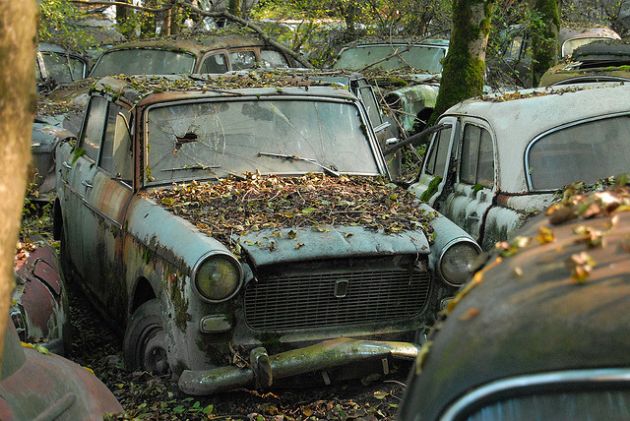
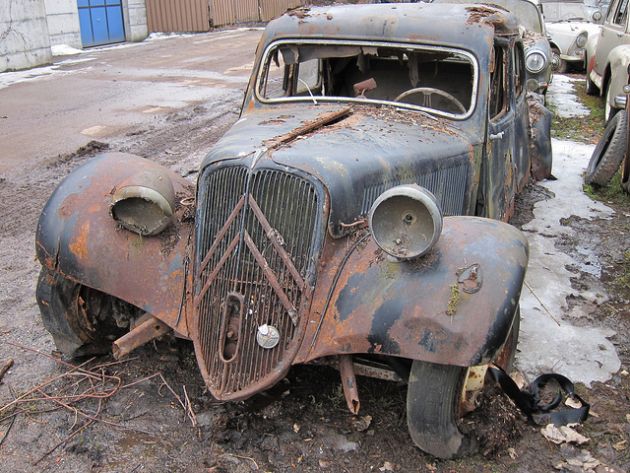
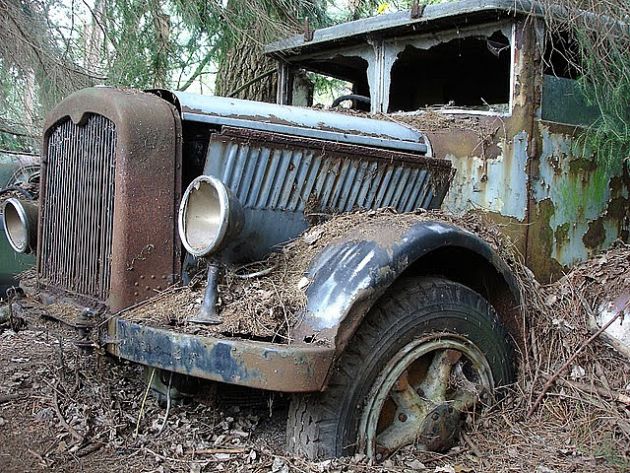
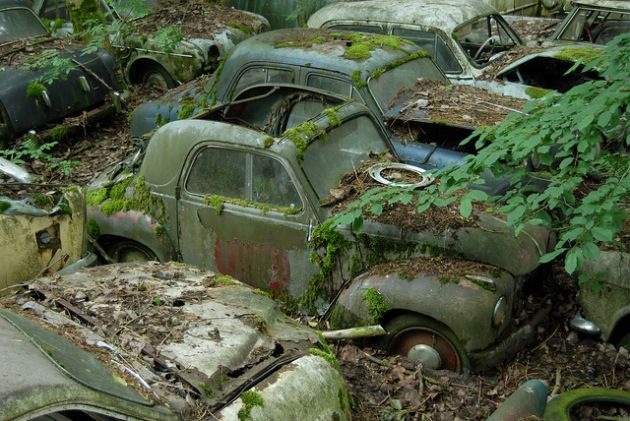
You push deeper. Rows upon rows of them. A once-proud Cadillac, its tail fins drooping like wilted leaves. A tiny Fiat 500, covered in a thick blanket of moss that has become its new upholstery. An old Citroën, its revolutionary suspension long since failed, causing its body to slump to the ground in a final, exhausted sigh.

kaufdorf-car-graveyard-switzerland-2

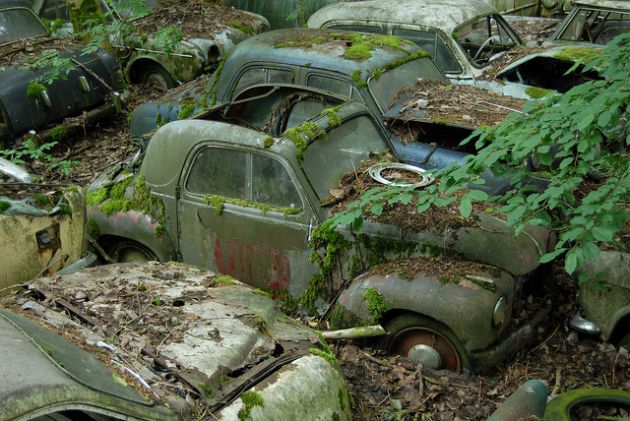
Vines snake through engine bays like new wiring. Roots buckle fenders and push through grilles. Windshields are spiderwebbed with cracks, framing perfect little scenes of decay. It was a silent, beautiful chaos. A symphony of entropy conducted by Mother Nature herself.

kaufdorf-car-graveyard-switzerland-3

You could spend days in there and not see everything. Each car was a story without an ending. Who drove this? Where did they go? What was the last song that played on its radio? The questions hang in the air, unanswered, absorbed by the rust and the moss.

kaufdorf-car-graveyard-switzerland-5

The Conspiracy Corner: Was Kaufdorf Hiding a Darker Secret?

This is where the official story starts to feel thin. Why would someone hoard hundreds of car bodies for over 75 years? Was it just sentimentality? Or was Messerli’s scrapyard a cover for something much bigger? The timing, the location, the sheer scale of it… it all feels… off.

Theory 1: The WWII Ghost Garage

Let’s look at the start date again. 1933. Tensions in Europe were escalating at a terrifying pace. Switzerland, famously, remained neutral. This made it a sanctuary. A place for people, money, art… and maybe, cars.

The theory is simple and chilling. As war became inevitable, wealthy individuals and persecuted families across Europe needed to escape. Many fled to or through Switzerland. But what did they do with their valuable assets, like a luxury Mercedes-Benz, a Bugatti, or an Alfa Romeo? You couldn’t exactly drive it across a guarded border unnoticed.

What if Walter Messerli’s yard wasn’t just for scrap? What if it was a discreet, long-term storage facility? A place where you could pay a man to hide your car deep in the woods, with the promise of retrieving it after the war. The perfect cover. Who would ever look for a priceless automobile in a remote Swiss junkyard?

But then… the owners never came back. Victims of the war, lost to history, their four-wheeled treasures waiting in a forest for a reunion that would never happen. Messerli, and later his son, perhaps felt a duty to guard these sleeping giants. It wasn’t a junkyard; it was a memorial. A promise he couldn’t break. This theory turns a strange hobby into a deeply human, and tragic, story.

kaufdorf-car-graveyard-switzerland-6

Theory 2: The Accidental Artist

Another, more philosophical theory has gained traction online. What if Walter Messerli was an artist who didn’t even know it? Perhaps he saw something we didn’t. He saw the beauty in decay. He understood that placing these man-made objects of power and progress into a forest would create a stunning, long-form piece of performance art.

He was creating a dialogue between technology and nature. A commentary on time, memory, and the inevitable fact that everything we build will one day return to dust. He wasn’t a junkyard owner. He was a pioneer of land art, decades ahead of his time. He didn’t leave behind a collection of junk; he left behind a masterpiece. His son simply became the curator of this sprawling, outdoor museum of rust.

kaufdorf-car-graveyard-switzerland-4

The Chatillon Connection: A Pattern of Ghosts

Kaufdorf isn’t an isolated case. Deep in the forests of southern Belgium lies another, equally famous car cemetery: Chatillon. For years, the legend surrounding Chatillon was that it was the abandoned fleet of American GIs after World War II. The story went that they couldn’t afford to ship their personal cars home, so they drove them deep into the woods, hiding them with the hope of one day returning.

That story has been largely debunked (it was more likely a post-war garage, similar to Kaufdorf). But the existence of multiple, massive car graveyards from the same era begs the question: is this a pattern? Were these simply scrapyards run by eccentric owners? Or were they part of a forgotten network, places across Europe that served a secret purpose during one of history’s darkest chapters? It’s a tantalizing thought. Two data points might just be a coincidence. Three or four? That’s a conspiracy.

kaufdorf-car-graveyard-switzerland-7

kaufdorf-car-graveyard-switzerland-8

The End of an Era: Erased from the Map

No matter what Kaufdorf was, its days were numbered. By the 2000s, the “art installation” had become a problem. Environmental groups raised concerns about oil, gasoline, and battery acid leaking into the soil. The local government saw it as an unlicensed, unregulated junkyard and a blight on their pristine Swiss countryside.

The battle was long and emotional. Preservationists and car lovers from around the world campaigned to have Kaufdorf declared a cultural heritage site. A museum. They saw its unique, strange beauty. But the government saw only liability.

In 2009, the final nail was hammered into the coffin. A court order was issued. Everything had to go.

kaufdorf-car-graveyard-switzerland-10

An auction was held. It was a somber affair. Collectors and scavengers descended on the forest, picking over the metal bones. Some cars, about 200 of the most complete specimens, were saved. They were hauled out of the mud and sold to new owners, destined for restoration and a second life. A few lucky ghosts would ride again.

kaufdorf-car-graveyard-switzerland-9

But hundreds more were not so fortunate.

The ones that were too far gone, too consumed by the earth, too fragile to move, met a far grimmer fate. The bulldozers moved in. The crunch of metal echoed through the valley as decades of history were unceremoniously scooped up and fed to the shredder.

kaufdorf-car-graveyard-switzerland-12

The forest was cleared. The land was remediated. And just like that, the Kaufdorf car graveyard was gone. Wiped clean. Erased as if it had never existed at all.

kaufdorf-car-graveyard-switzerland-13

kaufdorf-car-graveyard-switzerland-14

Kaufdorf’s Digital Ghost and the Questions That Remain

But you can’t truly erase something from history in the digital age. The physical place may be gone, but its ghost lives on. Kaufdorf is now a legend among urban explorers and fans of abandoned places. The thousands of photos and hours of YouTube footage are all we have left. They are our only window into that lost world.

kaufdorf-car-graveyard-switzerland-15

And the destruction has only fueled the speculation. Did the government order the cleanup to hide something? Was there evidence in that forest—of the WWII connection, or something else—that they wanted buried for good? Some online forums whisper that the “official” auction was a sham, and that certain well-connected collectors were allowed to secretly remove the most valuable, historically significant cars before the public was ever allowed in.

kaufdorf-car-graveyard-switzerland-16

We will never know for sure. The Messerli family remained tight-lipped to the end. The physical evidence is gone. All that remains is the eerie silence of a Swiss forest, and these haunting photographs of what once was.

kaufdorf-car-graveyard-switzerland-19

Kaufdorf was a beautiful, heartbreaking anomaly. A place that defied easy explanation. Whether it was a junkyard, a hidden wartime cache, a massive art project, or just the result of one family’s strange passion, its destruction was a loss. It reminds us how quickly the weird, wonderful, and mysterious corners of our world can be sanitized, regulated, and paved over.

kaufdorf-car-graveyard-switzerland-20

It makes you wonder, doesn’t it?

What other secrets are out there, quietly rusting away in a forgotten forest, waiting to be discovered… or to be erased forever?

kaufdorf-car-graveyard-switzerland-21

Amit Ghosh
Amit Ghoshhttps://coolinterestingnews.com
Aloha, I'm Amit Ghosh, a web entrepreneur and avid blogger. Bitten by entrepreneurial bug, I got kicked out from college and ended up being millionaire and running a digital media company named Aeron7 headquartered at Lithuania.
RELATED ARTICLES
- Advertisment -

Most Popular

Recent Comments

Warren Pan Abbott on The legend of the Devil Monkey !
chris davies on The McPherson Tape Mystery
Reed Reedly on ET has Internet!
Bea Houseoffashion on Proof Of Time Travellers – Gallery
Marcus2012 on ET has Internet!
Reed Reedly on ET has Internet!
LaughsAtConspiracyNuts on The 9/11 Conspiracy – Myths and Facts
Alex Sliverman on Did the ancients fly?
Doctor Wholigan on Time Traveler in 1938 film
chris davies on The McPherson Tape Mystery
Archie1954 on 10 secret UFO hideouts
chris davies on Ghosts of flight 401
Marcus2012 on ET has Internet!
jason Macdonald on Proof of Time Travel? – China
chris davies on Long-Lost Pyramids Found?
Reed Reedly on ET has Internet!
Milkman on Connected Universe
Tenmiles on Baigong Pipes Mystery
Simon Foster on Sirius – The Documentary
From the 1st April on 2013 – Alien Contact date ?
SkyWatcher on Is ET ignoring us?
I Come From The Future on Obama to make UFO Alien disclouser soon ?
Just another person on 2013 – Alien Contact date ?
Malcolm Windowcleaner on The strange case of Rudolph Fentz
Mason Servio on Strange Things on Mars
Marke Wisdom Seeker on What will we find as arctic melts?
Andrea A Elisabeth Levyne on Aliens Captured in Varginha, Brazil
Mitch Grouyeki on Amazing Space Shuttle pictures