The Earth is Opening Up: Are These Sinkholes a Warning?
It happens without warning.
One moment, you’re driving down a familiar street, the same one you take to work every single day. The next, the world falls out from under you. The asphalt groans, cracks, and then shatters like cheap glass. A monstrous, hungry void opens in the Earth, a gaping maw where solid ground used to be.
This isn’t the opening scene of a Hollywood blockbuster. This is the terrifying reality for cities across the globe, and the evidence is piling up that something is profoundly wrong with the ground beneath our feet.

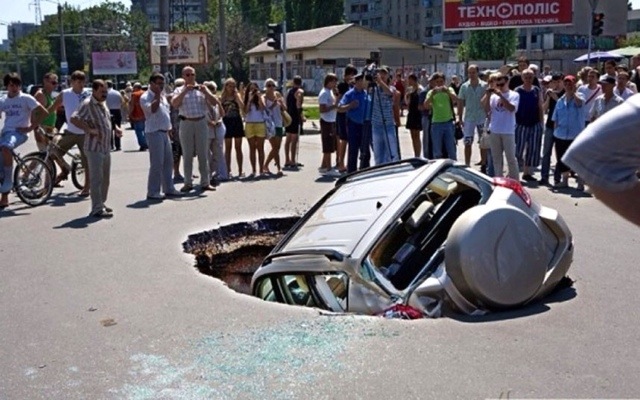
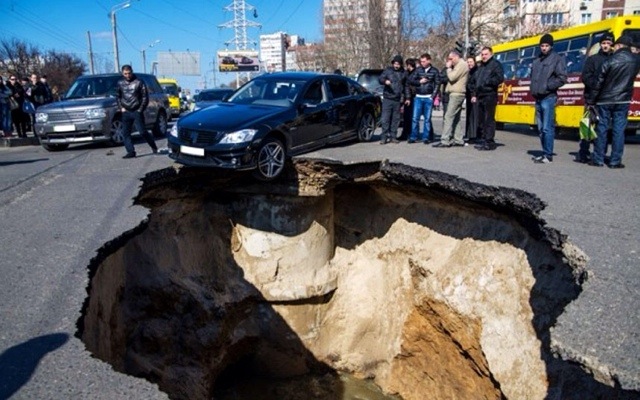
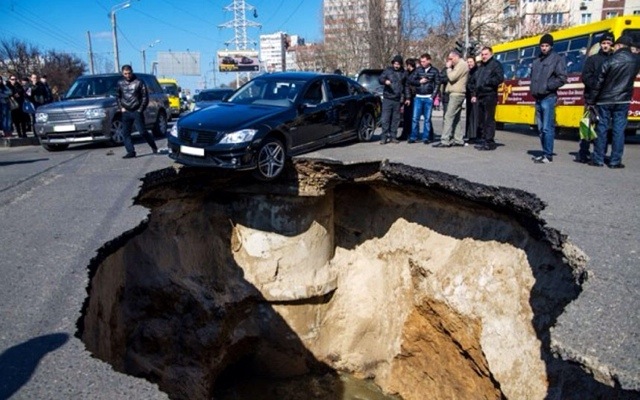
Look at that picture. Just look at it. A city bus, a behemoth of steel and glass weighing tens of tons, tilted into the abyss like a discarded child’s toy. This isn’t just a pothole. This is a catastrophic failure of the very foundation of a modern city.
The official story is always the same. It’s predictable. Tidy. They tell you it’s aging infrastructure. Broken water mains. Unusual weather patterns. In colder climates, they blame the relentless cycle of freezing and thawing, a process that supposedly turns the subterranean world into a slushy, unstable mess.
But is that all there is to it? Are we really supposed to believe that a few leaky pipes and some cold weather are capable of swallowing entire city blocks? Or is the “official story” just a convenient blanket to throw over a much deeper, more disturbing truth?
The Official Excuse: Water and Ice
Let’s entertain their explanation for a moment. In cities that experience brutal winters, like many in Siberia where these events are becoming shockingly common, temperatures can plummet to -20 Celsius and beyond. Water is a powerful force of nature. When it seeps into tiny cracks in the soil and under the pavement, it freezes.
And when water freezes, it expands. By about 9%.
This expansion acts like millions of tiny jacks, pushing, straining, and breaking apart the soil and rock from within. Then, when a thaw comes, the ice melts, and the water flows away, leaving behind a larger void than before. Repeat this cycle thousands of times over a single winter. Day after day. Night after night. The ground beneath the heavy, vibrating streets gets weaker. Softer. It becomes a geological sponge, riddled with cavities.
Then all it takes is the weight of one bus. One truck. One unlucky car.

The pressure becomes too much. The fragile crust gives way, and gravity does the rest. It’s a simple, logical explanation. Almost too simple.
What If It’s Not Just Water? Uncovering a Deeper Secret
This is where we peel back the layers. The simple explanation of erosion and weather just doesn’t account for the sheer scale and increasing frequency of these collapses. When you start connecting the dots, a different picture begins to emerge—a picture that involves forgotten histories, corporate greed, and perhaps even forces we don’t yet understand.
Deep Dive: The Ghosts of Soviet Engineering
Many of these dramatic collapses are happening in cities within the former Soviet Union. During the Cold War, the USSR embarked on some of the most ambitious, and secretive, construction projects in human history. They didn’t just build on the surface; they burrowed deep into the Earth.
We all know about the secret “closed cities” where nuclear research took place. But what about the secret tunnels? The rumored duplicate subway systems, like Moscow’s “Metro-2,” built to evacuate the top brass in case of nuclear war? What about the vast underground bunkers, storage facilities, and command centers that were built and then, after the collapse of the Soviet Union, simply… abandoned?
The blueprints were classified, lost, or destroyed. The memories faded. The entrances were sealed and built over. Now, decades later, these colossal underground structures are slowly decaying. Steel supports rust away. Concrete crumbles. The earth above, no longer supported by masterful engineering, is beginning to sag.
Is it possible that these aren’t random sinkholes at all? Could they be the systematic collapse of a forgotten, secret underground world? Is that bus falling into a water-eroded cavern, or is it crashing through the roof of a forgotten Cold War command post?

The city isn’t just disappearing. It’s falling into its own secret history.
Think about it. The authorities would never admit this. Admitting that vast, unmapped tunnels exist beneath their citizens would cause a panic. It would mean every road, every building, every school is potentially sitting on top of a ticking time bomb. It’s far easier to blame the weather.
The Planet’s Fever: Is the Permafrost Crying for Help?
Let’s zoom out. Another chilling factor is at play, one that scientists talk about in hushed tones but that the mainstream media often ignores. The permafrost.
In vast regions of Siberia and other northern territories, the ground has been frozen solid for thousands of years. This “permafrost” is like a type of natural concrete, a stable foundation upon which entire cities were built. But it’s not permanent anymore.
The planet is warming. The permafrost is thawing.
What was once solid, stable ground is turning into a soupy, unpredictable mush. The ground compacts, shifts, and sinks. Buildings are cracking. Roads are buckling. And massive holes, called thermokarsts, are opening up across the landscape, some of them miles wide.
The “official story” of seasonal freeze-thaw is a convenient smokescreen for this much larger, more terrifying reality. This isn’t just a local plumbing problem. This could be the early stage of a planetary-scale collapse. The Earth is literally losing its structural integrity in these regions. The ground is getting sick. And the sinkholes swallowing cars and trucks? They are the open sores.

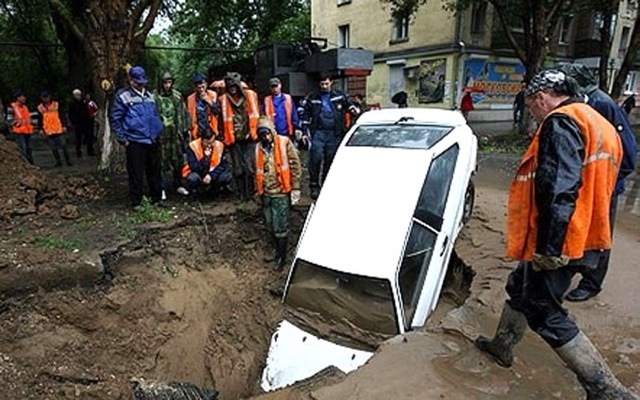
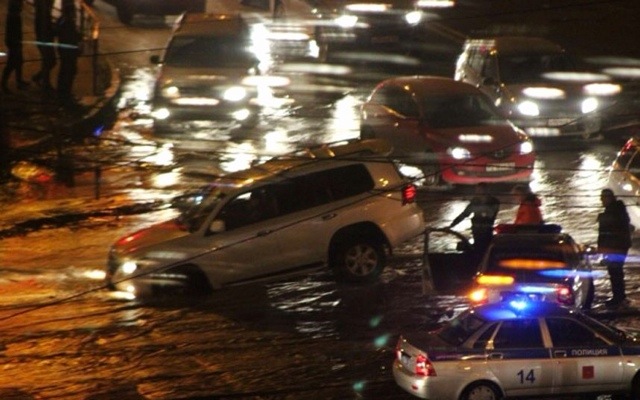
Even the emergency services, the very people sent to help, are not safe. An ambulance, a fire truck—their weight is more than enough to trigger a collapse on this newly unstable ground. The system is breaking down, unable to even respond to its own failures.
The Sound Before the Silence: Modern Internet Theories
This is where it gets really strange. In the age of smartphones, nothing goes undocumented. And a fascinating, disturbing pattern is emerging from eyewitnesses and survivors of these collapses. They talk about the sounds.
Forums on Reddit and Telegram channels are filled with accounts. People describe hearing strange, low-frequency hums in the days leading up to a collapse. Others report deep, groaning sounds coming from the ground itself, like a sleeping giant turning over in its sleep. These accounts are often dismissed as imagination or the sound of settling pipes.
But what if they’re not?
Viral videos have circulated showing strange metallic screeches or deep, resonant “booms” in the same areas where sinkholes later appear. Some call them “sky trumpets” or “earth groans.” Scientists have no solid explanation. Could this be the sound of massive, ancient structures deep underground finally giving way? The screech of rusting steel supports, miles long, finally snapping under unimaginable pressure? Or is it the sound of the permafrost itself cracking apart?
The narrative is that these things happen in an instant. But the digital breadcrumbs suggest otherwise. The Earth may be giving us a warning. A sound. A vibration. A low hum you feel in your bones. But we are too busy, too distracted, to listen.

The authorities tell us it’s just the cold. Just some water. But does water make the ground scream? Does it make the earth hum a funeral dirge for the streets above?
A Recurring Nightmare with a Human Cost
This isn’t a new phenomenon. It’s an accelerating one. The original report mentioned this wasn’t the first time the city had “suffered from crumbling tarmac.” That’s the understatement of the century. This isn’t crumbling. This is obliteration.
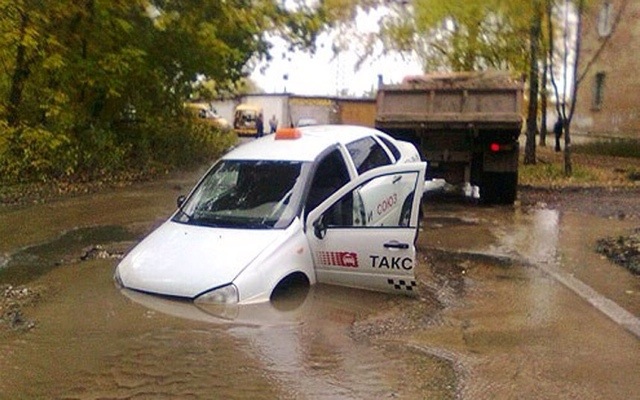
They admit it’s a yearly problem. Every spring, as the meltwater floods the weakened ground, the city plays a terrifying game of Russian Roulette. Which street will collapse next? Which car will be swallowed?

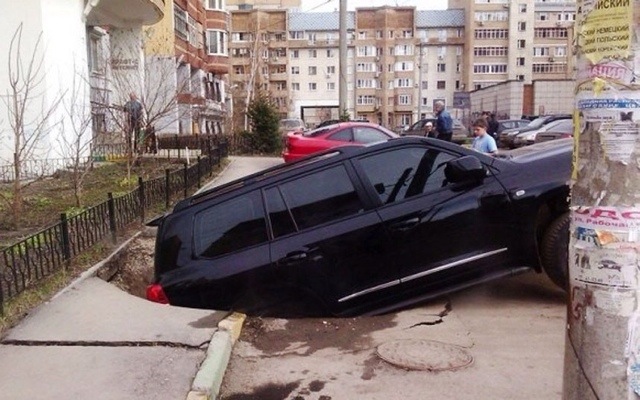
And it’s not a victimless crime. The post chillingly states that three years prior, “the problem took another life after a driver’s car disappeared under a pavement.”
Disappeared. Not crashed. Disappeared.
Imagine that for a second. The final moments. The sudden, violent lurch as the road beneath your tires vanishes. The feeling of weightlessness, followed by a crushing, brutal impact in the dark, cold earth. A tomb of asphalt and mud. This is the real price of the “official story.” The real cost of ignoring the warnings.
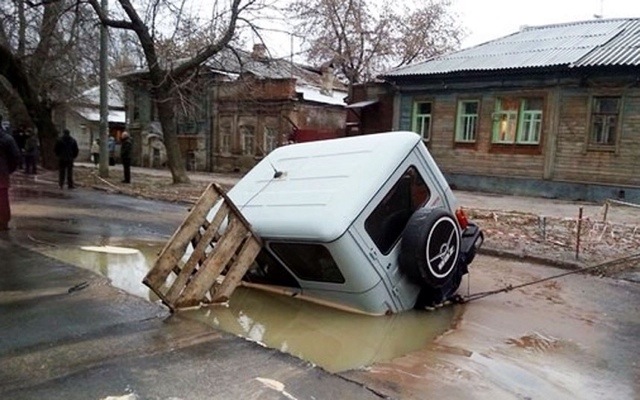
When you look at these images, you’re not just seeing broken roads and trapped vehicles. You’re seeing a fundamental betrayal. The concrete skin of civilization, the thing we trust to be solid and dependable, is proving to be a fragile illusion. And the people in charge are either unable, or unwilling, to tell us the real reason why.

So, what’s the truth? Is it just bad plumbing in a cold city? Or are we witnessing the surface-level symptoms of a much deeper sickness? A sickness born of forgotten Cold War secrets, a rapidly changing planet, and a collective refusal to listen to the groans of the very Earth we live on.
The next time you’re driving, and you feel an unusual vibration through the steering wheel, or see a new crack in the pavement that wasn’t there yesterday, what will you think? Will you dismiss it? Or will you remember these pictures and wonder what, exactly, is stirring in the darkness beneath you?