Friday, September 4, 2026
HomeUnexplained & ParanormalStrange StoriesThe Strange Story of Arthur Furguson

The Strange Story of Arthur Furguson

The Man Who Sold the World’s Landmarks (And Almost Got Away With It)

Ever look at a famous monument and think… I want that?

Probably not. But what if someone offered it to you? Not a keychain replica. The real thing. What if a well-dressed, incredibly persuasive gentleman told you that, due to some top-secret government financial trouble, Nelson’s Column was for sale? Or Big Ben? Or even… the White House?

You’d laugh, right? You’d walk away.

But in the Roaring Twenties, a time of dizzying wealth and even dizzier optimism, some people didn’t walk away. They wrote checks. Big ones.

This is the absolutely wild, almost unbelievable story of Arthur Furguson, a Scottish actor who became the world’s greatest con artist by selling things he never owned. He wasn’t just a swindler; he was a performance artist whose stage was the entire Western world and whose audience was a parade of the fabulously wealthy and profoundly gullible.

Deep Dive: Who Was Arthur Furguson?

The history books—what little they say of him—label him a “retired Glasgow-born actor.” But that’s like calling a hurricane a bit of a breeze. Arthur Furguson was a phantom, a man who understood human nature better than most psychologists. Born in Scotland, he found his way to the stage, but the applause of a small crowd was never going to be enough. He craved a different kind of performance, one with higher stakes and a much bigger payout.

His acting career wasn’t a failure. It was his training ground. He learned posture. Diction. How to project confidence and authority. He learned how to read a room, or in his case, how to read a single, wealthy mark. He mastered the art of becoming whatever his victim needed him to be: a confidential government agent, a concerned patriot, a man burdened with a terrible, secret responsibility.

He was a chameleon. And in 1923, this chameleon found his color.

The London Con: A Kingdom for Sale

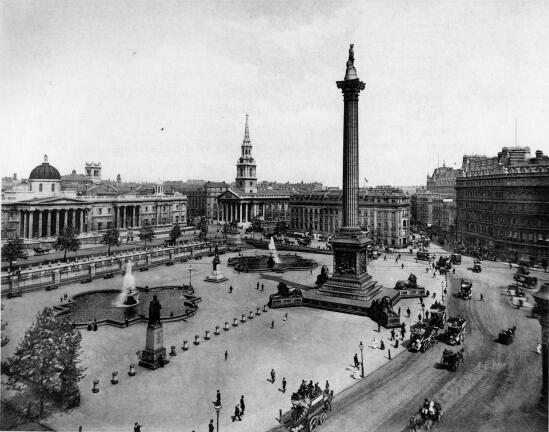
It all began on a bright, sunny morning in London’s Trafalgar Square. The world was recovering from the Great War. A new kind of tourist was flooding Europe: the American. Flush with cash from a booming economy, they were full of confidence, ready to see the old world, and maybe, just maybe, prove they were smarter than the stuffy Europeans.

Furguson spotted his perfect target. An American, a wealthy farmer from Iowa, staring up at Nelson’s Column with a look of pure, unadulterated awe. Opportunity didn’t knock. It screamed.

Furguson, dressed impeccably, approached the man not as a salesman, but as a fellow admirer. He sighed, a picture of melancholy grace. He introduced himself, perhaps as a minor official from His Majesty’s government. He explained the history of the magnificent monument, honoring the great Admiral Lord Nelson. He painted a picture of British pride and naval glory.

And then, the hook.

“Such a terrible shame we have to let it go,” Furguson would have said, his voice dropping to a conspiratorial whisper. “The war, you see. The national debt is simply staggering. Parliament has made a secret decision… everything must go. The lions, the fountains, the column itself.”

The American’s eyes widened. He wasn’t just a tourist anymore. He was an insider. He was being let in on a state secret.

“How much?” the Iowan asked, his voice trembling with excitement.

Furguson didn’t jump at the question. He pretended to think, to weigh the gravity of the situation. “The asking price is a mere £6,000,” he said, as if discussing the price of a used car. “But of course, it must go to the right sort of person. Someone who will appreciate its history, who will give it a good home.”

The American pleaded. This was his chance to own a piece of history! By a stunning coincidence, Furguson himself was the man secretly tasked with handling the sale. He made a show of reluctance, then ducked into a nearby building to make a “phone call” to his superiors. Minutes later he returned, face grim. “They’ve agreed,” he announced. “Given the circumstances, they’re willing to accept a personal cheque to close the deal immediately. To avoid a public scandal.”

The cheque was written. Furguson, a master of self-control, politely shook the man’s hand, cashed the cheque at the nearest bank, and vanished. The poor Iowan, meanwhile, started trying to hire demolition contractors to figure out how to ship a 169-foot granite column back to the United States. It wasn’t until Scotland Yard was called that he finally, painfully, understood he’d been had.

The London Spree: Big Ben and Buckingham Palace

Did Furguson lay low? Did he take his winnings and retire? Of course not. He was just getting warmed up.

The con was too good, the marks too easy. He was high on the thrill of it all. He stayed in London and went on a spree that defies belief. He found another American tourist and, with a story about upgrading the mechanism, sold the clock tower known as Big Ben for a down payment of £1,000. He even gave the man a receipt.

image-31

His audacity grew. His next target was the grandest of them all. He approached yet another moneyed American and, with a straight face, began negotiations for the sale of Buckingham Palace. The story was that the Royal Family found it “too noisy” and were looking to relocate to the countryside. For a modest £2,000 down payment, the American secured first refusal on the King’s official residence. One can only imagine the conversations that followed when these duped tourists tried to claim their new properties.

Scotland Yard was in an uproar. They were hunting a ghost, a man who could sell the Crown Jewels with a handshake and a smile.

The Paris Heist and a Lingering Conspiracy

With London getting too hot, Furguson did what any sensible con man would do. He took his show on the road. Destination: Paris.

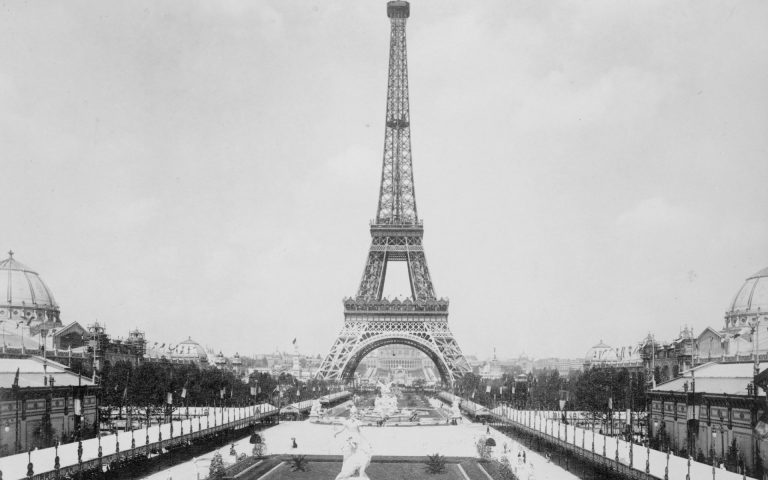
His target? The Eiffel Tower.

He found an American scrap metal dealer and pitched him the deal of a lifetime. The iconic tower, he explained, was only ever meant to be a temporary structure. The maintenance costs were astronomical, and the city of Paris had secretly decided to dismantle it and sell it for scrap. Furguson, naturally, was the man in charge of the disposal.

The deal was done. The price is lost to history, but the legend remains.

Deep Dive: The Lustig Connection

Now, this is where the story gets really strange. Around the same time, another legendary con artist, Victor Lustig, famously “sold” the Eiffel Tower for scrap not once, but twice! So what’s going on here? Was Furguson copying Lustig? Was Lustig copying Furguson? Or is it possible that this wasn’t an isolated con, but a known, high-level scam run by a secret syndicate of elite criminals? Some modern internet theories suggest that “Arthur Furguson” may have even been an alias used by Lustig himself or another member of his circle. The details are too similar, the timing too perfect. The official records are silent, but for a mystery blogger, that silence is deafening.

America Bound: Selling the American Dream

Having successfully sold off half of Europe, Furguson turned his eyes to the source of his income: America. It was time to take the con to the homeland of the conned. In 1925, he arrived in the United States, a wolf entering the world’s largest sheep pen.

He adapted his technique. Selling monuments was risky now; the police were on alert. So he switched to leasing. He found a massive Texas cattle rancher with more money than sense and an ego the size of his home state. Furguson, posing as a federal agent, explained that President Calvin Coolidge preferred to spend his time at his private residence, leaving the White House empty for long stretches.

The government, ever frugal, had decided to secretly lease it out. The Texan could have it for 99 years. The price? A cool $100,000 per year. Furguson collected the first year’s payment in advance and disappeared, his bank account now fat enough for a king.

He could have stopped. He should have stopped. But for a man like Arthur Furguson, the money was only part of the game. The true prize was the performance. The thrill. He needed one last, grand finale.

The Final Act: The Man Who Sold Lady Liberty

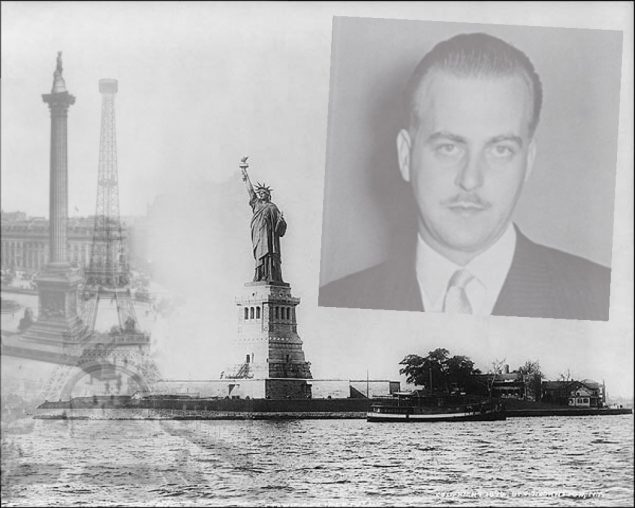
He found his last mark in New York City. This time, it was a proud Australian, eager to make a splash. Furguson’s stage was the harbor itself, with the Statue of Liberty standing as his magnificent prop.

image-32-768x480 (1)

The story was a masterpiece of plausible fiction. The U.S. Navy, he whispered, needed to widen the shipping lanes into the harbor. Lady Liberty, sadly, was in the way. It was a matter of national security and progress. The State Department had made the difficult decision to have her removed.

But they couldn’t just tear her down. Too much sentiment. So, they were willing to sell her to a discerning buyer who would promise to give her a good home. Someone, say, from a friendly nation like Australia? For a deposit of $100,000, the deal was his.

The Australian was hooked. But this is where Furguson’s vanity, his one fatal flaw, finally betrayed him. As the Australian worked to get the funds together, Furguson couldn’t resist a victory lap. He agreed to pose for a photograph with the buyer, arm-in-arm, with their “property” gleaming in the background. A souvenir of his greatest performance.

The money transfer was delayed. The Australian grew nervous. He started asking questions. And he had that photograph. He took it to the local police precinct, maybe just to ask if they knew which shipping companies could handle a 151-foot copper statue. The police, who had been hunting the “monument salesman” for years, couldn’t believe their luck. It was the breakthrough they had been praying for.

The Australian, feeling the sting of suspicion, led them right to Furguson. The performance was over. The curtain had fallen.

What Happened to Arthur Furguson?

The man who sold the world was arrested. The trial was a sensation. But the ending is perhaps the most bewildering part of the entire story. For a decade of scams that netted him a fortune, Arthur Furguson was sentenced to just five years in prison.

Five years. A slap on the wrist.

He was released in 1930 and, according to the official story, moved to Los Angeles. He lived out the rest of his days in absolute luxury, paid for by his ill-gotten gains and “a few more convenient tricks.” He died in 1938, a wealthy and free man.

But so many questions remain. Where did all the money go? Was the five-year sentence a result of a deal? Did he give up names of other con artists in that supposed “syndicate”? Or was he simply so charming that he managed to con the justice system itself?

Arthur Furguson’s story is more than just a series of funny scams. It’s a look into the psychology of belief. He proved that if a story is good enough, and told with enough confidence, people will believe anything. He wasn’t just selling steel and stone; he was selling ego. He was selling a dream. The dream of being the one person on Earth special enough to own a piece of history. And for that, people were willing to pay a fortune.

Amit Ghosh
Amit Ghoshhttps://coolinterestingnews.com
Aloha, I'm Amit Ghosh, a web entrepreneur and avid blogger. Bitten by entrepreneurial bug, I got kicked out from college and ended up being millionaire and running a digital media company named Aeron7 headquartered at Lithuania.
RELATED ARTICLES
- Advertisment -

Most Popular

Recent Comments

Warren Pan Abbott on The legend of the Devil Monkey !
chris davies on The McPherson Tape Mystery
Reed Reedly on ET has Internet!
Bea Houseoffashion on Proof Of Time Travellers – Gallery
Marcus2012 on ET has Internet!
Reed Reedly on ET has Internet!
LaughsAtConspiracyNuts on The 9/11 Conspiracy – Myths and Facts
Alex Sliverman on Did the ancients fly?
Doctor Wholigan on Time Traveler in 1938 film
chris davies on The McPherson Tape Mystery
Archie1954 on 10 secret UFO hideouts
chris davies on Ghosts of flight 401
Marcus2012 on ET has Internet!
jason Macdonald on Proof of Time Travel? – China
chris davies on Long-Lost Pyramids Found?
Reed Reedly on ET has Internet!
Milkman on Connected Universe
Tenmiles on Baigong Pipes Mystery
Simon Foster on Sirius – The Documentary
From the 1st April on 2013 – Alien Contact date ?
SkyWatcher on Is ET ignoring us?
I Come From The Future on Obama to make UFO Alien disclouser soon ?
Just another person on 2013 – Alien Contact date ?
Malcolm Windowcleaner on The strange case of Rudolph Fentz
Mason Servio on Strange Things on Mars
Marke Wisdom Seeker on What will we find as arctic melts?
Andrea A Elisabeth Levyne on Aliens Captured in Varginha, Brazil
Mitch Grouyeki on Amazing Space Shuttle pictures