The Ballechin House Curse: Did One Man’s Vow Unleash a Century of Terror?
Some houses are built on bad ground. Others have tragedy thrust upon them. And then there are houses like Ballechin House. A place that didn’t just become haunted. It was *willed* into it.
This isn’t your average ghost story, full of vague whispers and creaking floorboards. This is the chilling, documented account of a man who made a promise. A promise to cheat death itself. A promise that would drench his family home in a terrifying energy for nearly a century. He vowed to return from the grave… but not as a man.
He vowed to come back as a dog.
What followed was a storm of paranormal activity so intense, so violent, that it drove families from their homes, baffled seasoned investigators, and cemented Ballechin House’s reputation as the most terrifying haunting in Scottish history. The story you’re about to read involves phantom hounds, weeping nuns, and a single, brutal act that may have damned a property forever. Forget what you think you know about haunted houses. This is different.

The Major, The Mystic, and The Vow
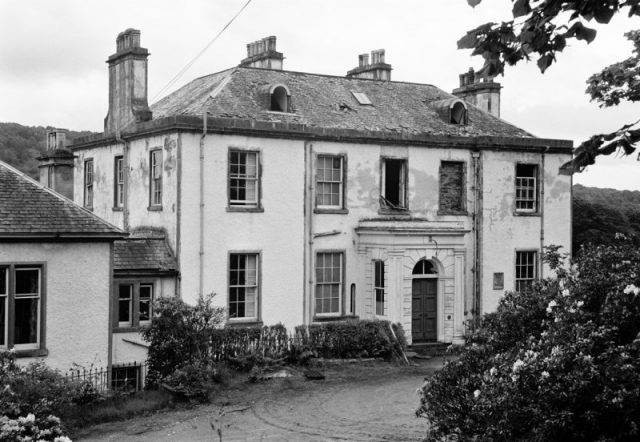
To understand the madness that consumed Ballechin House, you have to understand the man who lit the fuse: Major Robert Stuart. The house itself was new, built in 1806 on the grounds of an ancient family estate in Perthshire, Scotland, a place the Stuarts had owned for over 300 years. Robert was born there that very year, a son of the new house.
But his destiny wasn’t in the rolling hills of Scotland. Not at first.
In 1825, at just 19, he sailed for India, a young man seeking fame and fortune with the powerful East India Company. For a quarter of a century, he lived a world away. India in the early 19th century was a chaotic, vibrant, and spiritually super-charged place. It was a world of sweltering heat, colonial conflict, and philosophies that were utterly alien to the strict Presbyterianism of his homeland. Stuart absorbed it all. He rose through the ranks, eventually becoming a Major, but he brought back more than a pension and a title when he finally returned in 1850.
He brought back… ideas. Dangerous ones.
The man who left as a boy returned as a hardened, eccentric recluse. The locals whispered about him. He had no time for human company, preferring the loyalty of his dogs. And he had a lot of them. Fourteen, to be exact, who had the run of the house he had inherited sixteen years prior. His worldview had been permanently altered by his time abroad. He clung to his faith, but it was now fused with a deep, unshakable belief in the transmigration of souls—the idea that a soul, after death, could be reborn into a new body. Any body.
Even the body of an animal.
This wasn’t just a casual belief. It was an obsession. He made his intentions crystal clear to anyone who would listen. When he died, he would not be going to his final rest. No. He would return to his beloved Ballechin. He would come back in the form of his absolute favorite dog: a black spaniel.
A Mysterious Death in the Master Bedroom
The Major’s strange world had only one other human inhabitant he truly tolerated: his young housekeeper, Sarah. Little is known about her, but her fate is central to the Ballechin story. In 1873, Sarah, only 27 years old, died. Her death was mysterious, but her location was not. She wasn’t found in the simple servant’s quarters.
She was found in Major Stuart’s own bed.
The local gossip machine went into overdrive. Was she his secret lover? Was her death an accident? Or was it something darker? We will never know for sure, but one thing became terrifyingly certain. The room where she drew her last breath, the Major’s master bedroom, would become the epicenter of the haunting. The most active, the most malevolent room in the entire house.
A Vow Fulfilled? A Curse Unleashed
Just one year later, in 1874, Major Robert Stuart died. He was laid to rest in the Logierait churchyard, right next to the grave of his young housekeeper, Sarah. The estate passed to his nephew, John Stuart. Now, John was everything his uncle was not. He was a deeply devout Roman Catholic, a man who saw the world in black and white, good and evil, heaven and hell. His uncle’s talk of returning as a dog wasn’t just eccentric rambling to him. It was blasphemy. It was pagan. It was a corruption that had to be stamped out.
So John Stuart made a decision. A brutal, decisive, and catastrophic decision.
His very first act as the new master of Ballechin was to take a gun, walk out onto the grounds, and systematically execute all fourteen of his uncle’s beloved dogs. He started, with cold intention, with the black spaniel. He likely believed he was performing a kind of spiritual cleansing, a pre-emptive strike to prevent his uncle from fulfilling his unholy vow.
He could not have been more wrong. Instead of severing the connection, he may have trapped a furious, vengeful spirit within the walls of Ballechin forever. He pulled the trigger, and hell answered.
The First Disturbing Signs
The haunting didn’t wait. It began almost immediately. John Stuart’s wife was in the Major’s old study, the very room where he had spent countless hours with his dogs. Suddenly, she was overwhelmed by a foul, overpowering stench of dogs—a “kennel” smell that had no business being in a clean room. As she rushed to open a window, she felt something press against her leg. A firm, deliberate nudge.
She looked down. Nothing was there. But she described the sensation perfectly: it was as if an invisible dog had just rubbed up against her.
The phantom nudge was just the beginning. Days later, the house began to echo with sharp, inexplicable noises. Loud knocks on interior doors. The distinct, violent crack of a gunshot with no source. Then came the voices. Muffled, angry arguments seemed to bleed through the very walls, the words always just out of reach, impossible to understand but filled with rage.
The activity grew so relentless that the Stuarts’ governess, a woman of strong Victorian fortitude, simply packed her bags and left. She couldn’t take it anymore.
When Faith Fails: The Priest’s Experience
The Stuarts often had a guest, a Jesuit priest named Father Hayden. As a man of God, you might expect him to be a calming presence, a bulwark against any evil that might be lurking. But Ballechin House didn’t care about his collar.
Father Hayden experienced the haunting firsthand, on multiple occasions. He heard the disembodied screams. He heard the angry voices. But his most terrifying encounter came one night when he was trying to sleep. He was jolted awake by a frantic, heavy banging and scratching sound at his bedroom door. It sounded, for all the world, like a large dog, desperate to be let in.
He leapt from his bed and threw open the door. The hallway was empty. Silent. Cold.
By pure chance, years later, Father Hayden bumped into the governess who had fled the house. As they shared their stories, a chilling realization dawned on him. The rooms he had been given to sleep in during his visits were the two most notoriously active in the entire house: the Major’s old study, and the master bedroom where Sarah the housekeeper had died.

A Vengeful Omen and a New Wave of Terror
The spirits of Ballechin seemed to hold a special animosity for John Stuart. In January 1895, he was in the Major’s study discussing estate business with his agent. Their conversation was suddenly interrupted by three deafening thuds that seemed to come from inside the room itself. They were deep, resonant, and utterly terrifying. An omen.
A short time later, while in London, John Stuart was struck and killed by a horse-drawn cab.
With John gone, the house was leased out in 1896. The new heir was an Army captain with little interest in the remote Scottish estate. A new family moved in, full of hope, ready to start a new life. They lasted eleven weeks.
Forfeiting over nine months of paid rent, they fled in absolute terror. What they described was a dramatic escalation of the haunting. It was no longer just sounds and smells. It was now physical. It was visual.
The family reported constant, deafening knockings and thumping that would wake the entire house. Bedclothes were forcefully ripped from sleeping family members in the middle of the night. Multiple people saw the apparition of a woman in a silk dress gliding down the corridors. They could hear the distinct, rustling sound of her dress even when they couldn’t see her. Was this Sarah?
But the most frightening experience belonged to one of the daughters. Her room was the old master bedroom. The death room. One night, she was paralyzed with fear as she listened to the slow, heavy sound of limping footsteps circling her bed. Again and again. The sound was so clear that her screams brought her family running. They too heard it. They could feel a presence in the room, something heavy and menacing. Something they couldn’t see.
The limp was the smoking gun. Major Robert Stuart had returned from India with a permanent leg injury from his military service. He walked with a distinct limp for the rest of his life.
The Ghost Hunters Arrive: The Ballechin Investigation
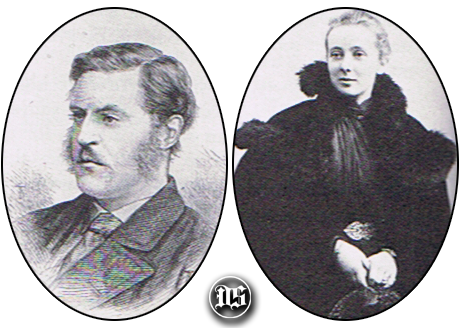
The story of the family who fled in terror spread like wildfire. It eventually reached the ears of one of the wealthiest men in Britain: John Crichton-Stuart, the 3rd Marquis of Bute. The Marquis was a man of science, industry, and an all-consuming passion for the paranormal. He was a leading figure in the burgeoning field of psychical research, and the Ballechin case was exactly the kind of high-level haunting he wanted to investigate.
In 1896, he rented Ballechin House for the express purpose of conducting one of the most extensive paranormal investigations of the era. He assembled a team, led by two prominent investigators, Colonel Lemesurier Taylor and a woman known as Miss Goodrich-Speer (writing under the pseudonym “Miss X”). On February 3rd, 1897, they didn’t just visit. They moved in. They brought a team of 35 people—a mix of investigators, servants, and objective observers—to live in the house and meticulously document everything that happened.
They didn’t have to wait long. The very first morning, the entire house was shaken by a “loud clanging noise” that repeated at frequent intervals for two solid hours. The team logged every event:
- The muffled sound of angry, quarreling voices.
- The distinct sound of someone walking around in locked, empty rooms.
- Heavy dragging sounds, as if furniture or a body were being pulled across the floorboards upstairs.
- The sharp, startling crack of a gunshot echoing through the halls.
The next morning, several team members, in separate rooms, independently reported hearing something truly bizarre: the clear sound of a Catholic priest conducting a service, the Latin chants rising and falling in the empty air.
The Weeping Nun by the Stream
The investigation took a strange turn when a new spirit seemed to make her presence known. This one didn’t seem angry or vengeful. It seemed heartbroken. During the investigation, two members of the team looked out a window and saw a startling sight down by a frozen stream on the property. Two nuns. One was on her knees in the snow, her body wracked with sobs. The other nun stood over her, seemingly offering comfort.
The investigators were stunned. Who were they? The answer, they believed, lay with another member of the Stuart family: Isabella, Robert Stuart’s sister. Isabella had become a nun, taking the name Sister Frances Helen, and had died in a convent in 1880. It was thought that the crying figure was her, perhaps grieving for the tortured soul of her brother.
Several Spiritualists were on the investigation team, and they brought a Ouija board. During a session, they made contact with a spirit who identified herself as “Ishbel,” a Scottish form of Isabella. The spirit spelled out a simple, clear message: go to the frozen stream where the nuns had been seen.
Following the instruction, a group of investigators went to the spot. And there, against the stark white of the snow, they saw her. A single figure of a nun, dressed in a black habit, was walking slowly up a nearby glen. As they watched, dumbfounded, she reached a large tree and simply… vanished. The nun of Ballechin was seen many more times by the team before their investigation concluded.
The End of Ballechin House
The Marquis of Bute’s investigation brought Ballechin worldwide fame, but it did nothing to cleanse the property. If anything, the activity seemed to intensify over the years. No one could live there for long. The house was a place of oppressive sadness and sudden terror.
By 1932, it was declared totally uninhabitable. It was abandoned, left to the wind, the rain, and the ghosts. For three decades it stood empty, its windows dark like vacant eyes, its story slowly turning into a local legend. Finally, in 1963, what remained of Ballechin House was demolished.
But does tearing down the walls get rid of the spirits trapped within? Online forums and modern paranormal circles still buzz with the Ballechin story. Some claim the psychic stain on the land is permanent. Local stories persist of a strange coldness on the former site of the house, of people hearing a faint barking sound on the wind, or catching a fleeting glimpse of a dark figure moving through the trees where the old glen path used to be.
Was it all just a series of coincidences, amplified by grief and local superstition? Or did John Stuart, in a moment of religious fervor, make the most terrible mistake of his life? Did his gunshot, meant to silence a blasphemous vow, instead trap his uncle’s raging soul between worlds, bound to the land and tethered to the spectral forms of his murdered dogs?
The house is gone. The stones are scattered. But a question still hangs in the cold Perthshire air. Is the Major still there, waiting?