The World’s Largest Mirror or a Glitch in the Matrix?
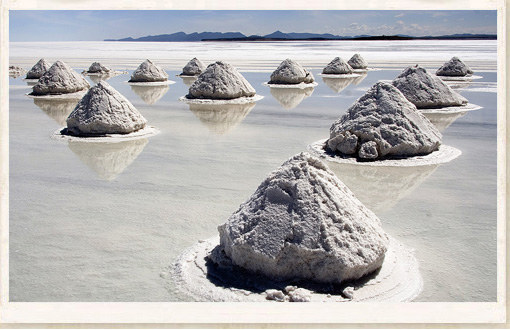
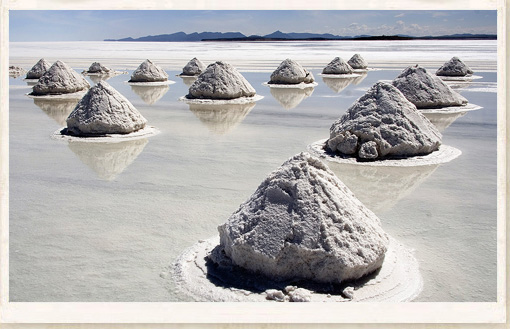
Imagine standing on the edge of the world. The ground beneath your feet isn’t dirt. It isn’t grass. It’s a blinding, endless sheet of white hexagon tiles stretching out until they vanish into the curve of the Earth. You look down, and you see the sky. You look up, and you see the sky. There is no horizon.
You are floating.
Welcome to one of the most alien landscapes on our planet. A place that defies logic, messes with your brain, and holds enough power to change the future of humanity. Or destroy it.
We are talking about the Salar de Uyuni.
Most travel blogs will tell you it’s just a “pretty tourist spot” in Bolivia. They’ll show you funny perspective photos of people holding toy dinosaurs. But that’s the distraction. That’s the fluff. When you peel back the layers of salt, you find a mystery that goes back 40,000 years—and a conspiracy that is unfolding right now in the boardrooms of Silicon Valley.

Strange Places: The White Desert of Bolivia
Let’s look at the raw numbers. They are staggering.
Salar de Uyuni is 4,085 square miles of nothingness. To put that in perspective, it’s larger than some countries. It’s the biggest salt flat on Earth, sitting at a breathtaking—literally, you cannot breathe properly up here—altitude of over 3,500 meters (11,900 feet) above sea level.
Why is it here? How does a giant ocean of salt end up on top of the Andes mountains?
Geologists say it’s the ghost of Lake Minchin, a massive prehistoric body of water that dried up around 40,000 years ago. When the water evaporated, it left behind a crust. But this isn’t your table salt. This crust is meters thick, covering a brine lake that ranges from two to twenty meters deep. It’s a lid. A white, hard lid covering a liquid treasure chest.
But that’s the textbook version. The official narrative.
When you stand there, in the silence, the geology feels secondary. The vibe is… wrong. It’s too flat. It’s too perfect. In fact, the variation in height across the entire 4,000-square-mile area is less than one meter. It is arguably the flattest place on the planet.
The Disorientation: A Psychological Whiteout
Have you ever heard of the “Whiteout Effect”? Pilots fear it. Explorers die from it.
When visitors step onto the Salar, something weird happens to their brains. Without trees, buildings, or hills to provide depth perception, the human eye fails. You lose your ability to judge distance. Is that mountain ten miles away or a hundred? Is that a person walking toward you, or a speck of dust on your sunglasses?
People report vertigo. Serious dizziness. A feeling of being unanchored from reality.
When it rains, this disorientation turns into a hallucination. A thin layer of water sits on top of the salt, turning the entire flat into a flawless mirror. The horizon line gets deleted. The sky reflects perfectly on the ground.
You are walking among the clouds. You can’t tell which way is up. It’s beautiful, sure. But it’s also terrifying. It looks like a glitch in the simulation. A place where the rendering engine of reality just gave up and said, “Let’s just copy-paste the sky texture on the floor.”
The Lithium Conspiracy: The New Gold Rush
Forget the scenery for a second. Let’s talk about money. Power. The future of warfare and technology.
Underneath that thick white crust lies a brine rich in lithium. We aren’t talking about a small pocket of minerals. We are talking about the motherlode.
Estimates suggest that Salar de Uyuni holds between 50% and 70% of the world’s known lithium reserves.
Think about that. The battery in your smartphone? Lithium. The battery in your laptop? Lithium. The massive battery packs powering the electric cars that governments are forcing us to buy? Lithium.
This desolate patch of Bolivia is the Saudi Arabia of the 21st century. And do you think the world powers are just going to let Bolivia sit on it peacefully? History says no.
The “White Gold” War
There is a theory circulating on the darker corners of the web that the political instability in South America isn’t accidental. It’s engineered. Why? To control the salt flats.
If you control the Salar, you control the energy grid of the future. You hold the keys to Elon Musk’s empire. You dictate the production of military drones and electric tanks.
Some alternative historians ask a sharper question: Why is it all here?
Is it a geological quirk? Or is there something more to the concentration of this specific, high-energy element? Look at the ancient history. The Andes are riddled with megalithic structures that we still can’t explain. Puma Punku. Tiahuanaco. Stones cut with laser-like precision. Massive blocks moved without wheels.
Did an ancient civilization know about the lithium? Were they harvesting it? Was this lake a byproduct of some massive, prehistoric industrial operation? It sounds crazy until you look at the energy potential lying just a few meters under the salt.
The Legend of the Giants: Tunupa’s Tears
Let’s pivot from high-tech conspiracies to ancient legends. Because the locals—the Aymara people—have a very different explanation for the salt flats. And honestly? It’s more compelling than the geology.
They don’t call it Salar de Uyuni. They call it Salar de Tunupa.
According to Aymara oral tradition, this wasn’t a dried-up lake. It was a tragedy of biblical proportions involving giants.
The legend goes like this: Long before humans ruled the Andes, huge giants walked these mountains. Tunupa was a giantess, a deity of the volcanoes. She was married to Kusku, another mountain giant. But Kusku betrayed her. He ran off with another giantess, Kusina.
Heartbroken and abandoned, Tunupa was left alone with her nursing baby. She began to cry. She cried for days, weeks, years. Her massive, giant tears mixed with her breast milk, pouring down the mountainside.
The mixture flooded the valley. It dried white and salty. The Salar is not a geological formation; it is the calcified sorrow of a giant.
Were the Giants Real?
You might dismiss this as a fairy tale. But pause for a moment. Every culture on Earth has legends of giants. The Bible speaks of the Nephilim. The Greeks had the Titans. The Norse had the Jötnar. Native American tribes in North America speak of red-haired giants.
Why does the Aymara culture have the exact same story? And why is it centered here, in a place that looks like it was flattened by a massive force?
There is a movement in Bolivia right now to officially rename the area Salar de Tunupa. It’s not just about respect for the indigenous culture. It’s about acknowledging the history that the textbooks ignore. If you believe the alternative history theories, the Andes might have been a stronghold for a pre-flood civilization of enormous beings. The salt flat isn’t just a resource; it’s a grave.
The Calibration Target: NASA’s Secret Playground
Here is a fact that sounds fake but is 100% real: Satellites use the Salar de Uyuni to figure out where they are.
Because the salt flat is so large, so white, and incredibly flat, it is the perfect “natural mirror” for radar altimeters. When NASA or other space agencies launch a satellite that maps the Earth’s topography, they point it at the Salar to calibrate the instruments.
It is five times better for calibration than the surface of the ocean. The ocean has waves. The Salar is dead still.
But this brings up the paranoia. If the satellites are constantly watching this spot, what else are they seeing? Is the calibration story the whole truth? Or is it a convenient excuse to keep high-resolution eyes on the world’s largest lithium deposit 24/7?
In a world where resource wars are fought in the shadows, having a “scientific reason” to monitor a location is the oldest trick in the book.
The Train Graveyard: A Post-Apocalyptic Warning
Just outside the town of Uyuni, before you hit the white expanse, lies something straight out of a Mad Max movie.
The Cementerio de Trenes (Train Cemetery).
Dozens of massive, antique steam locomotives sit rusting in the desert sun. They are skeletal, stripped, and covered in graffiti. Twisted metal groaning in the wind.
In the 19th century, British engineers tried to build a massive railway network here to haul minerals to the Pacific coast. They had big plans. They thought they could conquer the Andes.
They were wrong.
The mining industry collapsed in the 1940s. The trains were abandoned right where they stopped. The salt winds from the Salar are slowly eating them alive, corroding the steel into dust.
It’s a haunting reminder. Humans try to conquer nature. We try to extract the resources. We build our machines. But in the end, the salt wins. The desert wins. If we aren’t careful with the lithium rush, will our modern electric empires end up just like these rusting steam engines? Another pile of junk for future tourists to gawk at?
Islands in the Sky
Deep in the center of the salt flat, where life should be impossible, there is an island.
Incahuasi Island.
It’s a rocky outcrop jutting out of the white sea. And it is covered in cacti. Not little potted plants. We are talking about gigantic cacti that grow up to 10 meters tall. Some of them are over a thousand years old.
How? There is no fresh water. There is only salt. Yet, this ecosystem thrives.
From the top of the island, the view is mind-bending. You see the white curvature of the earth. It looks like you are on a rocky asteroid floating in space. It reinforces the feeling that the Salar de Uyuni is an anomaly. A place where the rules of biology and physics get bent.
The Flamingo Mystery
Then there are the birds. Three distinct species of pink flamingos live here. In the winter. At high altitude. In freezing temperatures.
Flamingos are supposed to be tropical birds. They belong on lawns in Florida or beaches in the Caribbean. What are they doing at 12,000 feet in the Andes, wading through toxic brine?
Their feathers are pink because they eat the red algae in the water. They have adapted to conditions that would kill almost anything else. It’s another piece of the puzzle. Life finds a way, even in the most alien environment on Earth.
Conclusion: The Mirror Looks Back
The Salar de Uyuni is more than a tourist trap. It’s a geological freak. It’s a bank vault for the world’s energy. It’s a sacred site of ancient giants. And it’s a mirror.
When you look into that mirror, what do you see? Do you see the beautiful reflection of the sky? or do you see the hunger of modern industry waiting to strip-mine the magic away?
Luca Galuzzi, the Italian photographer who captured the stunning image above back in 2007, froze a moment in time. But time is running out for the Salar. As the demand for lithium skyrockets, this pristine white wilderness could change forever. The “White Gold” rush is coming.
Visit it while you can. Walk on the clouds. Feel the vertigo. Because a place this strange, this quiet, and this powerful… it usually doesn’t stay hidden forever.
Is it a natural wonder? Or is it evidence of a lost chapter of Earth’s history? That is for you to decide.
READ MORE: Strange Mysteries of the Andes