The Silent Scream: Is Mars a Dead World, or a Covered-Up Crime Scene?
Forget what you learned in school. Forget the dry textbooks and the sanitized NASA press releases. We need to talk about Mars. Not the dusty, sterile ball of rock they show you, but the *real* Mars. The one whispered about in late-night forums and hinted at in declassified documents. A world of deep, bloody secrets.
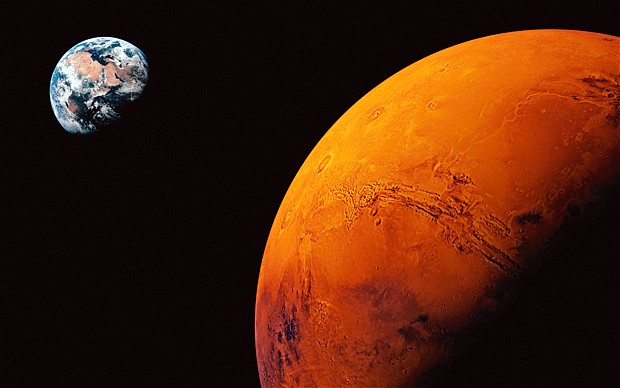
They call it the Red Planet. A fitting name. But is that redness from iron oxide, the “official story,” or is it the stain of a forgotten, planet-wide catastrophe? For centuries, we’ve stared up at that pinprick of light in the night sky and wondered. But now, with our rovers crawling across its surface, we’re no longer just wondering. We’re finding clues. And the clues don’t add up.
The story we’re told is one of a dead world. A failed Earth. A planet that lost its atmosphere, lost its water, and lost its chance at life billions of years ago. It’s a sad story. A safe story.
But what if it’s a lie?
What if Mars isn’t a tomb, but a crime scene? And what if the evidence for a lost civilization—or even surviving life—is being systematically ignored, explained away, or scrubbed from the public record? Get ready. We’re going down the rabbit hole, and the ground on Mars is redder and deeper than you could ever imagine.

The Mars They Let You See
Let’s start with the basics. The cover story. Mars is the fourth rock from the sun. It’s got two tiny, lumpy moons, Phobos and Deimos, which astronomers guess are just captured asteroids. Sounds plausible. Easy.
Its surface is a panorama of epic, almost unbelievable features. It’s home to Olympus Mons, a shield volcano so colossal it makes Mount Everest look like a foothill. Its peak scrapes the edge of space, three times taller than Everest. Imagine a volcano the size of Arizona. Why? How does a planet half the size of Earth produce a geological monster like that?
Then there’s Valles Marineris. This isn’t a canyon. It’s a planetary scar. A gash in the Martian crust that, if laid across the United States, would stretch from New York to Los Angeles. It’s four times deeper than the Grand Canyon. The official explanation is tectonic cracking. A simple stretching of the crust. But look at the images. It looks violent. It looks like something tore the planet open.
The atmosphere is thin, almost a vacuum. It’s 95% carbon dioxide, unbreathable. The pressure is so low your blood would boil if you stepped outside without a suit. It’s cold. Mind-numbingly cold. The average temperature is a brisk -80 degrees Fahrenheit. Solar radiation blasts the surface, unhindered by a magnetic field or a thick atmosphere. By all accounts, it’s a certified hellscape. A place where life could never be.
Case closed, right? A dead, geologically interesting but ultimately boring planet. That’s the postcard they want to send you. But the postcard is missing a few key details.

Deep Dive: The Ghost of a Blue Planet
The biggest secret, the one they couldn’t hide, was the water. For decades, the party line was “Mars is bone dry.” Then, the story started to change. Slowly.
It began with the old-timers. In the late 19th century, astronomer Percival Lowell peered through his telescope and saw something that shook the world. He saw lines. Hundreds of long, straight, impossibly geometric lines crisscrossing the planet’s surface. He called them “canali,” Italian for channels. But the word was mistranslated into English as “canals.”
Canals. Things that are built. By someone.
Lowell’s vision of a dying Martian civilization, building a massive irrigation network to bring water from the polar caps to their desert cities, captured the public imagination. H.G. Wells wrote “The War of the Worlds.” A cultural panic was born. The establishment, of course, crushed it. Lowell was dismissed as a fantasist, his canals nothing more than optical illusions. His legacy was tarnished. But was he entirely wrong?
Fast forward to the space age. Our robot explorers arrive, and what do they find? Evidence of water. Everywhere. Not canals, but something even more profound. They see vast, dried-up ocean basins. They find meandering riverbeds carved into the rock. The rovers drive over fields of rounded pebbles, smoothed by flowing water just like in a stream on Earth. They drill into rocks and find hematite “blueberries,” mineral concretions that can only form in the presence of liquid water. The evidence is overwhelming: Mars was once wet. Very wet. It had rivers, lakes, and possibly a shallow ocean covering most of its northern hemisphere.
It was a blue planet. A sister to Earth. So where did it all go? The official theory is that Mars lost its magnetic field, and the solar wind stripped away its atmosphere over billions of years, causing the water to evaporate into space or freeze underground. A slow, gentle death. But the geology sometimes tells a more violent story. Massive outflow channels suggest cataclysmic, world-ending floods. Something terrible happened to Mars. And it happened fast.

The Smoking Gun: Did Viking Find Life in 1976?
This is the big one. The conspiracy that just won’t die, because the evidence is too strong. In 1976, two NASA landers, Viking 1 and Viking 2, touched down on Mars. Their primary mission: to answer the biggest question of all. Are we alone?
Each lander had a robotic arm that scooped up Martian soil and dumped it into a miniature onboard laboratory. One experiment in particular, the Labeled Release (LR) experiment, was designed to be a definitive life-detector. The concept was simple: feed the soil a broth of nutrients tagged with a radioactive carbon isotope. If microorganisms were in the soil, they would “eat” the nutrients and “exhale” a radioactive gas. It was an elegant, foolproof test.
And it came back positive.
Let that sink in. The first, and only, experiment designed specifically to find active, living metabolism on Mars got a positive result. The soil sample was heated to sterilize it, and the reaction stopped—exactly what you’d expect if living things had been killed. Both Viking landers, thousands of miles apart, got the same positive results. It was a bombshell.
So why wasn’t this the biggest headline in human history? Because another instrument, designed to find the organic molecules that life is made of, came up empty. NASA was faced with a contradiction. A positive metabolic signal, but no “bodies.” So they made a choice. They went with the negative result. They declared the LR experiment a false positive, blaming it on some “exotic, unknown soil chemistry.” The case was slammed shut.
But Dr. Gilbert Levin, the brilliant scientist who designed the LR experiment, never accepted that. For the next 40 years, until his death, he fought NASA. He argued relentlessly that his experiment had worked perfectly and had found life. He pointed out that their “no organic molecules” finding was later proven to be wrong—the instrument they used wasn’t sensitive enough and, in fact, would have destroyed the very organics it was looking for. Recent rovers like Curiosity have found organic molecules all over Mars. Levin’s primary objection was nullified, but the official story never changed.
Was this a simple scientific error? Or did NASA get a result so terrifying, so paradigm-shattering, that they had to bury it? Did they find life on Mars in 1976 and then spend the next four decades pretending they didn’t?

Pareidolia or Proof? The Anomalies We Can’t Ignore
As our cameras on Mars get better and better, the internet has become a clearinghouse for strange images beamed back by the rovers. The official term for seeing familiar shapes in random patterns is “pareidolia.” Seeing a face in the clouds. Seeing a rabbit in a rock formation.
It’s a convenient, catch-all explanation. But can it really explain everything we’re seeing?
The Face on Mars and the Cydonia Complex
It all started with the infamous “Face on Mars.” A 1976 image from the Viking 1 orbiter showed a mile-long mesa in a region called Cydonia that looked uncannily like a human face, staring up into the void. Nearby were other strange structures, including a collection of what looked for all the world like pyramids, now called the “D&M Pyramid.”
NASA dismissed it immediately as a trick of light and shadow. But for anomaly hunters, this was ground zero. For years, they demanded NASA re-photograph the site with better cameras. Finally, in the late 90s and 2000s, they did. The new, high-resolution images showed a heavily eroded, natural-looking mesa. “See?” NASA said. “Just a hill.”
But the true believers weren’t convinced. They argued the new photos were taken at the wrong time of day, with the wrong lighting, to deliberately obscure the features. Others claimed the original was real, and the later photos were doctored. Was the Cydonia region once home to a massive artificial complex? Is the Face a monument, now worn down by millions of years of Martian winds?

The Rover’s Cabinet of Curiosities
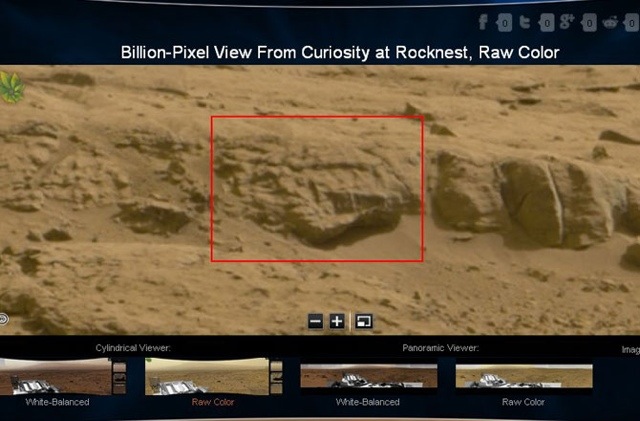
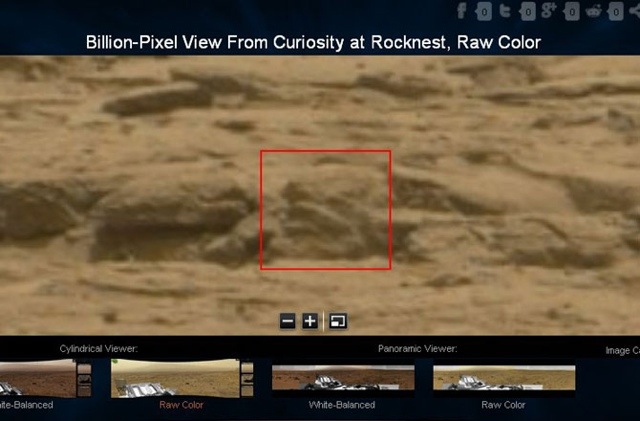
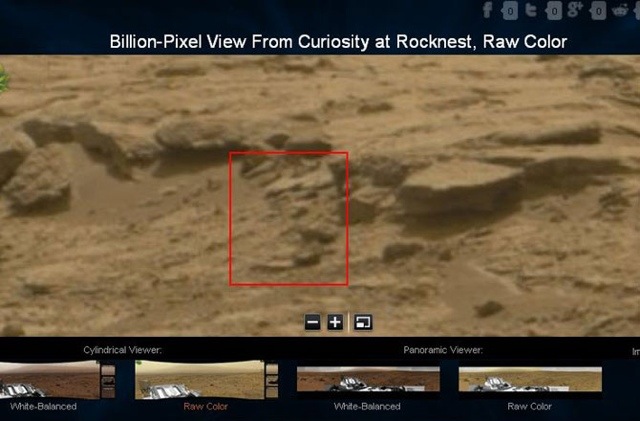
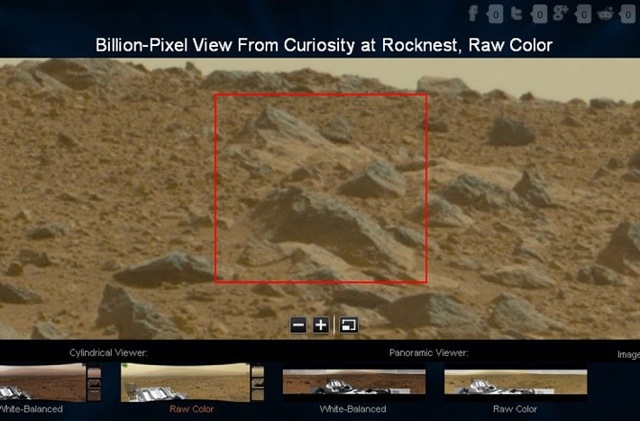
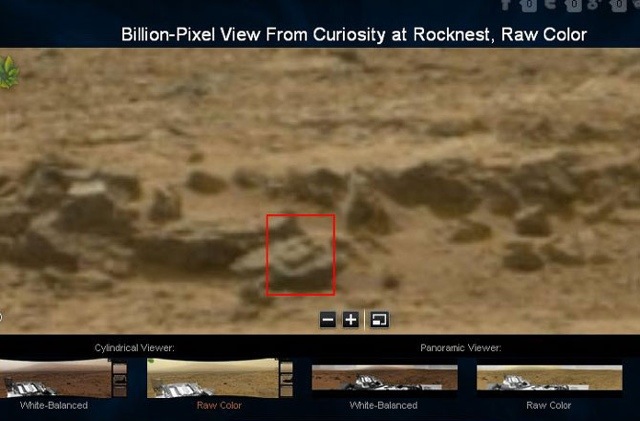
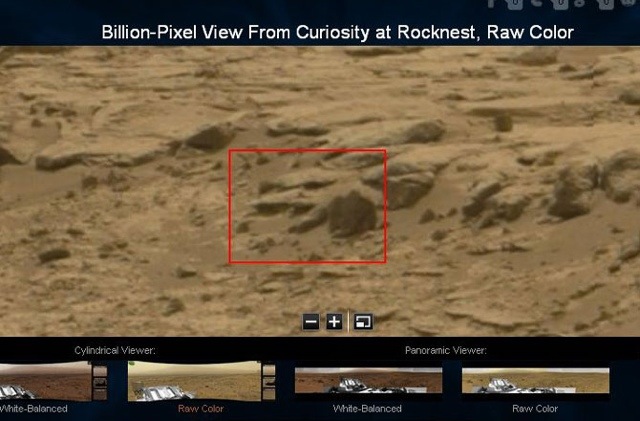
Since the rovers Spirit, Opportunity, and Curiosity landed, the number of anomalies has exploded. Every week, it seems, internet sleuths find something new in the thousands of raw images NASA posts online.
- The Martian Thigh Bone: An object photographed by Curiosity that looks exactly like a femur, bleached and lying in the sand. NASA says it’s just a rock carved by wind and water.
- The Traffic Light: A rock formation with three perfectly aligned, circular holes, stacked vertically. Eerily mechanical.
- The Mars Rat: A famous image showing what appears to be a rodent, complete with eyes, nose, and ears, nestled between two rocks.
- The Woman on Mars: An image from the Spirit rover that seems to show the cloaked figure of a woman with her arm outstretched, watching the rover from a rock ledge.
Is it all pareidolia? Maybe. Probably, even. The human brain is hardwired to find patterns. But the sheer number of these objects is staggering. Out of a million rocks, maybe 999,999 are just rocks. But what if one of them isn’t? What if we’re looking at the fossilized remains and shattered artifacts of a world we refuse to see for what it truly was?

The Sentinel in the Sky: What is the Phobos Monolith?
Let’s look up from the Martian surface for a moment, to its bizarre inner moon, Phobos. This tiny moon orbits so close to Mars that it whips around the planet three times a day. It’s doomed. Its orbit is decaying, and in a few tens of millions of years, it will either crash into Mars or be torn apart into a ring.
But Phobos is hiding a secret. In 1998, the Mars Global Surveyor spacecraft photographed an object on its surface that shouldn’t be there. It’s a massive, rectangular object standing upright, casting a long, sharp shadow across the desolate moonscape. They call it the Phobos Monolith.
It’s about the size of a city building. It is sharp-edged. It looks completely out of place on a lumpy, potato-shaped moon. It looks artificial.
This isn’t some blurry internet photo. This is a verified object, confirmed by NASA. Even Buzz Aldrin, the second man to walk on the Moon, talked about it in a 2009 interview, saying, “There’s a monolith there. A very unusual structure on this little potato-shaped object that goes around Mars once every seven hours. When people find out about that, they’re going to say, ‘Who put that there? Who put that there?'”
It’s the question we should all be asking. Is it a freak of nature, a bizarrely shaped boulder? Or is it something more? A marker? A warning sign? An ancient sentinel left by a civilization that knew we were coming?
The Red Planet is Not Dead. It’s Breathing.
The hunt continues. Today, rovers like Perseverance are drilling into the bed of an ancient lake, Jezero Crater, explicitly searching for signs of past life. But perhaps they’re looking in the wrong place, or for the wrong thing.
One of the most exciting and perplexing discoveries of the last decade has been the detection of methane in the Martian air. Here on Earth, 90% of methane is produced by living organisms. On Mars, scientists have detected mysterious plumes of the gas that appear, then vanish. They can’t predict where it will show up next. It’s like the planet is “breathing.”
This could be a geological process. But it could also be the signature of microbes living deep underground, safe from the surface radiation, releasing puffs of metabolic waste into the thin air. It’s a clue that points not to a past long dead, but to a present that is very much alive.
Mars is not a simple planet. It’s a world of contradictions and whispers. A world with a watery past, a potentially living present, and artifacts that defy easy explanation. The official narrative is clean and tidy. The reality is messy, mysterious, and infinitely more exciting.
So the next time you look up at that red star, don’t see a dead world. See a puzzle. A mystery. A planet that may be hiding the greatest discovery in all of human history right under our noses. The evidence is there, scattered in the red dust and etched in the shadows. The only question is: are we brave enough to see it?