Home Unexplained Mysteries Ancient Mysteries Strange facts about the Giza Pyramids

Strange facts about the Giza Pyramids

0
57

The Giza Pyramids: Why Everything You’ve Been Told Is A Lie

You think you know the pyramids. You’ve seen them in movies. In books. On postcards. Giant triangular tombs sitting in the Egyptian desert, monuments to long-dead pharaohs. A simple, settled story.

Forget it.

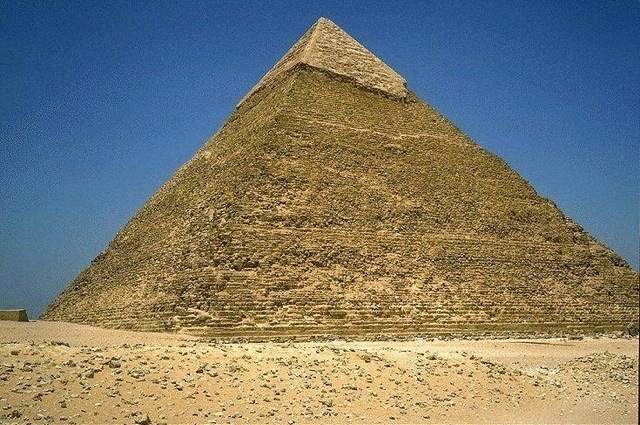
Throw that story in the trash. The narrative they sell in the textbooks is a threadbare blanket, riddled with holes so big you could drive a truck through them. The Great Pyramid of Giza and its silent neighbors aren’t just old buildings. They are a profound, screaming mystery. A 4,500-year-old riddle built on a scale that defies explanation, with a precision that mocks our modern technology.

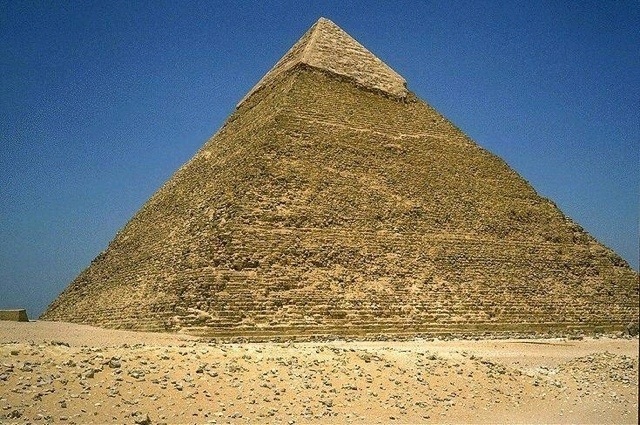
The official story tells us the Giza complex, with its three iconic pyramids for the pharaohs Khufu, Khafre, and Menkaure, was built in a flurry of activity between 2589 and 2504 BC. They call them tombs. Final resting places. But the more you look, the more you scrutinize the evidence, the less sense that makes. The stones themselves seem to cry out a different story, one of impossible engineering, cosmic alignments, and a history so deep it shatters our entire understanding of the ancient world.

So, strap in. We’re not just visiting the pyramids. We’re putting the official story on trial.

The Impossible Math They Don’t Teach in School

Let’s start with the big one. Khufu. The Great Pyramid. It’s not just a pile of rocks; it’s a masterpiece of mathematical and engineering genius that we would struggle to replicate today, even with all our cranes, computers, and laser-guided tools.

The numbers alone are staggering. It’s composed of an estimated 2.3 million stone blocks. These aren’t pebbles. The average block weighs 2.5 tons—the equivalent of two family cars. Some of the granite blocks, deep within the King’s Chamber, weigh up to 80 tons. They were quarried from Aswan, over 500 miles away. How?

The mainstream explanation involves immense manpower. Okay, fine. But let’s do the math the tour guides skip over. If the Great Pyramid was built in 20 years (a generous estimate), and workers labored 10 hours a day, 365 days a year, they would have had to quarry, shape, transport, and perfectly place one of these multi-ton blocks every… two and a half minutes.

Every. Two. And. A. Half. Minutes.

That’s not just difficult. It’s absurd. It doesn’t account for quarrying time, for the long journey from Aswan, for shaping the stones with a precision that is mind-boggling, or for lifting them hundreds of feet into the air. We are talking about 481 feet of construction, making it the tallest structure on Earth for an unbelievable 3,800 years.

Precision That Defies Logic

And then there’s the precision. This isn’t a rustic stone cabin. The casing stones that originally covered the pyramid, brilliant white Tura limestone, were cut and fitted so perfectly that you couldn’t slide a razor blade between them. The entire structure, covering 13 acres, is oriented to true north with an accuracy of within 3/60th of a single degree. An error so small it’s almost non-existent.

How did they achieve this? Without a compass? Without GPS? Mainstream archeology suggests they used the stars. A plausible idea, until you realize the level of sustained astronomical observation and mathematical calculation required would be phenomenal. All of this, supposedly, with copper chisels and stone pounders. It just doesn’t add up.

Who Really Built Them? The Workforce Question

The old Hollywood image of slaves being whipped into submission is, thankfully, a myth. Archeologists have uncovered the remains of a workers’ village near the pyramids. The evidence found there paints a picture of a well-cared-for, respected workforce. They ate well—bread, fish, and prime cuts of beef. They drank beer. They even had access to advanced medical care; skeletons have been found with bones that were expertly set and healed.

These were skilled artisans, not slaves. A dedicated, rotating labor force of tens of thousands of Egyptians. That’s the accepted theory. But does it solve the problem? Does having a well-fed, dedicated crew explain how they lifted 80-ton granite blocks 200 feet into the air and placed them with hair’s-breadth precision? Does it explain the impossible construction timeline?

Or does it open the door to a more radical question? Were they working from a plan—a set of instructions—left behind by someone else? A forgotten, older culture with technology we can’t yet comprehend?

20131226-112339.webp

A Map of the Heavens on Earth

This is where the mystery deepens, moving from the physical to the cosmic. Why are the three Giza pyramids laid out the way they are? The smaller pyramid of Menkaure is slightly offset from the diagonal line formed by the two larger pyramids of Khufu and Khafre. For years, this was dismissed as a simple error or a result of the terrain.

Then, in the 1980s, author Robert Bauval dropped a bombshell. He noticed that the layout of the three Giza pyramids perfectly mirrored the layout of the three stars in Orion’s Belt.

Think about that. The two bright stars, Alnitak and Alnilam, are mirrored by the two large pyramids. The fainter, slightly offset third star, Mintaka, is mirrored by the smaller, offset pyramid of Menkaure. The correlation is exact. What’s more, the Nile River mirrors the celestial river, the Milky Way, as it would have appeared in the sky.

Coincidence? It seems unlikely. The ancient Egyptians were obsessed with the stars, particularly the constellation of Orion, which they associated with the god Osiris, the ruler of the afterlife. It seems the Giza plateau was designed to be a literal reflection of the heavens on Earth. A sacred landscape. But the “Orion Correlation Theory” goes even further. Due to the precession of the equinoxes—the slow wobble of the Earth’s axis—the alignment on the ground would have been most perfect not in 2500 BC, but around 10,500 BC. A time when, according to our history books, humans were supposedly simple hunter-gatherers, not master astronomers and builders.

The Silent Witness: Is the Sphinx 8,000 Years Older Than Egypt?

And that brings us to the Great Sphinx. The official story says this colossal monument, 241 feet long with the body of a lion and the head of a man, was carved during the reign of Khafre, the pharaoh of the second pyramid. It’s a nice, tidy explanation.

It’s also almost certainly wrong.

In the early 1990s, a geologist from Boston University named Dr. Robert Schoch looked at the Sphinx not as an art historian, but as a rock expert. And he saw something that stunned him. The deep, vertical fissures covering the body of the Sphinx and the walls of its enclosure were not caused by wind and sand erosion, which creates horizontal, layered patterns. They were classic, textbook examples of erosion caused by thousands of years of heavy rainfall.

Rainfall? In the desert? Yes. But the Sahara wasn’t always a desert. The last time this region experienced a rainy period capable of causing such profound erosion was between 10,000 and 5,000 BC. This geological evidence—the “Water Erosion Hypothesis”—suggests the body of the Sphinx is thousands of years older than the pyramids themselves. It could date back to 10,500 BC, the exact same period pinpointed by the Orion alignment.

Mainstream Egyptologists have fought this theory tooth and nail. It would rewrite their entire history. But the stone tells a story the history books refuse to acknowledge. The Sphinx may have been sitting there for millennia before the pharaohs even arrived, a silent witness to a forgotten chapter of human history. Perhaps Khafre didn’t build it; maybe he just re-carved an existing, much older head in his own image.

The Great Pyramid: Tomb, Power Plant, or Something Else?

If the Giza complex is more than just a collection of tombs, then what is its true purpose? Let’s focus on the Great Pyramid again. The “tomb” theory has one gigantic, fatal flaw.

No pharaoh was ever found inside.

The King’s Chamber contains a large, crude granite box that they call a “sarcophagus.” But it’s undecorated, roughly finished, and had no lid when modern explorers entered. It was completely empty. Furthermore, it’s too large to fit through the Ascending Passage, meaning it must have been placed in the chamber as the pyramid was being built around it. Why go to all that trouble for an empty box?

The entire structure is devoid of the elaborate hieroglyphs and paintings that cover the walls of every other known Egyptian tomb in the Valley of the Kings. The Great Pyramid is stark, sterile, and geometric. It doesn’t feel like a tomb. It feels like a machine.

Deep Dive: A Giant Power Plant?

This is where theories get wild, but they are backed by some fascinating observations. Engineer Christopher Dunn proposed a radical idea in his book, “The Giza Power Plant.” He argues that the Great Pyramid was a highly sophisticated piece of machinery designed to harness the natural vibrations and energies of the Earth.

He points to the materials used. The inner chambers, like the King’s Chamber, are built of Aswan granite, which is rich in quartz crystals. Quartz has piezoelectric properties, meaning it generates an electric field when put under pressure. The immense weight of the pyramid would certainly provide that pressure. Dunn theorizes that the pyramid was designed to resonate with the Earth’s subtle vibrations, converting them into energy. The so-called “air shafts,” which don’t point to the outside surface, might have been waveguides, directing this energy. He even suggests chemical reactions took place in the Queen’s Chamber to produce hydrogen gas, amplifying the process.

Is it true? We don’t know. But it’s a theory that attempts to explain the pyramid’s strange features—the choice of materials, the precise angles, the empty chambers—in a way the “tomb” theory simply cannot.

Deep Dive: An Initiation Chamber or Stargate?

Another compelling idea is that the pyramid was not a machine for the body, but a machine for the soul. The four shafts leading from the King’s and Queen’s chambers point with incredible accuracy to specific constellations: Orion, Sirius, and others. Perhaps this was not for viewing the stars, but for a spiritual purpose.

Was the sarcophagus a place where a pharaoh or priest would undergo a profound, consciousness-altering experience? A ritual designed to connect their soul with the gods in the stars? Some theories go even further, suggesting it was a machine for achieving immortality, or even a form of transportation—a “stargate” to other worlds. It sounds like science fiction, but in a structure that already defies so much of what we know, can we really rule anything out?

New Discoveries: The Secrets Are Still Unfolding

The Giza plateau is not a cold case. It’s an active investigation. And modern technology is giving us a tantalizing glimpse into its remaining secrets.

In 2017, the ScanPyramids project used a technique called muography (which detects cosmic-ray particles) to peer inside the Great Pyramid without drilling a single hole. What they found sent shockwaves through the archaeological world. They discovered a massive, previously unknown void, a hidden chamber at least 100 feet long, located directly above the famous Grand Gallery.

They call it the “ScanPyramids Big Void.” What is it? Is it just a structural feature to relieve weight off the gallery below? Or is it something more? A hidden chamber, sealed since the pyramid was built, potentially containing artifacts, scrolls, or the real burial chamber of Khufu? The Egyptian authorities have been slow to approve further investigation. The mystery of the Big Void remains one of the most exciting developments in modern Egyptology.

The sand still holds secrets. The stones have yet to tell their full story.

What we are looking at in Giza is not just a wonder of the ancient world. It’s a legacy. A message in stone from a past so remote we can barely imagine it. The pyramids challenge the very timeline of human civilization. They suggest that we are a species with amnesia, that brilliant, technologically sophisticated cultures may have risen and fallen long before our recorded history began.

They are not just tombs. They are a question, aimed directly at us across 4,500 years. The Giza plateau isn’t a closed book; it’s a mystery that’s just beginning to unfold. The stones don’t just sit there; they whisper.

The real question is… are we finally ready to listen?

Originally posted 2013-12-26 10:28:25. Republished by Blog Post Promoter