Home Weird World Strange Places Strange and spooky castles in the UK

Strange and spooky castles in the UK

0
82

spooky castles

Stop. Listen. Can you hear that?

The wind howling through the cracks of broken stone. The faint, rhythmic dripping of water in a dungeon that hasn’t seen sunlight in six centuries. The UK isn’t just rolling green hills and quaint tea shops. It’s a graveyard. A massive, ancient graveyard disguised as a tourist destination.

We are walking on bones. Literally.

Britain is absolutely saturated with spooky castles. But we aren’t talking about the Disney kind. We are talking about the kind of places where the air feels heavy, where your phone battery dies for no reason, and where you get that unshakable feeling that something is watching you from the shadows. Here is our selection of the best of them, rewritten for those of you who want the real dark history.

spooky castles

The Nightmare on the Jurassic Coast: Corfe Castle

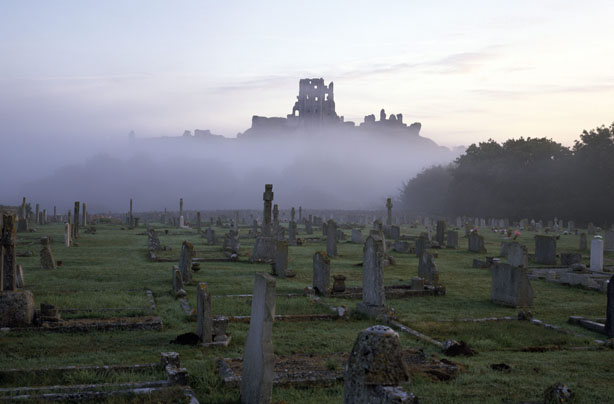
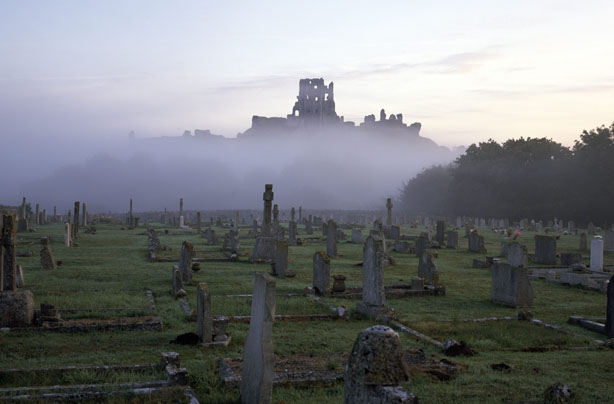
Look at those ruins. Just look at them. This jagged silhouette against the sky is Corfe Castle, and it is a beast. Located on the Isle of Purbeck (part of the famous Jurassic Coast), this place has a vibe that screams “get out.”

Historians say the site is over 5,000 years old. 5,000 years. Let that sink in. That means people were living, fighting, and dying on this hill when the Pyramids were just a blueprint.

It stands as a brutal reminder of Britain’s gruesome past. You want stories? We’ve got imprisonment. We’ve got torture that would make a horror movie director flinch. We’ve got treachery and murder so cold it freezes your blood.

The Boy King’s End

Let’s go back to 978 AD. King Edward the Martyr. He was just a teenager. He rides up to the castle to visit his stepmother, Queen Elfrida. Big mistake.

According to the legend—and historical records that feel way too specific to be fake—she offered him a cup of mead. While he was drinking, one of her henchmen stabbed him in the back. Literally. His horse bolted, dragging his body by the stirrup until he was battered to death. People say his ghost still rides the grounds, terrified and confused.

The Headless Betrayal

But the story that really keeps the locals up at night comes from the Civil War. The Bankes family owned the castle. Lady Bankes, a total powerhouse, defended this place against the Parliamentarians (the Roundheads) for years. She was unstoppable. They couldn’t get in.

Until they were betrayed.

Someone on the inside opened the doors. The castle was sacked, ruined, and left to rot. This brings us to the most famous sighting: the Headless Woman in White. Some say she is the traitor, cursed to roam the battlements forever without her head as punishment for her deceit. Others think she is a victim of the slaughter that followed the breach.

Visitors have reported chilling encounters. Not just “oh, I felt a chill.” We’re talking about hearing the distinct sound of a child crying nearby. A weeping that seems to come from the stones themselves. History tells us a family was overrun here during the Civil War. Was a child hidden in the walls? Left behind in the chaos?

If the visuals don’t do it for you, the audio will. It’s a symphony of misery.

The Fortress of Bones: Carreg Cennen

Shift gears. We are moving to Wales. The Brecon Beacons. Desolate. majestic. Foggy.

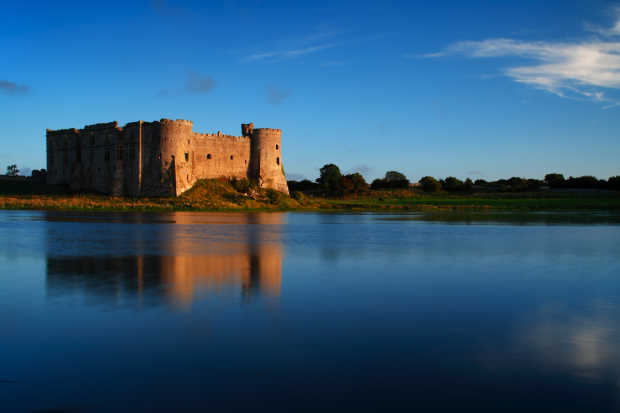
This castle’s position on top of the Brecon Beacons lends to its grand stature, while a sheer cliff face on one side gave it a tactical advantage during the War Of The Roses. But calling it a “tactical advantage” is an understatement. It’s a death trap.

The site dates back to the Iron Age. But here is where it gets weird. Really weird.

The Cave Beneath

Most castles have dungeons. Carreg Cennen has a natural limestone cave running deep beneath the foundations. You have to walk down a precarious, slippery tunnel cut into the cliff edge to get there. It’s pitch black. Damp. Smells like old earth.

Why build a fortress on top of a cave? Alternative historians have some wild theories.

Was it a storage locker? Maybe. A water source? Sure. or was it something else? Iron Age sites often had ritualistic purposes. Some believe the cave was a portal. A place for druidic rites long before the first stone of the castle was laid. During the War of the Roses, this place was a stronghold for the Lancastrians until it was destroyed by Yorkist forces in 1462.

They didn’t just burn it; they tried to erase it. Hundreds of men with pickaxes spent months tearing the walls down to ensure no one could ever use it again. That much anger? That much effort to destroy a pile of rocks? It makes you wonder what they were really afraid of.

Modern hikers report feeling nausea near the cliff edge. A sudden urge to jump. Is it vertigo? Or is it the call of the sheer drop, echoing the hundreds of soldiers who likely met their end falling from that exact spot?


spooky castles

The Tower of Lust and War: Cilgerran Castle

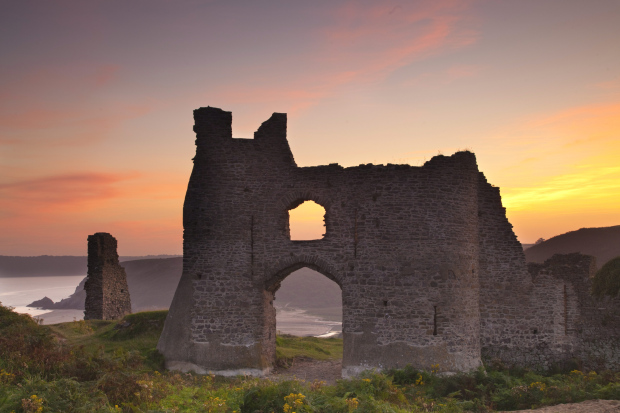
Two tower structures remain of the original building, built in the 13th Century. It sits on a rocky promontory overlooking the Teifi Gorge. It looks romantic, right? Wrong.

This place is largely attributed to Llywelyn the Great. But before he took over, this castle was ground zero for one of the most insane stories in British history.

The Helen of Wales

Prior to Llywelyn’s residency, it saw the abduction of Nest, the wife of Gerald of Windsor. Nest ferch Rhys was a princess, famously called the “Helen of Wales” because she was so beautiful she started wars.
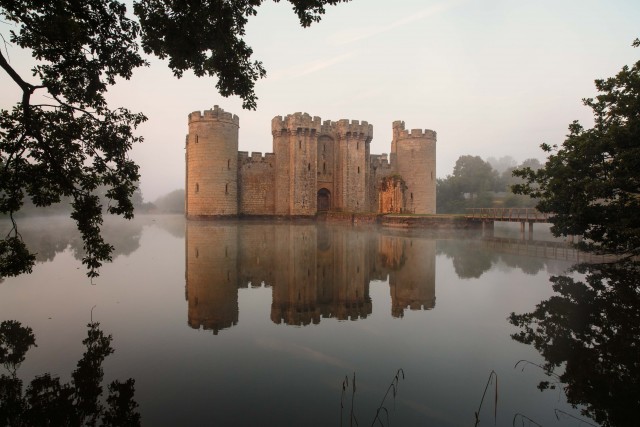
Here’s the scene: It’s Christmas, 1109. Gerald and Nest are in the castle. Her cousin, Owain ap Cadwgan, attacks. He sets the castle on fire. Gerald—her husband!—escapes by climbing down the toilet chute. Yes, the toilet. He leaves his wife behind.

Owain kidnaps Nest and her children. He claims he did it for love. The country erupts into civil war. People died. Villages burned. All because of what happened inside these walls.

The energy here is chaotic. Paranormal investigators suggest that “residual hauntings” are strong in places of high emotion. What has more emotion than a burning castle, a fleeing husband in a latrine, and a kidnapped princess? Visitors often report a feeling of panic in the courtyard. A “fight or flight” response triggered by absolutely nothing.

Is the stone recording the trauma? Is that why you feel like running when you stand near the edge of the gorge?

spooky castles

Why Is The UK So Haunted?

We need to ask the big question. Why here? Why are these islands such a hotspot for the paranormal?

Some theorists point to the “Stone Tape Theory.” The idea is simple: quartz and limestone (which these castles are made of) act like magnetic tape. When something high-energy happens—a murder, a siege, a betrayal—the stone records it. Under the right atmospheric conditions, it plays back.

You aren’t seeing a ghost. You are seeing a recording. A holographic echo of pain.

Others look at Ley Lines—invisible energy grids that crisscross the earth. The ancients knew where to build. They built on the power spots. The Iron Age forts became Roman temples, which became Norman castles. Layers upon layers of history, all sitting on the same charged ground.

So, the next time you visit a UK castle, don’t just look at the gift shop. Touch the walls. Close your eyes. And if you hear a child crying, or see a flash of white… run.

Originally posted 2016-01-27 14:04:17. Republished by Blog Post Promoter