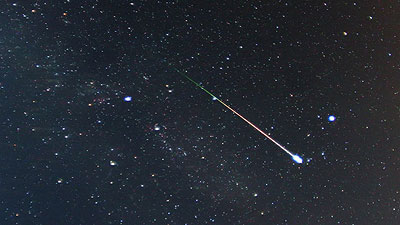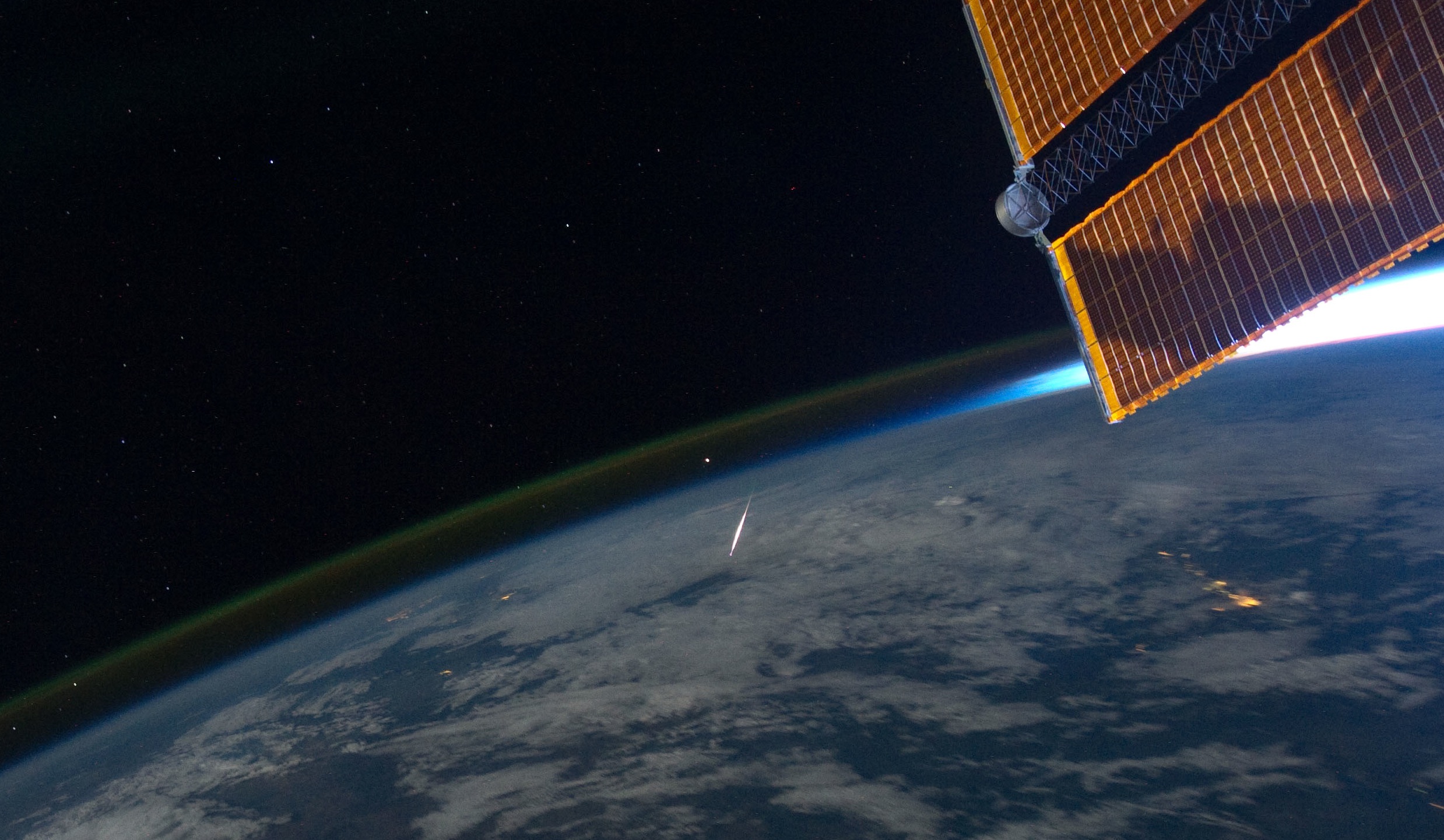
9:40 PM. A quiet Saturday night. The pubs are full, the streets are dark, and for most people in Scotland and the North of England, the biggest worry is catching the last bus home. Then, without warning, the heavens tear open.
It wasn’t just a flicker. It wasn’t a shooting star making a polite little scratch across the blackness. This was violence. Pure, celestial violence.
This is the story of a night when the sky caught fire, panic swept across the UK, and one specific detail—buried in the flood of reports—suggests we might not have been looking at a rock at all.

The Event That Broke the Emergency Lines
Imagine looking up and seeing the roof of the world ignited by an “orange glow” so intense it tricked the eye into thinking it was an aircraft crash. That’s not hyperbole. That is exactly what thousands of people thought they were witnessing.
Police switchboards didn’t just light up; they melted down. Strathclyde Police. Durham Police. Forces across the entire northern stretch of the UK were suddenly dealing with a populace convinced that a plane had gone down, or worse, that something had attacked.
Strathclyde Police admitted they were “inundated” with calls. The descriptors weren’t poetic. They were terrified. “Bright light.” “Fire in the sky.”
The Official Narrative: “Nothing to See Here”
Almost immediately, the machinery of explanation kicked into gear. The Met Office hit Twitter with a casual, almost bored explanation: “Hi All, for anyone seeing something in the night sky, we believe it was a meteorite.”
Case closed? hardly.
Sure, that fits the Occam’s Razor narrative. A rock from the asteroid belt, drifting for billions of years, finally slams into our atmosphere at 40,000 miles per hour. Friction turns it into plasma. It burns up. We say “ooh” and “aah.”
But rocks are dumb. They obey simple physics. They fall. They arc. They burn.
They do not have pilots.
The Witness Account That Changes Everything
While the American Meteor Society was busy logging dozens of standard reports, and people like Michelle Thornton from Birmingham were calling it “outstanding” and “amazing,” a different story was emerging from the noise. A story that shouldn’t exist if this was just a meteor.
Enter Brandi, a witness from Stirling. She didn’t see a rock. She saw something that acted like a machine.
Her report is the glitch in the matrix. It’s the detail that keeps investigators up at night. She initially thought it was a firework. Then, she thought it was a missile.
Why? Because rocks don’t change their minds.

The “Impossible” Turn
Let’s break down Brandi’s statement, because the implications are terrifying if accurate.
She noted the object “stuttered out” and seemed to fade. Okay, that happens. Meteors break apart or pass through different atmospheric densities. But then? It reappeared. And it did the impossible.
“It then reappeared as it continued across the sky, seemingly changing directions slightly – as if around a 15 degree corner.”
Read that again. A 15-degree corner.
Isaac Newton is rolling in his grave. Ballistic objects—stones, dead satellites, debris—follow a parabolic arc. They do not turn corners. To turn a corner, you need drag flaps, thrusters, or a shifting center of gravity controlled by an intelligence or a guidance system. You need agency.
If a “meteor” turns 15 degrees, it isn’t a meteor. It’s a craft.
Deep Dive: The “Skipping Stone” Theory vs. Intelligent Control
Skeptics—and I know you’re out there—will argue for the “atmospheric skip.” Can a meteor bounce off the atmosphere like a stone on a pond? Yes. It’s rare, but it happens. The 1972 Great Daylight Fireball is the most famous example. It came in, hit the atmosphere, and bounced back out into space.
But that’s a vertical bounce. A change in altitude.
Brandi described a lateral shift. A “corner.” That implies horizontal maneuvering. Atmospheric skipping doesn’t typically result in a sharp, 15-degree directional snap followed by a continued powered flight. She noted the tail was “longer than any astral body” she had ever seen.
Let’s look at the color. “Orangey-red.”
- Magnesium burns blue-white.
- Sodium burns orange.
- Liquid Propellant (specifically Hydrazine or dirty solid fuel) can burn with a distinct, erratic orange glow.
Was this a test? In 2012, hypersonic technology was the world’s biggest secret arms race. The US, Russia, and China were all scrambling to build gliders that could enter the atmosphere and—crucially—maneuver to avoid missile defense systems.
A hypersonic glide vehicle doesn’t fall. It surfs. It turns. It banks. If you were a civilian in Stirling looking up, a hypersonic glider banking to adjust its trajectory would look exactly like a “meteor” turning a corner.
The Psychology of the “Fire in the Sky”
Why was the reaction so visceral? Why did Durham Police get reports of a plane crash?
Because we have forgotten what the sky can do to us. We live in cities bathed in artificial light. We don’t look up. When something invades that safe, black dome, our lizard brains scream “Danger!”
This event shares a chilling DNA with the Chelyabinsk meteor that would explode over Russia just a year later in 2013. That monster injured 1,500 people and blew out windows across a city. It proved that the sky isn’t empty; it’s a shooting gallery.
But in the UK incident, the object didn’t explode. It maneuvered (allegedly), dropped lower, and vanished.
The “Stutter” Anomaly
Brandi mentioned the light “stuttered out” and then “reappeared.”
Meteors usually flare and die. They don’t blink. A blinking light suggests a tumbling object (like a dead satellite) or… propulsion. Pulse detonation engines? A dying thruster?
When the Space Shuttle Columbia tragically disintegrated, it didn’t stutter and reappear. It streaked and broke. The behavior described here is erratic. It suggests a struggle to stay aloft, or a deliberate change in profile.
What If It Wasn’t Human?
We have to go there. We can’t talk about lights turning corners in the sky without addressing the elephant in the room. The UAP (Unidentified Anomalous Phenomena) reality.
In recent years, the Pentagon has admitted that objects exist in our airspace that move in ways we cannot replicate. They stop instantly. They accelerate at thousands of Gs. And yes, they make sharp, angular turns at hypersonic speeds.
Witnesses often describe these craft as glowing orbs or “fireballs” when they are powered up. Could the “long tail” Brandi saw be the plasma sheath generated by one of these objects moving at Mach 10?
If an object enters our atmosphere from deep space and decides to take a left turn over Scotland, that is not a rock. That is a visitor.
The Timeline of Panic
Let’s reconstruct the chaos of that night. It wasn’t just a local sighting. It swept the nation.
9:35 PM: The sky is dark. Routine patrols for Strathclyde Police.
9:40 PM: First reports. Not just one or two. A deluge. The switchboards jam. The human brain tries to categorize the unknown. “Plane crash” is the most logical fear. It implies a tragedy, but a known one.
9:45 PM: Social media catches fire. Twitter (now X) becomes the primary news source. Photos—blurry, shaky, terrifying—start to circulate.
10:00 PM: The authorities realize nothing has actually hit the ground. No impact crater. No explosion. Just a silent intruder that came, scared the hell out of everyone, and left.
The Aftermath: The Met Office issues the “meteorite” statement. It calms the herd. Go back to sleep, Britain. It was just a space pebble.
But the witnesses know what they saw. You don’t forget the color of a fire that shouldn’t be there.
Modern Findings: The “Green Fireball” Connection
This isn’t the first time this has happened. In the late 1940s, the “Green Fireballs” plagued the southwestern United States near atomic testing sites. Military pilots saw them. They weren’t meteors. They flew horizontally and tracked aircraft.
Is the UK event a modern echo of this phenomenon? The description of the “head” being bright with warm colors and a distinct tail matches descriptions from Project Blue Book files that were dismissed as “swamp gas” or “meteors” for decades.
With the recent release of the ODNI report on UAPs, we now know the government investigates these “meteors” much more closely than they admit to the public. Did radar track this object? Did it actually leave the atmosphere, or did it dip down into the Atlantic?
We never get that data. We just get a tweet from the Met Office.
Conclusion: Keep Watching the Skies
So, was it a rock? Statistically, yes. It’s the safe bet. It’s the bet that lets you sleep at night.
But statistics don’t account for 15-degree turns. They don’t account for objects that stutter, fade, reappear, and bank like a fighter jet. The universe is massive, violent, and full of mysteries that don’t care about our physics textbooks.
Brandi in Stirling saw something that defied the official explanation. She saw an anomaly. And in the world of conspiracy and truth-seeking, the anomaly is the only thing that matters.
Next time the sky lights up, don’t just say “pretty.” Watch the trajectory. Watch for the turn. Because the moment it turns, you know we aren’t alone.
Originally posted 2016-02-24 12:28:12. Republished by Blog Post Promoter