The Greatest Lie You’ve Ever Been Told About Gold
Stop. Forget everything you think you know about the “City of Gold.” Disney movies? Wrong. Old Spanish legends? Mostly misunderstood. The biggest treasure hunt in human history has been chasing the wrong name for five hundred years.
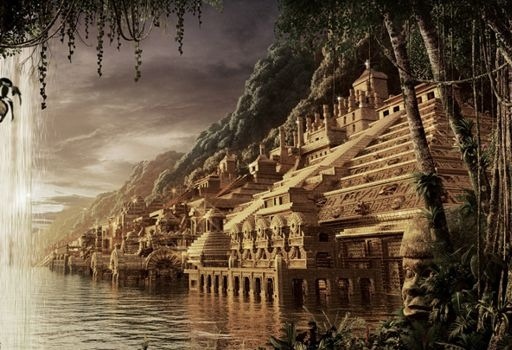
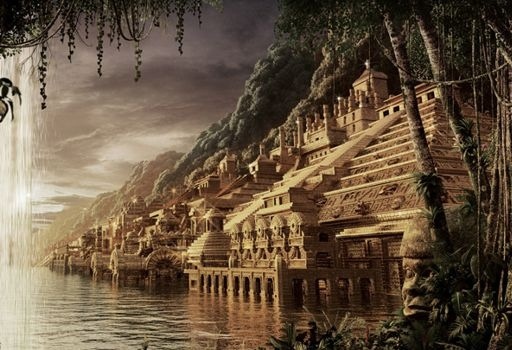
Most people hear “El Dorado” and imagine a sparkling metropolis hidden behind a waterfall, paved with emeralds and gold bricks. That is the Hollywood version. It’s fiction. Here is the cold, hard historical truth: El Dorado was never a city.
It was a man.
Specifically, it was a Muisca Chieftain—”The Golden One.” This guy didn’t live in a city made of metal; he became the metal. Before sacred religious ceremonies, his followers would coat his entire naked body in sticky resin and blast him with gold dust until he looked like a walking, breathing statue. He would raft out to the middle of Lake Guatavita and wash the gold off as an offering to the gods. That is the legend. That’s it.
But the Conquistadors? The Spanish invaders who had just seen the staggering wealth of the Aztecs and the Incas? They didn’t care about nuances. They heard “gold” and “man,” and their greed twisted the story. Over decades of whispers in dusty taverns, “The Golden Man” morphed into “The Golden City.”
Millions of lives were lost searching for a place that didn’t exist.
But here is the twist that keeps archaeologists and treasure hunters awake at 3:00 AM: There really is a lost city. It just has a different name. And unlike the myth of El Dorado, the evidence for this place is stacking up fast.
The real City of Gold is Paititi.
The 40-Year War and the Ghost City
To understand why Paititi exists, you have to look at the blood-soaked history of the Inca Empire’s collapse. It wasn’t an overnight defeat. We tend to think Pizarro showed up, fired a few muskets, and the Incas gave up. No.
The war raged for nearly forty years.
After the initial shock of the invasion, the Inca resistance retreated from Cusco. They pulled back into the dense, suffocating jungles of the Vilcabamba Valley. They established a new capital. A resistance base. From there, they waged a brutal guerilla war against the Spanish invaders, holding them off until 1572. That is a long time to hide a fortune.
Think about the logistics. The Incas were the masters of gold. They called it the “Sweat of the Sun.” It wasn’t money to them; it was spiritual. It was sacred.
When the Spanish finally broke the resistance and marched into the final stronghold of Vilcabamba in 1572, they expected the payoff of a lifetime. They kicked down the doors. They stormed the temples. They readied their sacks.
And found… nothing.
Dust. Wind. Silence.
The city was largely deserted. The royal family was gone. The priests were gone. And most importantly, the massive stockpiles of gold artifacts, the sun disks, the life-sized cornstalks made of solid gold? Gone.
It was a ghost town. It appeared as if the Incas had fled to a new, secret location even deeper in the rainforests, likely moving toward southern Brazil. They didn’t just run; they evacuated. And they took the family jewels with them.
The Legend of the “White City”
Where did they go? You can’t just hide thousands of people and tons of metal. Or can you?
The Amazon rainforest is not just a forest. It is a green ocean. It swallows civilizations whole. You could walk ten feet past a stone pyramid in the Amazon and never see it because the vines and canopy are so thick. This is the “Green Hell.”
For centuries, the story of the refugees’ final destination was dismissed as a myth. It was whispered about by indigenous tribes. They spoke of a city called Paititi, somewhere east of the Andes. A place where the “Jaguar People” lived. A place that shone white in the sun.
Even the Vatican might be involved. In 2001, an Italian archaeologist named Mario Polia discovered a missionary report in the Jesuit archives in Rome. The document, dating back to the 1600s, described a city rich in gold, silver, and jewels, located in the middle of the jungle. The Pope at the time allegedly buried the report. Why? Maybe to prevent a gold rush. Maybe to protect the tribes. Or maybe because the Church wanted it for themselves.
The Google Earth Breakthrough
Fast forward to the 21st century. The machete has been replaced by the satellite.
The new city was never found by guys in pith helmets hacking through the bush. But in 2009, something strange happened. The deforestation of the Amazon is a tragedy, but it had an unintended side effect. It peeled back the roof of the jungle.
Satellite photos of deforested areas in the Boco do Acre region of Brazil revealed something that shouldn’t be there. Nature doesn’t make straight lines. Nature doesn’t make perfect squares or geometric circles.
Yet, there they were.
These vast settlements can be clearly seen on Google Earth. They have forced historians and archaeologists to totally rewrite the textbooks. We used to think the Amazon couldn’t support large civilizations because the soil was too poor. We were wrong. The soil was engineered (terra preta). The settlements were massive.
It now seems possible—even likely—that Paititi really did exist. And hidden within its perimeter is a potential hoard of lost Inca gold that was carried out of Vilcabamba in 1572.
See It For Yourself
Don’t take my word for it. Fire up your computer. You can play archaeologist right now. Zoom in on these coordinates and ask yourself: what kind of “natural formation” looks like that?
Google Earth Reference for Boca do Acre:
Latitude: 8°50’38.63″S
Longitude: 67°15’11.95″W
The $10 Billion Question
Let’s talk numbers. Why is everyone so obsessed with this?
When the Spanish captured the Inca Emperor Atahualpa years earlier, the Incas filled a room with gold to pay his ransom. A room. 22 feet long, 17 feet wide, filled up to a height of 8 feet. That was just one payment. That was the loose change.
The Incas had centuries of accumulation. They had gardens where the flowers were made of gold and silver. They had life-sized statues of llamas. They had plates, cups, and armor.
If the refugees of 1572 managed to transport even a fraction of the imperial treasury to Paititi, the value is astronomical. We aren’t talking about a few coins. We are talking about the heritage of a continent.
The Treasure Profile
Target: Lost City and Gold of Paititi
Status: Lost since 1572 (The Great Evacuation)
Current Estimated Value: $10,000,000,000 (Conservative Estimate)
Contents: Incan gold & artifacts, gold bars, religious icons, emeralds.
Location: Brazil / Peru Border Region (Boco do Acre)
Why Hasn’t It Been Claimed?
If we have the coordinates, why hasn’t someone just gone there and dug it up?
Two reasons: Geography and Protection.
First, the area is still incredibly remote. Even with deforestation, getting heavy equipment in there is a nightmare. It is hot, wet, and full of things that want to kill you—from snakes to disease.
Second, and more mysteriously, many who go looking for Paititi don’t come back. Remember Percy Fawcett? The famous explorer who was the inspiration for Indiana Jones? He went looking for a lost city in this exact same region (he called it the City of Z). He vanished. No body. No trace.
Some say the indigenous tribes in the area are the descendants of those Inca guards, and they are still protecting the city. They are known to be uncontacted and often hostile to outsiders. Maybe they know exactly what lies beneath the earthworks visible from space.
The Modern Theory
The “Geoglyphs” found in Boco do Acre might not be the city itself, but the ceremonial centers surrounding it. The actual residential zones—and the vaults—could be buried deeper, or consumed by the jungle that hasn’t been cut down yet.
Archaeology is undergoing a revolution right now thanks to LiDAR (Light Detection and Ranging). This laser technology can “see” through the trees without cutting them down. In the last five years, LiDAR has revealed thousands of structures in Guatemala and Brazil that we never knew existed. Sprawling metropolises connected by superhighways.
Paititi is out there. The satellite images from 2009 were just the first crack in the door. The gold of the Incas didn’t just evaporate. Matter cannot be created or destroyed. It is sitting there, waiting.
The only question is: Are we brave enough to find it? Or should some mysteries stay buried?
Originally posted 2013-12-14 14:08:30. Republished by Blog Post Promoter