Thursday, June 4, 2026
HomeWeird WorldScienceBrilliant Computer Scientists Solved the Bermuda Triangle Mystery

Brilliant Computer Scientists Solved the Bermuda Triangle Mystery

The Ocean’s Burp: Did Massive Gas Explosions Swallow the Bermuda Triangle?

It happens in seconds. The water, usually a deep, calm blue, suddenly turns white. It froths. It boils. A massive ship, thousands of tons of steel and cargo, doesn’t just sink. It drops. It falls through the surface of the ocean as if a trapdoor had opened beneath the waves. No distress signal. No wreckage. No survivors.

For decades, we’ve blamed everything under the sun. Rogue waves. Time warps. Magnetic anomalies. Even Atlantis or little green men snatching planes out of the sky. The Bermuda Triangle has been the ultimate boogeyman of the high seas, a patch of ocean that eats travelers alive.

But what if the monster isn’t supernatural? What if the monster is just… gas?

That’s right. The most terrifying theory to hit the wires in years suggests the Triangle isn’t haunted. It’s suffering from a massive geological case of indigestion. We are talking about methane. Billions of cubic feet of it. Exploding from the seafloor with the force of a nuclear bomb, turning the ocean into a frothy soup that can’t support the weight of a paper boat, let alone a tanker.

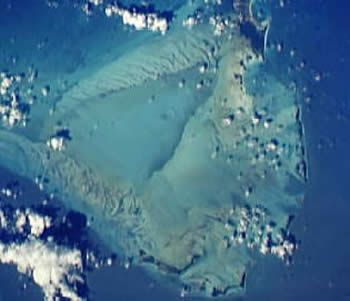
The Bermuda Triangle

The “Gas Kills” Hypothesis

Forget the aliens. Put down the tin foil hat. According to a groundbreaking study out of Australia, the answer to the mystery of the Bermuda Triangle—and other “Vile Vortexes” around the globe—is simple physics. Terrifying, destructive, unpredictable physics.

Professor Joseph Monaghan and honor student David May, researchers at Monash University in Melbourne, Australia, cracked the code. Their research, published in the American Journal of Physics, lays out a scenario that is practically out of a disaster movie.

Their theory centers on methane hydrates. Picture this: deep under the ocean floor, frozen in the rock and sediment, are massive pockets of natural gas. It’s the same stuff that heats your stove. Down there, under the crushing pressure of the deep sea and the freezing temperatures, the gas gets locked inside ice crystals. It sits there. Waiting.

It’s a ticking time bomb.

Monaghan and May proposed that tectonic shifts, warming waters, or even a small earthquake can knock these gas pockets loose. When that happens, the solid ice turns back into gas instantly. It expands. It rises.

The Physics of a Mega-Bubble

This isn’t a few bubbles from a scuba diver. This is a “mega-bubble.” Imagine a bubble of gas the size of a skyscraper roaring up from the abyss. As it rises, the pressure decreases, and the bubble expands geometrically.

By the time it hits the surface, it’s a monster.

Here is where the nightmare starts for any ship unlucky enough to be passing through. Ships float because of buoyancy. Archimedes’ principle. The water pushes up against the hull with a force equal to the weight of the water displaced. Saltwater is dense. It holds the ship up.

But when a methane mega-bubble breaches the surface, the water isn’t water anymore. It becomes a mixture of gas and water. It becomes foam.

Foam has significantly less density than solid water. Suddenly, the math changes. The water can no longer support the weight of the ship. The buoyancy vanishes instantly. The ship doesn’t slide under the waves; it plummet straight down, hitting the ocean floor before the crew even knows they are sinking. It’s like stepping onto a floor made of tissue paper.

The Monash Experiments: Proving the Horror

Monaghan and May didn’t just sit around drawing diagrams. They wanted proof. They needed to see if a bubble could actually swallow a vessel.

They turned to computer modeling first. Using advanced fluid dynamics software, they simulated the velocity, pressure, and density of a methane eruption. The computer spit back a grim result: Confirmed. If the bubble is big enough and the ship is in the wrong spot, it’s game over.

But computer screens are one thing. Reality is another. So, they built a tank.

The researchers constructed a large water tank to simulate the open ocean. They floated toy ships on the surface—stand-ins for the freighters and yachts that have vanished in the Triangle over the last century. Then, they released large methane bubbles from the bottom.

The Kill Zone

The results were chilling. The physical tests mirrored the computer models perfectly. The destruction depended on where the ship was relative to the bubble:

  • The Edge: If the ship was on the outer rim of the bubble, it might tip, rock violently, but potentially survive.
  • The Center: If the ship was positioned near the center of the bubble when it surfaced, it was doomed. The ship lost all lift. It fell through the water column.

But the horror doesn’t stop with the sinking. The experiment showed something else. When the bubble bursts, the water rushes back in to fill the void. This creates a high-velocity jet of water—a geyser—that slams down onto anything remaining. If the fall didn’t kill the ship, the rebounding jet of water would smash it into the murky depths in seconds.

Not Just Ships: The Aircraft Mystery

This is where the theory gets truly wild. We all know the stories. Flight 19. The Avenger torpedo bombers that went missing in 1945. The rescue plane that went after them and also vanished. Ships sinking is one thing, but how does an ocean bubble take down an airplane flying at 10,000 feet?

Monaghan and May have an answer for that, too.

When these massive bubbles explode at the surface, the gas doesn’t just stop. It shoots into the atmosphere. Methane is lighter than air. It creates a gigantic plume of invisible gas rising rapidly into the sky.

Any aircraft flying into this plume faces a triple threat:

  1. Engine Failure: Airplane engines are designed to burn jet fuel mixed with oxygen-rich air. If the plane flies into a cloud of pure methane, the oxygen levels drop. The mix is wrong. The engines can choke and stall instantly.
  2. Explosion: Methane is highly flammable. The heat from the aircraft engine could ignite the gas cloud. The pilot wouldn’t just stall; they would be flying inside a bomb.
  3. Loss of Lift: Just like the ship in the water, a plane relies on the density of the air over its wings to generate lift. Methane is less dense than normal air. If the plane hits a pocket of low-density gas, the wings stop working. The altimeter creates a false reading. The plane drops out of the sky.

The pilot would be confused, the instruments would go haywire, the engine would scream, and then… silence.

The Ghost Ships: Dead Without a Scratch

One of the creepiest aspects of the Bermuda Triangle lore involves “Ghost Ships.” These are vessels found drifting aimlessly. The coffee is still warm. The lifeboat is still attached. But the crew is gone. Or worse—the crew is found dead at their stations, with no sign of violence.

The methane theory explains this grim puzzle.

If a ship encounters a bubble that is large, but not large enough to sink it immediately, the danger becomes biological. As the bubble bursts, it releases a massive, concentrated cloud of methane gas. Methane displaces oxygen. It’s an asphyxiant.

A ship sailing through the aftermath of a “gas burp” would be enveloped in an invisible, odorless cloud (pure methane has no smell; the smell we know is added by utility companies). The crew would breathe in, but get no oxygen. They would pass out and die within minutes. The ship, undamaged, would drift on, a floating tomb carried by the currents.

Ivan T. Sanderson and the Vile Vortexes

This phenomenon isn’t limited to the stretch of ocean between Miami, Bermuda, and Puerto Rico. In the 1960s, researcher Ivan T. Sanderson identified twelve areas around the world where disappearances seemed to cluster. He called them the “Vile Vortexes.”

Sanderson noted that these areas weren’t really triangles. They were lozenge-shaped. They lined up along specific latitude lines.

The most famous, besides Bermuda, is the Dragon’s Triangle (or Devil’s Sea) off the coast of Japan. The Japanese government has officially labeled this area a danger zone. Why? Because ships vanish there. And guess what? The Devil’s Sea is geologically active. It is littered with underwater volcanoes and deep trenches—the exact kind of environment where methane hydrates build up and explode.

The North Sea, located between Britain and continental Europe, is another hotspot. It’s cold, rough, and sits on top of massive natural gas reserves. It’s a prime candidate for these blowouts.

Modern Evidence: The Craters of the North

Skeptics have argued against the methane theory for years, claiming it’s just speculation. But modern technology is starting to prove the believers right. Oceanographic surveyors scanning the sea floor in the North Sea and near the Bermuda Triangle have found the smoking gun.

Craters.

Sonar scans have revealed giant pockmarks on the ocean floor. These aren’t impact craters from asteroids. They are eruption sites. These are the scars left behind when massive pockets of methane hydrate blow their tops. Some of these craters are miles wide.

Sunken vessels have been located suspiciously close to these venting sites. It’s the forensic evidence we’ve been waiting for. The ocean floor is effectively a minefield, and for centuries, we’ve been sailing blind.

Why Now? The Warming Ocean

Here is the part that should keep you up at night. Methane hydrates are stable when they are frozen. They need high pressure and low temperature to stay locked in the rock. But the oceans are warming.

As water temperatures rise, even by a fraction of a degree, these frozen gas deposits become unstable. The ice melts. The gas expands. The structural integrity of the sea floor weakens.

Are we seeing fewer disappearances today because of better GPS and radar? Or are we sitting on a keg of dynamite that is slowly heating up? Some scientists worry that as the climate changes, these methane eruptions could become more frequent. A “burp” that releases millions of tons of methane isn’t just a danger to ships; it’s a massive greenhouse gas release that accelerates the warming cycle.

A Mystery Solved, or Just Begun?

The beauty of the Monaghan and May hypothesis is that it ties up the loose ends. It explains the disappearances. It explains the lack of wreckage (the ship is buried under sediment displaced by the explosion). It explains the instrument malfunctions. It explains the dead crews.

Does it explain every disappearance? Probably not. The ocean is vast and dangerous. Human error, pirates, and hurricanes will always claim their share of victims. But the Methane Hydrate theory moves the Bermuda Triangle from the shelf of “science fiction” to the shelf of “science fact.”

The next time you fly over the deep blue Atlantic, look down. That calm surface might be hiding a monster. Not a squid. Not a portal to another dimension. But a bubble. A silent, invisible, rising killer that has been swallowing sailors for centuries.

The Triangle doesn’t need magic to be deadly. It just needs gas.

Arindam Mukherjee
Arindam Mukherjee
Arindam loves aliens, mysteries and pursing his interest in the area of hacking as a technical writer at 'Planet wank'. You can catch him at his social profiles anytime.
RELATED ARTICLES
- Advertisment -

Most Popular

Recent Comments

Warren Pan Abbott on The legend of the Devil Monkey !
chris davies on The McPherson Tape Mystery
Reed Reedly on ET has Internet!
Bea Houseoffashion on Proof Of Time Travellers – Gallery
Marcus2012 on ET has Internet!
Reed Reedly on ET has Internet!
LaughsAtConspiracyNuts on The 9/11 Conspiracy – Myths and Facts
Alex Sliverman on Did the ancients fly?
Doctor Wholigan on Time Traveler in 1938 film
chris davies on The McPherson Tape Mystery
Archie1954 on 10 secret UFO hideouts
chris davies on Ghosts of flight 401
Marcus2012 on ET has Internet!
jason Macdonald on Proof of Time Travel? – China
chris davies on Long-Lost Pyramids Found?
Reed Reedly on ET has Internet!
Milkman on Connected Universe
Tenmiles on Baigong Pipes Mystery
Simon Foster on Sirius – The Documentary
From the 1st April on 2013 – Alien Contact date ?
SkyWatcher on Is ET ignoring us?
I Come From The Future on Obama to make UFO Alien disclouser soon ?
ÛñK?øWn on 2013 – Alien Contact date ?
Just another person on 2013 – Alien Contact date ?
Malcolm Windowcleaner on The strange case of Rudolph Fentz
Mason Servio on Strange Things on Mars
Marke Wisdom Seeker on What will we find as arctic melts?
Andrea A Elisabeth Levyne on Aliens Captured in Varginha, Brazil
Mitch Grouyeki on Amazing Space Shuttle pictures