Home Weird World Strange Stories Skegness Monster! Mysterious sea creature spotted

Skegness Monster! Mysterious sea creature spotted

0
65

The Skegness Monster: Was a Prehistoric Beast Filmed Off a UK Beach?

Forget Loch Ness. Forget the murky, peat-stained waters of the Scottish Highlands. For a moment, let’s turn our eyes to the bracing, choppy waves of the North Sea. To a place you’d never expect.

Skegness.

A classic British seaside resort. Famous for its pier, its fish and chips, its cheerful holidaymakers. The last place on Earth you’d expect to find a monster. But on one fateful day, the vacation crowds saw something that defied all explanation. Something big, dark, and very much alive just yards from the shore. The story they told us was simple. The truth? The truth is buried much deeper.

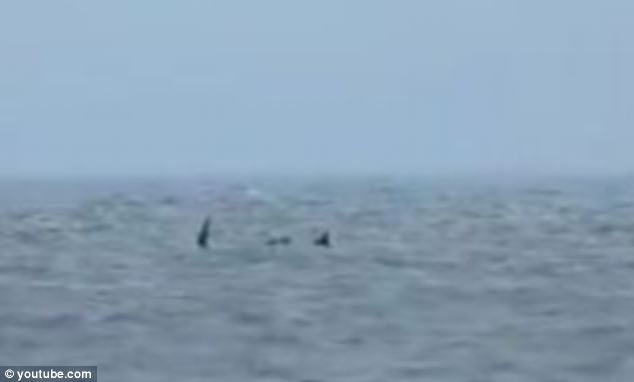
The grainy video footage spread like wildfire. A dark, humped shape breaks the surface of the water. Then another. And another. It’s not one thing. It’s a series of fins, or humps, moving with a purpose that is both alien and terrifyingly real. Children are paddling nearby, oblivious. Onlookers gasp. The immediate comparison was obvious. It looked just like the classic descriptions of Nessie.

But this wasn’t a land-locked lake. This was the open ocean. And the creature of Skegness was about to become one of the UK’s most baffling modern mysteries.

Skegness Monster! Mysterious sea creature spotted

A Day at the Beach Goes Wrong

Imagine the scene. A typical summer’s day on the Lincolnshire coast. The sun is out, families are spread across the sand, and the biggest worry is keeping the seagulls away from your chips. Then, a few people notice it. A disturbance in the water, far too large to be a seal. Too strange to be a piece of debris.

Miss Clarke, the holidaymaker who captured the now-infamous footage, initially dismissed it. Just some trash, maybe? A floating bin bag? But then it moved. It rose from the water with a strange, deliberate motion. She grabbed her camera and started filming, capturing a spectacle that would puzzle experts and ignite the imaginations of monster-hunters worldwide.

Her own words paint a picture far stranger than the official explanation allows. “It might seem silly,” she said, “but I thought it looked rather reptilian, like a crocodile or a dragon as the fins seemed more rigid than they do on sharks.”

Reptilian. Dragon. Rigid fins.

Those are not words you use to describe a fish. Ever. Her instincts screamed that she was seeing something ancient, something that didn’t belong in the 21st century. And maybe, just maybe, she was right.

The Official Story: Just a Harmless Basking Shark?

Almost as quickly as the video appeared, the “experts” arrived to pour cold water on the whole affair. The consensus was swift, clinical, and crushingly boring. It was a basking shark. Or maybe two or three of them swimming in a line.

Case closed. Nothing to see here. Go back to your ice cream.

On the surface, it almost makes sense. The North Sea is home to basking sharks, the second-largest living fish after the whale shark. They are gentle giants, filter feeders who pose no threat to humans. They can grow up to 40 feet long, and their large dorsal fin, followed by their tail fin, could potentially create the illusion of two separate creatures or a long, humped beast.

Deep Dive: The Basking Shark Alibi

Let’s play devil’s advocate. Let’s really look at the shark theory. Basking sharks are known to engage in “tandem swimming” or “nose-to-tail” following behaviors, especially during courtship. If three large sharks were swimming in a perfect line, with their dorsal and caudal (tail) fins breaking the surface, could it produce the effect seen in the video? From a distance, to the untrained eye, it’s plausible. You’d see a series of fins breaking the water in succession, giving the impression of one very long, multi-finned animal.

This behavior is well-documented. Marine biologists would nod sagely and say it’s the most logical, rational explanation. It fits the location. It fits the general size. It’s a neat little box to put the mystery in.

But the box doesn’t quite close.

The problems start when you look closer. When you listen to the eyewitness. Basking shark fins are floppy, often curving backward. The witness, Miss Clarke, was adamant that the fins she saw were “rigid.” More like a dragon’s spine. Furthermore, the classic basking shark sighting involves a dorsal fin and a tail fin. The video seems to show multiple, similarly-sized humps or fins. And what about the main body? The witness saw a “humped-back,” a solid mass that reminded her of the legendary Scottish beast. Basking sharks are massive, but they don’t typically present a large, solid hump above the water like a whale might.

The official story feels too easy. It explains away the sighting without truly addressing the strange details that make it so compelling. It ignores the gut feeling of the person who was actually there.

Beyond the Shark: Unlocking the Depths

If we reject the simple answer, we are left with some mind-bending possibilities. What if something far stranger was lurking off the coast of Skegness? What if the “official story” is just a cover for a reality we’re not supposed to know about?

What If It Was the Loch Ness Monster… on Vacation?

It sounds absurd, right? But think about it. The one creature the Skegness sighting was most compared to was Nessie. The classic image of Nessie is that of a plesiosaur, a long-necked marine reptile thought to have died out with the dinosaurs 65 million years ago. For decades, the primary argument against the plesiosaur theory for Loch Ness has been that a single, isolated lake could never support a breeding population.

But what if Loch Ness isn’t their home? What if it’s just one stop on a much larger journey?

Loch Ness is connected to the sea via the River Ness and the Caledonian Canal. While navigating the locks of the canal seems unlikely, the river itself flows into the Moray Firth, which opens directly into the vast, deep, and mysterious North Sea. Could a population of these creatures live in the deep trenches of the sea, only occasionally venturing into freshwater lochs? This would solve the “breeding population” problem overnight. A sighting off Skegness, on the same North Sea coast, suddenly looks less like a random event and more like a piece of a much larger puzzle. A creature from the deep, following migratory patterns we can’t begin to comprehend.

Deep Dive: The Lost World of Doggerland

Let’s go even deeper. Thousands of years ago, the North Sea wasn’t a sea. It was a vast, low-lying plain of hills, rivers, and marshlands known as Doggerland, connecting Britain to mainland Europe. As the last Ice Age ended and the glaciers melted, the sea levels rose, flooding this massive land bridge and creating the sea we know today.

What if some of the unique ecosystems of Doggerland—deep inland lakes, massive river systems—didn’t just disappear? What if they were simply submerged, creating pockets of unique deep-sea environments? Is it possible that creatures from a bygone era, trapped by the rising waters, managed to survive and adapt in the cold, dark depths? A sighting like the one at Skegness could be a rare glimpse of this hidden world. A survivor from the lost world of Doggerland, briefly surfacing into our reality before sinking back into the abyss.

The Dragon of the North Sea

Let’s not forget the witness’s most chilling description: “dragon.” For centuries, sailors and fishermen have told tales of sea serpents and dragons in the North Sea. These weren’t just fanciful stories; they were treated as real dangers of the deep. Old sea charts are littered with warnings: “Here be dragons.”

Were these all just misidentifications of whales and giant squid? Or were our ancestors seeing something real? Something that, by and large, remains hidden in the depths, but on rare occasions, ventures close to shore. The creature’s “rigid” fins, its reptilian appearance—it aligns perfectly with these ancient legends. Perhaps Miss Clarke didn’t just film a shark; perhaps she captured a genuine sea serpent on camera, the very same beast that terrified Viking longships a thousand years ago.

See the evidence for yourself. Does this look like a shark to you?

The Internet Digs Deeper

In the years since the sighting, the grainy footage has become a cult classic in online cryptozoology circles. While the mainstream media moved on, digital sleuths went to work. The video was stabilized, sharpened, and analyzed frame-by-frame. And the debates still rage.

Forum users have pointed out what they claim is a non-sharklike head briefly breaking the surface at the 15-second mark. Others have run audio analysis on the clip, claiming to filter out the crowd noise to reveal a low-frequency underwater vocalization that doesn’t match any known marine animal in the region.

Of course, this is the internet. These claims are unverified and hotly contested. Skeptics argue it’s just pixelation, wave distortion, and wishful thinking. But the sheer dedication of people trying to find the truth shows how deeply this sighting affected those who refuse to accept the easy answer. They, like the original witness, saw something that didn’t fit. Something ancient.

A Mystery That Won’t Die

So what was in the water at Skegness?

Was it just a few basking sharks on a leisurely swim, their fins creating a monstrous illusion for excited holidaymakers? This is the safe answer. The one that lets us sleep at night. The one that keeps the world tidy and known.

Or was it something more?

Was it a living fossil from the age of dinosaurs, a North Sea plesiosaur venturing south from its Scottish hunting grounds? Was it a survivor from the drowned world of Doggerland, a creature out of time? Or was it the physical manifestation of a myth, the “dragon” of mariners’ nightmares, proving that the old legends were true all along?

The footage remains. The eyewitness account stands. The official story feels hollow. Out there, in the cold, grey waters of the North Sea, secrets are still kept. The Skegness Monster sighting was a brief, tantalizing tear in the fabric of our reality, a glimpse into a world far older and stranger than our own. The experts can call it a shark. But a question mark will forever hang over the choppy waves of that English seaside town. A question mark shaped like the hump of a monster.

Originally posted 2016-03-24 04:27:54. Republished by Blog Post Promoter