Home Alien Life Ancient Aliens – cave paintings

Ancient Aliens – cave paintings

0
74

History’s Hidden Code: Is Proof of Alien Contact Hiding in Plain Sight?

Forget what they taught you in art history class. Forget the dusty textbooks and the hushed tones of museum guides. We’re told that ancient art is a window into the past—a record of their gods, their myths, their daily lives. But what if it’s more? What if it’s a record of their *visitors*?

The truth isn’t buried in a government vault in Nevada. It’s not locked away in a secret file. It’s been hanging on walls, carved into rock, and woven into grand fabrics for thousands of years. It’s a global phenomenon, a silent scream across the centuries, depicting beings and machines that simply should not have existed. These aren’t just artistic quirks or symbolic fantasies. They are patterns. They are eyewitness accounts.

And once you see it, you can’t unsee it. Ever.

Whispers from the Stone Age: The Val Camonica Spacemen

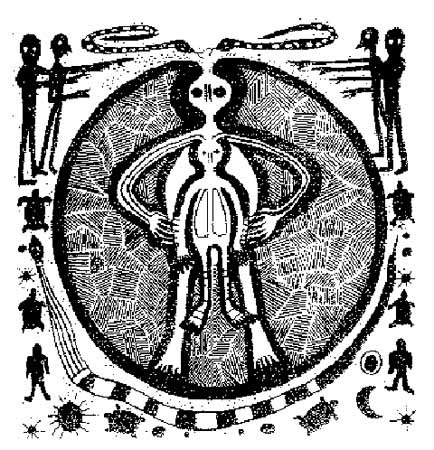
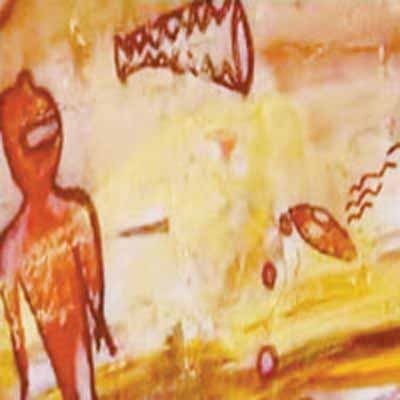
Let’s travel back. Way back. Before the pyramids. Before the first written word. We’re in Val Camonica, Italy, a stunning valley in the Alps. The timeline? A mind-boggling 10,000 BC. Here, an ancient people known as the Camuni spent thousands of years carving more than 200,000 figures into the valley’s rock faces. They carved animals they hunted. They carved village scenes. They carved symbols of their world.

And then, they carved this.

20130615-235953.webp

Look at it. Really look. These are not hunters. They are not animals. They are tall, humanoid figures encased in what can only be described as protective suits. Their heads are massive, perfectly round, and feature what look like helmets with radiating lines—antennas? A halo of energy?

And their hands. They aren’t holding spears or bows. They hold strange, unidentifiable implements. The figures seem to loom over the other, smaller carvings of regular people and animals. They are different. They are superior.

Deep Dive: Who Is Lying on the Rocks?

Skeptics and mainstream archaeologists have a ready-made explanation, of course. They always do. “They’re shamans in ritualistic costumes,” they say. “The halo is a representation of spiritual power.”

A plausible theory? Maybe. On its own. But it starts to fall apart when you apply basic logic. Why would a “spiritual power” halo look so much like a modern depiction of a helmet’s energy field or radiating signals? Why would a “ritual costume” so closely resemble the bulky, life-supporting suits we designed for our own astronauts ten thousand years later?

The Camuni people carved what they saw. They carved deer, men with spears, and the sun. When they drew a deer, it looked like a deer. Why, when they drew their “gods” or “shamans,” did they look exactly like visitors from another world? It’s a question that echoes from those ancient stones, and the official explanations feel hollow. It was a message. A record. They drew what they saw.

The Kiev Figurine: Another Suited Anomaly

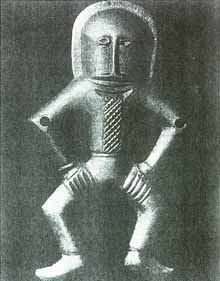
The trail doesn’t end in Italy. Thousands of miles away, and thousands of years later, another clue surfaces. This time, in Kiev, Ukraine, dating to around 4,000 BC. It’s not a rock carving. It’s a small, detailed statuette.

20130616-000255.webp

The resemblance is chilling. Once again, we see a figure in a sealed suit. The helmet is massive, with a visor-like slit. There are no clear facial features. It’s a helmet. A pressure suit. There’s no other way to describe it. Was this a toy? An idol? A scale model of a visitor that a terrified, yet fascinated, ancient artist created to commemorate an encounter?

Think about the distance and the time gap. Val Camonica, 10,000 BC. Kiev, 4,000 BC. Two completely different cultures, separated by millennia and a continent, are depicting the *exact same concept*: a being in a strange, technological suit. This isn’t a coincidence. This is a pattern. And the pattern is just getting started.

When Flying Saucers Crashed the Renaissance

Let’s jump forward in time. To an age of supposed enlightenment, reason, and profound religious faith. The Renaissance. This is where the evidence goes from strange carvings to undeniable, full-color depictions of advanced aerial craft, often hidden within the holiest of subjects: Christian art.

Artists were the cameras of their day. They painted what they saw, or what they were told to see. But sometimes, they painted something else. Something in the background. Something that didn’t belong. A secret for those with eyes to see.

Flying Discs Over Bruges

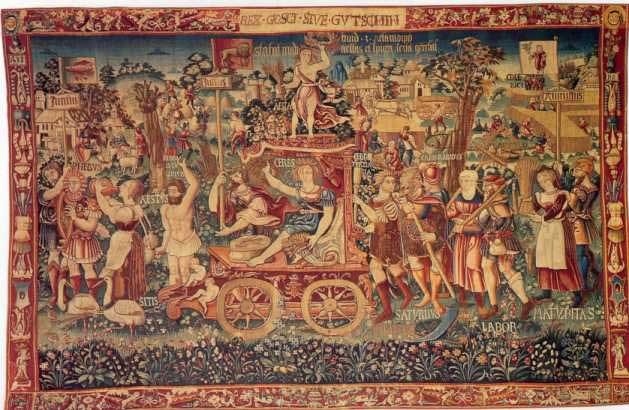
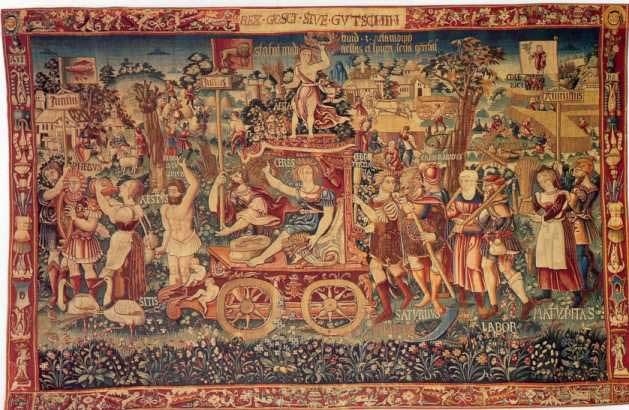
Our first stop is a magnificent 16th-century woven scene, created in Bruges, Belgium, in 1538. It’s called “Summer’s Triumph,” and it depicts a ruler’s rise to power. But look up. Look at the sky.

20130616-000548.webp

Floating along the top border are several dark, disc-shaped objects. They are not birds. They are not the fluffy, stylized clouds you see in other art from this period. They are solid. They are distinct. They look like a fleet of UFOs, silently observing the human events below.

Art historians will tell you these are symbolic representations of divine intervention or a nod to a comet sighting. But do they look like comets? Do they look like angels? They look like machines. Why would an artist in 1538 choose this specific, unnatural shape to represent God’s blessing? Unless… it wasn’t a symbol. Unless it was a memory of something seen in the skies over Belgium.

A Divine Baptism… From a UFO?

Now, let’s get even more direct. This isn’t a subtle object in the background. This is the main event. The painting is “The Baptism of Christ,” created in 1710 by Flemish artist Aert De Gelder. It hangs in the Fitzwilliam Museum, a quiet, respected institution.

But the painting is anything but quiet.

20130616-000727.webp

Forget a dove descending from the heavens. Above Jesus and John the Baptist, a massive, silvery, disc-shaped craft hovers in the broken clouds. It is unmistakably a flying saucer, the kind of object reported by thousands of witnesses in the 20th and 21st centuries. And from this craft, four distinct beams of light shine down, directly onto the baptism.

The “voice from the heavens” described in the Bible—was it coming from this ship? Was the divine anointing a beam of advanced technology? Aert De Gelder was a student of Rembrandt; he was a master painter, not some fringe amateur. He knew exactly what he was painting. What inspired him to merge one of the most sacred moments in Christianity with a depiction of a non-terrestrial vehicle? Was he exposing a hidden truth about the nature of miracles?

Starfighters at the Crucifixion

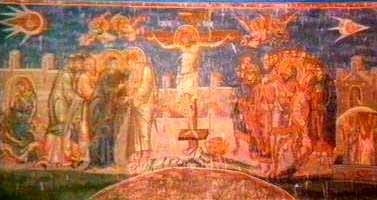
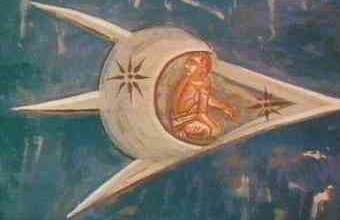
Perhaps the most shocking examples are found painted directly onto the walls of the Visoki Decani Monastery in Kosovo. The fresco, dating back to 1350, depicts the crucifixion of Christ. A solemn, tragic scene.

Until you look in the upper corners.

20130616-000826.webp

On the left and right, we see two craft speeding through the sky. These are not angels or meteors. They are teardrop-shaped vehicles, and more importantly, *there are pilots inside*. You can see them! The figure in the lead craft is looking forward, seemingly operating their vehicle. The one in the craft behind is looking back over their shoulder, as if in a chase or a dogfight.

The mainstream explanation is that these are personifications of the sun and the moon. A weak and frankly absurd defense. When has the sun or moon ever been depicted as a mechanical craft with a person inside, hunched over controls? Look at the “exhaust” trails behind them. It’s a depiction of powered flight.

What were two flying vehicles doing in the sky during the crucifixion? Were they observers? Participants? The implications are staggering, and they are painted right onto a monastery wall for all to see.

The Madonna and the Man Who Saw Too Much

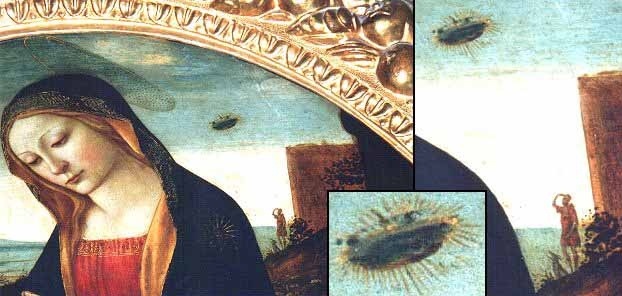
This next one is a favorite among internet sleuths and for good reason. It’s called “The Madonna with Saint Giovannino,” painted in the 15th century by the renowned Domenico Ghirlandaio. At first glance, it’s a typical religious scene. Mary, the infant Jesus, and John the Baptist.

But the artist hid something extraordinary in the background. Look over Mary’s right shoulder.

20130616-000908.webp

It’s a dark, oval-shaped object floating in the sky, radiating a golden light. It is clearly a structured craft. And just to make sure we don’t miss it, the artist included a witness.

20130616-000913.webp

Below the object, on a rocky outcrop, a man is standing with his dog. He is shielding his eyes with his hand, looking directly up at the strange craft. Even his dog is looking up and seems to be barking at it. This isn’t symbolism. This is an event. It’s a man and his dog reacting to a UFO in the skies of 15th-century Florence.

Why would Ghirlandaio, a master of his craft, include such a bizarre and specific detail? Was this a common sight? Was he trying to tell us that these divine events were always watched over by beings not of this world?

The Annunciation by Directed Energy Beam

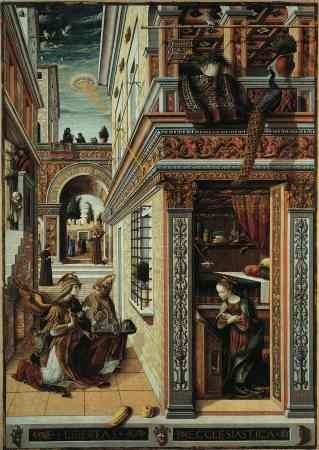
Our final piece of evidence is perhaps the most technologically specific. It’s “The Annunciation with Saint Emidius” by Carlo Crivelli, painted in 1486. The painting depicts the moment the angel Gabriel announces to the Virgin Mary that she will conceive the son of God.

Again, look at the sky.

20130616-001010.webp

There is no gentle, divine glow. Instead, there’s a perfectly circular vortex of clouds that looks suspiciously like a mothership. From the center of this disc, a pencil-thin beam of golden light shoots down at a precise angle. It passes through a small opening in the building’s facade and strikes Mary directly on the head.

20130616-001059.webp

This isn’t a vague “holy spirit.” This is a depiction of a directed energy beam. The immaculate conception, presented here, looks less like a miracle and more like an advanced biological procedure conducted from an aerial vehicle.

The object in the sky is so detailed, so structured, so clearly a machine. Was Crivelli simply using the artistic language of his time? Or was he passing down a story, a truth about the event, that was far more technological and strange than the version we read in the Bible?

The Verdict Written in Paint and Stone

One strange painting is an anomaly. Two is a curiosity. But this? This is a library of evidence. Across continents, cultures, and thousands of years, our ancestors were telling us the same thing. They saw beings in suits. They saw craft in the sky. They documented it the only way they knew how.

They didn’t have cameras, so they used brushes. They didn’t have word processors, so they used chisels. They left us a visual record that is so obvious, so blatant, that we have been trained to ignore it, to explain it away with flimsy academic theories.

Are these all just coincidences? A global, multi-millennial misunderstanding of cloud formations and shamanistic headwear? Or are we looking at the greatest cover-up in human history, a truth hidden in the most public places imaginable?

The evidence is there. It’s been waiting for us. The only question left is: What are we going to do about it?

Originally posted 2013-10-24 08:11:50. Republished by Blog Post Promoter