Home Weird World Strange Stories The shocking true story of Issei Sagawa

The shocking true story of Issei Sagawa

0
79
The shocking true story of Issei Sagawa

The Celebrity Cannibal: How Issei Sagawa Ate a Woman and Walked Free

Some stories defy belief. They crawl under your skin and stay there, a cold lump of pure, unadulterated wrongness. This is one of those stories. It’s a tale that begins in the romantic heart of Paris and ends in the bizarre world of Japanese celebrity culture. It’s about a man who committed one of the most heinous acts imaginable and, instead of paying for it, became a star.

Forget everything you think you know about justice. Forget sanity. Forget reason.

We need to talk about Issei Sagawa.

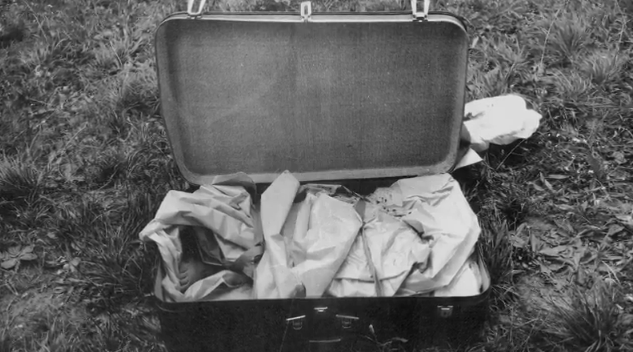
On a seemingly ordinary afternoon, June 13, 1981, people strolling through the idyllic Bois de Boulogne, a sprawling park on the edge of Paris, saw something strange. A small Japanese man, struggling. He was wrestling with two heavy, tan suitcases, trying to dump them into a lake. He failed. He fled. The suitcases remained.

What police found inside would spark a media firestorm and a decades-long nightmare. The contents were the butchered remains of a young Dutch student named Renée Hartevelt. And the man with the suitcases? He hadn’t just killed her. He had been eating her for three days.

A Shadow in the Making: The Boy Who Craved Beauty

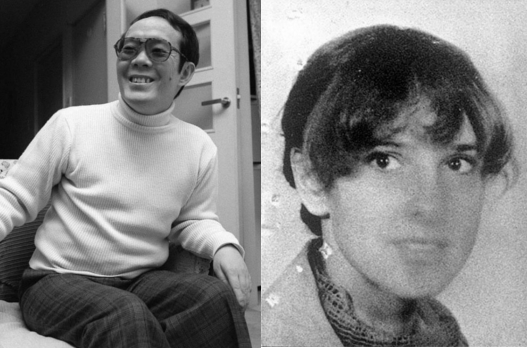
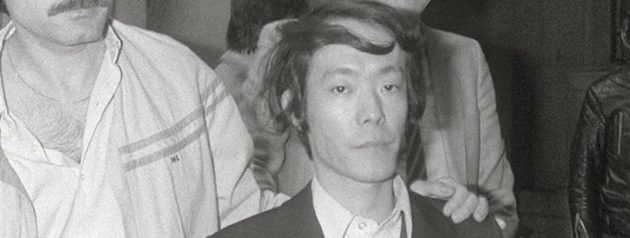
Who was this man? Issei Sagawa wasn’t some hulking monster from a horror film. He was born in 1949, the son of a wealthy and powerful Japanese executive. He was born premature, a tiny, frail child who grew into a tiny, frail man, standing just 4 feet 9 inches tall. He was bookish, intelligent, and haunted by a profound sense of his own inadequacy.

He saw himself as weak. Ugly. Insignificant. And he developed an obsession.

It was an obsession with the opposite of everything he believed himself to be: tall, healthy, beautiful Western women. He told interviewers later that it all started with a movie poster. The actress was Grace Kelly. Her blonde hair, her height, her radiant health—it fixated him. But his wasn’t a normal crush. It twisted into something dark. Something predatory. A disturbing thought began to take root in his mind: if he couldn’t possess that beauty, perhaps he could consume it. Literally.

This horrifying fantasy followed him through his youth. It was a secret hunger that grew alongside his academic ambitions. He eventually enrolled in one of the most prestigious universities in the world: the Sorbonne in Paris, pursuing a doctorate in literature. He was in the city of light, the city of art and romance. But he brought his darkness with him.

image-5-e1473623286407

An Unspeakable Hunger in the City of Light

At the Sorbonne, he met Renée Hartevelt. She was 25, bright, vibrant, and kind. She was everything he obsessed over: tall, Dutch, and beautiful. She was friendly to the quiet Japanese student in her class. She had no idea about the thoughts swirling behind his eyes.

Sagawa began to orbit her. He would invite her over to his apartment, always under a plausible pretext. One night it was for dinner. Another time, to discuss their studies. She was a fellow student, a friend. She had no reason to suspect the danger.

On June 11, 1981, he invited her over again. The excuse this time was that he needed help with a German poetry translation for one of their classes. She agreed. She sat in his apartment, her back to him, reading the poetry aloud.

Sagawa picked up a .22 caliber rifle he had purchased. He aimed it at the base of her neck. He pulled the trigger.

The nightmare had begun.

Deep Dive: The Days That Followed

What happened next comes mostly from Sagawa’s own chilling, remorseless accounts. After shooting her, he claimed he fainted from the shock. When he awoke, his first act was to have sex with her corpse. This was just the beginning. The core of his fantasy was about to be realized.

He went to his kitchen. He began the methodical process of butchering her body. He started, he said, with her thighs and buttocks. He described the texture of the flesh. He commented on the lack of odor. He cooked some parts and ate others raw, comparing them to tuna. For two days, he feasted on the woman he claimed to have admired.

He was attempting to absorb her energy, her beauty, her very essence. He wanted to ingest her “health” to cure his own perceived weakness. It was a ritual of the most profane kind. When the police finally stormed his apartment, guided by the taxi driver who had been suspicious of the leaking, foul-smelling suitcases, they found a house of horrors. Parts of Renée Hartevelt were still in his refrigerator, neatly packaged.

His confession was immediate and chillingly simple. “I killed her to eat her flesh.”

The System Fails: A Twisted Path to Freedom

The case was an open-and-shut horror show. The evidence was overwhelming. The confession was on the record. But this is where the story lurches from a simple tale of terror into a conspiracy of incompetence and influence.

Sagawa’s wealthy father, Akira Sagawa, flew to Paris. He hired the best lawyers money could buy. A legal strategy was formed. Issei wasn’t a criminal. He was insane. A panel of French psychiatrists examined him and, after deliberation, agreed. They declared him legally insane and unfit to stand trial. He couldn’t be found guilty, because, in the eyes of the law, he didn’t know what he was doing.

So, he was sent to a secure mental institution in Paris. But the French public was outraged. Why were their tax francs being used to house this foreign monster? The pressure mounted. After about a year, the French authorities decided to deport him back to Japan.

The shocking true story of Issei Sagawa

A Loophole You Could Drive a Truck Through

Here’s where the story becomes truly unbelievable. When Sagawa was put on a plane to Japan, a catastrophic legal blunder occurred. The French authorities, considering the case closed, either sealed or failed to forward the critical court documents and psychiatric evaluations to their Japanese counterparts. Maybe it was bureaucratic incompetence. Maybe they just wanted him gone. Online theories still rage about whether his father’s influence quietly greased the wheels, ensuring the paperwork “got lost.”

When Sagawa landed in Japan, he was immediately placed in Tokyo’s Matsuzawa Psychiatric hospital for evaluation. The Japanese doctors examined him. Their conclusion? Issei Sagawa was not insane. He was perfectly sane. He was just… evil.

But here was the catch-22. The French charges had been dropped due to insanity. Without the French case files, the Japanese authorities had no evidence and no legal basis to charge him. They couldn’t try him for a crime committed in another country that had already dismissed the case. Their hands were tied.

So on August 12, 1986, just five years after murdering and eating Renée Hartevelt, Issei Sagawa checked himself out of the hospital. A free man. And he never looked back.

From Monster to Media Darling

For most people who had committed such an act, fading into obscurity would be the goal. Live a quiet life. Hide from the world. Not Sagawa.

He craved the spotlight. And shockingly, Japan gave it to him. He became a minor celebrity, a ghoulish curiosity. The public was morbidly fascinated by him. He wrote a memoir titled “In the Fog,” detailing his crime in excruciating detail. It became a bestseller.

He didn’t stop there. He wrote over 20 books. He became a restaurant critic for a Japanese magazine, a fact so grotesquely ironic it feels like fiction. He posed for photos, gave countless interviews, and even acted in a soft-core pornographic film called “Unfaithful Wife: Shameful Torture,” where he played a sadistic voyeur.

The message was clear and horrifying: murder doesn’t have to be a career-ender. It can be a career-starter.

The shocking true story of Issei Sagawa

Consulting with the Devil

Perhaps the peak of his bizarre public life came in 1989. When Japanese police were hunting the notorious child-killer Tsutomu Miyazaki, they found themselves stumped. So, who did they call for insight into the mind of a depraved killer? Issei Sagawa. Like a real-life Hannibal Lecter, he consulted with authorities, offering his “expert” opinion. The act cemented his place in the public consciousness.

Even Western culture took notice. The Rolling Stones wrote a song, “Too Much Blood,” directly inspired by the media frenzy around his case. Sagawa, ever the opportunist, loved the attention and even tried to create a manga version of the song.

A Look into the Abyss

In a now-infamous 2008 interview with Vice, an older Sagawa sat down and calmly recounted his life and his crime. The conversation is one of the most disturbing documents you can read. He explained his urges were purely sexual. He insisted he didn’t *want* to kill anyone, but that the urge to eat a girl would become overwhelming, especially after a full meal.

He told them, “It wasn’t like I felt like eating someone every time I was hungry. But you know how you tend to feel a stronger sexual desire when you’ve eaten a full meal? That’s when I would start feeling the urge to eat a girl.”

He described in detail his previous failed attempts to kill prostitutes. He explained that Renée’s fatal flaw was her kindness. It made her an easy target. He then, as if describing a recipe, recounted the act of cutting and consuming her. He talked about the taste. The texture. Which parts were best. He did it all with a disquieting normalcy, as if discussing a favorite meal.

Where is Justice for Renée Hartevelt?

Through all of this—the books, the films, the fame, the interviews—one person was all but forgotten. Renée Hartevelt. A young woman with a future, a family, and friends. Her family never received justice. They were forced to watch from afar as the man who butchered their daughter became a pop culture figure. Her memory was desecrated not just by the murder, but by the decades of celebrity that followed.

Issei Sagawa lived as a free man for 36 years after his release. He never spent a single day in prison for his crime. He suffered a stroke in his later years and was confined to a wheelchair, cared for by his brother. He died of pneumonia in November 2022, at the age of 73.

His death closes a chapter but provides no answers. Was he truly insane, or a cunning manipulator who played the system? Did his father’s money buy his freedom? And what does it say about us, as a society, that we would give a platform to such a man?

The story of Issei Sagawa is more than a true crime tale. It’s a profound failure of international law, a study in morbid celebrity, and a haunting reminder that sometimes, the monsters don’t just walk among us. Sometimes, we put them on television.