It sounds like the setup for a bad spy movie or a satirical cartoon from the 1960s. But this is not fiction. This is real life, and it is happening beneath the dark, churning waves of the Black Sea right now.
Dolphins. We think of them as playful, smiling creatures jumping through hoops at SeaWorld. But the Russian military sees something else entirely. They see a weapon. A biological asset. A killer with sonar so advanced it makes modern technology look like stone-age tools.
A defense ministry tender published online dropped a bombshell request that sent conspiracy theorists and military analysts into a frenzy. The Kremlin wasn’t asking for more bullets. They weren’t asking for tanks. They called for five dolphins with “perfect teeth.”
The $24,000 Bounty for “Perfect” Killers
Let’s look at the cold, hard numbers. The mysterious military notice specified that Russia was willing to pay the sum of $24,000 to a broker who could provide three male and two female bottlenose dolphins. That is a lot of cash for fish food.
Why the specificity? Why perfect teeth? This isn’t a beauty pageant.
The tender stipulated that the animals should be ready and willing to “display motor activity” and needed to be around average length which, in the case of a dolphin, is around 8-9ft long. This suggests physical peak performance. They want athletes. Soldiers.
The “perfect teeth” requirement is the clue that keeps experts up at night. Some theories suggest the teeth are necessary for holding specific mouth-based apparatus. Clamps. Sonar jammers. Or perhaps, weaponized mouthpieces designed to neutralize enemy divers.
There is no indication of exactly what this mammal will be used for, however, the notice does imply that Russia may still be dabbling—or fully immersing themselves—in the idea of deploying the animals during military operations. The listing was pulled down almost as fast as it went up, vanishing into the digital ether. But the internet never forgets.
Biology Beats Technology: The Ultimate Radar
Why bother? Why use a fish (well, mammal) when you have nuclear submarines and drones? Because nature did it first, and nature did it better.
The concept is actually not as silly as it sounds because the Soviets had previously used this mammal during the Cold War and the US military is also known to have trained dolphins as well.
Electronic sonar has flaws. It can be jammed. It gets confused by clutter. It has blind spots. A dolphin does not.
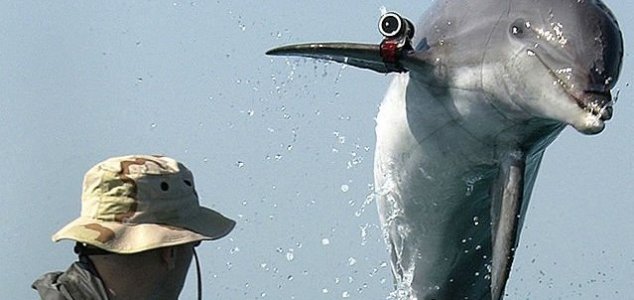
Being intelligent and highly proficient swimmers, the animals were used for a number of different tasks including rescuing mariners, locating underwater mines, and even spying on the enemy. Their echolocation is biological magic. They can distinguish between a metal mine and a rock from hundreds of yards away in murky water where a human diver couldn’t see their own hand in front of their face.
Imagine a guard dog that never sleeps, swims at 30 miles per hour, and can hear your heartbeat underwater. That is what Russia is buying.
Cold War 2.0: The Sevastopol Legacy
Russia’s military is looking for a few good dolphins to join its navy – five, to be exact, with perfect teeth, average length, and a willingness to “display motor activity.” But this isn’t a new program. It’s a resurrection.
That’s according to a Defense Ministry tender that was published online this week. It offered about $24,000 to a broker who could supply three male and two female bottlenose dolphins, each about eight feet long, for the service of the Russian state.
To understand the gravity of this, we have to look back at the Soviet era. The USSR had a massive, secret facility in Sevastopol. This wasn’t a zoo. It was a base.
The notice, which was described by the state-run TASS news agency before it was apparently taken down, did not indicate what military duty the dolphins would be expected to perform, nor why they need good teeth. But it rekindled speculation that the Russian navy is reviving the combat dolphin units that served as Soviet spies, investigators, rescuers – and possibly even assassins – during the Cold War.
The Assassin Theory
Did they kill? That is the million-dollar question. Official sources always say “no.” They claim the animals are used for “guard duty” or “mine detection.”
Don’t believe it for a second. Rumors have swirled for decades about the darker side of this training. Stories of dolphins fitted with carbon dioxide injection needles attached to their snouts. One bump into an enemy diver, and the gas is injected, causing their internal organs to explode. Other rumors speak of dolphins trained to drag propellers of enemy submarines to jam them, or to carry limpets—magnetic mines—to the hulls of ships.
Kamikaze dolphins. It sounds insane. But in the desperation of the Cold War, sanity was in short supply.
The Tug-of-War for Control
Those dolphins were based in Sevastopol, on the Crimean Peninsula, during the Soviet era. They were absorbed by Ukraine after the collapse of the Soviet Union, and in 2000, the BBC reported that the animals, which had been moved to a “private dolphinarium to perform for tourists,” were being sold to Iran because its handler could no longer feed them.
Think about that. Biological military assets sold to Iran. What did Iran do with them? Did they breed them? Are the offspring of Soviet spy dolphins patrolling the Persian Gulf right now? The trail goes cold there.
Ukraine resurrected the dolphin military training program in 2012, according to the Guardian. They tried to bring the old guard back.
But then came 2014.
After Russia annexed Crimea in 2014, it also took control of the military aquarium and the dolphins, despite Ukrainian objections. It wasn’t just a land grab; it was an asset seizure. Russia stormed in and effectively said, “The tanks are ours, the base is ours, and the dolphins are ours.”
The Hunger Strike of the Patriots?
Here is where the story gets heartbreaking and bizarre. After the takeover, strange reports leaked out of Crimea.
That same year, an anonymous source told the state news agency RIA Novosti that the Russian military was again training flippered fighters, which the Defense Ministry denied. (A Ukrainian military spokesman pooh-poohed the whole matter at the time, telling The Washington Post that “dolphins are not a military asset.”)
However, Ukrainian officials later claimed that the dolphins refused to obey their new Russian masters. They alleged that the animals, bonded to their Ukrainian trainers, went on a hunger strike. They refused food. They refused to ping on command. They essentially chose death over defection.
Is it propaganda? Maybe. But dolphins are emotionally complex creatures. They mourn. They hold grudges. It is entirely possible the stress of the takeover killed them, leaving Russia desperate to restock their supply. Hence, the tender for five new recruits with “perfect teeth.”
The U.S. Navy is Not Innocent
Whatever the case, the recruits will have a pretty fierce legacy to live up to. Dolphins’ fantastic sonar skill, or echolocation, make them excellent at detecting mines and sea vessels, locating lost divers and swimmers, and detecting enemy activity on the sea, shore, and ships. The U.S. Navy agrees: It has used dolphins, as well as sea lions, since the 1960s.
The U.S. Navy Marine Mammal Program based in San Diego is very real. During the Vietnam War, rumors persisted that US dolphins were used to guard Cam Ranh Bay, tasked with “nullifying” enemy swimmers who tried to sabotage anchored ships.
The U.S. officially denies training dolphins to harm humans. They say dolphins are too benevolent, that they cannot distinguish between a friend and a foe. But if a dog can be trained to attack on command, why not a dolphin? The intelligence is there. The capability is there.
Modern Sightings: The Spy Whale
This isn’t ancient history. Just a few years ago, a Beluga whale appeared off the coast of Norway wearing a tight harness. The harness was stamped with “Equipment St. Petersburg.” The whale, nicknamed Hvaldimir, was incredibly tame, harassed fishing boats, and seemed to be looking for food in exchange for tasks.
Experts agreed: this was likely a Russian military asset that had either defected or gotten lost. If they are using whales, they are certainly using dolphins.
What Are They Guarding Now?
So, why the new tender? Why now? Look at the map. The Black Sea is a hot zone. Submarines are moving. Pipelines like Nord Stream are vulnerable targets (as recent history has shown). Drone boats are changing naval warfare.
Russia knows that underwater drones are a threat. A metal drone is hard to stop. But a dolphin? A dolphin can intercept a drone. A dolphin can alert the base before the drone even gets close.
Whether Russia will be able to find any candidates for its latest project however remains to be seen. Finding a dolphin is easy. Finding one with the temperament for war, the intelligence for complex signals, and the “perfect teeth” for whatever dark purpose they have in mind? That is the challenge.
Next time you look at the ocean, remember: it’s not just fish down there. There are soldiers. And they are watching.
Originally posted 2016-05-04 21:45:00. Republished by Blog Post Promoter
Originally posted 2016-05-04 21:45:00. Republished by Blog Post Promoter

Arindam loves aliens, mysteries and pursing his interest in the area of hacking as a technical writer at ‘Planet wank’. You can catch him at his social profiles anytime.