Monday, June 8, 2026
HomeUnexplained MysteriesAncient MysteriesPuzzling and Strange Ancient Artifacts - Gallery

Puzzling and Strange Ancient Artifacts – Gallery

Forget your high school history class. Seriously. Throw it out. That neat, clean timeline of human progress they sold you? It’s a fairy tale. A bedtime story to keep you from looking too closely at the gaps. The glitches. The objects that just… shouldn’t exist.

History isn’t a straight line. It’s a dark, dusty attic filled with locked chests. And every now and then, someone stumbles upon a key. They turn it, the lock clicks, and what’s inside shatters everything we thought we knew. These are the artifacts that keep archaeologists up at night. The relics that make historians whisper. They are the Out-of-Place-Artifacts, or Ooparts. And they don’t just ask questions; they scream them.

They are the gears of a computer found in a 2,000-year-old shipwreck. A battery from ancient Baghdad. A Viking coin unearthed thousands of miles from where any Viking should have been. These aren’t just curiosities. They are breadcrumbs leading us down a rabbit hole so deep, the official story of our past starts to look like a cover-up. Are you ready to see what they’ve been hiding?

The Antikythera Mechanism: A Computer Before Its Time?

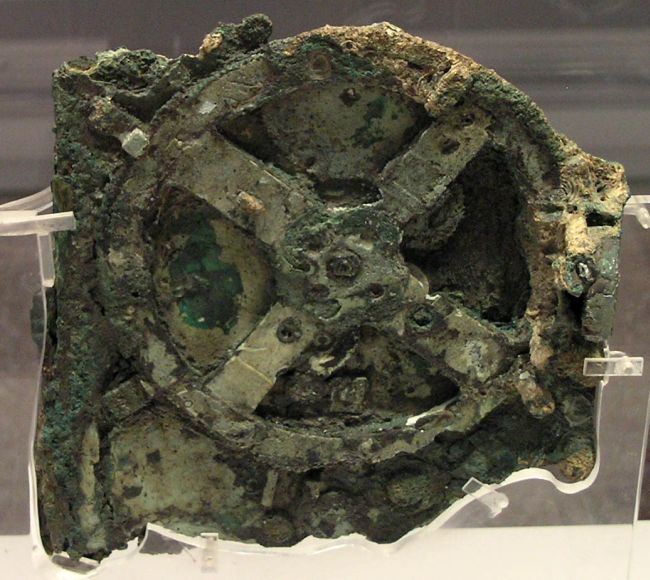
Imagine this. The year is 1900. A team of Greek sponge divers is sheltering from a violent storm near the tiny island of Antikythera. When the waters calm, they dive, expecting to find sponges. Instead, they find a nightmare. A heap of bronze and marble statues, ghostly white on the seabed. The remnants of a Roman shipwreck, lost to the depths for two millennia.

For months, they bring treasures to the surface. But one find looks like nothing more than a corroded lump of rock. It’s tossed aside, forgotten for years in a museum. Then, a crack appears. And inside that lump of corroded bronze are gears. Dozens of them. Precision-cut, interlocking wheels smaller than a thumbnail. Gears that simply had no business being on a Roman cargo ship from the 1st century BC.

A Clockwork Cosmos From a Lost World

Antikythera_Mechanism

For decades, nobody knew what it was. A clock? An astrolabe? The technology was too advanced. Nothing even close to this level of mechanical complexity would appear again in human history for over a thousand years. It was like finding a jet engine in a pharaoh’s tomb. It broke the timeline.

Then came the X-rays. And the CT scans. Modern technology peeled back the layers of corrosion, revealing a breathtaking secret. This wasn’t just a machine. It was an astronomical computer. A mind-bogglingly sophisticated device capable of tracking the positions of the Sun, the Moon, and the five known planets. It could predict eclipses, both solar and lunar, down to the exact hour. It even had a dial to track the four-year cycle of the ancient Olympic Games.

Think about that. An analog computer. A mechanical model of the cosmos, built by people who we thought were still figuring out basic geometry. It used a differential gear—a concept so advanced it was supposedly invented by Charles Babbage in the 19th century. Yet here it was, ticking away in a box of bronze 2,000 years ago.

The Unthinkable Question: Who Built It?

So, who could have possibly built such a thing? The mainstream points to Greek astronomers. Maybe someone from an academy founded by the great philosopher Posidonius on the island of Rhodes. The Roman orator Cicero even mentioned a similar device built by the legendary Archimedes of Syracuse. Could this be it? The machine Marcellus looted from Syracuse in 212 BC? A prize of war, lost to a storm on its way to Rome?

It’s a neat story. But it feels… incomplete. The level of miniaturization, the sheer genius of its design, feels like a quantum leap, not a simple step. Internet forums buzz with other ideas. Was it a relic from a much older, forgotten civilization? A piece of tech from Atlantis, perhaps, passed down through secret societies? Some even whisper the A-word. Aliens. Could this device have been a gift? Or worse, a piece of technology reverse-engineered from a crashed otherworldly vehicle? When you look at the sheer impossibility of its existence, no theory seems too wild.

The Baghdad Battery: Ancient Power in a Clay Pot

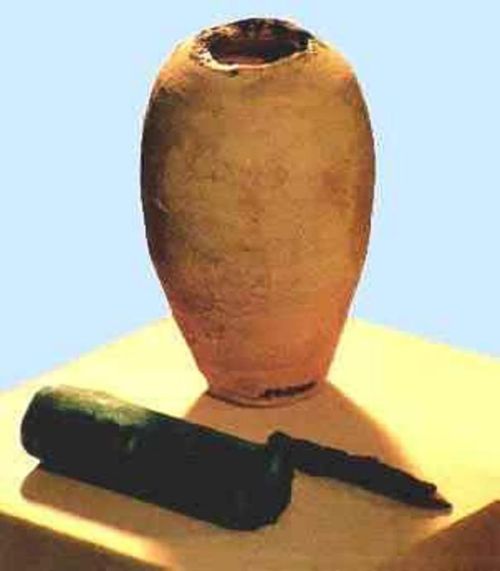
In 1938, while digging in the basement of the National Museum of Iraq, German archaeologist Wilhelm König stumbled upon a mystery. It was a small, unassuming clay jar, no bigger than a man’s fist. Inside, there was a copper cylinder, and suspended in the center of that was an iron rod, held in place by an asphalt stopper. It was labeled as a ritual object. Something to hold sacred scrolls. That was the official story, anyway.

But König saw something else. He saw the fundamental components of an electric cell. A simple battery.

And he didn’t just find one. He found a dozen. All dating back to the Parthian period, somewhere between 250 BC and 225 AD.

A Shocking Possibility

Baghdad_Battery

Could ancient Mesopotamians have discovered electricity 1,800 years before Alessandro Volta? The idea was explosive. Mainstream archaeology laughed it off. They still do. “They’re scroll jars,” they insist. “The iron rod was for hanging the scroll, the copper cylinder a protective case.” But why the asphalt seal? Why the specific combination of iron and copper—two metals essential for an electrochemical reaction?

The “fringe” theorists went to work. They filled replicas with an acidic electrolyte, like grape juice or vinegar—liquids readily available in ancient Baghdad. The result? The jars produced a small but steady electrical current. Between 0.5 and 2 volts. Not enough to power a lightbulb, but more than enough for other, more subtle applications.

What Were They Used For?

So if they *were* batteries, what was the power for? The most popular theory is electroplating. Using this low voltage, ancient artisans could have applied a paper-thin layer of gold or silver onto cheaper metals. It would have seemed like magic, a secret alchemical process to turn silver into gold. Some of the finest Parthian-era artifacts show evidence of incredibly fine gilding that modern experts have struggled to replicate.

Other theories are even more dramatic. Some suggest the batteries were used in healing rituals, providing a gentle electrical tingle that priests could use to awe the masses and perform “miraculous” cures. Connected in series, a dozen of these jars could produce a more significant jolt. The Discovery Channel show MythBusters even built replicas and confirmed they could be used for electroplating and mild electro-therapy.

The debate rages on. But the objects remain. Silent clay jars that challenge the very foundations of our technological history. Were our ancestors more advanced than we could ever imagine? Or is it all just a fantastic coincidence?

The Maine Penny: Proof of a Secret American History?

The story of America’s discovery is simple, right? Columbus sailed the ocean blue in 1492. End of story. Except, it’s not. We know the Vikings, led by Leif Erikson, landed in Newfoundland, Canada, around 1000 AD. They called it Vinland. They built a settlement. But the history books tell us they didn’t last long and never ventured further south.

Then came the penny.

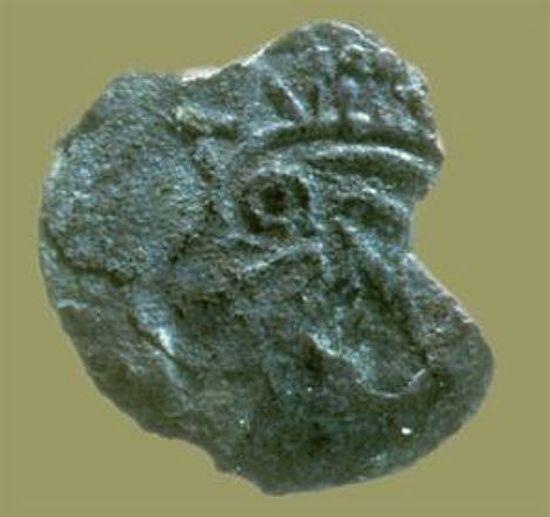
In 1957, an amateur archaeologist named Guy Mellgren was digging at the Goddard Site in Maine, a massive ancient Native American settlement. Among the thousands of native artifacts, he found something that made no sense. A small, silver coin. It was thin, worn, and clearly not of Native American or colonial origin.

For years, no one knew what it was. Then, in 1978, an expert from London identified it. It was a Norwegian silver penny, minted during the reign of King Olaf Kyrre, between 1067 and 1093 AD. A Viking coin. Found in the heart of Maine.

A Coin That Changes the Map

Maine_penny

Suddenly, the map of history had to be redrawn. This wasn’t Newfoundland. This was the modern-day United States. The coin suggested that either the Vikings traveled much farther south than previously believed, or—and this is perhaps even more mind-blowing—there was a vast, sophisticated trade network connecting the natives of Maine with the Viking settlements hundreds of miles north in Canada.

This single, tiny coin hints at a pre-Columbian America that was far from isolated. It suggests a continent buzzing with long-distance trade, cultural exchange, and stories passed from tribe to tribe, stretching for thousands of miles. The Maine Penny isn’t just a coin; it’s a potential key to a completely different American history.

A Hoax or a Smoking Gun?

Of course, the skeptics pounced. The American Numismatic Society declared it was “most probably a hoax.” They claimed Mellgren, the man who found it, might have planted it to gain fame. It’s the easiest way to dismiss evidence that doesn’t fit the narrative: attack the source.

But the Maine State Museum, which now holds the coin, stands by its authenticity. They point out that the Goddard Site is the only place on Earth where a Norwegian coin from that specific period has been found alongside legitimate native artifacts from the correct time frame. Was it dropped by a Viking explorer? Or did a Native American trader carry it south, a strange silver trinket from the pale-skinned men in the far north?

Either way, the penny sits there, a silent rebuke to the simplified history we’ve all been taught. It asks us: what else don’t we know about the world before Columbus?

The Iron Pillar of Delhi: Ancient Metallurgy or Something More?

In the heart of the Qutb complex in Delhi, India, stands a monument to a forgotten science. It’s a simple iron pillar, about 22 feet tall. It’s not particularly beautiful or ornate. But it is, for all intents and purposes, impossible.

It was erected 1,600 years ago, during the reign of King Chandragupta II. And for 1,600 years, it has stood exposed to the punishing sun and monsoon rains of Delhi. Yet, it has not rusted. At least, not in the way that any other piece of iron from that era—or even from a few hundred years ago—would have. It remains almost pristine, a testament to a level of metallurgical skill that we are only just beginning to understand.

A 1,600-Year-Old Miracle

Ashoka_Pillar_Delhi

For centuries, the pillar was a source of wonder and legend. Ancient Indian steel, known as Wootz steel, was legendary. It was the material that inspired the famous Damascus blades of the Middle East. But this was something else entirely. How did they do it? How did ancient smiths, working with primitive forges, create a six-ton pillar of iron so pure it could resist corrosion for a millennium and a half?

Modern science has offered an answer. Kind of. Metallurgists who studied the pillar found that its surface has formed a unique, passive protective film. This thin layer of “misawite,” a compound of iron, oxygen, and hydrogen, seals the metal from the elements. This film was created due to the high phosphorus content in the iron, a byproduct of the specific ore and charcoal used by the ancient smiths. In essence, they accidentally created a perfect, self-renewing anti-rust coating.

An Accident, or Lost Knowledge?

The official explanation is that it was a happy accident. A one-off fluke of chemistry. But that feels too easy. Does it really make sense that such a monumental achievement, a six-ton pillar that would have required incredible effort to forge and transport, was the result of a lucky guess? What if it wasn’t an accident? What if the ancient metallurgists of the Gupta Empire knew *exactly* what they were doing?

This suggests a body of chemical and metallurgical knowledge far beyond what we give them credit for. A science that was lost to time. Online theorists, naturally, take it a step further. They point to ancient Indian texts like the Vedas, which describe flying machines (Vimanas) and advanced weaponry. Was the iron pillar a mundane application of a much more advanced technology? Was it forged from a meteorite, as some legends claim, imbuing it with otherworldly properties? The pillar doesn’t offer easy answers. It just stands there, defying the weather, and defying our understanding of the past.

The Lake Winnipesaukee Mystery Stone: A Message From an Unknown People?

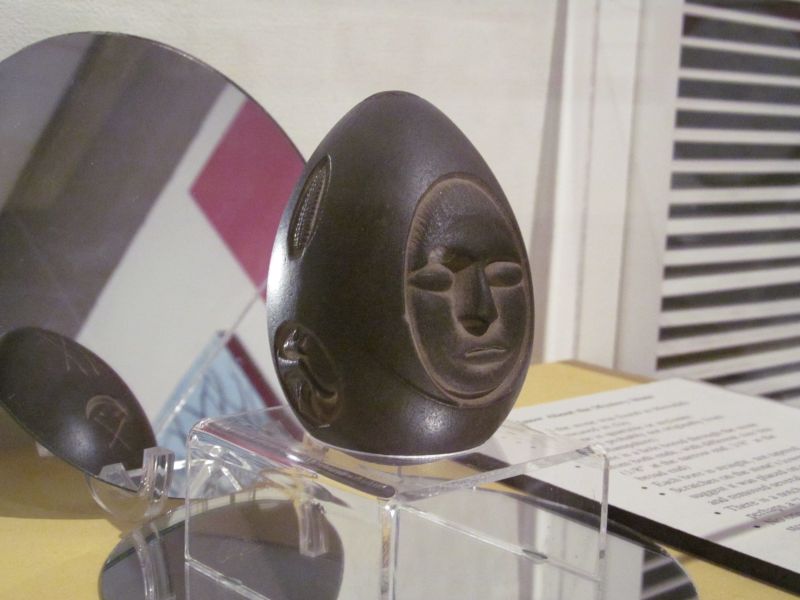
Some mysteries are found in shipwrecks or ancient ruins. Others are found in a lump of clay by the side of a lake. In 1872, a group of construction workers digging a fence post hole in Meredith, New Hampshire, near the shores of Lake Winnipesaukee, hit something hard. It was a smooth, dark, egg-shaped stone, about four inches long. And it was covered in carvings.

On one side, a stylized face with sunken eyes and a thin mouth. On another, an ear of corn on a stalk. Dotted around the object were strange geometric shapes, spirals, and a depiction of the moon and stars. And, most strangely of all, two perfectly drilled, impossibly smooth holes, one at the top and one at the bottom.

An Unreadable Message

Lake_Winnipesaukee_mystery_stone

No one knew what it was. The stone’s owner, Seneca Ladd, displayed it in his home for years, a local curiosity. Theories flew. Was it a Native American artifact? A thunderstone, imbued with spiritual power? Some suggested it was a commemorative object, marking a peace treaty between two warring tribes. But none of the symbols matched any known Native American iconography from the region.

The stone is a puzzle with no reference point. We don’t know who made it, when they made it, or why. The type of rock, a form of quartzite, isn’t local to New Hampshire. The symbols are a language no one can read. It’s a message in a bottle from a culture that has seemingly vanished without a trace.

The Impossible Holes

But the real mystery isn’t the carvings. It’s the holes. According to state archaeologist Richard Boisvert, who studied the stone, the two holes bored through its ends are perfectly straight and uniform. They show microscopic scratch marks consistent with being drilled by a high-speed, mechanical power tool. Not the kind of technology available to Native Americans hundreds of years ago.

This leaves us with two unsettling possibilities. The first is that the stone is a 19th-century fake, created by a local tinkerer with a machine drill. A clever hoax to fool the town. But why? And why use a type of stone not found in the area?

The second possibility is far more chilling. What if the holes are ancient? What if the original creators of the stone possessed a technology that shouldn’t have existed? It brings us back to the same troubling question that the Antikythera Mechanism and the Baghdad Battery raise. Are we looking at evidence of a lost high-tech civilization? Or contact from someone not of this world?

These objects are more than just historical oddities. They are error messages in the code of our accepted past. They prove that for all our books and all our science, we know so much less than we think. They whisper of lost sciences, forgotten journeys, and possibilities that the history books are too afraid to even consider. The real question isn’t just what these objects are, but how many more are still out there, buried in the mud or lost at the bottom of the sea, waiting to be found.

Amit Ghosh
Amit Ghoshhttps://coolinterestingnews.com
Aloha, I'm Amit Ghosh, a web entrepreneur and avid blogger. Bitten by entrepreneurial bug, I got kicked out from college and ended up being millionaire and running a digital media company named Aeron7 headquartered at Lithuania.
RELATED ARTICLES
- Advertisment -

Most Popular

Recent Comments

Warren Pan Abbott on The legend of the Devil Monkey !
chris davies on The McPherson Tape Mystery
Reed Reedly on ET has Internet!
Bea Houseoffashion on Proof Of Time Travellers – Gallery
Marcus2012 on ET has Internet!
Reed Reedly on ET has Internet!
LaughsAtConspiracyNuts on The 9/11 Conspiracy – Myths and Facts
Alex Sliverman on Did the ancients fly?
Doctor Wholigan on Time Traveler in 1938 film
chris davies on The McPherson Tape Mystery
Archie1954 on 10 secret UFO hideouts
chris davies on Ghosts of flight 401
Marcus2012 on ET has Internet!
jason Macdonald on Proof of Time Travel? – China
chris davies on Long-Lost Pyramids Found?
Reed Reedly on ET has Internet!
Milkman on Connected Universe
Tenmiles on Baigong Pipes Mystery
Simon Foster on Sirius – The Documentary
From the 1st April on 2013 – Alien Contact date ?
SkyWatcher on Is ET ignoring us?
I Come From The Future on Obama to make UFO Alien disclouser soon ?
Just another person on 2013 – Alien Contact date ?
Malcolm Windowcleaner on The strange case of Rudolph Fentz
Mason Servio on Strange Things on Mars
Marke Wisdom Seeker on What will we find as arctic melts?
Andrea A Elisabeth Levyne on Aliens Captured in Varginha, Brazil
Mitch Grouyeki on Amazing Space Shuttle pictures