Home Weird World Strange Stories Is Putin really immortal? Some say yes!

Is Putin really immortal? Some say yes!

0
76

The Immortal Putin Paradox: The Photographic “Proof” an Ageless Vampire Rules Russia

Forget everything you think you know about history. Forget the steady, predictable march of time. We’re told that men are born, they live, and they die. But what if some men… don’t?

What if a figure of immense global power wasn’t just a politician, but something else entirely? Something ancient. Something that has watched empires rise and fall, not in history books, but with its own eyes.

This isn’t the plot of a late-night horror movie. This is the question millions have asked after a set of photographs exploded across the internet, sending shockwaves through the digital underground. They are simple, grainy, black-and-white pictures. One from 1920. Another from 1941. They depict Russian soldiers, their faces etched with the seriousness of their eras. But look closer. Look into their eyes. Stare at the set of their jaw, the thin lips, the unmistakable hairline.

You’re looking at Vladimir Putin.

Or are you?

This is the story of one of the most bizarre, terrifying, and captivating conspiracy theories of the 21st century. The theory that the man in the Kremlin is not 70-something years old. Not even close. It’s a rabbit hole that leads to time travel, Transylvanian princes, and the very nature of reality itself. So, strap in. We’re peeling back the layers on the man they call the ageless president.

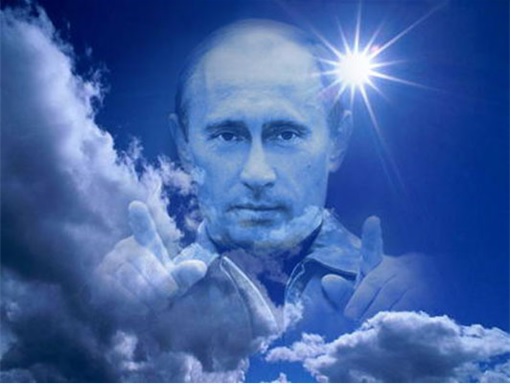
Russian-Vladimir-Putin-God-in-the-Blue-Sky

Exhibit A: The Chilling Photographic Evidence

It all starts with the pictures. Let’s not mince words. The resemblance is jaw-dropping. Uncanny. The first image, dated 1920, shows a young man in a Red Army uniform. He’s thin, wiry, but the face is what stops you cold. The high cheekbones. The intense, focused gaze. It’s a young Vladimir Putin, a full 32 years before he was officially born in Leningrad.

Then comes the second photo. Dated 1941, it shows another Russian soldier on the front lines of World War II. He looks a little older, a little more weathered by the horrors of war. But it’s the same man. The same face. The same soul-piercing stare. He seems to have aged precisely 21 years between the two photos, just as he should have.

When these images first surfaced on paranormal forums and sites like Disclose.tv, the internet went into a meltdown. The theory was born almost instantly. It wasn’t just a simple case of a doppelgänger. No. The timeline was too perfect. The resemblance too exact. Supporters of the theory put forth a stunning conclusion: Vladimir Putin is immortal.

He is a being who does not age, who has walked the earth for centuries, if not millennia, assuming new identities to blend in. The soldiers in the photos weren’t his grandfathers or distant relatives. They were *him*. Just him, living another life, another chapter in an impossibly long existence.

Is this just a case of random genetic chance? Skeptics will tell you that in a country with a population as vast as Russia’s, facial duplicates are bound to appear over a century. It’s a numbers game. But for believers, this isn’t about probability. It’s about a pattern. A pattern of power, of survival, of a single, unblinking presence at the heart of Russian history.

The Ageless Leader Archetype: A Deep Dive into Power and Myth

The idea of an immortal leader isn’t new. It’s a deep, primal archetype that resonates with the human psyche. We crave stability. We crave strength. And what’s stronger than a leader who has conquered death itself? History is littered with figures rumored to possess supernatural longevity or unholy powers.

Think of the Count of St. Germain, the 18th-century European adventurer who claimed to be centuries old, possessed the elixir of life, and was seen looking exactly the same for over 50 years. Or Rasputin, the “Mad Monk” in the court of Russia’s last Tsar, who survived poisoning, shooting, and beatings that would have killed any ten normal men. These stories persist because they tap into our awe and fear of absolute power.

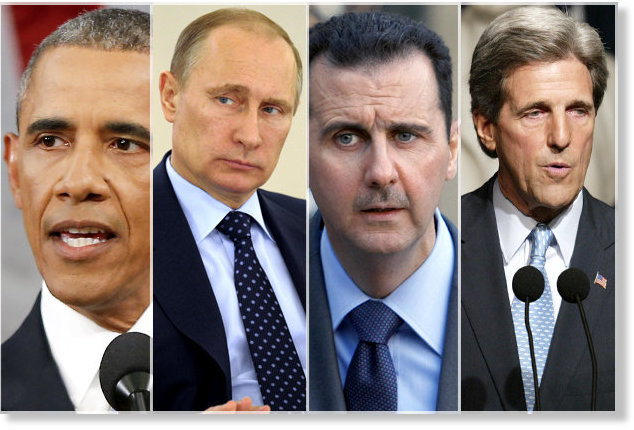
obama_putin_assad_kerry

The “Immortal Putin” theory fits this mold perfectly. In fact, one could argue that Putin himself has carefully cultivated an image that feeds this very myth. He’s not just a politician in a suit. He’s an action hero. The world has seen the photos and videos: Putin riding a horse shirtless through the Siberian wilderness. Putin tranquilizing a tiger. Putin scoring eight goals in an exhibition hockey game. Putin piloting a submersible to the bottom of the Black Sea.

This isn’t just political PR. It’s modern myth-making. It projects an aura of superhuman vitality, of a man who defies the normal frailties of aging. He appears unchanging, a permanent fixture on the world stage while other leaders come and go. Presidents and prime ministers age visibly in office, their hair graying, their faces lining with stress. But Putin? He seems locked in time, a perpetual force of nature. This carefully constructed image makes the jump to “immortal creature” feel less like a leap and more like a small step.

From the Kremlin to Transylvania: The Vampire Connection

If he is immortal, what exactly *is* he? This is where the theory gets really dark, branching into the gothic horror of Eastern European folklore. The whispers are undeniable: Putin is a vampire. And not just any vampire. He is the original.

The Vlad the Impaler Theory

Let’s look at the “evidence.” His first name: Vladimir. The historical figure he’s most often linked to? Vlad III, Prince of Wallachia. Also known as Vlad the Impaler. The bloodthirsty 15th-century ruler whose sickening cruelty inspired Bram Stoker’s Dracula.

Born in 1431, Vlad was known for his absolute ruthlessness in defending his homeland. His preferred method of execution—impaling his enemies on massive stakes and leaving them to die in agony—became legendary. He was a creature of cold, calculating brutality, a master of fear and control. Sound familiar?

Proponents of the theory draw a direct line. They point to Putin’s political methods—the iron fist, the silencing of dissent, the unyielding projection of national strength—as echoes of the Impaler’s reign. Could the same cold, pragmatic soul that ruled Wallachia with terror now be ruling Russia with geopolitical cunning? Did he fake his death in the 15th century and simply move on, adapting his methods of control for a new era? The idea is as chilling as a Transylvanian winter night.

The Mona Lisa Enigma

But the connections don’t stop in the 15th century. In a truly bizarre twist that even the most hardcore conspiracy theorists find hard to swallow, some have suggested another of Putin’s past lives. They claim he sat for Leonardo da Vinci’s most famous painting.

They claim Vladimir Putin is the Mona Lisa.

It sounds absurd. A joke. But then you see the facial comparison, the side-by-side morphs that have circulated on forums for years. There’s an unsettling similarity in the bone structure, the shape of the face, and that famously enigmatic, thin-lipped smile. The theory goes that after his brutal life as Vlad the Impaler, the immortal being sought a quieter, more disguised existence. Perhaps he changed his form, or perhaps he was simply a master of disguise, posing as Lisa Gherardini, the wife of a Florentine merchant, in the early 1500s.

Is it a stretch? Absolutely. But in the world of the Immortal Putin theory, all possibilities are on the table. It paints a picture of a creature that has not only lived through history but has also placed itself at the very center of its most iconic moments.

Alternative Theories: What if it’s Not Immortality?

For those who find the vampire hypothesis a bit too fantastical, the rabbit hole offers other paths. The core fact remains: the men in the photos look identical to Putin, and he appears unnaturally ageless. If it’s not immortality, what else could it be?

The Time-Traveler Hypothesis

This theory suggests Putin is not an ancient being living forward through time, but a traveler moving *through* it. Perhaps he is an operative from the future, sent back to critical junctures in Russian history to ensure a specific outcome. His appearances as a soldier in 1920 (just after the Russian Revolution) and 1941 (at the height of the Great Patriotic War) would not be random. They would be strategic missions.

What would his mission be? To ensure the survival and eventual dominance of the Russian state. In this scenario, his current presidency isn’t a career; it’s the culmination of his life’s work, the final phase of a mission that has spanned over a century. He isn’t just reacting to world events; he is shaping them, armed with the knowledge of what is to come. It explains his seemingly prescient political moves and his unnerving calm under pressure. He’s already seen the script.

The Clone Conspiracy

Then there’s the sci-fi angle. The theory of the Putin clones. This idea posits that the original Vladimir Putin may have died years ago—perhaps from illness, perhaps in an assassination plot that was covered up. To maintain stability and control, the highest echelons of the Kremlin activated a top-secret cloning program.

The man we see today is just the latest in a line of perfect biological copies, each one decanted and activated as needed. This would explain the lack of aging perfectly. You don’t need an elixir of life when you can just print a new 50-year-old version of yourself from a lab. It also accounts for subtle shifts in his personality or appearance noted by eagle-eyed Kremlin-watchers over the years. Was that a different Putin we saw last week? The question is no longer a joke; it’s a terrifying possibility.

The Skeptic’s Corner: Dousing the Flames of Conspiracy

Of course, for every believer, there is a skeptic armed with logic and reason. How do they explain away the eerie photographs and the ageless appearance?

The most common argument is simple: doppelgängers. In a gene pool of millions, uncanny resemblances are statistically inevitable. We’ve all seen someone on the street who looks just like a celebrity. The Putin case is no different; it’s just that his global fame makes the discovery of his historical look-alikes far more sensational.

Furthermore, modern digital forensics offers another explanation: fakery. In an age of sophisticated photo editing software, creating a convincing historical hoax is child’s play for a skilled artist. How can we be certain the 1920 and 1941 photographs haven’t been subtly manipulated, with features altered just enough to create the stunning resemblance? Without access to the original negatives, there is no way to be 100% sure.

Finally, there’s the power of human psychology. Our brains are hardwired to find patterns, especially faces. This phenomenon, called pareidolia, is why we see animals in the clouds or a man on the moon. When we are primed to look for Putin’s face in an old photograph, our brain will work overtime to find the similarities and ignore the differences. We see what we want to see.

So, is Vladimir Putin an immortal vampire, a time-traveling agent of the state, the latest in a series of clones, or simply a powerful man with a few remarkable historical look-alikes and a fantastic fitness regimen?

The evidence is circumstantial. The theories are wild. The official story is that he is just a man. But the photographs remain. They sit on the internet, silent and challenging, inviting you to look deeper. The next time you see the Russian president on your screen, giving a speech or meeting with another world leader, look closely. Look past the suit and the title. Look into his eyes.

You never know how many centuries might be staring back at you.

Originally posted 2016-03-15 17:16:47. Republished by Blog Post Promoter