The Midnight Plunge: Madness or a Glitch in Reality?
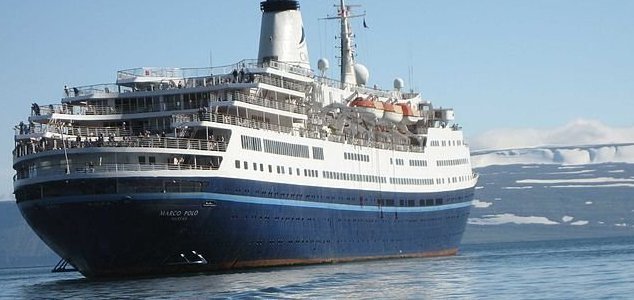
Stop scrolling for a second. Look at that ship. It looks majestic, right? A floating city of light and luxury. But for one woman, that vessel became a phantom. A siren call that nearly lured her to a watery grave in the pitch-black Atlantic.
We need to talk about what happened in Madeira. Because on the surface, this is a news story about a confused tourist. But when you peel back the layers? It’s a terrifying look into the human mind, panic, and the raw, unforgiving power of the ocean.
The cruise ship in question was the Marco Polo. A classic liner. A beast of the sea.
Most people leave a cruise ship by walking down a gangplank. They grab a taxi. They go to the airport. They go home. Susan Brown did not do that. Susan Brown did something that defies logic, defies survival instincts, and honestly, defies belief.
A woman had to be rescued from the ocean after swimming for several hours in pursuit of a cruise liner.
Let that sink in. She tried to catch a moving cruise ship. By swimming. At night. In the Atlantic.
The Setup: A Holiday Gone Wrong
Let’s set the scene. It’s 2016. Susan Brown, 65 years old, and her husband Michael are wrapping up a month-long voyage. The Marco Polo has docked in Funchal, Madeira. It’s a stunning place. Steep cliffs, dark water, heavy atmosphere.
They decide to cut the trip short. Maybe they were tired. Maybe they missed home. Reports say they were at the airport. Bags packed. Tickets in hand. Ready to fly back to Bristol.
Then, the timeline fractures.
According to reports, the couple had cut their month-long trip short and had been at the airport to return home when she lost sight of her husband and assumed that he had changed his mind.
Chaos. Panic. The airport is busy. One minute he’s there, the next he’s gone. Now, a rational mind thinks, “He went to the bathroom.” Or, “He’s at the gate.”
But fear isn’t rational. Fear is a shapeshifter.
Somewhere in the electrical firing of her neurons, Susan Brown became convinced of a terrifying alternate reality: He went back to the ship.
The Decision That Should Have Killed Her
She didn’t wait. She didn’t call his cell phone. She didn’t page him over the intercom. She ran. She left the airport and headed straight for the port. But when she got there? The Marco Polo was already moving.
It was leaving. Gliding away into the dark mist.
Most of us would cry. We’d wave. We’d go find a hotel. Susan Brown saw the lights of that ship fading and made a decision that sounds like something out of a fever dream.
She jumped in.
65-year-old Susan Brown was pulled from the water approximately 500 meters from the coast of Madeira after deciding to swim after the vessel in the belief that her husband was on board.
Five hundred meters. That is five soccer fields. In freezing, chopping water. At midnight.
The Deep Dive: What Was She Thinking?
We analyze mysteries here. We look at the “why.” How does a grandmother decide her best option is to race a 22,000-ton ocean liner?
Some internet theorists suggest a momentary break from reality. A fugue state. Have you ever been so convinced of something that turned out to be false? It’s called the “Mandela Effect” on a personal scale. In her reality, in that specific moment, Michael was on that boat. He was leaving her. And the only way to fix it was to swim.
Others look at the psychology of separation anxiety. When we lose our anchor—our partner—the brain goes into fight or flight. Rationality shuts down. The amygdala takes over. It screams: GO. CATCH HIM.
But the physical reality? That’s where the horror sets in.
The Physics of a Nightmare
Imagine the water hitting you. The shock. The Atlantic Ocean isn’t a heated pool. It sucks the heat right out of your bones. Within minutes, your fingers go numb. Your breathing spikes.
She kept swimming. For hours.
The ship? It was gone. The Marco Polo cruises at around 16 knots. Michael Phelps couldn’t catch that ship. But she didn’t turn back. She kept paddling into the void.
It was later revealed that he had actually caught his flight as planned and had flown back home.
This is the tragic irony that makes your stomach turn. While she was fighting the waves, swallowing salt water, freezing to death in the pitch black… Michael was sitting in a comfortable airline seat, probably sipping a ginger ale, wondering where his wife was. He thought she was lost in the airport. He had no idea she was bobbing like a cork in the ocean below his flight path.
The Miracle in the Dark
Let’s talk about survival. Because by all laws of nature, Susan Brown should be a statistic. She should be a “Missing Person” poster on a telephone pole in Madeira.
“She was very lucky to survive,” said Funchal port captain Felix Marques.
Lucky doesn’t even begin to cover it. This was a one-in-a-million roll of the dice.
“She was in the water for more than three hours and was suffering from the effects of hypothermia when she was rescued by fishermen who heard her cries for help around 12.20am on Sunday.”
Three. Hours.
Do you know what happens to the human body after three hours in 18-degree (Celsius) water? Muscle coordination fails. You can’t grip. You can’t kick. Your speech slurs. Your heart begins to beat erratically. You drift into a sleep you don’t wake up from.
The Handbag That Saved Her Life
Here is the wildest detail of this entire saga. The thing that kept her afloat wasn’t a life vest. It wasn’t debris.
“All she had on her was the clothes she was wearing and a handbag which she was clinging to. She could easily died if she had not been rescued when she was.”

Her purse. Her handbag.
Physics explains this, but it feels like magic. A high-quality handbag, if zippered shut, traps a pocket of air. It becomes a makeshift buoy. She clung to that bag like Wilson in Cast Away. That pocket of air was the only thing between her and the bottom of the Atlantic.
The Fisherman’s perspective
Put yourself in the boots of those fishermen. It’s after midnight. The sea is dark. The sky is black. You are pulling in nets or setting lines. The engine is humming.
Then, over the sound of the waves, you hear it.
A scream.
Not a seagull. Not the wind. A human voice. Out there? In the emptiness? It must have been terrifying. Ghost stories start this way. Sailors have whispered about sirens and spirits for centuries.
But these guys didn’t ignore it. They turned the light. They searched. And they found her. shivering, barely conscious, clutching her purse.
If they had been 100 meters to the left? She dies. If they had their radio turned up too loud? She dies. If they had decided to go home ten minutes earlier? She dies.
The Marco Polo: A Cursed History?
Let’s take a sidebar on the ship itself. The Marco Polo isn’t just any boat. Built in the 1960s, originally named the Aleksandr Pushkin, it was a Soviet liner. It has a history. It has vibes.
Old ships have personality. Some sailors swear they have appetites. While there is no evidence the ship is “haunted,” the fact that it triggered such a visceral, irrational reaction in Susan Brown adds to its mystique. It’s almost as if the ship pulled her in.
In the world of high strangeness, we often talk about “The Call of the Void.” The French call it l’appel du vide. It’s that urge to jump when you stand on a high ledge. Did Susan experience the Call of the Sea?
The Aftermath: A Reality Check
So, she gets pulled out. They rush her to the hospital in Funchal. She’s hypothermic. She’s in shock. She’s confused.
Imagine the phone call to Michael.
He lands in Bristol. He’s worried. He’s probably talking to airport police, filing a missing person report. “My wife vanished at the airport.”
Then the phone rings. “Sir, we found your wife.”
“Oh, thank god. Was she in the bathroom?”
“No, sir. She was swimming in the Atlantic Ocean trying to chase a 22,000-ton boat.”
The silence on that line must have been heavy.
The “Missing 411” Connection?
If you follow conspiracy theories or disappearances, you know about the “Missing 411” phenomenon—people vanishing in national parks under impossible circumstances. Often, they do irrational things. They shed clothes in freezing weather. They walk miles in terrain they shouldn’t be able to cross.
Susan Brown survived, so she isn’t a statistic. But her behavior mimics those strange disappearances. The sudden, inexplicable break from logic. The compulsion to go into the wild (or the water). The separation from a partner.
Was this a medical episode? Likely. But it sits right on the edge of the unexplainable.
What Can We Learn?
This story went viral in 2016, then faded. But we shouldn’t forget it. It teaches us something fragile about our grip on reality.
We like to think we are in control. We think, “I would never do that.” But panic is a drug. Confusion is a fog. Under the right mix of stress, exhaustion, and fear, your brain can rewrite the script. It can tell you that the only way to survive is to jump into the dark water.
Susan Brown is alive today because of a handbag and a fishing boat. She stared into the abyss, and for once, the abyss blinked.
Next time you are at an airport, hold onto your partner’s hand a little tighter. And if you miss your flight? Just wait at the gate. Don’t swim. Never, ever swim.
Originally posted 2016-03-30 21:45:43. Republished by Blog Post Promoter