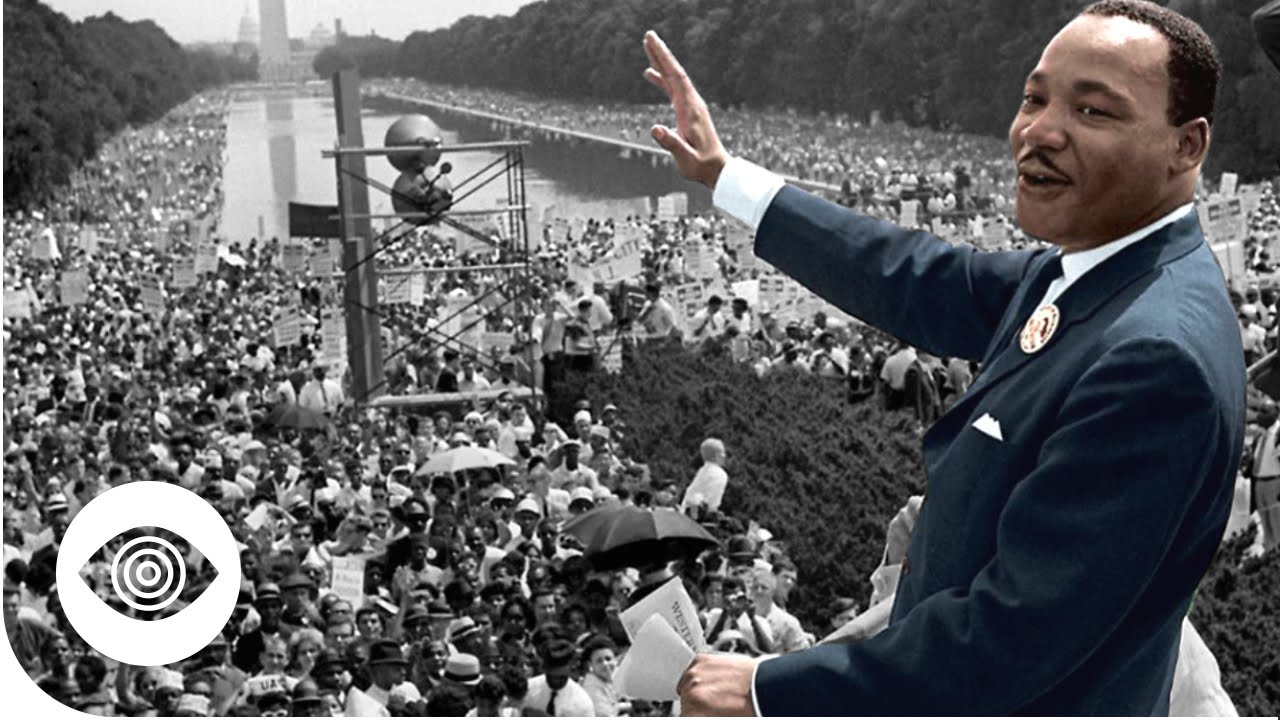
Home Films & Documentaries Did The Government Assassinate Martin Luther King Jr?

Did The Government Assassinate Martin Luther King Jr?

8
70

April 4, 1968. A shot rings out in the humid Memphis air. It’s a sound that breaks the backbone of a movement and sends shockwaves across the planet. Dr. Martin Luther King Jr. falls on the balcony of the Lorraine Motel. Chaos.

Screams.

Finger-pointing.

Within hours, the narrative was set in stone. The authorities told us exactly what happened. They gave us a name. They gave us a motive. They wrapped it up in a neat little package and sold it to the history books. A lone gunman. A hateful drifter named James Earl Ray. Case closed, right?

Wrong.

So, so wrong.

If you dig just an inch below the surface of the official story, you hit concrete. You hit contradictions that don’t make sense. You find witnesses who were ignored. You find evidence that mysteriously vanished. And you find a rabbit hole so deep it might just lead all the way to the steps of the White House.

We are going to rip apart the “Lone Wolf” myth. We are going to look at the shadows on that balcony. Buckle up.

The Impossible Escape of James Earl Ray

Let’s talk about the man they pinned it on. James Earl Ray. The media painted him as a mastermind. A cold-blooded sniper who stalked King across the country, fired one perfect shot from a bathroom window, and then vanished into the night like a ghost.

Does that sound like a petty criminal to you?

Because that’s what Ray was. A loser. A small-time crook known for bungling gas station robberies and getting caught because he was clumsy. This guy couldn’t pump gas without tripping over his own feet, yet we are supposed to believe he pulled off the most significant assassination of the 20th century with military precision?

Think about the logistics. It’s mind-bending.

Ray supposedly escapes Memphis, triggers a massive international manhunt, gets a fake Canadian passport, and flies to London. He’s moving through Europe. He has money. He has resources. Who funded this? How does a broke fugitive suddenly have the cash flow to jet-set across the Atlantic while every cop in the world is looking for his face?

Modern internet sleuths and historians alike have been screaming this question for decades: Where did the money come from?

Ray didn’t act alone. He couldn’t have. He claimed until his dying day that he was set up by a mysterious figure named “Raoul.” For years, the Feds laughed at this. They called Raoul a figment of Ray’s imagination. A desperate lie to save his skin.

But witnesses saw Ray with another man. They saw him talking to someone deep in the shadows. Was Raoul a handler? An intelligence asset? Or just the middleman for a much bigger, scarier organization?

The Rifle That Didn’t Fit

Here is where the physics get messy. The police found a bundle dumped in a doorway near the crime scene. Inside? A Remington Gamemaster rifle with Ray’s fingerprints on it. Smoking gun, literally.

Except it wasn’t.

Ballistics tests were… let’s say, inconclusive. They could never 100% match the bullet that killed Dr. King to that specific gun. And Ray? He was a mediocre shot at best. The shot that killed King was one in a million. It severed the spinal cord. Immediate. Precise.

Are we really buying that a guy who could barely rob a grocery store suddenly turned into a Special Forces sniper for five seconds? Or is it more likely the bundle was planted? A drop gun. A prop left for the police to find while the real shooter packed up and walked away calmly.

The Bushy Knoll: What the Witnesses Saw

You know about the Grassy Knoll in Dallas. But did you know Memphis had one too?

The official story says Ray fired from the bathroom window of a rooming house across the street. But people on the ground—people who were actually there—looked somewhere else.

Solomon Jones. He was Dr. King’s driver. He was standing right there. When the shot rang out, he didn’t look up at the bathroom window. He looked into the brush. A thick area of bushes and trees across the street, near the retaining wall.

He wasn’t the only one.

Multiple witnesses pointed to the bushes. They claimed they saw smoke rising from that spot. Gunpowder smoke. You don’t get smoke from a bathroom window hundreds of feet away. You get it from the muzzle.

So, what happened to this critical evidence?

This is where it gets chilling. The very next morning—less than 24 hours after the murder of the most famous man in America—city workers showed up. They cut down the bushes. They destroyed the crime scene. They razed the foliage to the ground.

Why?

Why would you destroy the physical environment of an active murder investigation the next morning? Unless you wanted to make sure nobody could prove a sniper was hiding there. Unless you needed to change the line of sight.

The 1999 Trial You Never Heard About

This is the big one. The smoking gun that the history books conveniently forget to mention. Most people think the case is closed because Ray pleaded guilty (which he tried to take back three days later). But there was a trial. A real, civil trial.

In 1999, the King family—Coretta Scott King and her children—filed a wrongful death lawsuit. But not against Ray.

They sued a man named Loyd Jowers.

Jowers owned Jim’s Grill, the restaurant below the rooming house where Ray supposedly stayed. In 1993, Jowers went on national TV and dropped a bomb. He confessed. He said he was part of a conspiracy to kill King. He claimed he was hired to help coordinate the hit, and that the shooter wasn’t Ray.

He said the shooter was a police officer. An expert marksman.

The trial lasted four weeks. The evidence presented was overwhelming. We’re talking about 70 witnesses. They laid it all out: the mafia involvement, the government complicity, the military intelligence presence.

The verdict?

The jury found Jowers guilty. But more importantly, they ruled that Martin Luther King Jr. was the victim of a conspiracy involving the Memphis police as well as federal agencies. This is a matter of court record. It’s a legal fact.

Did the news explode? Did the textbooks change? No. The media buried it. They called it a “mock trial.” They ignored the jury’s decision. Why would the mainstream press ignore a verdict that proved the government was liable for the death of a civil rights icon?

You know why.

J. Edgar Hoover’s Obsession

To understand the “why,” you have to look at the “who.” And all roads lead back to one man: J. Edgar Hoover.

The FBI director was obsessed with King. It wasn’t just dislike; it was hate. Pure, distilled paranoia. Hoover was convinced King was a communist puppet. He initiated COINTELPRO, a secret program designed to harass, discredit, and destroy political dissidents.

They bugged King’s hotel rooms. They tapped his phones. They followed him everywhere.

The Suicide Letter

It went beyond surveillance. The FBI sent King a package. Inside was a tape recording—allegedly of King in a compromising situation—and a letter. The letter called him evil. It called him a fraud. And the final paragraph? It heavily implied that King should kill himself.

“There is only one thing left for you to do,” the letter read. “You know what it is.”

They wanted him dead. They tried to make him do it himself. When that didn’t work, is it really so hard to believe they decided to take matters into their own hands? If you have an agency that is willing to write a suicide letter to a pastor, are they above hiring a hitman?

The Military Intelligence Connection

Here is a piece of the puzzle that modern researchers are just starting to piece together. The presence of the 111th Military Intelligence Group.

On the day King died, Memphis was a powder keg. But why were Army intelligence agents in the city? Reports suggest that a specialized unit was watching King. Not protecting him. Watching him.

Some theories—backed by testimony in the 1999 trial—suggest that there were snipers on the rooftops that day. Not one, but two teams. “Alpha” and “Bravo.” They were the backup. If the primary shooter failed, the military was there to clean up the mess.

This sounds like a movie script. But when you look at the way the police security detail was stripped away hours before the shooting, it starts to look less like fiction and more like a tactical operation.

Ed Redditt, a black Memphis police detective, was posted at a fire station overlooking the Lorraine Motel. He was the eyes on the ground. But an hour before the shot, he was ordered home. His superiors told him there was a threat against his life. He was removed from his post. Blindfolded the security.

Who gave that order?

The Green Beret Theory

Let’s go deeper. Let’s get into the territory that makes people uncomfortable.

There is a persistent claim that the bullet that killed King wasn’t from a standard hunting rifle. The wound was massive. The damage was catastrophic. Some ballistics experts have whispered that it looked more like the work of a military-grade round, perhaps something used by Special Forces.

The 20th Special Forces Group had a presence in the area. These were men trained to topple governments and neutralize high-value targets. King had just come out against the Vietnam War. He was threatening to merge the civil rights movement with the anti-war movement. He was planning the “Poor People’s Campaign” to shut down Washington D.C.

He was messing with the money. He was messing with the war machine.

Did King become too dangerous to be allowed to live? Was James Earl Ray just the “patsy” designed to take the fall while the pros did the job and vanished?

The Truth is Still Bleeding

Over 50 years later, the official story remains the same: One bad man with a gun. But the cracks in that story are now canyons.

We have a confessed conspirator in Loyd Jowers. We have a civil court verdict confirming a conspiracy. We have the FBI’s documented hatred. We have the missing bushes, the mismatched gun, and the mysterious Raoul.

Martin Luther King Jr. saw the promised land, but he wasn’t allowed to get there. Not because of a lone drifter, but because he was a threat to the established order. The system didn’t fail to protect him. The system worked exactly as it was designed to.

Don’t just accept the history they feed you in school. Look at the documents. Listen to the tapes. The truth is out there, sitting in the shadows of the Lorraine Motel, waiting for you to find it.

What do you think? Was James Earl Ray a lone wolf, or was he a pawn in a much darker game? Let us know in the comments below.

Originally posted 2014-01-17 21:30:01. Republished by Blog Post Promoter