Sunday, June 7, 2026
HomeUnexplained MysteriesAncient MysteriesOut of Place Artifacts - "2.8 Billion" Year Old Sphere's

Out of Place Artifacts – "2.8 Billion" Year Old Sphere’s

History is comfortable. It fits in a box. We know where the dinosaurs go. We know when the pyramids were built. We know when humans discovered fire. But sometimes, the earth spits out something that doesn’t fit in the box. Something that shatters the timeline we’ve been taught since grade school. This is one of those stories.

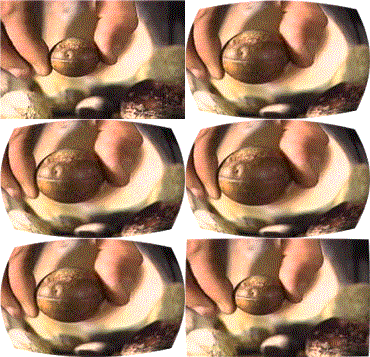
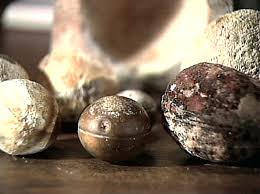
Imagine holding a metal ball in your hand. It’s cool to the touch. It feels manufactured. It has perfect grooves running around its equator. Now, imagine a geologist telling you that the rock this ball came from is 2.8 billion years old.

Not million. Billion.

That is impossible. It shouldn’t be real. And yet, here we are.

2.8 Billion Year Old Sphere's

The Discovery at Wonderstone

Let’s set the scene. We are in the Western Transvaal region of South Africa, near a small town called Ottosdal. The landscape is rugged, ancient. Beneath the surface lies the Wonderstone Silver Mine. For decades, miners here have been digging deep into the crust of the planet.

They aren’t looking for mysteries. They are looking for pyrophyllite. It’s a mineral used in everything from carving to industrial manufacturing. But for more than thirty years, the workers in these tunnels have been pulling up something else. Something that stops them in their tracks.

Strange. Metallic. Spheroids.

These aren’t just shapeless lumps of ore. They are distinct, isolated objects. To date, at least 200 of them have been recovered from the rock face. They don’t look like they grew there. They look like they were dropped there.

A Geological Impossibility

The pyrophyllite deposits at Wonderstone are old. Incredibly old. Geologists have thrown every dating technique in the book at this rock layer. Radio-isotope dating. Stratigraphic analysis. The answer comes back the same every time.

2.8 to 3 billion years.

Let that number sink in. 3 billion years ago, Earth was a hostile, alien place. There were no trees. No animals. No dinosaurs. The only life on the planet was slime—single-celled algae and bacteria floating in the primordial soup. Oxygen was barely a thing yet.

So, who was running a metal foundry in South Africa when the most advanced life form on Earth was a microbe?

The Composition: Nature or Machine?

In 1979, the scientific community finally decided to take a look. J.R. McIver, a professor of geology at the University of Witwatersrand in Johannesburg, teamed up with geologist professor Andries Bisschoff of Potchefstroom University. They wanted to crack the code.

What they found only deepened the mystery.

The spheroids—often called the Klerksdorp Spheres—are weirdly uniform. They look like flattened globes. Most are small, averaging between 1 and 4 inches in diameter. You can hold them in your palm. The exterior is usually a steel-blue color with a reddish, metallic reflection. They look heavy.

But it’s what is inside that counts.

The Alien Alloy

The analysis revealed a nickel-steel alloy. Now, nickel and steel do exist in nature, but usually in meteors. The composition here? It doesn’t match known meteorites. It doesn’t match the surrounding rock. It’s an anomaly.

Looking closer, the surface is embedded with tiny flecks of white fibers. When researchers cracked some of the spheres open, they found something even stranger. Some of them are solid. But others? They have a thin shell, maybe a quarter of an inch thick.

Inside that shell is a spongy material. It looks stable at first. But the moment it makes contact with modern air—oxygen that didn’t exist when the rock was formed—it disintegrates. It turns into dust. Gone. Just like that.

The Museum Mystery: It Moves?

If the chemical makeup wasn’t weird enough, let’s talk about the ghost in the machine.

Roelf Marx was the curator of the South African Klerksdorp Museum. He had one of these spheres on display. It was his job to watch it, protect it, and explain it to tourists. But he started noticing something that defied physics.

The sphere was locked in a glass display case. The museum was quiet. No heavy traffic nearby to cause vibrations. No earthquakes. Yet, the sphere moved.

Marx reported that the object would slowly rotate on its own axis. By its own power. It wasn’t rolling around the case; it was spinning in place, almost imperceptibly, but over time, the change in position was undeniable.

Is it reacting to magnetic fields? Is there some kind of dormant energy inside the spongy core? Or was Roelf Marx just losing his mind? To this day, the story of the rotating sphere remains one of the creepiest footnotes in this saga.

The NASA Connection and the “Perfect” Balance

This is where the story shifts from “weird geology” to “high-tech conspiracy.”

Enter John Hund. Fifteen years ago, this man from Pietersburg got his hands on one of the spheres. He wasn’t a geologist. He was just a curious guy playing with a rock on a flat surface at a restaurant. We’ve all done it. You spin a coin or a marble to see how long it goes.

Hund noticed something immediately. The balance.

It was too perfect. Natural rocks are lumpy. They have heavy sides. They wobble. This thing didn’t wobble.

Hund, sensing he was onto something huge, took the stone to the California Space Institute at the University of California. He wanted the pros to look at it. He wanted measurements.

Breaking the Measuring Equipment

The scientists at the institute are used to precision. They build gyrocompasses for NASA. They work with tolerances that are invisible to the naked eye. They put the Klerksdorp Sphere through its paces.

The results were terrifyingly accurate.

“It turned out that the balance is so fine, it exceeded the limit of their measuring technology,” Hund explained later. Think about that. We can measure atoms. We can measure light waves. But the balance of this 3-billion-year-old rock was so precise that 1980s space-age technology couldn’t find a flaw.

According to Hund, the stone is balanced to within one-hundred thousandths of an inch of absolute perfection.

To put that in perspective: If you take a billiard ball, it looks round. But under a microscope, it’s a mountain range. This sphere? It was geometrically god-like.

The Zero Gravity Theory

It gets better. Hund claimed a NASA scientist spoke to him off the record. The scientist allegedly admitted that they didn’t have the technology to create anything that finely balanced here on Earth. Not then, and maybe not even now.

The scientist’s conclusion? The only way to get a sphere that perfect, with a balance that absolute, is to manufacture it in zero gravity.

In space.

So, are we looking at space debris? Did an ancient spaceship explode 2.8 billion years ago, showering South Africa with ball bearings? It sounds insane. But when you look at the grooves—three parallel lines running perfectly around the center—it looks less like a rock and more like a component.

The Skeptics Strike Back: Just a Rock?

We have to be fair here. If you ask a mainstream geologist, they will roll their eyes. They hate the “Ancient Alien” theories.

The scientific consensus—the boring explanation—is that these are “concretions.”

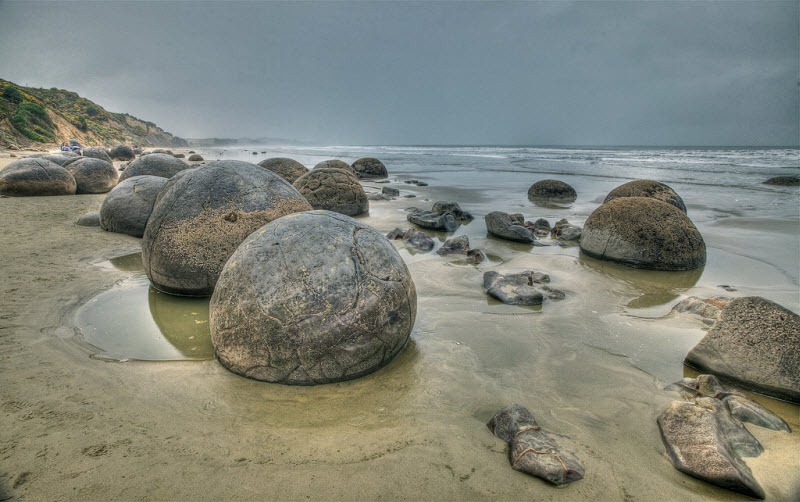
A concretion is a hard, compact mass of matter formed by the precipitation of mineral cement within the spaces between particles. Basically, sedimentary rock acts like a filter, and minerals clump together. The Moqui Marbles in Utah are often cited as a similar phenomenon. They are round. They are iron-heavy. They are natural.

Geologists argue that the Klerksdorp Spheres are just limonite and goethite nodules. They say the grooves are caused by layers of sediment that the nodule grew through.

Case closed? Not quite.

Why the Skeptics Might Be Wrong

There are holes in the “natural concretion” theory you could drive a truck through.

  • Hardness: Concretions are usually not harder than steel. These things cannot be scratched by a steel point.
  • The Grooves: Natural layering is messy. The grooves on the Klerksdorp Spheres are often startlingly precise, cutting around the equator. Nature rarely draws straight lines, and it almost never draws three parallel lines on a round object.
  • The Alloy: The specific nickel-steel mix is rare for terrestrial concretions.
  • The Age: 2.8 Billion years is extremely old for these types of formations to survive without being crushed or metamorphosed into something else.

The “What If” Scenario

Let’s step away from the microscope and look at the timeline again. This is where your brain might start to hurt.

If these aren’t natural, someone made them.

If someone made them 2.8 billion years ago, they weren’t human. We are a blip on the radar. Modern humans have been around for maybe 200,000 years. Civilization? Maybe 6,000 years. That is a drop of water in the ocean of time compared to 2.8 billion years.

Could there have been a civilization here before us? A “Silurian Hypothesis” scenario? Maybe an industrial society rose and fell billions of years ago, and all that is left of them are a few indestructible metal balls buried in the mud.

Or are we looking at visitors?

If a probe from another star system visited Earth when it was just a slime-ball planet, maybe it left behind sensors. Maybe it crashed. Maybe these spheres are the black boxes of a tragic expedition that happened before the continents had even finished forming.

The Mystery Remains

Today, the Klerksdorp Spheres sit in museums. Some are in private collections. They are silent. They (mostly) don’t move.

But they are waiting. They are a glitch in the matrix of history. We want to believe we understand our planet, but every time a miner in Ottosdal swings a pickaxe, there’s a chance he hits something that proves we don’t know anything at all.

Are they seeds? Are they weapons? Are they art? Or are they just the universe playing a trick on us with iron and dust?

Next time you pick up a smooth stone on the beach, look at it closely. Check the balance. Look for the grooves. You might be holding a piece of history that shouldn’t exist.

Originally posted 2013-10-10 21:31:44. Updated and Expanded for Modern Researchers.

Amit Ghosh
Amit Ghoshhttps://coolinterestingnews.com
Aloha, I'm Amit Ghosh, a web entrepreneur and avid blogger. Bitten by entrepreneurial bug, I got kicked out from college and ended up being millionaire and running a digital media company named Aeron7 headquartered at Lithuania.
RELATED ARTICLES
- Advertisment -

Most Popular

Recent Comments

Warren Pan Abbott on The legend of the Devil Monkey !
chris davies on The McPherson Tape Mystery
Reed Reedly on ET has Internet!
Bea Houseoffashion on Proof Of Time Travellers – Gallery
Marcus2012 on ET has Internet!
Reed Reedly on ET has Internet!
LaughsAtConspiracyNuts on The 9/11 Conspiracy – Myths and Facts
Alex Sliverman on Did the ancients fly?
Doctor Wholigan on Time Traveler in 1938 film
chris davies on The McPherson Tape Mystery
Archie1954 on 10 secret UFO hideouts
chris davies on Ghosts of flight 401
Marcus2012 on ET has Internet!
jason Macdonald on Proof of Time Travel? – China
chris davies on Long-Lost Pyramids Found?
Reed Reedly on ET has Internet!
Milkman on Connected Universe
Tenmiles on Baigong Pipes Mystery
Simon Foster on Sirius – The Documentary
From the 1st April on 2013 – Alien Contact date ?
SkyWatcher on Is ET ignoring us?
I Come From The Future on Obama to make UFO Alien disclouser soon ?
Just another person on 2013 – Alien Contact date ?
Malcolm Windowcleaner on The strange case of Rudolph Fentz
Mason Servio on Strange Things on Mars
Marke Wisdom Seeker on What will we find as arctic melts?
Andrea A Elisabeth Levyne on Aliens Captured in Varginha, Brazil
Mitch Grouyeki on Amazing Space Shuttle pictures