Home Weird World Strange Places New ‘stealth’ ship commanded by Captain Kirk

New ‘stealth’ ship commanded by Captain Kirk

0
71

Let’s get one thing straight. This isn’t just a ship. It’s a riddle, wrapped in a mystery, inside a radar-invisible shell. It’s a story so bizarre, so packed with mind-bending technology and spectacular failures, that it sounds like science fiction. But the craziest part? It’s all real.

And it starts with a cosmic joke. Or maybe, just maybe, it’s not a joke at all.

The United States Navy, in its infinite wisdom, built the most futuristic, most formidable, and most controversial warship in human history. A silent, knife-edged ghost designed to rule the seas. And who did they pick to command this vessel on its maiden voyage into the unknown? A man named Captain James Kirk. No, you did not misread that. Captain. James. Kirk.

Life imitating art? Or a deliberate signal that we’ve crossed a threshold into a new era? You decide.

The Floating Pyramid at the End of the World

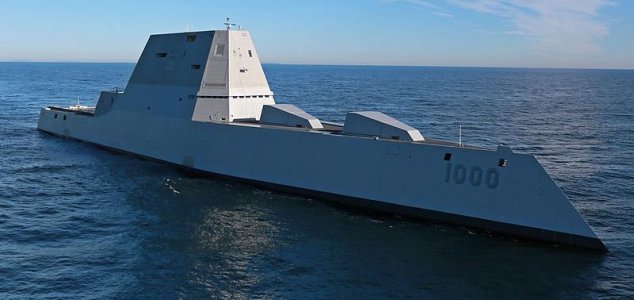
First, you have to understand what the USS Zumwalt (DDG-1000) looks like. Because it looks like nothing else on Earth.

Forget everything you know about warships. Forget the towering masts, the cluttered decks, the spinning radar dishes. The Zumwalt is… smooth. Angled. Alien. It’s a 600-foot-long, 15,000-ton blade of shadowy steel, a geometric nightmare designed not to be seen, a ship that slices through the waves looking less like a naval vessel and more like a captured artifact from a distant, warlike civilization.

ship

This radical appearance is born from a single, obsessive purpose: stealth. Total, absolute stealth. The unique “tumblehome” hull, where the sides slope inward from the waterline, is a design resurrected from over a century ago. Why? Because those sharp, clean angles don’t reflect radar signals back to their source. They bounce them away, up into the sky or down into the water. The entire superstructure is a composite fortress, absorbing radar waves like a sponge. Antennas, sensors, even the massive gun barrels are hidden away behind sleek panels until the moment they’re needed.

The result? On an enemy’s radar screen, this 15,000-ton behemoth—the largest “destroyer” ever built—has the radar signature of a small fishing boat. A ghost. A phantom that can sneak up on a hostile coastline and be right on top of you before you even know it’s there. At least, that was the idea.

A Power Plant That Could Light a City

Beneath that stealthy skin lies the Zumwalt’s true secret. Its heart. The ship isn’t just powered by engines; it’s a floating power station. A god-tier generator on the high seas.

It’s called the Integrated Power System (IPS). Two massive Rolls-Royce gas turbines, the same kind you’d find on a Boeing 777, don’t turn the propellers directly. Instead, they drive generators that produce a staggering 78 megawatts of electricity. That’s enough power to light up a small city. Enough to power nearly 80,000 homes.

Think about that. All that power courses through the ship’s veins, a solution looking for a problem. It runs the advanced automation systems, allowing the giant vessel to operate with a skeleton crew half the size of a normal destroyer’s. It drives the electric motors that propel the ship through the water with an eerie quietness, making it a submarine hunter’s worst nightmare. But that wasn’t the main event. All that electricity was meant to fuel the weapons of tomorrow.

Weapons that would change warfare forever. Weapons that, in a spectacular twist of fate, would become the ship’s greatest embarrassment.

The Billion-Dollar Cannon That Can’t Fire a Single Shot

This is where the story gets truly insane. The Zumwalt was built around two colossal cannons, the most advanced naval guns ever conceived: the 155mm Advanced Gun System (AGS).

These weren’t just cannons. They were fully automated, water-cooled, stealth-housed monsters capable of firing custom-designed, rocket-assisted projectiles over 80 miles. Imagine a shell, launched from a ship far over the horizon, guided by GPS to land with pinpoint accuracy on a target. Ten of these shells could be fired per minute from each gun. A relentless, unstoppable barrage from an invisible enemy.

It was the ultimate weapon for supporting troops ashore. It was the entire reason the ship was built the way it was.

There was just one tiny problem. The bullets.

The specialized shell, known as the Long Range Land-Attack Projectile (LRLAP), was a marvel of engineering. It was also breathtakingly expensive. As the number of Zumwalt-class ships the Navy planned to build was slashed from 32 down to a measly three, the cost for each individual shell skyrocketed. The price tag ballooned until a single, solitary LRLAP shell cost nearly $1 million. One million dollars. Per shot.

Let that sink in. Firing the main guns for just one minute could cost the US taxpayer $20 million. The Navy, faced with this absurdity, did the only thing it could. In 2016, they cancelled the ammunition. Completely.

So now, the USS Zumwalt and its two sister ships sail the seas with two magnificent, state-of-the-art, billion-dollar cannons… for which no ammunition exists. They are the most expensive, technologically advanced lawn ornaments in the history of the world. Why would the most powerful navy on Earth build a revolutionary ship around a revolutionary gun, only to then refuse to buy the bullets? Is it simple government incompetence on a scale that boggles the mind? Or is the story of the guns a cover for the ship’s *real* purpose?

The Phantom Menace: Railguns and Lasers

But the AGS wasn’t even the final frontier. The Zumwalt’s massive power plant was always meant for something more exotic. The original post mentioned it: the railgun.

A railgun isn’t science fiction. It’s a real, terrifying concept. Instead of using gunpowder, it uses raw electromagnetic force—the same force that pins magnets to your fridge—to launch a solid metal slug at unbelievable speeds. We’re talking Mach 7. Seven times the speed of sound. A projectile moving so fast it needs no explosives; it obliterates its target through sheer kinetic energy alone. It’s like hitting something with a meteor.

The Zumwalt was the only ship with enough power to potentially field such a weapon. For years, the Navy tested prototypes, releasing jaw-dropping videos of these hypervelocity cannons. And then… silence. The program was quietly defunded, pushed to the back burner. The official line is that the technology just wasn’t ready. But is that the truth? Or has the railgun gone “black,” a secret project now being perfected in the shadows, waiting for the right moment?

The same goes for directed energy weapons. Lasers. Powerful enough to shoot down drones, missiles, even aircraft. The Zumwalt’s power grid could support them. But again, a lot of talk, and not a lot of action. The weapons of the future remained tantalizingly out of reach.

“Fired Up to Get Under Way”: Captain Kirk at the Helm

And through all of this, there was Captain Kirk. The real one. The man tasked with bringing this sci-fi vessel to life.

You can’t make this stuff up. The commander of America’s real-life Starship Enterprise shared the exact same name as William Shatner’s iconic character. It was a PR dream, and a source of endless speculation for those of us who look for patterns in the chaos.

Was it a deliberate choice by Navy brass with a sense of humor? Or a signal to the world—and perhaps beyond—that humanity was embarking on a new “five-year mission” of technological dominance? When the ship first headed out for sea trials from the shipbuilders in Maine, Kirk’s real words echoed his fictional counterpart’s spirit.

“We are absolutely fired up to see Zumwalt get under way,” Captain Kirk said. “For the crew and all those involved in designing, building and readying this fantastic ship, this is a huge milestone.”

A huge milestone indeed. But a milestone on the road to where, exactly? The ship, like its namesake’s vessel, was headed for uncharted territory. And just like in the show, the mission profile was about to change dramatically.

The Great Conspiracy: What is the Zumwalt *Really* For?

A ship designed around guns that can’t shoot. A ship with power for weapons that don’t exist yet. A ship whose production run was cut by over 90%, leaving each of the three remaining vessels with a mind-blowing price tag of over $4.4 billion—and with development costs, some say the total program cost is closer to $7.5 billion per ship.

This is not a normal story. And it has led to some wild theories on the internet and in the shadows of the defense community.

Theory 1: The Floating Lab. This is the most “official” theory. The Zumwalt was never meant to be a 32-ship class. It was a technology demonstrator. A testbed. A hugely expensive experiment to prove concepts like the stealth hull, the integrated power system, and advanced automation. The three ships are simply floating laboratories, and their expensive lessons are already being applied to the next generation of less-radical, more practical warships. The “failure” of the guns and the railgun is just part of the scientific process of finding out what *doesn’t* work.

Theory 2: The Unstable Failure. This theory suggests the program was an unmitigated disaster. Rumors have persisted for years that the tumblehome hull, while stealthy, is dangerously unstable in rough seas. That the advanced automation is buggy and requires more, not less, crew intervention. That the stealth itself is compromised by the massive wake the ship produces. In this version of the story, the Navy realized they had a multi-billion-dollar white elephant on their hands and cut their losses, cancelling the program and desperately trying to find *some* use for the three ships they were stuck with.

Theory 3: The Black Budget Platform. This is where it gets interesting. What if the guns and the railguns are a massive piece of misdirection? A smoke screen to hide the Zumwalt’s true purpose. Why would a ship need 78 megawatts of power? Perhaps it’s not for weapons at all. Perhaps it’s for an unprecedented surveillance and electronic warfare suite. An antenna and sensor array so powerful it can hoover up every electronic signal for hundreds of miles. Or maybe it powers something even more exotic. A stealth field generator? A “cloaking device”? It sounds like fantasy, but a decade ago, so did a 15,000-ton ship that looks like a fishing boat on radar.

A New Hope: The Hypersonic Solution

For years, the three Zumwalt-class ships—the USS Zumwalt, the USS Michael Monsoor, and the future USS Lyndon B. Johnson—seemed like a fleet in search of a mission. A Swiss Army knife with all the tools broken.

But now, the story is changing again. The Navy has a new plan. A dramatic, expensive, and frankly awesome plan.

They are physically ripping the two useless, multi-million-dollar Advanced Gun Systems out of the USS Zumwalt. In their place, they are installing launch tubes for the future of warfare: hypersonic missiles. These are weapons that travel at more than five times the speed of sound, capable of maneuvering mid-flight, making them nearly impossible to intercept. By packing the Zumwalt with these new “Conventional Prompt Strike” missiles, the Navy is transforming its biggest liability into its most lethal asset.

The ghost ship, the silent hunter, will become the ultimate first-strike weapon. A platform that can sneak up to an enemy’s shore and unleash an unstoppable wave of hypersonic weapons from its hidden launch bays.

Is this the mission the Zumwalt was always destined for? Or is it just the latest desperate attempt to justify one of the most expensive and controversial military programs in history? The ship remains an enigma. A testament to incredible ambition and staggering failure, all at once. It’s a symbol of a future that hasn’t quite arrived, a ghost from a timeline that might have been.

The only thing we know for sure is that the strange saga of the USS Zumwalt is far from over.

Originally posted 2016-05-04 15:54:46. Republished by Blog Post Promoter