Tuesday, June 9, 2026
HomeWeird WorldScience3D-printed bionic hand wins Dyson prize

3D-printed bionic hand wins Dyson prize

They’re Printing Superhuman Body Parts in Garages. Is This the End of the World as We Know It?

Stop what you’re doing. Seriously. Look at your hands. Wiggle your fingers. Simple, right? Now, imagine one of them was gone. Vanished. Replaced by an empty space, a constant reminder of something lost. For millions, that’s not imagination. It’s daily reality. The solution? A cold, heavy, claw-like “prosthetic” that costs more than a family car. Or, for the truly wealthy, a bionic marvel straight out of science fiction… with a price tag to match a small house.

That was the game. A rigged game, played by massive medical corporations. Until it wasn’t.

What if I told you that a revolution began years ago, not in a billion-dollar corporate lab, but with a few young innovators and a machine that hums on a desktop? A revolution that promised to give people back their lives, not for a king’s ransom, but for the cost of a used laptop. They said it was a pipe dream. A fantasy. But the whispers from 2015 were real. And what’s happened since… well, it’s something the gatekeepers of the old world don’t want you thinking about too hard.

The Shot Heard ‘Round the World: A 2015 Prophecy

Let’s rewind the tape. The year is 2015. A small UK-based initiative called Open Bionics makes a sound that few hear, but it was the sound of a tectonic plate shifting beneath the foundations of the entire medical industry. The headlines were simple, almost quaint. They spoke of a new, inexpensive 3D-printed bionic hand. A game-changer.

But it wasn’t just a new product. It was a declaration of war.

The promise was audacious. Downright insane. They claimed they could digitally scan an amputee, fire up their 3D printers, and build a fully functional, custom-fit bionic limb in just two days. Two. Days.

And the cost? This is the part that made people choke on their coffee. Around £2,000. Not £60,000. Not £80,000. Two thousand pounds.

Joel Gibbard, the founder, wasn’t trying to be subtle. “We have a device at the lower-end of the pricing scale and the upper end of functionality,” he stated at the time. It was a direct shot at the giants who had controlled the market for decades, charging astronomical prices for tech that was often heavy, clumsy, and outdated. He wasn’t just building a hand; he was throwing down a gauntlet. His creation was lightweight. It was powerful. And it could be personalized.

DEEP DIVE: How Do You “Teach” Plastic to Obey Your Mind?

So, how does this “magic” actually work? It’s not sorcery. It’s something far more interesting. It’s the perfect fusion of biology and basement-level engineering, a middle finger to the idea that progress must be complex and expensive.

The Ghost in the Muscle

Forget psychic powers. The secret is something called myoelectricity. Every time you think about moving a muscle—even a muscle that is no longer there—your brain sends an electrical signal down your nerves. It’s a ghost signal. An echo of intent.

The engineers at Open Bionics placed tiny sensors directly against the skin of the wearer’s remaining limb, often on the shoulder or forearm. These sensors are like hyper-sensitive microphones, but instead of listening for sound, they listen for the faint electrical crackle of a muscle contracting. A twitch to clench your phantom fist. A subtle flex to open your missing fingers.

The sensors pick up these whispers. These ghosts in the muscle. A tiny computer inside the arm acts as a translator, converting the chaotic crackle of electricity into clean, digital commands. “Clench.” “Open.” “Pinch.” “Point.” It’s not mind-reading. It’s muscle-reading. And it happens in a split second.

The Desktop Factory That Changed Everything

For a century, making a prosthetic was an artisan craft. Carving wood. Bending metal. It was slow, laborious, and insanely expensive. Each one was a bespoke sculpture. 3D printing blew that entire model to smithereens.

Instead of a giant factory, you have a machine the size of a microwave. Instead of a block of steel, you have a spool of plastic filament that costs a few dollars. The computer takes the 3D scan of the person’s limb and generates a unique blueprint. Then, the printer gets to work, laying down layer after minuscule layer of molten plastic. It builds the fingers, the palm, the housing for the electronics, all in one continuous process.

Mistake? A part doesn’t fit right? Who cares. You didn’t just waste thousands of dollars on a molded piece of metal. You melt down the plastic and print it again. The cost of failure is almost zero. This allows for endless tinkering, constant improvement. It’s a living, breathing design, not a static product frozen in time.

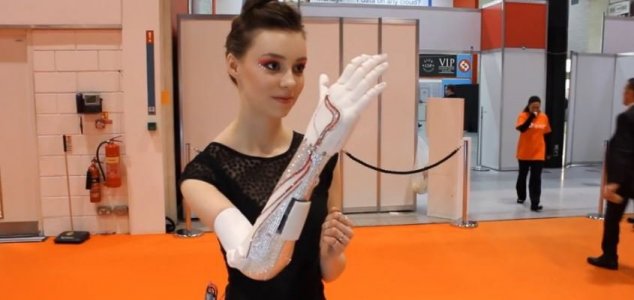
The bionic limb can be personalized with unique designs. Image Credit: YouTube / Open Bionics

This isn’t just about cost. It’s about identity. The old prosthetics were designed to be hidden. Flesh-colored plastics that matched no one’s flesh. Uncanny, creepy attempts to imitate reality. Open Bionics took a hard left turn. They asked: Why hide it? Why not celebrate it? They offered arms with intricate designs, bold colors, and custom themes. They turned a medical device into a piece of personal expression. A statement.

The Evolution: What Happened When the World Woke Up

That 2015 announcement was just the beginning. The seed. In the years that followed, that seed grew into something wild and unpredictable. Open Bionics didn’t just fade away. They exploded. They started partnering with… Disney. With Eidos-Montréal, the creators of the video game *Deus Ex*. Suddenly, this wasn’t just a prosthetic. It was a superhero arm.

Kids weren’t just getting a replacement hand. They were getting an Iron Man arm. A *Star Wars* lightsaber-themed arm. A glittering blue arm from the movie *Frozen*. Think about the psychological shift. The device that once marked a child as “different” or “disabled” was now the thing that made them the coolest kid in the entire school. It transformed a symbol of loss into a symbol of power.

And the technology kept advancing, quietly, persistently.

The sensors got more sensitive. The grip patterns became more complex. They added haptic feedback—tiny motors in the fingertips that vibrate when the hand touches something. It’s not true “feeling,” not yet. But it’s a whisper of it. It’s data. The user can feel the gentle buzz when they pick up a fragile object, like an egg, telling them “Okay, you’ve got it. Don’t squeeze any harder.” It’s a crude sense of touch, but it’s a monumental leap forward.

THE CONSPIRACY: Who’s Afraid of the $2,000 Super-Limb?

This all sounds wonderful, right? A heartwarming story of innovation helping people. But you have to ask the question. The one they don’t want you to ask. If a small team can build a functional, stylish bionic arm for a couple of thousand dollars… why were the old ones costing $60,000, $80,000, even over $100,000? Where, exactly, was all that money going?

You’re looking at a classic gatekeeper scenario. An industry built on inflated costs, opaque supply chains, and insurance mazes designed to extract maximum profit. For decades, they had a captive audience. If you lost a limb, you paid their price. There was no other choice. It wasn’t about the cost of materials. It was about the cost of access. They controlled the gate, and the toll was astronomical.

The 3D printer is a battering ram aimed at that gate. It decentralizes manufacturing. It democratizes design. The blueprints for these hands can be shared online, downloaded anywhere in the world. An engineer in a war-torn village in Sierra Leone, a place Barbara Jemec of the British Foundation for International Reconstructive Surgery and Training specifically mentioned, can download the files, tweak the design for a local patient, and print a new hand on the spot. “A working hand can make all the difference between hunger and being able to work and take care of yourself and your family,” she said back in 2015. This technology doesn’t just restore a person; it can restore an entire family’s future.

This is what terrifies the old guard. An open-source revolution they cannot control. You can’t put a patent on a thousand different people modifying and improving a design for free. You can’t charge a licensing fee for a file shared on the internet. It’s a fundamental threat to a business model built on scarcity and control.

What If It’s Not Just About Replacement?

Here’s where the rabbit hole gets really deep. The story we are told is that this technology is for “restoration.” To make people “whole” again. But what if that’s just chapter one?

The line between restoration and enhancement is terrifyingly thin. If you can build a hand that’s as good as a human one, you can almost certainly build one that’s better. Stronger grip. Faster fingers. Fingers that contain tools—a screwdriver, a USB drive, a wireless hotspot. Why not?

This is the transhumanist question that lurks in the shadows of this technology. We are rapidly approaching the moment where an artificial limb could be objectively superior to a biological one. What happens then? Do able-bodied people start considering “upgrades”? Does a soldier opt for an arm that can punch through a wall? Does a factory worker get a limb that never gets tired?

Suddenly, this isn’t a medical story. It’s an evolutionary one. And it raises dark, unsettling questions about what it means to be human. Is a person with cybernetic enhancements still the same person? Who gets access to this technology? Only the rich? Are we on the verge of creating a new, technologically-enhanced class of human beings? The questions are endless, and the powers that be are deathly silent on the matter.

The Future Is Here. And It’s Unstoppable.

The story of the 3D-printed bionic hand is not just a story about a cool piece of tech. It’s a story about a paradigm shift. It’s the garage inventor versus the billion-dollar corporation. It’s open access versus closed systems. It’s the beginning of a future that, until recently, was confined to the pages of cyberpunk novels.

The genie is out of the bottle. The files are online. The printers are humming away in workshops, universities, and basements all over the world. The old gatekeepers can try to slow it down, to regulate it, to dismiss it. But they can’t stop it.

The question is no longer *if* this technology will change the world. The question is how we will deal with it when it does. We are standing on a precipice, looking out at a future where the human body is no longer a fixed, biological fact, but a mutable, upgradeable platform. A future where a lost limb isn’t a tragedy, but an opportunity for an upgrade.

What comes next? Full neural integration, where the hand is controlled directly by thought? Printed limbs with synthetic skin that can feel texture and temperature? It’s all on the table. The revolution is not coming. It’s here. It’s just not being televised. Pay attention.

Arindam Mukherjee
Arindam Mukherjee
Arindam loves aliens, mysteries and pursing his interest in the area of hacking as a technical writer at 'Planet wank'. You can catch him at his social profiles anytime.
RELATED ARTICLES
- Advertisment -

Most Popular

Recent Comments

Warren Pan Abbott on The legend of the Devil Monkey !
chris davies on The McPherson Tape Mystery
Reed Reedly on ET has Internet!
Bea Houseoffashion on Proof Of Time Travellers – Gallery
Marcus2012 on ET has Internet!
Reed Reedly on ET has Internet!
LaughsAtConspiracyNuts on The 9/11 Conspiracy – Myths and Facts
Alex Sliverman on Did the ancients fly?
Doctor Wholigan on Time Traveler in 1938 film
chris davies on The McPherson Tape Mystery
Archie1954 on 10 secret UFO hideouts
chris davies on Ghosts of flight 401
Marcus2012 on ET has Internet!
jason Macdonald on Proof of Time Travel? – China
chris davies on Long-Lost Pyramids Found?
Reed Reedly on ET has Internet!
Milkman on Connected Universe
Tenmiles on Baigong Pipes Mystery
Simon Foster on Sirius – The Documentary
From the 1st April on 2013 – Alien Contact date ?
SkyWatcher on Is ET ignoring us?
I Come From The Future on Obama to make UFO Alien disclouser soon ?
ÛñK?øWn on 2013 – Alien Contact date ?
Just another person on 2013 – Alien Contact date ?
Malcolm Windowcleaner on The strange case of Rudolph Fentz
Mason Servio on Strange Things on Mars
Marke Wisdom Seeker on What will we find as arctic melts?
Andrea A Elisabeth Levyne on Aliens Captured in Varginha, Brazil
Mitch Grouyeki on Amazing Space Shuttle pictures