The Eye of the Ocean: What Secrets Are Hiding in the Great Blue Hole?
Look at it. Just look.
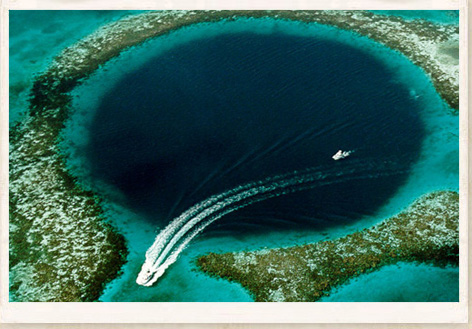
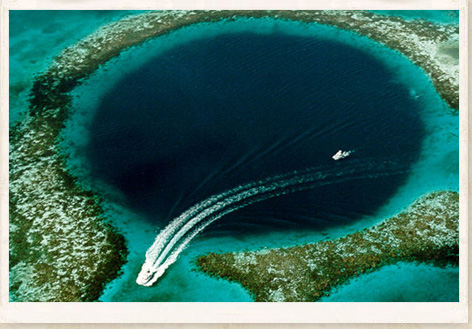
From space, it looks like an iris. A deep, sapphire-blue pupil staring out from the planet’s turquoise skin. It’s a perfect circle, an unnerving, geometric anomaly in a world of chaotic, natural shapes. They call it the Great Blue Hole.
And it’s one of the most terrifying and mystifying places on Earth.
Located off the coast of Belize, this colossal marine sinkhole is over 1,000 feet across and plunges more than 400 feet into the crushing, inky blackness. It’s a chasm. An abyss. A gateway to another time, holding secrets that shatter our understanding of the world we thought we knew.
Forget what the dry, dusty textbooks tell you. The official story is just the beginning. The truth? The truth is far, far stranger. Are you ready to take the plunge?

The Man Who Dared to Look Back
Our story starts with a legend. The man in the red beanie. Jacques Cousteau.
In 1971, long before satellite imagery made the hole a desktop wallpaper, Cousteau brought his world-famous ship, the Calypso, to this bizarre spot. Local fishermen had known about it for centuries, a place where the water turned a deep, ominous blue and the fish behaved strangely. They mostly avoided it. Cousteau, of course, sailed right for it.
He wasn’t just there for a swim. He wanted to know what this thing was. Was it a volcanic crater? A meteor impact? He and his team plunged into the depths, their primitive submersibles piercing the blue veil. What they found wasn’t just a hole. It was a time capsule.
And it would change everything.
Deep Dive: How Do You Even Make a Hole Like This?
The “official” explanation sounds simple enough. But when you really think about it, it’s mind-bending.
This wasn’t made by an asteroid. It wasn’t a volcano. The Great Blue Hole used to be a cave. A gigantic, dry cave on solid land.
Think about that for a second. This 400-foot-deep pit, now flooded with ocean water, was once open to the air. You could have walked into it.
How is that possible?
You have to rewind the clock. Way back. We’re talking about the last Ice Age, a time when massive glaciers locked up a huge portion of the world’s water. The period known as the Pleistocene. The sea level wasn’t just a little lower. It was hundreds of feet lower. The coastline of Belize was miles further out, and the area of the Great Blue Hole was a limestone plateau, high and dry.
The Slow, Patient Work of Water
Limestone is a soft, porous rock. It’s basically compressed ancient sea shells and skeletons. Over thousands of years, rainwater, which is slightly acidic, seeped down into the limestone. It trickled and dripped. It carved and dissolved. A tiny crack became a fissure. A fissure became a tunnel. A tunnel became a vast, cathedral-like cavern system, an underground world of darkness.
Then, the world changed. The ice caps began to melt. Fast.
Around 10,000 years ago, the oceans swelled. The sea level rose dramatically, swallowing coastlines all over the globe. The land that held this massive cave was inundated. The water pressure built up. The thin, cavernous roof, no longer able to support its own weight against the rising sea, collapsed.
Boom. A perfect, circular sinkhole was born, instantly flooded by the Caribbean Sea.
It’s a violent, spectacular origin story. But it’s the evidence inside the hole that truly boggles the mind.
A Journey Into the Abyss
Diving into the Great Blue Hole is not like a fun day at the reef. It’s a descent into another world. A darker one.
The first 30 feet are teeming with life. Brightly colored fish, vibrant corals clinging to the rim. It’s beautiful. Deceptive.
Then you keep going down.
The light begins to fade. The vibrant blue gives way to a deep, solemn indigo. The walls of the chasm are sheer, almost perfectly vertical. There is less and less life. It gets quiet. Eerily quiet. You might see a lone reef shark patrolling the edge, a ghostly sentinel in the gloom.
Around 100 feet down, you start seeing them. Strange, ghostly shapes littering the ledges. They are conch shells. Thousands of them. A conch graveyard. Did they fall in? Or did they crawl here to die? No one knows for sure. It’s the first sign that this place operates by its own set of rules.
And then, things get truly weird.
The Poison Cloud and the Lost World
At about 300 feet down, you hit a layer. It’s a murky, hazy boundary that looks like a cloud floating in the water. This is a thick layer of hydrogen sulfide.
It’s poison. It’s a suffocating blanket where the oxygen-rich water from above meets the stagnant, dead water below. Nothing lives here. Nothing can survive. The cloud smells like rotten eggs, and it completely absorbs the last of the surface light. Passing through it means entering total, absolute blackness.
But this is where Cousteau’s team, and every diver since, found the smoking gun.
Below the poison cloud, the hole opens up into the ancient cave system it once was. And hanging from the ceilings and rising from the floors are colossal, perfectly preserved stalactites and stalagmites.
Let me be clear: stalactites CANNOT form underwater. They are created by mineral-rich water dripping, drop by agonizing drop, over tens of thousands of years in a dry, air-filled cave. Finding them here, 350 feet below the surface of the ocean, is like finding a fossilized tree on the moon. It’s definitive proof that this was once a different world. A world without an ocean here.
Some of these formations are over 40 feet long. They are tilted at a specific angle, about 5 degrees. Geologists believe this indicates a massive geological event, a “great tilt” of the entire tectonic plate in the distant past. This place isn’t just a hole; it’s a history book written in stone.
Conspiracy Corner: What Are They NOT Telling Us?
This is where the story gets really interesting. The official narrative is clean and tidy. But for a place this old and this deep, you know there’s more to it. The internet is buzzing with theories, and some of them are too compelling to ignore.
What if Something is Still Down There?
The cave system at the bottom is largely unexplored. It’s a labyrinth of passages that spiderweb into the bedrock for miles. It’s cold, dark, and completely without oxygen. So, nothing could live there, right?
Maybe not. The discovery of extremophiles—organisms that thrive in the most hostile environments on Earth—has changed science. They live near volcanic vents, in sub-zero ice, in pure acid. Why not in an anoxic (oxygen-free) cave system at the bottom of the ocean? Divers have reported seeing strange, unidentifiable tracks in the silt at the bottom. Too large for any known crustacean. Too regular to be a coincidence.
Could a species of megafauna from the Pleistocene, a creature that adapted to the changing world by retreating into this deep, dark abyss, still be lurking in those unexplored tunnels? It sounds like a movie plot, but the ocean is the last great frontier. We know more about the surface of Mars than we do about the bottom of our own seas.
The Xibalba Connection
Let’s talk about geography. The Great Blue Hole sits in the heartland of the ancient Maya civilization. The Maya had a rich and terrifying cosmology. Their underworld was called Xibalba, which translates to the “Place of Fright.” It was a subterranean realm ruled by the gods of death, accessible through caves and deep water-filled cenotes (which are geologically just smaller, land-based blue holes).
Is it really a stretch to think that the Maya knew about this gigantic, perfectly circular, terrifyingly deep “cenote” in the ocean? Could this have been their ultimate gateway to Xibalba? A place of sacrifice and ritual? Mayan artifacts have been found in other, smaller cenotes across the Yucatan. What artifacts—or bodies—might be buried under the silt at the bottom of the biggest one of all?
Traces of a Lost Civilization?
This is the big one. If the Blue Hole was a dry cave on land during the Ice Age, then people could have lived in it. Or near it.
Mainstream archaeology tells us that sophisticated human civilization is a relatively recent development. But alternative historians have long talked about the possibility of a lost, ancient civilization—call it Atlantis, Lemuria, or something else—that was wiped out by a great cataclysm at the end of the last Ice Age. The very same sea-level rise that flooded the Great Blue Hole.
What if the “tracks” and “anomalies” found at the bottom aren’t from some creature, but are the last remnants of this lost culture? Perfectly cut stones? The foundations of an ancient structure? In 2018, a high-profile expedition led by Richard Branson and Fabien Cousteau (Jacques’ grandson) took two advanced submersibles to the bottom. They used state-of-the-art sonar to map the entire interior.
They released some fascinating footage of the stalactites and the hydrogen sulfide layer. But they also mentioned finding “unidentified tracks” and other strange features at the very bottom. The full data from their sonar mapping has never been fully released to the public. Why not? What did they see down there that they aren’t sharing?
The Modern Warning from the Deep
The 2018 expedition did reveal one thing for certain. A heartbreaking secret hidden in the eternal darkness. At the very bottom of the 400-foot chasm, they found plastic.
A plastic bottle. And then another. A testament to humanity’s reach. There is no place left on Earth, not even a 15,000-year-old anoxic pit at the bottom of the sea, that we haven’t managed to pollute. It’s a sobering message from a place that has survived ice ages and tectonic shifts. The greatest monster at the bottom of the hole might just be us.
So what is the Great Blue Hole? Is it a geological marvel? A time capsule from the Ice Age? A tomb for unknown creatures? The gateway to the Mayan underworld? Or the final resting place of a civilization we’ve forgotten?
Maybe it’s all of those things.
It remains an enigma. A beautiful, terrifying blue eye that has seen the world change in ways we can barely comprehend. It guards its secrets well, in the crushing pressure and the suffocating dark. And it serves as a powerful reminder. A reminder that just beneath the surface of the world we know, there is another one. A deeper, older, and infinitely more mysterious world waiting to be found.
Originally posted 2016-03-12 04:27:50. Republished by Blog Post Promoter
![strange-places-blue-hole[1]](https://coolinterestingnews.com/wp-content/uploads/2012/07/strange-places-blue-hole1.webp)