The Greatest Vanishing Act in Human History
Picture it. July 20, 1969. The world holds its collective breath. On a grainy, ethereal, black-and-white television screen, a ghostly figure descends a ladder. Neil Armstrong. He takes one small step. Humanity takes a giant leap.
Over 650 million people watched it happen. It’s an image burned into our collective memory, a symbol of what we can achieve when we reach for the heavens. But what if I told you that what we saw… was a degraded copy? A fuzzy, fourth-generation photocopy of a masterpiece?
What if the original, crystal-clear footage of the moon landing—the master tapes—are gone? Not just misplaced. Vanished. Wiped from existence.
This isn’t a theory. It’s a fact confirmed by NASA itself. The original telemetry tapes containing the highest-quality video of the Apollo 11 moonwalk are missing. And the official explanation is almost more shocking than any conspiracy. They say they taped over them.
A simple mistake? A catastrophic, bureaucratic blunder? Or is it something more? Was something on those tapes that certain people didn’t want the world to see? Let’s pull on that thread and see what unravels.
Two Tapes, Two Realities
To understand this mystery, you first need to understand that there were two different versions of the moon landing footage. Think of it like a Hollywood movie. There’s the stunning IMAX version you see in the theater, and then there’s the blurry, pirated copy someone filmed on their phone.
The Ghost We All Watched
The footage that was broadcast live to the world was a compromise. The camera on the moon recorded in a special format called Slow-Scan Television (SSTV). It was a brilliant piece of engineering, designed to send a clear-enough signal across 238,000 miles of empty space with the limited technology of the 1960s.
But there was a problem. SSTV was incompatible with the television sets in our living rooms. It used a different number of lines and a different frame rate. To get it on the air, NASA had to point a regular TV camera at a special high-res SSTV monitor and re-film it in real-time. This process, called scan conversion, was clunky. Primitive. It stripped away detail, added noise, and created that iconic, blurry, almost supernatural look. That was the NTSC broadcast version. Those tapes were copied a thousand times over and were never lost.
The Holy Grail: The SSTV Master Tapes
But at the ground stations in Goldstone, California, and Honeysuckle Creek, Australia, something else was happening. As they performed the scan conversion for the live broadcast, they were also recording the raw, unprocessed SSTV signal directly onto massive, one-inch magnetic data tapes. Fourteen tracks of pure data. Telemetry. Voice. Biomedical information. And the video. The pure, unadulterated video feed, direct from the Moon.
This was the master copy. The original negative. Sharper. More detailed. A completely different visual experience. These tapes were the ground truth. And for decades, they sat in a vault, forgotten. Until they weren’t.

The Searchers: A Band of Retired Rocketeers
The fuse was lit in the late 1990s. As the 30th anniversary of the landing approached, old photographs began to surface online. Pictures taken inside the control rooms at those ground stations in 1969.
And people noticed something odd. Something incredible.
The images on the monitors in those old photos were stunningly clear. You could see details in the astronaut’s suits, textures in the lunar dust, and a depth that was completely absent from the broadcast footage. The internet began buzzing. Where was *this* version?
This question galvanized a group of people who couldn’t let it go. These weren’t conspiracy theorists in basements. They were retired NASA engineers, Apollo-era contractors, and space historians—the very people who had made the landing happen. Led by figures like Dick Nafzger, they launched a quest. A multi-year, needle-in-a-haystack search for the lost master tapes.
Their logic was simple and beautiful. With modern digital technology, they could take those raw SSTV signals and convert them perfectly. They could restore the moonwalk. They could show the world what it *really* looked like. All they had to do was find the tapes.
Deep Dive: The Nightmare in the Archives
Their search turned into a descent into a bureaucratic labyrinth. They started at the Goddard Space Flight Center, where the tapes were originally sent. Records were incomplete. Boxes were mislabeled. They followed a paper trail that led them to the National Archives. More boxes. More tapes. But not the right ones.
Think about the sheer volume of data. The Apollo program generated millions of magnetic tapes. Tapes for every system, every simulation, every second of every mission. The Apollo 11 moonwalk tapes—an estimated 45 reels in total—were just a few drops in an ocean of data. One archivist described the storage facility as a “cathedral of tapes,” rows upon rows of metal shelves stretching into the darkness, each holding a piece of history, most of it unlabeled.
The team chased leads for years. They interviewed old colleagues. They dug through shipping manifests from the 1970s. At one point, a rumor sent them searching a warehouse in Pennsylvania. Another time, they thought the tapes might be in a collection held at a university. Every lead was a dead end. The tapes were simply gone.
The Official Story: A Cosmic Mistake
Finally, in 2009, after an exhaustive investigation, NASA held a press conference. The search was over. They had found their answer.
And the answer was horrifying.
According to NASA, the tapes had been erased. Sometime in the late 1970s or early 1980s, the agency was facing a severe shortage of high-quality magnetic tapes. New satellite programs, like the Landsat Earth-mapping project, were data-hungry and required thousands of fresh reels.
So, following standard procedure at the time, a manager ordered the degaussing and reuse of old tapes. In a government warehouse, an estimated 200,000 tapes were pulled from the shelves, put through a powerful magnetic eraser, and repurposed. Among them, lost in the shuffle, were the 45 reels containing the original, unprocessed Apollo 11 moonwalk.
The most important recording in human history was wiped clean to save a few thousand dollars on new tapes. A tragic, almost unbelievable story of shortsightedness. It was, as one engineer put it, an “unintentional, colossal screw-up.”
The Conspiracy Files: Was It *Really* an Accident?
And this is where the story takes a sharp turn into the shadows. Because for many, the official explanation just doesn’t sit right. The most valuable, irreplaceable data recording in history, wiped by mistake? It feels too convenient. Too simple. And the internet, as it always does, has filled the vacuum with some mind-bending theories.
Theory 1: The UFO in the Tapes
This is the big one. For years, rumors have swirled that the astronauts were not alone on the moon. Proponents point to unconfirmed reports of cryptic messages from Armstrong, and to the two minutes of audio communication that were mysteriously lost during the live broadcast. What if the raw, high-definition SSTV feed caught something in the background? A strange light? An unnatural object moving across the lunar horizon? Something that a quick-thinking technician could filter out of the live broadcast, but that would remain on the master tapes forever.
If that were the case, those tapes would be the most dangerous artifact on Earth. Destroying them wouldn’t just be a good idea; it would be a matter of planetary security. Wiping them clean under the guise of a “tape shortage” would be the perfect crime.
Theory 2: Hiding the Hoax
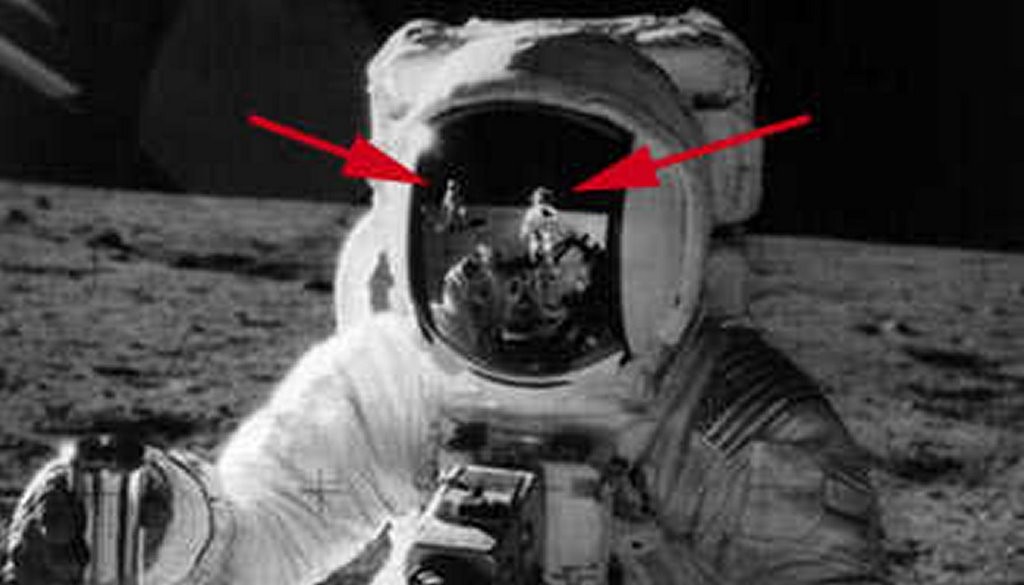
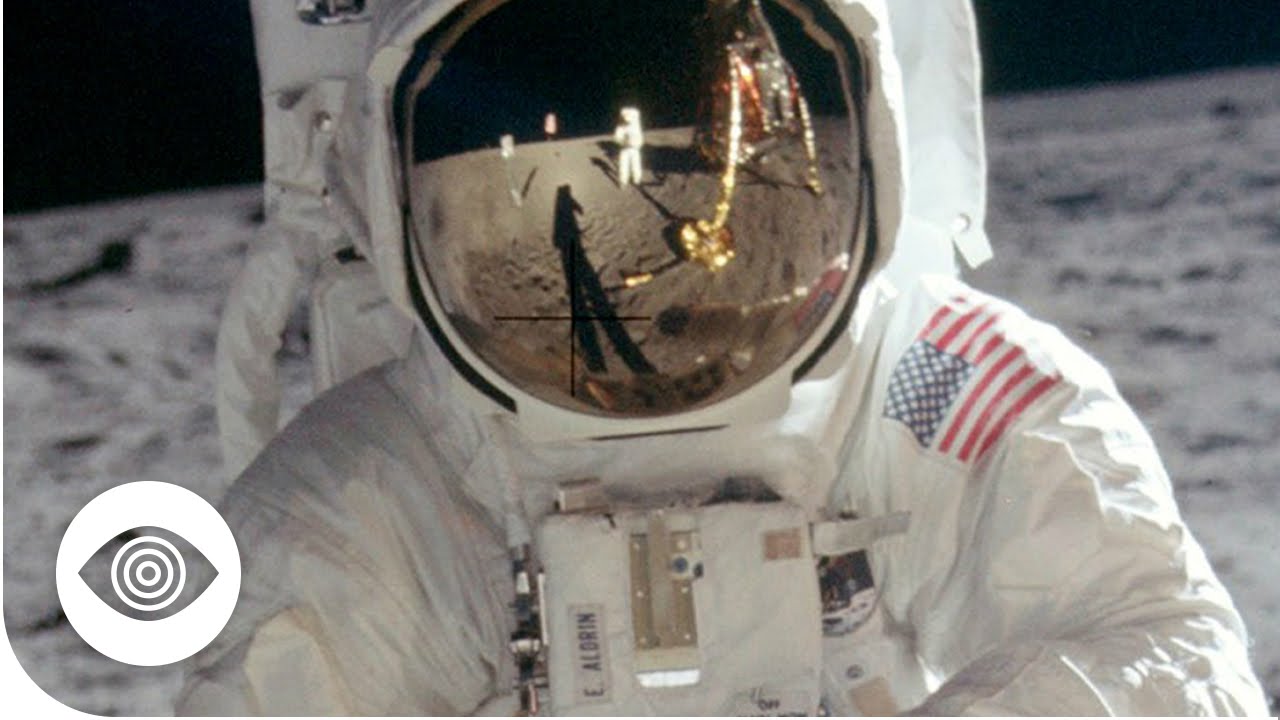
You can’t talk about a moon mystery without touching on the theory that the whole thing was faked. While the evidence for the landing is overwhelming, hoax believers see the missing tapes as the ultimate smoking gun. They argue that the raw footage was *too* good. Maybe it showed a wire holding up an astronaut. Or a flag waving when it shouldn’t. Or a reflection in a helmet visor that revealed a studio light.
In this scenario, the grainy, degraded NTSC broadcast was a deliberate choice to obscure the details and hide the imperfections of a staged production. The SSTV master tapes were the “director’s cut” that showed all the mistakes. They had to disappear. Permanently.
Theory 3: Simple, Terrifying Theft
Perhaps the truth is less complex, but no less sinister. What if the tapes weren’t erased at all? What if someone, an employee with access, understood their immense historical and monetary value back in the 70s? They could have simply walked out with them. Labeled as something else, they would never be missed until decades later. Are the most important tapes in history sitting in a private collector’s vault somewhere, a secret treasure waiting to be rediscovered?

Digital Ghosts: The Restoration Project
The search for the original tapes may have ended in heartbreak, but it wasn’t a total failure. In their hunt, the team unearthed treasure.
They didn’t find the master tapes, but they found the *next best thing*. They located the best-surviving copies of the live NTSC broadcast. Even better, they discovered lost footage from the Australian ground station. This included Super 8 film footage of the raw SSTV monitor, captured before even the first scan conversion. It was another generation closer to the source.
NASA handed all of this material over to Lowry Digital, the same Hollywood wizards who restore cinematic classics like *Star Wars* and the James Bond films. The team began a painstaking, frame-by-frame digital restoration. They used advanced algorithms to remove noise, sharpen details, and stabilize the image. It was digital archaeology, reconstructing a ghost from its faintest echoes.
The result was the beautifully enhanced 2009 release of the moonwalk footage. It’s the cleanest, sharpest, and most complete version we have ever seen. It’s a triumph of technology. But it is still a restored copy. A beautiful painting of a memory. The original photo is still missing.
The Final Frontier of a Mystery
So where does that leave us? With two stories.
One is a tale of human error on an epic scale. A story of bureaucracy and budget cuts accidentally erasing our greatest achievement. It is a profoundly sad, and profoundly human, mistake.
The other story is darker. It’s a story of secrets and shadows, suggesting that the truth of what happened on the moon is more complex than we’ve been told. That something on those tapes was deliberately and methodically eliminated from history.
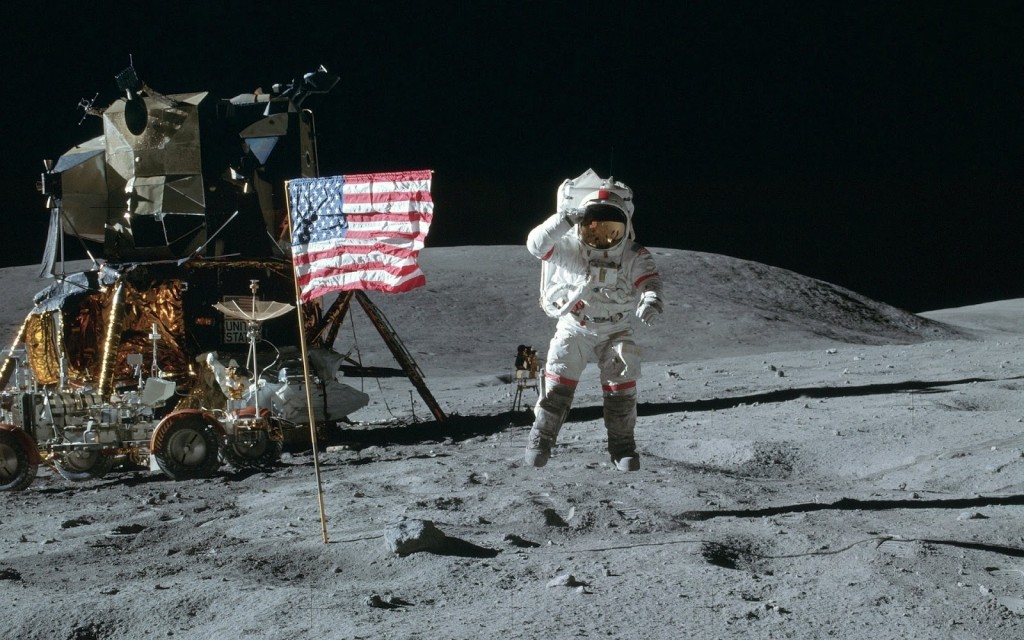
The tapes are gone. Forever. We will likely never know for certain which story is true. We are left with the restored footage, a miracle of modern science. But as we watch Armstrong and Aldrin bounce across the lunar surface in stunning new clarity, we must also live with a permanent, nagging question.
What did we miss? What was on those tapes, really? What secrets are now just silent, magnetic dust?
Originally posted 2015-09-26 17:35:38. Republished by Blog Post Promoter