The mountains don’t whisper. They scream. Sometimes, if you’re unlucky enough to be listening, they scream secrets that mankind was never meant to hear. We sit in our heated lodges, drinking cocoa, strapping on fiberglass skis, pretending we’ve tamed the wild. We haven’t. We are guests. And the landlords? They might be watching from the tree line.
There is a video. A fragment of digital chaos that refuses to die. It comes from Formigal. Not the remote Himalayas. Not the deep, dark thickets of the Pacific Northwest. Spain. A crowded, tourist-heavy ski resort in the Pyrenees.
Take a look. Don’t just glance. Look.
The Glitch in the Snow
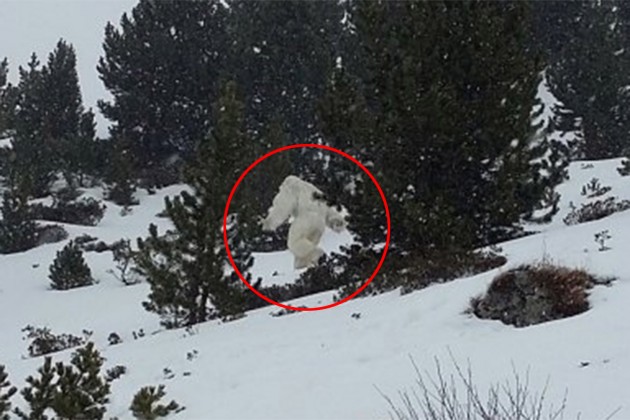
Shaky footage. Grainy zoom. The hallmarks of every great monster hunt. But this one feels… different. It’s visceral. What looks like a massive, bipedal, ape-like creature is seen clambering through the trees, just meters away from where families ski and children play. It’s jarring.
The existence of yetis has long been a topic of discussion. A polite way of saying we’ve been obsessed with the “Wild Man” archetype since we first huddled around fires in caves. But usually, these stories come from the ends of the earth. This time, the monster came to dinner.
So could there finally be proof they’re real? If the latest footage is to be believed, then, maybe. Or maybe we are looking at something far stranger.
The Footage That Broke the Internet
Let’s set the scene. It’s January 2016. A user on a popular Spanish forum (Foro Coches) goes by the handle “Kangaroo.” He posts a photo and a video. The caption isn’t a joke. It’s panic. “Strange animal spotted in Formigal. What the hell is this?” he asks. You can feel the confusion radiating off the screen.
Shaky camera work captures a white, hulking figure. It doesn’t move like a man. It moves with purpose. It slouches. It steps high through the powder. It’s clambering through the popular ski resort, Formigal in northeast Spain. This emerged out of nowhere and slapped the cryptozoology world across the face.
Sending social media into meltdown, the ski resort was forced to comb part of the region after the amateur recording surfaced. They had to act. They had to be seen doing something. Why? Because fear is bad for business. If tourists think a 400-pound relic from the Pleistocene era is waiting to rip their arms off on the bunny slope, ticket sales drop.
Not too surprisingly, they found no sign of the creature. Or so they said.
Analysis: Man, Myth, or Military?
Watch that clip again. Pause it. The stride. That’s the key. Human beings walking through deep snow do what we call “post-holing.” We sink. We struggle. Our hips wobble. This thing? It glides. It has power.
The internet, being the hive-mind of detectives that it is, immediately split into factions. The theories range from the plausible to the absolutely insane.
Theory 1: The “Furry Suit” Hoax
Rumoured to be a man dressed in a furry suit. This is the skeptic’s go-to shield. “It’s a prank, bro.” But think about the logistics. Have you ever tried to run through waist-deep snow in a mascot costume? It’s nearly impossible. You’d pass out from heat exhaustion in ten minutes, or you’d trip and look ridiculous. This figure maintains balance. It traverses uneven terrain with an animalistic grace that is hard to fake.
Theory 2: The Photoshopped Polar Bear
Some claimed it was a photoshopped polar bear. Impossible. This is video footage. While CGI is good, it wasn’t “random guy on a Spanish forum” good in 2016. Plus, the lighting matches perfectly. The shadows interact with the snow. It’s physically there.
Theory 3: The Super-Soldier
Or even a soldier wearing mountain camouflage. Now we’re getting into the spicy territory. The Pyrenees are a border zone. Smugglers. Military drills. Black ops. Is it possible this is a specialized mountain unit testing experimental arctic gear? A ghillie suit designed for snow? If so, why does he walk like a gorilla? Is that part of the training? “Walk like an ape to confuse the enemy”? Seems unlikely. But in the world of shadows, you never know.
Despite the ridicule, the skier who posted the video on a Spanish forum stands by it. He didn’t back down. He didn’t say “gotcha!” later. He remained terrified.
‘Strange animal spotted in Formigal. What the hell is this?
‘A bear or a bloody Yeti? ‘We’ve told the ski resort but they haven’t taken us seriously.
‘I bet there’s something on the loose out there. I know what I saw.’
The Deep History: The Basajaun of the Pyrenees
Here is where things get really interesting. Most people hear “Yeti” and think of Tibet. They think of the Abominable Snowman in the Himalayas. But they are missing the pieces of the puzzle that are right under their noses in Europe.
The Pyrenees mountains have their own legend. It isn’t the Yeti. It’s the Basajaun.
In Basque mythology—one of the oldest, most mysterious cultures in Europe—the Basajaun is the “Lord of the Woods.” A huge, hairy, wild man who watches over the flocks. He isn’t a monster in the sense of a mindless killer. He is a guardian. He is the link between nature and man. He taught humans how to forge iron and grow wheat. He is ancient.
Think about it. The Basques have lived in these mountains for thousands of years. Their language is unrelated to any other on Earth. Their myths are specific. They didn’t make up a “wild man” because they saw a movie. They made it up because they saw him. They heard his heavy footsteps in the night.
Is the Formigal creature a Basajaun? Did a modern skier, armed with an iPhone, accidentally capture a deity of the forest on camera?
The “Missing Link” Theory
Let’s play devil’s advocate. Europe was once home to Neanderthals. We know this. It’s a fact. We lived alongside them. We bred with them. Then… they vanished. Or did they?
The Pyrenees are rugged. Cavernous. There are valleys where human feet rarely tread. Is it biologically impossible for a small, relict population of hominids to survive? Bears do it. Wolves do it. Why not a smarter, more elusive primate? One that knows how to hide. One that knows the sound of a ski lift means “stay low.”
Maybe this creature made a mistake. Maybe it was sick. Maybe it was hungry. And for one brief second, the veil slipped.
The Cover-Up: “Nothing to See Here”
While for now the mystery remains unsolved, skiers have been assured there is no cause for alarm. Of course they have. Imagine the headline: “Ski Resort Admits Monsters Are Real, Please Buy A Lift Pass.” It doesn’t work.
A spokesman for the resort said: ‘We have spoken to the witnesses of the sighting to identify the area in which it took place and after combing the area we have found nothing.
‘We believe therefore that there is no cause for alarm and that visitors’ security is guaranteed.
‘In any case we will remain alert.’
Notice the language. “Guaranteed.” “No cause for alarm.” It’s the standard corporate script. It’s the same thing the Mayor said in the movie Jaws. “The beaches are open.”
They searched the area? How hard? Did they use thermal drones? Did they bring in trackers? Or did a guy on a snowmobile do a quick loop, smoke a cigarette, and report back that the coast was clear? The snow hides everything. Tracks fill in within minutes if the wind is blowing. “Finding nothing” proves nothing.
The Viral Marketing Conspiracy
We have to address the elephant in the room. A few days after this footage went supernova, there were whispers. Rumors that a sunglasses company or a promotional firm might have staged it. But here is the catch: nobody ever claimed it. Usually, with a viral stunt, the “reveal” comes a week later to sell you product. “Gotcha! Buy our goggles!”
That reveal never happened. The footage just sat there. Festering. If it was a marketing stunt, it was a failure because it didn’t sell anything except nightmares. This lack of a corporate “gotcha” makes the hair on the back of my neck stand up. It suggests the footage might be orphan data—an anomaly that fits no narrative.
Pareidolia or Predation?
Skeptics love the word “Pareidolia.” It’s the brain’s tendency to see patterns where none exist. Faces in toast. Animals in clouds. They say the Formigal Yeti is just a trick of light and shadow on a tree stump or a rock.
Look at the image again. Rocks don’t have shoulders. Tree stumps don’t have a distinct head that turns. The figure has posture. It conveys exhaustion or determination. That is a biological quality. It triggers the predator-detection circuit in our brains. We know when we are looking at a living thing.
The yeti, also known as the abominable snowman, is regarded as legend by the scientific community given the lack of concrete evidence. But “lack of evidence” is not “evidence of absence.”

Every year, we discover new species. Deep sea squids. Amazonian monkeys. Insects. Why is it so hard to believe that in the whiteout conditions of the high peaks, something survived? Something that learned long ago that humanity is dangerous, and the only way to stay alive is to stay hidden.
Next time you are on the slopes, and you veer off-piste, away from the groomed trails… listen. Listen past the wind. Watch the tree line. That white shape in the corner of your eye?
It might not be a trick of the light.
Originally posted 2016-02-25 16:13:03. Republished by Blog Post Promoter