Wednesday, August 12, 2026
HomeSpace & ScienceScienceNASA warns 'something very unexpected is happening to the Sun'

NASA warns ‘something very unexpected is happening to the Sun’

NASA Warned ‘Something Unexpected’ Was Happening to Our Sun. Here’s the Story They DIDN’T Tell You.

They told us to prepare. They told us to brace for impact.

The year was 2013. The Sun, our magnificent, life-giving star, was supposed to be throwing a tantrum of epic proportions. This was the moment of ‘solar maximum,’ the peak of its ferocious 11-year cycle. We were promised a spectacle. A face riddled with dark, boiling sunspots. An atmosphere crackling with energy. And solar flares—titanic explosions of plasma capable of lashing out across the solar system.

Scientists at NASA sharpened their pencils and double-checked their models. The world watched.

And then… nothing.

A whisper. An eerie, unsettling silence from the one celestial body that should have been screaming.

What Happens When a Star Goes Off-Script?

To understand the depth of this mystery, you need to picture what a solar maximum *should* be. Imagine the Sun as a seething cauldron of magnetic chaos. Every 11 years, its magnetic poles flip. North becomes South. South becomes North. But this process isn’t clean. It’s messy. Violent. During this reversal, the Sun’s magnetic field lines get twisted and tangled like cosmic spaghetti.

Where these lines burst through the surface, we get sunspots. These aren’t just dark blemishes; they are planet-sized magnetic storms, cooler than their surroundings, and seething with pent-up energy. They are the barrels of the gun. The flares and Coronal Mass Ejections (CMEs) are the bullets.

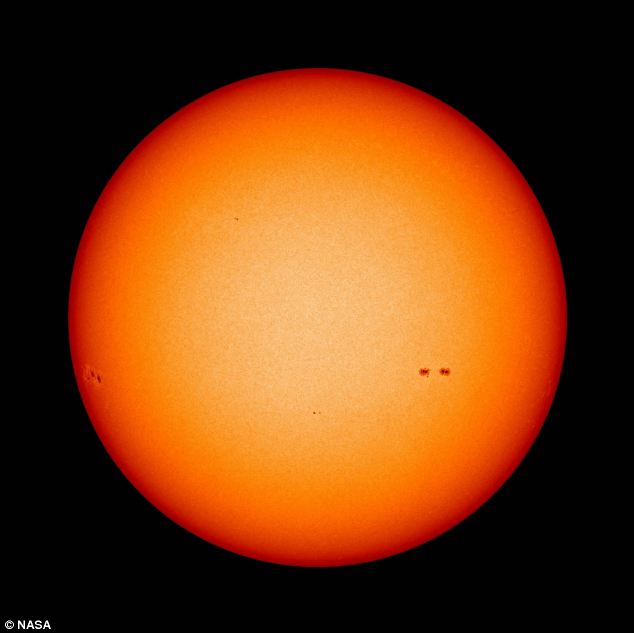
2013 was supposed to be the peak of this magnetic mayhem. But when NASA’s Solar Dynamics Observatory (SDO) turned its unblinking eye toward our star, this is what it saw.

Look at it. On February 28, 2013, at the supposed height of the storm, the Sun’s face was almost… blank. Clean. A few tiny spots peppered an otherwise placid yellow orb. It was the cosmic equivalent of a rock concert where the band never shows up. The silence was deafening.

NASA themselves had to admit it. In a public statement that dripped with confusion, they announced, “Something unexpected is happening on the Sun.”

Unexpected?

Sunspot numbers weren’t just low; they were plummeting, well below the levels seen two years prior in 2011. Powerful flares, the main event of any solar maximum, were few and far between. The experts were baffled. The models were wrong. The giant was sleeping. And that, my friends, might be far more terrifying than if it had been raging.

The “Double-Peak” Theory: A Clever Cover-Up or Simple Science?

Of course, an institution like NASA can’t just say, “We have no idea what’s going on.” They need an answer. An explanation. Something to calm the nerves.

Enter solar physicist Dean Pesnell of NASA’s Goddard Space Flight Center. He stepped forward with a theory that was either a brilliant piece of analysis or a convenient way to explain away a massive forecasting failure.

“This *is* solar maximum,” he claimed. “But it looks different from what we expected because it is double-peaked.”

A double-peaked maximum? What does that even mean?

Pesnell argued that the Sun’s two hemispheres were out of sync. Think of it like a badly timed engine, with one piston firing before the other. The northern hemisphere had apparently peaked early, back in 2011, producing a flurry of activity. Then it fizzled out. The southern hemisphere, he predicted, was lagging behind and would fire off its own peak later in 2013, or maybe even in 2014.

This would create two smaller humps of activity instead of one giant mountain. It’s a neat explanation. It sounds plausible. He even pointed to recent history, noting that the maxima around 1989 and 2001 also showed hints of this two-humped behavior. A mini-cycle within the larger cycle.

But then he reached further back into the history books, unearthing a ghost.

A Look Back: The Ghost of Solar Cycle 14

Pesnell spotted an unnerving similarity between our modern, baffling cycle (Solar Cycle 24) and a much older one: Solar Cycle 14. That cycle ran from 1902 to 1913. And guess what? It also had a strange, weak, double-peaked maximum that puzzled astronomers of the era.

If our current cycle was a twin of Cycle 14, Pesnell suggested, it would mean one peak in late 2013 and another, even later, in 2015. It was a way of kicking the can down the road. But what was happening on Earth during that original, strange solar cycle?

The early 20th century. A period of immense global tension leading up to World War I. Strange weather patterns were reported globally. The world was on a knife’s edge. Is it a coincidence that the Sun was behaving so erratically during a time of such human turmoil? Mainstream science says yes. But others wonder if there isn’t a deeper connection between the energy of our star and the state of humanity.

Was the “double-peak” theory the whole truth? Or was it a way to paper over a much more disturbing reality?

A Sleeping Giant: Why a Calm Sun Might Be Scarier Than a Raging One

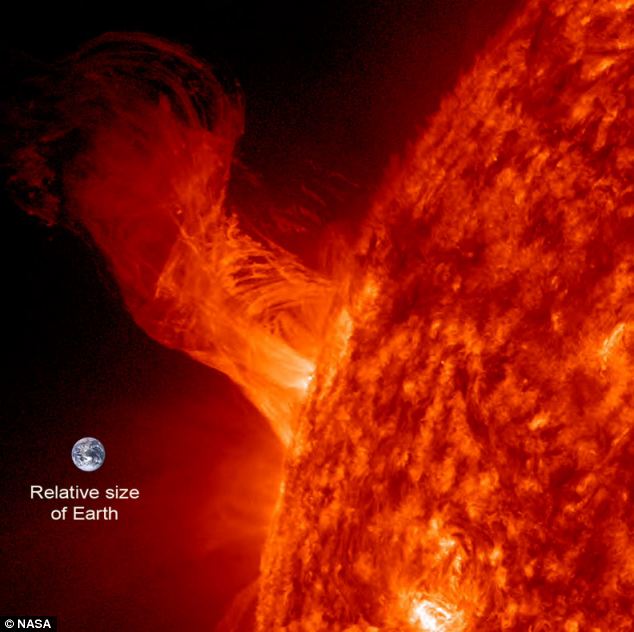
Everyone is afraid of a solar flare. It’s the big, cinematic threat. A massive burst of energy that could wipe out our technology. We picture explosive, dramatic events like this:

sun flare up

But what if the real threat isn’t the roar, but the whisper? What if the lackluster maximum of 2013 wasn’t just a dud, but a symptom of something much bigger? A sign that the Sun is entering a prolonged period of quiet.

This isn’t just speculation. It has a name.

The Grand Solar Minimum: Are We Staring Down a New Ice Age?

Throughout history, the Sun hasn’t always followed its neat 11-year cycle. Sometimes, it goes dormant for decades. The most famous example is the Maunder Minimum, a period from roughly 1645 to 1715 when sunspots almost completely vanished from the Sun’s face.

And what happened on Earth during that time? We call it the “Little Ice Age.”

Rivers that never froze before, like the Thames in London, froze solid. Glaciers in the Alps advanced, swallowing entire villages. Winters became brutally long and cold. Crops failed. Famine and disease were rampant. It was a period of global misery, and it corresponded directly with a sleepy, quiet Sun.

The shockingly weak performance of Solar Cycle 24 in 2013, and the even weaker cycle that followed it, has sent shockwaves through a community of independent researchers. They are asking a question that makes governments very nervous: Was 2013 the beginning of a new Grand Solar Minimum? Are we on the precipice of another Little Ice Age?

Forget global warming for a second. The data from ice cores and historical records is clear: low solar activity is linked to periods of intense cold on Earth. If the Sun’s internal dynamo is slowing down, the consequences for our food supply, our economy, and our global stability could be catastrophic.

Maybe the quiet Sun wasn’t a mystery to be solved. Maybe it was a warning.

The Bullet We Barely Missed: The “Carrington-Class” Event of 2012

But the story has another twist. A mind-bending, terrifying twist.

Just one year before the “great solar silence,” something incredible happened. On July 23, 2012, a region of the Sun that was *not* facing Earth unleashed a monster.

It was a Coronal Mass Ejection of almost unbelievable power. A cloud of magnetized plasma, billions of tons of it, was hurled into space at incomprehensible speed. Scientists who analyzed the data from NASA’s STEREO-A spacecraft, which was in the direct line of fire, were stunned. The CME was as powerful, if not *more* powerful, than the legendary Carrington Event of 1859.

Ah, the Carrington Event. The bogeyman of the modern technological age. In 1859, a massive solar storm struck the Earth head-on. It was so powerful that people could read newspapers at night by the light of the auroras, which were seen as far south as Cuba and Hawaii. But it did more than that. It supercharged the planet’s young electrical infrastructure—the telegraph system.

Telegraph pylons threw sparks. The paper in telegraph offices spontaneously caught fire. Operators were electrocuted. Some systems were so filled with energy from the sky that they could be unplugged from their batteries and *still* send messages.

Now, imagine that same event happening today.

It wouldn’t just be a few fried telegraphs. It would be a civilization-ending catastrophe. The power grid would be destroyed. Not a blackout for a few hours, but a shutdown for months, or even years, as hundreds of massive, custom-built transformers are fried simultaneously. No electricity. No internet. No GPS. No banking. No refrigerated food or medicine. No clean water pumped to your home. It would throw humanity back to the 1800s in an instant, but without the skills to survive there.

And we missed that exact event in 2012. By one week.

If the eruption had happened seven days earlier, the Earth would have been directly in the crosshairs. We dodged a planetary bullet. So here’s the question: Was the weak maximum that followed in 2013 somehow connected? Did the Sun exhaust its fury in that one monster blast that luckily missed us? Or was something else going on?

What the Online Sleuths Are Saying

While the official story settled on the “double-peak,” online forums and independent researchers went into overdrive. The weak maximum of 2013 became a focal point for countless alternative theories, many of which are more compelling than you might think.

Is Earth’s Weakening Magnetic Field to Blame?

It’s a scientific fact that Earth’s magnetic field—our planetary shield against solar radiation—is weakening. It has been for centuries. The magnetic north pole is also wandering away from Canada and toward Siberia at an accelerating rate.

What does this mean? It means our shield is getting thinner. Some have theorized that there’s a feedback loop between the Earth and the Sun. Could a change in Earth’s magnetism somehow influence the Sun’s behavior? Or, more frighteningly, does a weaker shield mean that even a “weak” solar cycle poses a greater threat to us than a strong cycle did a century ago? Are we more vulnerable than ever before, even to a Sun that’s half-asleep?

A Galactic Influence?

This is where things get really wild. Our solar system isn’t static. It’s constantly moving through the Milky Way galaxy, orbiting the galactic center every 230 million years. Some theorists propose that we are currently passing through a region of space with different properties—perhaps a cloud of interstellar dust or a zone of higher energetic charge.

Could this “galactic weather” be affecting our Sun? Is an outside force tamping down its normal activity, or building it up for something we can’t yet predict? It’s an idea that mainstream science scoffs at, but it persists because the Sun’s behavior remains so stubbornly hard to forecast.

So, What Is Really Happening to Our Sun?

A decade has passed since the great solar mystery of 2013. The “second peak” did arrive, but it was also a dud. The entire solar cycle went down in the books as the weakest in over a century. The cycle that followed has been even quieter.

So, what was the truth? Was it a simple, boring “double-peak” that the models just didn’t see coming? A sign of scientific fallibility?

Or was it a symptom of something profound? A warning shot that our star is entering a long, cold slumber, threatening a new Little Ice Age that could change human civilization forever?

Or was it the quiet aftermath of a cosmic near-miss, a moment of calm after the Sun threw the punch that could have killed us, but thankfully, missed?

We live our lives day to day, worrying about jobs, bills, and politics, all while floating on a rock next to a thermonuclear furnace that is following a script we clearly do not understand. NASA said “something unexpected” was happening. They were right. The problem is, it’s still happening.

The Sun is still out there. It’s still quieter than the history books say it should be. For now.

The real question isn’t what happened in 2013. The real question is what happens *next*.

Amit Ghosh
Amit Ghoshhttps://coolinterestingnews.com
Aloha, I'm Amit Ghosh, a web entrepreneur and avid blogger. Bitten by entrepreneurial bug, I got kicked out from college and ended up being millionaire and running a digital media company named Aeron7 headquartered at Lithuania.
RELATED ARTICLES
- Advertisment -

Most Popular

Recent Comments

Warren Pan Abbott on The legend of the Devil Monkey !
chris davies on The McPherson Tape Mystery
Reed Reedly on ET has Internet!
Bea Houseoffashion on Proof Of Time Travellers – Gallery
Marcus2012 on ET has Internet!
Reed Reedly on ET has Internet!
LaughsAtConspiracyNuts on The 9/11 Conspiracy – Myths and Facts
Alex Sliverman on Did the ancients fly?
Doctor Wholigan on Time Traveler in 1938 film
chris davies on The McPherson Tape Mystery
Archie1954 on 10 secret UFO hideouts
chris davies on Ghosts of flight 401
Marcus2012 on ET has Internet!
jason Macdonald on Proof of Time Travel? – China
chris davies on Long-Lost Pyramids Found?
Reed Reedly on ET has Internet!
Milkman on Connected Universe
Tenmiles on Baigong Pipes Mystery
Simon Foster on Sirius – The Documentary
From the 1st April on 2013 – Alien Contact date ?
SkyWatcher on Is ET ignoring us?
I Come From The Future on Obama to make UFO Alien disclouser soon ?
Just another person on 2013 – Alien Contact date ?
Malcolm Windowcleaner on The strange case of Rudolph Fentz
Mason Servio on Strange Things on Mars
Marke Wisdom Seeker on What will we find as arctic melts?
Andrea A Elisabeth Levyne on Aliens Captured in Varginha, Brazil
Mitch Grouyeki on Amazing Space Shuttle pictures