Is Earth a Planet… or a Hard Drive?
Stop what you are doing. Look at your hand. Look at the tree outside your window. Look at the bacteria teeming on your smartphone screen (yes, it’s there). You think you are looking at biology. You think you are looking at “nature.”
You’re wrong.
You are looking at storage. Massive, encrypted, biological storage.
For decades, we’ve looked for advanced technology in the stars. We built radio telescopes to listen for alien signals. We searched for Dyson Spheres. But a mind-bending study suggests the most advanced technology in the universe isn’t out there. It’s right here. It’s us. It’s the grass under your feet.
Scientists have finally run the numbers. They calculated the total amount of genetic material on Earth. The result? It’s not just a big number. It is a number so staggering, so incomprehensibly vast, that it changes the fundamental question of what Earth actually is.
We are living on a biological supercomputer.
The 50 Billion Tonne Secret
Let’s look at the raw data. No fluff. Just the terrifying scale of it.
A team of researchers, led by Hanna Landenmark at the University of Edinburgh, decided to do something no one had successfully done before. They didn’t just want to count animals. They wanted to weigh the *code*.
They took an “information approach” to the biosphere. They added up every single organism on the planet. Every blade of grass. Every ant. Every blue whale. Every single microscopic virus floating in the upper atmosphere. Then, they multiplied that by the number of cells in each organism. Finally, they calculated the weight of the DNA inside those cells.
The result?
50 billion tonnes.
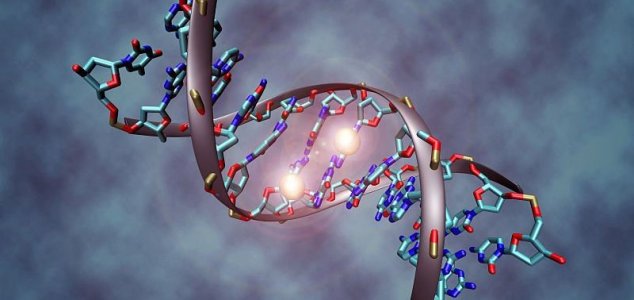
Let that sink in. That is not the weight of the animals. That is the weight of the code itself. If you extracted the DNA from every living thing on Earth and put it in a pile, it would weigh 50 billion tonnes.
To put that in perspective, that’s vastly heavier than the entire human population. We are outweighed by our own programming.
The Supercomputer That Puts Google to Shame
We think we are smart. We think the Internet is big. We talk about “Big Data” and Zettabytes like we are masters of information.
We are a joke compared to nature.
The study suggests that the information stored in the biosphere is enough to fill the capacity of more than a billion trillion supercomputers. Not a billion. A billion *trillion*.
Think about the most powerful supercomputer currently running. Maybe the Frontier system in Tennessee. It takes up a warehouse. It consumes enough electricity to power a small city. Now, imagine a billion trillion of them.
That is what surrounds you every time you walk into a forest.
“We wanted to take an information approach to the biosphere,” said lead author Hanna Landenmark. It sounds like a calm scientific statement. But read between the lines. She is admitting that biology is, at its core, information theory. It is math. It is code.
“The reason why this is important is that DNA is the fundamental molecule of life and by extent all biological processes that take place in the world are encoded in this molecule,” Landenmark added.
Encoded. That’s the key word.
The Green Overlords: Why Plants Hold the Key
Here is where things get weird. Really weird.
If Earth is a biological hard drive, who owns the most storage space? You might think it’s humans. We are the “dominant” species, right? Or maybe bacteria, since they are everywhere.
Wrong again.
The team discovered that the combined DNA of all the world’s plants takes up the vast majority of space. In the grand hierarchy of biological data, plants are the kings. They are the servers. We are just glitches in the system.
Animals and viruses? We share the bottom spot. We are statistically insignificant.
This fuels a massive alternative theory gaining traction on the dark corners of the web: The “Gaia Server” hypothesis. If you were an advanced alien civilization, and you wanted to store the history of the galaxy, where would you put it?
You wouldn’t build a metal hard drive. Metal rusts. Electronics fail. Solar flares wipe out magnetic tapes.
You would build a biological storage system. Self-replicating. Self-repairing. Solar-powered. You would plant a forest.
Trees can live for thousands of years. They copy their data into seeds, which spread and reboot the system automatically. The 50 billion tonnes of DNA isn’t just “nature.” It’s an archive. And plants are the librarians.
The “Junk DNA” Conspiracy
If this theory holds water—that Earth is a storage device—then we have to look at the content of the files. And this brings us to the biggest mystery in genetics: “Junk DNA.”
Mainstream science tells us that a huge percentage of our genome doesn’t do anything. It doesn’t code for proteins. It doesn’t determine your eye color. It just sits there. They call it non-coding DNA.
For years, they called it “junk.”
But why would evolution, a process driven by efficiency, keep 98% of the data if it was useless? That’s like writing a book where 98 pages out of 100 are gibberish, but you keep reprinting them anyway.
It makes no sense. Unless it’s not gibberish.
What if that “junk” is the data? What if the functional parts of our DNA (the parts that make us breathe and walk) are just the operating system, and the non-coding regions are the encrypted files?
We could be walking around with the blueprints for zero-point energy or the history of a lost civilization locked inside our own blood, labeled as “junk” because we haven’t found the decryption key yet.
The Simulation Argument
We have to touch on the Simulation Theory. Elon Musk talks about it. Neil deGrasse Tyson talks about it. But this DNA weight calculation provides the physical evidence.
Computers need memory. If we are living in a simulation, the system needs a place to store the state of the world. The study by Landenmark and her team essentially quantified the RAM of the Matrix.
The fact that we can quantify it—that we can reduce life to a number of bits and bytes—is unsettling. It implies that life is finite. It implies that we are computable.
“This approach may help us to understand the changing complexity of the biosphere over time and to predict in new ways, both anthropogenic and natural, future changes in the biosphere,” the researchers wrote.

Translation: Now that we know the system specs, we can predict the crash.
We Are Running Out of Space
The researchers noted that these findings provide a way to study habitat loss. That’s the polite way of saying “data corruption.”
When we burn down the Amazon rainforest, we aren’t just losing trees. We are formatting the hard drive. We are wiping exabytes of data that we haven’t even learned how to read yet.
The study mentions “anthropogenic” changes. That’s human-caused. We are the virus in this computer. We are deleting the plant files (the primary storage) and replacing them with concrete (null data).
If Earth is a repository of galactic information, we are currently setting the library on fire.
The Future: Storing the Internet in a Puddle
Ironically, human technology is trying to mimic what nature has already done. Microsoft and other tech giants are currently working on “DNA Data Storage.” They have successfully stored movies and operating systems inside synthetic DNA strands.
Why?
Because it is the most dense, stable storage medium in the known universe. A shoebox full of DNA could store all the data the entire world generates in a year.
So, connect the dots.
- Fact 1: Humans are just now realizing DNA is the ultimate hard drive.
- Fact 2: Earth is covered in 50 billion tonnes of this specific storage material.
- Fact 3: The system is older than humanity itself.
Did we evolve this perfectly efficient storage system by accident? Or is this evidence of a “Type II” civilization on the Kardashev scale leaving their mark?
Maybe the search for extraterrestrial intelligence shouldn’t be looking up. It should be looking down through a microscope.
The Final Verdict
The next time you hear a scientist talk about biodiversity, don’t just think about cute animals or green forests. Think about data centers.
Earth holds a vast quantity of genetic material. The impressive figure was reached by adding up all the organisms in the world and multiplying this by the total number of cells containing at least one DNA molecule. Even greater still is the amount of genetic material the DNA of every plant, animal, bacterium and virus actually contains.
We are walking on a library. We breathe data. We eat code. And somewhere, hidden in the 50 billion tonnes of biological tape, is the answer to who built it.
The only question is: Will we survive long enough to read the file?
Originally posted 2016-05-04 19:40:53. Republished by Blog Post Promoter