Friday, September 4, 2026
HomeSpace & ScienceSpaceNASA announces discovery of a second Earth

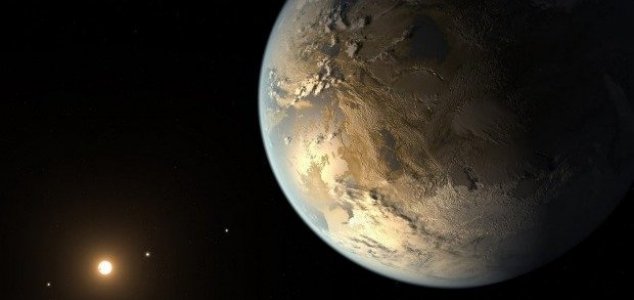
NASA announces discovery of a second Earth

Earth 2.0: The Mind-Bending Mystery of Kepler-452b, NASA’s “Lost” Twin

July 23, 2015. Remember that day? For a few brief, shining hours, the world stopped spinning. NASA called a press conference. The air crackled with anticipation. And then they dropped the bombshell.

They found it.

A planet so similar to our own, it was nicknamed Earth’s “older, bigger cousin.” A world orbiting a sun-like star, in the perfect spot for liquid water. For life. For us.

They called it Kepler-452b.

And then… silence. The story faded. The excitement died down, replaced by the usual noise of the 24-hour news cycle. But some of us didn’t forget. Some of us started asking questions. What really is Kepler-452b? Why did the story just disappear? And have they told us everything they know?

Let’s pull on the thread and see how deep this rabbit hole really goes.

Deep Dive: The Tale of the Tape on Our Supposed Twin

On the surface, the data released by NASA was staggering. It read like a cosmic checklist for creating another Earth. Let’s break down the official story.

First, the star. Kepler-452 is a G-type star. That’s the same class as our own sun. A yellow dwarf. It’s a little older, about 6 billion years old compared to our sun’s 4.6 billion. It’s about 10% bigger and 20% brighter. This isn’t just some angry red dwarf or a blazing blue giant. This is a stable, familiar, life-giving kind of star. Our kind of star.

Then there’s the orbit. This is where it gets spooky. Kepler-452b takes 385 days to circle its star. Our year is 365 days. That’s an orbital difference of less than 5%. It’s an almost identical dance, at an almost identical distance. This placed the planet squarely, perfectly, in the middle of the “habitable zone.”

The what zone?

The Goldilocks Zone Deception

You’ve heard the term. The “Goldilocks Zone.” It’s the region around a star where conditions are not too hot, not too cold, but just right for liquid water to exist on a planet’s surface. It’s sold to the public as a celestial paradise, a cosmic green belt where life is almost inevitable.

But that’s a dangerous oversimplification. A lie, even.

The habitable zone is a razor’s edge, not a cozy neighborhood. A planet needs more than the right address. It needs the right atmosphere. A thick, crushing atmosphere like Venus? You get a runaway greenhouse hellscape. A thin, wispy atmosphere like Mars? Any water boils away into space. Both Venus and Mars are on the edges of our own sun’s habitable zone. One is an acid-choked pressure cooker, the other is a frozen, irradiated desert. So much for a “safe” zone.

NASA knows this. They told us Kepler-452b was in the right place. They told us it had been there for six billion years—a billion and a half years longer than Earth. Plenty of time for life to get started. What they didn’t tell us, or what they whispered in the fine print, was that they had no idea if it even had an atmosphere at all.

The Six-Billion-Year Question That Should Keep You Up at Night

Let’s stop and really think about this. Six. Billion. Years. Earth has been around for about 4.5 billion years, and complex life, the kind you can see without a microscope, only really got going in the last 500 million. We, Homo Sapiens, have been around for a paltry 300,000 years. Our entire recorded history, from the first cave painting to the smartphone in your hand, is a blink of a cosmic eye.

Kepler-452b has had a 1.5 billion-year head start on us.

What could a civilization do with an extra one and a half billion years? It’s a question so profound, it’s almost terrifying to contemplate.

  • Would they still be biological? Or would they have long since transcended their fleshy forms, becoming beings of pure energy or integrated machine intelligence?
  • Would they have mastered interstellar travel, mapping the entire galaxy while our ancestors were just learning to harness fire?
  • Could they have solved every mystery of the universe, from dark matter to the meaning of consciousness itself?

Or maybe, just maybe, there’s a darker possibility. Any civilization that advanced would surely face the same challenges we do: war, climate change, resource depletion. What if Kepler-452b is not a thriving utopia but a silent tomb? A monument to a civilization that rose, fell, and turned to dust a billion years before life on Earth even crawled out of the sea? The planet could be a radioactive wasteland, its atmosphere stripped away by a final, cataclysmic war. The silence we hear isn’t because they aren’t there. It’s because they *were*.

The Elephant in the Cosmos: The “Super-Earth” Problem

Here’s another detail from the press conference that was glossed over. Kepler-452b is about 60% larger in diameter than Earth. Its mass is estimated to be about five times that of our planet.

This puts it in a strange category of planets called “Super-Earths.”

On one hand, this sounds amazing. More room! But physics is a harsh mistress. The surface gravity on Kepler-452b would be about double what we experience. Every step would feel like you’re carrying another person on your back. Trees, if they existed, would have to be incredibly strong and squat to fight the pull. Flying creatures would be an evolutionary impossibility.

But the bigger problem is this: we don’t know for sure if it’s a rocky world at all.

There is a dividing line in planetary formation. Worlds that get too big, around 1.5 times the size of Earth, tend to hold onto massive amounts of gas from their formation. They don’t become Super-Earths; they become “mini-Neptunes” or “gas dwarfs.” These are planets with a solid core buried deep beneath a thick, crushing atmosphere of hydrogen and helium, with no distinct surface at all.

Could Kepler-452b be one of these? A world with no ground to stand on? Scientists are split. Its size puts it right on the fuzzy boundary between rocky and gassy. NASA presented it as a rocky world, a terrestrial cousin. But was that honest? Or was it just good PR to get the “Earth 2.0” headline?

Think about it. The difference between a rocky world with double our gravity and a gas planet with no surface is the difference between a potential home and a completely alien deathtrap. Yet, this critical detail was presented as a near-certainty.

Internet Whispers and Modern-Day Theories

The original Kepler mission ended. The telescope that found this world is no more. The story went cold. But on the corners of the internet, in astronomy forums and Discord channels, the chatter never stopped.

One persistent theory revolves around the star itself. Kepler-452 is older and brighter than our sun. This means its habitable zone has been slowly moving outwards over billions of years. Some models suggest that Kepler-452b may have spent its first few billion years being baked in a Venus-like inferno. Could life have even started there? Or, more chillingly, is the planet only *now* entering its life-giving phase, while its parent star is slowly expanding towards its own death?

Another, more conspiratorial take, points to the raw data from the Kepler telescope. Kepler worked by watching stars and waiting for tiny, almost imperceptible dips in their brightness. This dip is a planet passing in front of the star, an event called a “transit.” Did they see anything else in that light curve? Any strange fluctuations? Any anomalies that couldn’t be explained by a simple, dead rock passing by? The full dataset is public, but it’s massive and requires expert analysis. Some amateur astronomers claim to have found oddities, things that don’t quite add up. But their findings are quickly dismissed by the mainstream.

Why Isn’t Webb Pointing at Our Cosmic Cousin?

This brings us to today. We have the James Webb Space Telescope (JWST). A technological miracle capable of peering into the atmospheres of distant exoplanets and sniffing out the chemical signs of life. Methane. Oxygen. Water vapor.

So, the obvious question is: have we pointed Webb at Kepler-452b?

The answer, shockingly, is no. And the official reason is… it’s too difficult.

You see, Webb studies atmospheres using something called transit spectroscopy. It looks at the starlight shining *through* a planet’s atmosphere as it transits. But Kepler-452b is 1,400 light-years away, and its star is very bright. The signal-to-noise ratio, they say, is just too poor. We wouldn’t be able to detect anything meaningful.

Is that the real reason? Or is it possible that they already know something? That perhaps an initial, private look with Webb or another powerful instrument revealed something they don’t want us to see? Or, even worse, absolutely nothing at all, proving the “Earth 2.0” moniker was just a publicity stunt from the start?

It’s strange that the most Earth-like planet ever discovered, the one that captured the world’s imagination, is not a primary target for our most powerful tool. It feels less like a scientific decision and more like a deliberate omission.

A Lost Hope or a Hidden Truth?

So where does that leave us? Stranded 1,400 light-years from the truth. Kepler-452b remains an enigma. It could be a thriving, ancient super-civilization. It could be a barren, high-gravity rock. It could be a gassy mini-Neptune with no surface. It could be the fossilized remains of a world that died a billion years ago.

The one thing it isn’t, is simple.

The 2015 announcement gave us a tantalizing glimpse of a possibility that humanity has dreamed of for millennia: we are not alone. They sold us a beautiful, simple story of a twin Earth. But the universe is never that simple. The truth is always messy, complicated, and often hidden just out of sight.

Perhaps Kepler-452b isn’t Earth 2.0. Perhaps it’s a cosmic mirror, forcing us to ask the hard questions. Are we just a fluke? Is intelligent life a fleeting accident that burns itself out? Or is there something out there, in the silent darkness between the stars, waiting?

They told us to look up and dream. But maybe they should have told us to look closer at the story they were spinning.

Arindam Mukherjee
Arindam Mukherjee
Arindam loves aliens, mysteries and pursing his interest in the area of hacking as a technical writer at 'Planet wank'. You can catch him at his social profiles anytime.
RELATED ARTICLES
- Advertisment -

Most Popular

Recent Comments

Warren Pan Abbott on The legend of the Devil Monkey !
chris davies on The McPherson Tape Mystery
Reed Reedly on ET has Internet!
Bea Houseoffashion on Proof Of Time Travellers – Gallery
Marcus2012 on ET has Internet!
Reed Reedly on ET has Internet!
LaughsAtConspiracyNuts on The 9/11 Conspiracy – Myths and Facts
Alex Sliverman on Did the ancients fly?
Doctor Wholigan on Time Traveler in 1938 film
chris davies on The McPherson Tape Mystery
Archie1954 on 10 secret UFO hideouts
chris davies on Ghosts of flight 401
Marcus2012 on ET has Internet!
jason Macdonald on Proof of Time Travel? – China
chris davies on Long-Lost Pyramids Found?
Reed Reedly on ET has Internet!
Milkman on Connected Universe
Tenmiles on Baigong Pipes Mystery
Simon Foster on Sirius – The Documentary
From the 1st April on 2013 – Alien Contact date ?
SkyWatcher on Is ET ignoring us?
I Come From The Future on Obama to make UFO Alien disclouser soon ?
ÛñK?øWn on 2013 – Alien Contact date ?
Just another person on 2013 – Alien Contact date ?
Malcolm Windowcleaner on The strange case of Rudolph Fentz
Mason Servio on Strange Things on Mars
Marke Wisdom Seeker on What will we find as arctic melts?
Andrea A Elisabeth Levyne on Aliens Captured in Varginha, Brazil
Mitch Grouyeki on Amazing Space Shuttle pictures