The Greatest Heist Not Attempted: Why Did NASA Cancel its Plan to Steal an Asteroid?
Look up. Go on, do it. Even if it’s daytime, you know what’s up there. A vast, silent, infinite blackness, peppered with burning suns and wandering worlds. We live our entire lives on a single, fragile blue marble hurtling through a cosmic shooting gallery. We are, for all our bluster and technology, trapped. Confined. Stuck.
But what if we weren’t?
What if humanity decided to reach out and grab a piece of the cosmos for itself? Not just visit. Not just sample. But capture. Tame. And drag a wild, untamed piece of the solar system back to our own backyard. It sounds like the plot of a blockbuster movie. A crazy, trillion-dollar gamble.
But it wasn’t science fiction. It was a real plan. A fully-funded, White-House-approved NASA mission that was supposed to redefine our place in the universe. It had a name: The Asteroid Redirect Mission, or ARM. And then, just as it was getting good, it vanished. Poof. Gone from the budget, scrubbed from the mission logs. Why? The official story is boring. Budgets. Politics. Shifting priorities. But when you dig deeper, when you connect the dots, the story gets a whole lot weirder. Was it really just about the money? Or did NASA’s audacious plan to steal an asteroid get a little too close to a truth someone didn’t want us to find?
The Audacious Plan: A Celestial Snatch and Grab
It all started back in 2010. President Obama stood at the Kennedy Space Center and threw down a gauntlet. He challenged NASA to send astronauts to a near-Earth asteroid by 2025. It was a bold new direction after the retirement of the Space Shuttle. A new frontier. But there was a problem. A big one.
Sending humans into deep space to chase down a rock zipping along at tens of thousands of miles per hour is, to put it mildly, difficult. And dangerous. And unbelievably expensive. The mission could take a year. The crew would be bombarded with radiation. The chances of something going catastrophically wrong were terrifyingly high. It was a logistical nightmare.
So, the brilliant minds at NASA and the Keck Institute for Space Studies at Caltech came up with a truly magnificent, outside-the-box solution. If you can’t go to the asteroid… why not make the asteroid come to you?
The concept was as simple as it was insane.
Step One: The Cosmic Snare
First, you build a hunter. A robotic spacecraft, powered by incredibly advanced and efficient solar-electric propulsion. Think of ion engines, but on steroids. This machine wouldn’t blast its way through space with chemical fire; it would patiently, persistently push its way through the void using sips of xenon gas and vast solar arrays. It would be a silent, relentless predator.
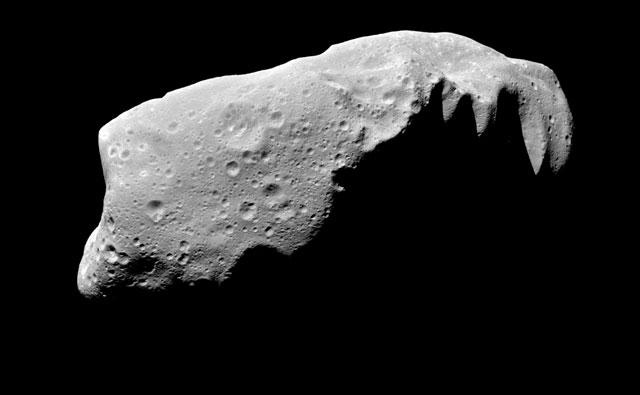
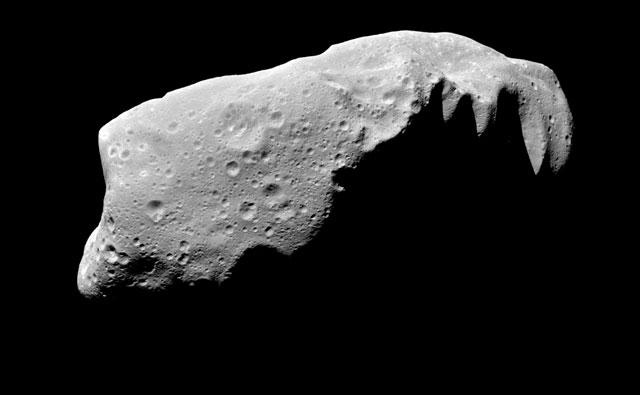
Its target? A small near-Earth asteroid. Something manageable. Maybe 7 to 10 meters across. The size of a large truck. A cosmic boulder. The probe would spend months, maybe even a year or two, tracking its prey, matching its orbit, and finally, closing in for the capture.
And how would it perform this capture? With a giant, high-tech bag.
Yes, you read that right. The leading concept was a massive, inflatable capture bag that would deploy from the spacecraft and simply… swallow the asteroid whole. A celestial butterfly net. The bag would cinch shut, securing the multi-ton space rock. The robotic ship would then fire up its engines and begin the long, slow journey home. An alternate plan, known as “Option B,” was even more surgical: the spacecraft would use robotic arms to land on a much larger asteroid, pluck a boulder off its surface, and then fly away with its prize. Either way, humanity was going asteroid fishing.
Step Two: The Ultimate Parking Spot
You can’t just drag a wild asteroid into Earth’s orbit. That would be… unwise. The gravitational dynamics are too messy, and the public relations nightmare of accidentally dropping a 500-ton rock on the planet is best avoided. So, where do you put it?
You park it in one of the most stable, predictable places in the entire Earth-Moon system. You put it in orbit around our own Moon.
The plan was to use the robotic spacecraft as a celestial tow truck. Over the course of several years, it would gently and precisely nudge its captive rock, shaping its trajectory until it settled into a “distant retrograde orbit” around the Moon. This is an incredibly stable orbit, a true gravitational parking lot where the asteroid could remain for a century or more with minimal fuss. It would be our own private, captured piece of the solar system, waiting patiently just a few days’ journey from Earth.
Once parked, the real fun could begin. NASA would launch astronauts aboard its new Orion crew capsule, powered by the monstrous Space Launch System (SLS) rocket. Instead of a year-long, high-risk journey into deep space, astronauts would have a relatively short trip to the Moon’s orbit. They could rendezvous with the captured asteroid, perform spacewalks on its surface, and collect hundreds of pounds of pristine samples. The entire human portion of the mission would be slashed from a year to mere weeks. It was safer. Cheaper. Smarter. It was brilliant.
The Trillion-Dollar Question: Why Bother?
This all sounds amazing, but a $2.6 billion price tag (a conservative estimate, by the way) demands a pretty good reason. NASA had three. And each one is bigger than the last.
Deep Dive: A Stepping Stone to Mars
The Asteroid Redirect Mission was never *just* about the asteroid. It was a dress rehearsal. A crucial shakedown cruise for every piece of technology we would need to send humans to Mars. The giant SLS rocket and the Orion capsule? This would be their first real deep-space test. The advanced solar-electric propulsion on the robotic tug? That’s the exact technology you’d need for hauling cargo and habitats to the Red Planet. Astronauts performing complex operations far from Earth, with significant time delays in communication? Check. This mission was the perfect middle step. It was far enough to be a true test, but close enough to be safe. It was the training wheels for our first steps on another planet.
Deep Dive: Planetary Defense 101
Remember that cosmic shooting gallery? Well, some of those rocks have our name on them. It’s not a matter of *if* a major asteroid will hit Earth, but *when*. For decades, our only plan has been to watch and pray. ARM was going to change that.
By moving a 500-ton asteroid, even slowly, NASA would be conducting the first-ever real-world planetary defense test at this scale. The robotic probe wouldn’t just be a tow truck; it would be a “gravity tractor.” By parking itself near the asteroid, the spacecraft’s own minuscule gravity would, over time, gently tug the asteroid into a new path. This is one of the leading theories for how we could deflect a truly dangerous, city-killing asteroid without blowing it into a million smaller, equally dangerous pieces. ARM was our chance to practice saving the world. This is not hyperbole. The data would have been priceless. It’s a capability we still desperately need, as the recent DART mission—which successfully slammed a probe into an asteroid moonlet—has proven.
Deep Dive: The Cosmic Gold Rush
And now we get to the really interesting part. The part the official press releases mentioned, but never really shouted about. Asteroids are not just dead rocks. They are flying treasure chests.
They are packed with platinum-group metals—materials incredibly rare on Earth’s surface but essential for our technology. A single, modest-sized asteroid could contain more platinum than has ever been mined in human history. We’re talking trillions. With a ‘T’.
But the real prize isn’t gold or platinum. It’s water. Water, locked away as ice in the rock. Why is water so valuable in space? Because you can split it into hydrogen and oxygen. Also known as rocket fuel. An asteroid parked in lunar orbit isn’t just a scientific curiosity; it’s a gas station in the sky. A refueling depot that could make travel to the rest of the solar system exponentially cheaper. Suddenly, the entire economic model of space exploration changes. This wasn’t just science. It was the beginning of an industrial revolution in space. The first step to building a real, self-sustaining off-world economy. So, the mission wasn’t just about saving the world or getting to Mars. It was about unlocking an unimaginable amount of wealth.
The Dream Dies: A Political Assassination
The plan was in motion. The initial $100 million in funding was approved. Teams were assembled. The technology was being developed. And then, in 2017, the newly installed Trump administration quietly took ARM out behind the woodshed. In the 2018 NASA budget request, it was gone. Canceled. The official reason? The new administration wanted a more direct focus on the Moon. A “Moon first” approach that would eventually become the Artemis program.
On the surface, it makes a certain kind of political sense. Redirecting funds, changing focus. It happens. But it feels… too simple. Too clean. You have a mission that serves as a stepping stone to Mars, practices planetary defense, *and* unlocks the door to asteroid mining, and you just cancel it? For years, internet forums and space policy circles have been buzzing. Was there more to it?
Think about it. The prospect of asteroid mining is a paradigm-shattering event. It would upend the global economy. The value of precious metals on Earth would plummet. The power dynamics of entire nations could shift overnight. Perhaps the established powers-that-be weren’t quite ready for that kind of disruption. Is it so crazy to think that powerful interests, both governmental and corporate, might have seen this mission as a threat?
Or maybe it’s something else. The more you study near-Earth objects, the more you realize how many there are, and how little we know about them. What if, in the early planning stages, in the process of identifying potential targets, they found something… unusual? An object with a strange composition? Unexplained thermal signatures? It’s a long shot, but governments don’t typically cancel multi-billion-dollar programs that tick all the right boxes unless there’s a very, very good reason. And “changing our minds” just doesn’t feel good enough.
The Ghost in the Machine
The Asteroid Redirect Mission may be dead, but its ghost still haunts NASA’s halls. The technology didn’t just vanish. That ultra-efficient solar-electric propulsion system? It’s the heart of the Power and Propulsion Element for the Lunar Gateway, the small space station that will be our outpost in lunar orbit for the Artemis missions. The robotic capture technologies and autonomous rendezvous software are being refined for future satellite servicing and debris removal missions.
The spirit of planetary defense lives on in the DART mission and its planned successors. The scientific hunger to understand asteroids continues with missions like OSIRIS-REx, which successfully returned a sample from the asteroid Bennu, and Psyche, which is on its way to a bizarre metal world.
The dream of asteroid capture isn’t truly gone. It has just been… dispersed. Broken into smaller, less ambitious, and perhaps less threatening pieces. The grand, all-in-one vision was too much, too soon.
So we’re left to wonder. What did we lose when ARM was canceled? Did we just lose a clever mission plan, or did we lose a decade of progress? Did we sacrifice a chance to practice saving our own planet? Did we delay the start of a new economic frontier in space? Or was the plug pulled to keep us from finding something we weren’t ready to see?
The official story is written in budget reports and policy memos. But the real story—the one about humanity’s first, aborted attempt to reach out and tame the wild frontier—is still out there, floating in the dark. Waiting for the next time we get bold enough to try again.