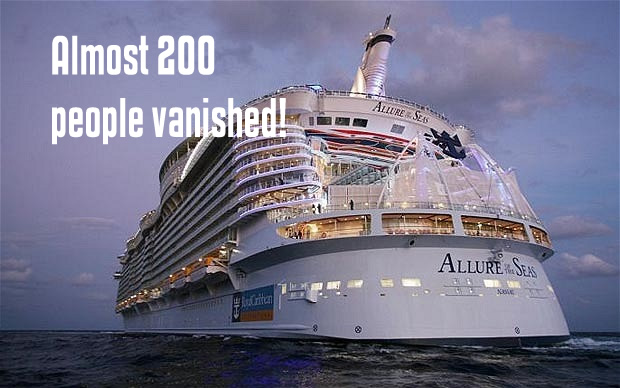
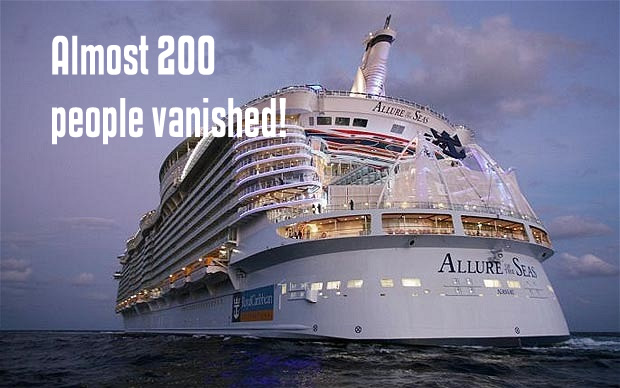
Look at that water. Endless. Dark. Hungry.
You book a cruise to escape reality. You want the buffet, the pool deck, the golden sunsets, and the promise of paradise. You pay thousands of dollars for the privilege of floating on a luxury hotel that moves across the globe. It’s supposed to be the safest vacation on Earth. A controlled environment. A gated community on the waves.
But that is a lie.
There is a shadow hanging over the cruise industry that nobody talks about in the brochures. It’s a secret kept in the boardrooms and buried under maritime law. People are vanishing. They aren’t just dying of old age in their cabins. They aren’t just having heart attacks by the slot machines. They are literally disappearing into thin air.
Poof. Gone.
Why have almost 200 people just vanished from cruise ships in recent years? Where did they go? And why does nobody seem to care?
The Vanishing: By the Numbers
Let’s look at the cold, hard facts. They are terrifying.
According to data tracked by groups like the International Cruise Victims Association, approximately two people go missing every single month. Some estimates suggest that every two weeks, a passenger or crew member vanishes from a massive ocean vessel, never to be seen again. We are talking about nearly 200 souls in the last few years alone. Unaccounted for.
If 200 people vanished from a hotel chain in Las Vegas or a theme park in Florida, the National Guard would be called in. It would be on every news channel, 24/7. The FBI would shut the place down. There would be congressional hearings.
But on the ocean? It’s just a Tuesday.
The water swallows the evidence. The ship keeps moving. The band keeps playing.
The “Suicide” Narrative: A Convenient Lie?
When someone goes missing, the cruise lines have a script ready. They almost immediately suggest suicide. It’s the perfect defense. It blames the victim. It shuts down questions. It protects the stock price.
They tell the families: “Oh, he must have been depressed.” or “She had too much to drink and made a bad choice.”
But that story doesn’t hold water.
When you dig into the profiles of these missing people, the suicide theory falls apart. We are talking about newlyweds on honeymoons. Grandmothers on family reunions. Crew members who just wired money home and made plans for their next vacation. These are sensible, sound people.
They showed no signs of depression. No notes were left. No goodbye texts were sent. They were happy. They were planning their shore excursions for the next morning. And then, between the hours of 2:00 AM and 5:00 AM, they ceased to exist.
So, if they didn’t jump… what happened to them?
The Physics of “Falling”
Let’s talk about the architecture of these ships. Have you ever stood on the deck of a modern cruise liner? The railings are high. They are designed by engineers specifically to prevent accidental falls. They usually come up to the chest or neck of an average-sized person.
You do not just “fall” overboard.
To go over that rail, you have to climb. You have to put in effort. Or, and this is the part that chills the blood, you have to be thrown.
Gravity doesn’t work sideways. For a grown adult to tumble over a 4-foot railing requires force. If it wasn’t self-inflicted force, then it came from someone else. And if it came from someone else, we aren’t talking about accidents anymore. We are talking about murder.
The Lawless City on the Sea
This is where the conspiracy gets deep. This is where the “system” is designed to fail you.
Imagine a city. It has 5,000 residents. The population changes every seven days. Strangers sleep next door to strangers. There is alcohol flowing 24 hours a day. There are dark corners, long hallways, and deafening engine noise.
Now, imagine this city has no police force.
That is a cruise ship.
Security on a cruise ship is not law enforcement. They are private security guards hired by the corporation. Their job is not to solve crimes; their job is to protect the cruise line from liability. They answer to the captain, not the constitution.
The “International Waters” Loophole
Once a ship sails 12 miles off the coast, it enters International Waters. The High Seas. The Maritime Void.
Laws out there are murky. If a crime happens, who investigates? Is it the country the ship left from? The country it’s going to? The country where the ship is registered?
Most cruise ships fly “Flags of Convenience.” They are registered in places like Panama, the Bahamas, or Liberia to avoid taxes and labor laws. So, if a murder happens on a ship registered in the Bahamas, technically, the Bahamian authorities have jurisdiction.
Do you think a small island police force has the resources to fly a CSI team out to the middle of the Atlantic Ocean to dust for fingerprints? Of course not.
By the time the ship docks, the cabin has been cleaned. The sheets have been washed. The potential witnesses have flown home to Ohio or Manchester. The crime scene is gone. It is the perfect setting for the perfect crime.
Theory 1: The Serial Killer’s Playground
Let’s get dark. Really dark.
If you wanted to kill someone and get away with it, where would you go? You’d go where there are no cameras, no police, and an endless graveyard that never gives up its dead.
There is a terrifying theory circulating in the dark corners of the web that serial predators use cruise ships as hunting grounds. Think about it. You can stalk a victim in a bar. You can follow them to a lonely deck at 3:00 AM. One push. Splash. Done.
The ship is moving at 20 knots. By the time anyone realizes the person is missing—usually the next morning when they miss breakfast—the ship is 100 miles away from the body. The ocean is vast. Finding a head bobbing in the waves is harder than finding a needle in a haystack. It’s impossible.
The killer finishes their vacation, disembarks, and nobody ever knows their name.
Theory 2: Human Trafficking Transit
Not everyone who vanishes goes into the water. Some theorists believe people are being taken off the ship.
Cruise ships stop at many ports. Thousands of people get on and off. Supplies are loaded. Crew members rotate. It is a chaotic ant hill of activity.
Is it possible that people are being snatched? Drugged? Smuggled off the ship in cargo containers or crew exits at foreign ports?
We know human trafficking is a massive global industry. A cruise ship provides a high-value target list. Wealthy tourists. Young backpackers. Solo travelers. The confusion of port days provides the perfect cover. A person goes missing, the ship assumes they fell overboard at sea, but in reality, they were walked off the gangway in Mexico or Jamaica under heavy sedation.
It sounds like a movie. But looking at the missing person files, the lack of bodies found is statistically bizarre.
The FBI and the “Man Overboard” System
Many of these cases eventually land on the desk of the FBI. But the Bureau is handcuffed. They can only investigate if the victim is a U.S. citizen and if the cruise line invites them on board—or if the ship docks in a U.S. port.
Even then, the investigation is a nightmare. Time is the enemy of evidence. The cruise lines are notorious for dragging their feet. They don’t want crime scene tape on the Lido Deck. It scares the customers.
Modern ships have “Man Overboard” detection systems. Sensors that are supposed to detect a falling mass and trigger an alarm. But do they work?
In many cases, the family is told, ” The cameras weren’t working in that area,” or “The sensors didn’t trip.”
Convenient.
Is it a technical failure? Or is it a cover-up? If a system admits a passenger went overboard, the ship might have to turn around. That costs fuel. That ruins the schedule. That costs money.
The Deep Blue Horror: What Else is Out There?
We have to look at the stranger side of things, too. The ocean is a place of high strangeness. Sailors have told stories for centuries about the “Call of the Void.”
There is a psychological phenomenon where the sheer vastness of the ocean, the rhythmic pounding of the waves, and the isolation creates a break in reality. People hallucinate. They hear voices in the wind. They see things in the whitecaps.
Is there a frequency? A vibration caused by the massive engines of these floating cities that affects the human brain? Some researchers have looked into “infrasound”—sound waves below human hearing that cause anxiety, paranoia, and dread. Could the ship itself be driving people to the edge?
Or are we looking at something even more unnatural? Rogue waves that snatch people from balconies? Freak weather events that are localized to a single square meter?
The Silence of the Industry
The most damning piece of evidence is the silence.
The cruise industry is a multi-billion dollar juggernaut. They have powerful lobbyists in Washington. They spend millions on marketing. They do not want you thinking about death when you are booking your summer holiday.
Families of the missing are often stonewalled. They are given the runaround. They are denied access to CCTV footage. They are told to “accept” that their loved one committed suicide, even when the evidence screams otherwise.
Why is there no central database mandated by the government? why are the cruise lines allowed to police themselves?
When you step onto that gangway, you are signing away your rights. You are entering a zone where the laws of land do not apply. You are putting your life in the hands of a corporation that views you as a liability the moment you stop buying drinks.
Conclusion: The Ultimate Cold Case
So, what is happening?
Is it a series of tragic accidents? Is it a mental health crisis at sea? Or is there a predator—either human or corporate—stalking the decks of these massive ships?
The next time you are on a cruise, standing at the railing at night, looking out into the pitch-black void, remember this: You are alone. The ocean is deep. And if you vanish, the ship will keep sailing.
The buffet will open at 7:00 AM. The pool will open at 8:00 AM. And your cabin will be sold to someone else next week.
Stay safe. Watch your back. And maybe, just maybe, stay away from the railing.