Home Weird World Science Impact craters

Impact craters

0
82

Impact craters

The Silent Evidence: Why Earth is a Cosmic Target Practice

Look up at the Moon on a clear night. Really look at it. What do you see? It’s a mess. Pockmarked. Scarred. Beaten. It looks like a war zone, because it is. It is a frozen record of billions of years of cosmic violence. Now, look down at your feet.

Earth looks safe, doesn’t it? Green hills, blue oceans, sprawling cities. But here is the terrifying truth they don’t emphasize in standard geology textbooks: Earth is swimming in the exact same shooting gallery as the Moon. We have been hit just as many times. Harder, actually, because our planet’s gravity sucks in debris like a vacuum cleaner.

So where are the holes? Where are the scars?

They are hiding. Camouflaged. Buried.

An impact crater isn’t just a hole in the ground. It is the aftermath of a hypervelocity event—a moment where physics breaks down and solid rock behaves like liquid. When a space rock slams into a planet, it doesn’t just “land.” It explodes with the force of millions of nuclear arsenals. It creates a circular depression, usually with a raised rim and a floor that sinks below the surrounding terrain. But on Earth, the evidence is being erased. Slowly. Methodically.

The Great Cover-Up: How Earth Hides Its Wounds

The Solar System is a rough neighborhood. On dead worlds like Mercury, Callisto, or Ganymede, the history of violence is preserved forever. There is no wind to smooth it over. No rain to wash it away. No shifting tectonic plates to grind the evidence into magma. Their craters stay fresh for billions of years.

But Earth? Earth is alive. And because it is alive, it is a master of disguise.

Our planet has active surface processes. Wind, water, vegetation, and the grinding conveyor belt of plate tectonics are constantly working to wipe the slate clean. A crater formed 500 million years ago doesn’t stand a chance against the Atlantic Ocean widening or the Himalayas rising. The rock is folded, buried, or eroded down to nothing.

In the scientific community, when a crater has been beaten up by millions of years of erosion, they stop calling it a crater. They use a much cooler, more mysterious term: Astrobleme.

Literally, a “star wound.”

Before we understood that rocks fall from the sky, geologists were baffled by these structures. They called them “cryptoexplosion” structures. They thought they were weird, underground volcanoes that blew up without lava. It took decades of fighting against the mainstream dogma to prove that these weren’t burps from below—they were punches from above.

The Physics of Apocalypse: What Happens When It Hits?

Let’s get into the nitty-gritty. We aren’t talking about a pebble hitting a windshield. We are talking about hypervelocity. This is speed so fast that the air in front of the object transforms into plasma warmer than the surface of the sun before the rock even touches the ground.

Impact craters come in two main flavors, and understanding the difference is key to spotting the hidden ones:

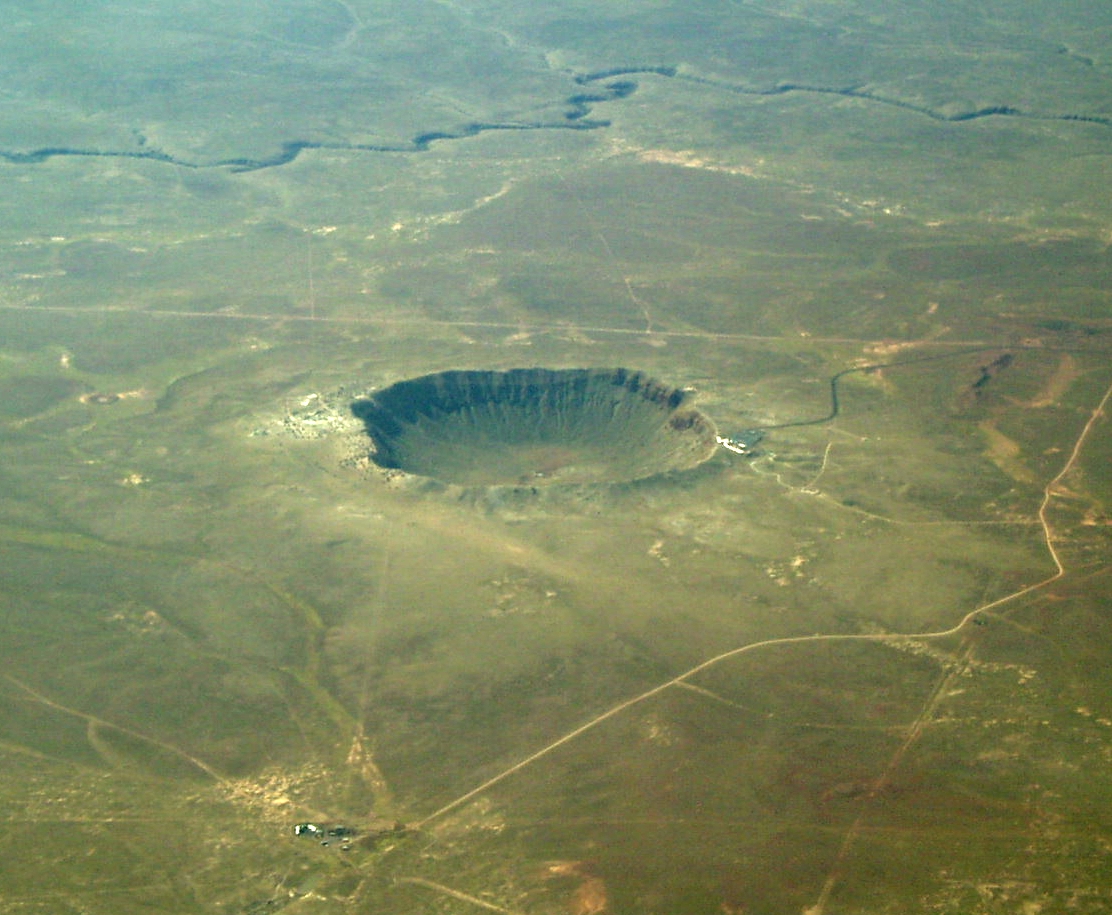
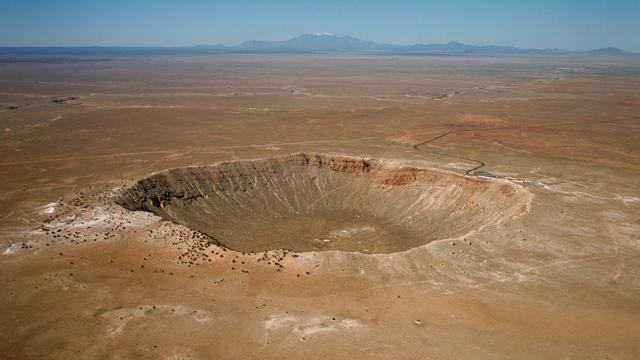
  • Simple Craters: These are your classic bowl shapes. Think Meteor Crater in Arizona. Small, deep, terrifyingly perfect. The projectile hits, the ground explodes, and you are left with a clean hole.
  • Complex Basins: This is where it gets nightmarish. When a truly massive object hits—something city-sized—the ground becomes so elastic that it rebounds. The center of the crater snaps back up, creating a central peak. It’s like dropping a pebble in water and watching the droplet spike up in the middle, except this is made of solid granite and is ten miles high.

These complex basins are the ones that end civilizations. They don’t just ruin your day; they rewrite the biological history of the planet.

The 3.9 Billion Year War: The Late Heavy Bombardment

If you think the solar system is dangerous now, you should have seen it 3.9 billion years ago. This is a time period astronomers call the Late Heavy Bombardment.

Something went wrong in the outer solar system. A gravitational dance between giant planets—Jupiter and Saturn—sent the asteroid belt into chaos. It wasn’t a trickle of rocks; it was a shotgun blast. The inner solar system (Mercury, Venus, Earth, Mars) was pummeled.

The cratering records on the southern highlands of Mars and the dark side of the Moon prove it. They were absolutely plastered. Earth would have taken the brunt of this. Our entire crust was likely cracked, melted, and reformed. The oceans may have boiled off and rained back down. Life, if it existed back then, would have had to hide deep underground to survive.

But here is the kicker: It didn’t stop there. The rate dropped, sure. But it never went to zero.

The Baptistina Family: The Bullet With Our Name on It

Fast forward to 160 million years ago. The dinosaurs are thriving. Giant ferns everywhere. It’s a paradise. But deep in the asteroid belt, between Mars and Jupiter, two massive rocks collide. It’s a silent, violent smash in the vacuum of space.

This collision shattered a parent body, creating what we call the Baptistina family of asteroids. A swarm of jagged fragments was sent spiraling outward. Chaos theory in action. One of those fragments—a dark, carbon-rich mountain of death—entered an unstable orbit.

It tumbled through the dark for nearly 100 million years. It dodged Jupiter. It missed Mars. And then, 65 million years ago, it crossed Earth’s path.

Chicxulub.

That is the name of the crater buried underneath the Yucatán Peninsula in Mexico. For decades, oil prospectors noticed weird anomalies in their gravity maps. They found perfect rings of cenotes (sinkholes). They didn’t know what they were looking at. It turned out to be the graveyard of the dinosaurs.

That single impact didn’t just kill the T-Rex. It set the forests of North America on fire instantly. It kicked up enough dust to block the sun for years. Photosynthesis stopped. The food chain collapsed. 75% of all life on Earth vanished. Just like that.

And the scary part? We only found the crater in the 1990s. It was hiding right under our feet the whole time.

The Missing Craters: Where is the Evidence?

Statistically, this doesn’t add up. Geologists estimate that Earth takes a hit from a rock large enough to create a 20 km (12 mile) wide crater about once every million years. Do the math. The Earth is 4.5 billion years old. There should be thousands of these things.

Yet, we have only identified about 170 terrestrial impact craters. 170. That is barely a scratch on the surface.

Where are the rest? Is the dating wrong? Or are they hidden in the one place we can’t easily look?

The Oceans.

70% of our planet is covered in water. If a rock hits the ocean, it doesn’t leave a neat little bowl for tourists to visit. It creates a mega-tsunami, vaporizes cubic miles of seawater, and smashes into the seabed. But the seabed is constantly being recycled. Through subduction, the ocean floor is dragged down into the Earth’s mantle and melted. The evidence is literally being eaten by the planet.

Undersea craters are the “Dark Matter” of geology. We know they are there. We know they must exist. But finding them requires scanning the bottom of the abyss. The Eltanin impact in the Pacific Ocean is one of the few we know about—and it was only found because a research ship accidentally pulled up evidence of a massive explosion from 2.5 million years ago.

The Modern Threat: It’s Not Ancient History

There is a dangerous complacency in modern society. We treat impact events like fairy tales or Hollywood scripts. We think of them as things that happened to “primitive” Earth.

Wake up. The universe hasn’t become safer. We just have short memories.

Let’s talk about the Sikhote-Alin craters. This didn’t happen in the Jurassic period. This happened in 1947. In Russia. An iron meteorite smashed into the mountains, exploding with the force of a small atomic bomb. It rained iron shrapnel over square kilometers. Witnesses saw a fireball brighter than the sun.

Or what about Tunguska in 1908? A massive explosion flattened 80 million trees in Siberia. No crater was found because the object—likely a comet fragment—detonated in the air. If that had happened over London, New York, or Moscow? Millions dead. Instantly.

And we can’t forget Chelyabinsk in 2013. Dashcams captured it. A 20-meter rock exploded over a Russian city. It blew out windows in thousands of buildings. It injured over 1,500 people. And we didn’t see it coming. Not a single telescope spotted it until it was burning up in our atmosphere.

The Younger Dryas Hypothesis: The Lost Civilization Connection?

Here is where things get really interesting. This is the stuff mainstream archaeology hates to discuss.

Around 12,800 years ago, the Earth was coming out of the Ice Age. Things were warming up. Humans were spreading. And then, suddenly, the planet was plunged back into a deep freeze called the Younger Dryas. It lasted for 1,200 years. Large mammals—mammoths, saber-toothed cats—went extinct rapidly. The Clovis people in North America vanished.

Why?

A growing group of renegade researchers believes a comet fragment hit the North American ice sheet. It wouldn’t have left a traditional crater because it hit mile-thick ice. It would have vaporized the ice instantly, causing cataclysmic floods (does the story of Noah or Atlantis ring a bell?) and setting the world on fire.

They have found a “black mat” layer in the soil across the globe from this time period. It contains nanodiamonds, metallic spherules, and elevated platinum—signatures of a cosmic impact. If this theory is true, it means a space rock didn’t just kill dinosaurs; it wiped out a chapter of human history that we are only just beginning to remember.

The Stable Interiors: The Survivors

So, if you want to find these ancient scars, where do you look? You have to go to the “cratons”—the stable interiors of continents. These are the ancient shields of rock that haven’t been recycled by tectonics in billions of years.

Go to the Canadian Shield. Go to Australia. Go to Scandinavia. That is where the ghosts are.

The Vredefort Crater in South Africa is huge—300 km wide. It’s 2 billion years old. The Sudbury Basin in Canada is another monster. It’s so rich in nickel and copper (delivered by the asteroid itself) that we have been mining the asteroid remains for decades. We are building our iPhones out of the weapon that nearly killed the planet.

These features range from massive basins down to small pits a few tens of meters across. But remember: for every one we find, there are ten we have missed.

Confusion in the Landscape: Is It a Crater or a Volcano?

Nature loves to play tricks. Not every hole in the ground is from outer space. You have to be careful not to confuse impact craters with calderas (collapsed volcanoes) or ring dikes.

A caldera forms when a volcano erupts so much magma that the ground above it collapses into the empty chamber. It looks like a crater. It acts like a crater. But the chemistry is different. It’s born from the Earth, not the sky.

But there is a tell-tale sign of an impact: Shock Quartz. Under a microscope, quartz crystals that have been hit by a meteorite show fracture patterns that cannot be created by volcanoes. They can only be created by the instant, shocking pressure of a cosmic hammer. That is the fingerprint. That is the proof.

The Final Warning

The study of impact craters isn’t just about looking at old rocks. It’s about calculating the odds. The Baptistina family is still out there. The asteroid belt is still churning. We are drifting through a cosmic shooting gallery with a blindfold on.

The Earth heals its wounds. It covers the craters with grass, water, and ice. It hides the violence of the past. But the sky doesn’t forget. And sooner or later, the sky will fall again.

Are we ready? Probably not. But at least now, when you look at a circular lake or a strange depression in the ground, you might wonder: Is this just geology? Or is this the spot where the sky touched the ground and everything changed?

Originally posted 2013-06-16 21:36:35. Republished by Blog Post Promoter