Home Weird World Strange Stories Mystery of The Fake Art

Mystery of The Fake Art

1
69

The $80 Million Lie: How a Secret Hoard of Masterpieces Brought Down the Art World’s Oldest Empire

It started with a whisper. A story so good, so perfect, it had to be true. A secret collection. A trove of undiscovered masterpieces from the giants of modern art, hidden away for decades, waiting for the right moment to emerge. It was the kind of story that art dealers dream about, the kind of discovery that makes careers and fortunes overnight.

But this dream was a nightmare in disguise.

This wasn’t a discovery. It was a weapon. A carefully crafted illusion that would fool experts, seduce millionaire collectors, and ultimately, bring a 165-year-old institution crashing to the ground. This is the story of the biggest, most audacious art fraud in modern history—a crime that didn’t happen in the dead of night with ski masks and alarms, but in the bright, hallowed halls of New York’s most prestigious gallery.

A Knock on the Door of History

Imagine a place. Knoedler & Company. Not just a gallery, but an institution. A titan. Since 1846, it had stood on the Upper East Side of Manhattan like a stone fortress of culture, a place that sold Rembrandts and Matisses to Vanderbilts and Rockefellers. Its name was synonymous with trust, authenticity, and the highest echelon of the art world. Walking through its coffered-ceiling mansion was like walking through history.

And at its helm in the mid-1990s was Ann Freedman. Sharp, respected, and self-assured, Freedman wasn’t just the gallery’s president; she was a gatekeeper of art history, a woman with an eye for genius and a Rolodex filled with the world’s wealthiest collectors.

Then, one day in 1994, a woman walked through the door.

Her name was Glafira Rosales. She was not a Rockefeller. She was a little-known art dealer from Long Island, charming and cultured, but a relative nobody in this stratosphere. And she had something to show them.

She unwrapped a painting. A small board. Two bruised, ethereal clouds of color—one crimson, one dark—floating against a pale peach background. It pulsed with energy. It screamed of its creator. It had to be a Mark Rothko. A lost one. A miracle.

Ann Freedman was captivated. “It was immediately, from my eyes, a work of interest,” she would later recall. She didn’t just sell it. She bought it herself.

That first painting was just the bait. The real con was about to begin.

The Legend of Mr. X: A Perfect Backstory

Rosales didn’t just have a painting; she had a story. A brilliant one. She explained that she was merely a representative, an agent for a very, very private collector. A man she called “Mr. X.”

The story went like this: The father of Mr. X, a wealthy European, had quietly amassed an incredible collection of Abstract Expressionist art in the 1950s. He bought them directly from the artists with the help of a well-known art advisor, David Herbert. The plan was to open a new gallery, but the collector and Herbert had a bitter falling out. The deal collapsed. The magnificent collection—dozens of works by Pollock, de Kooning, Rothko, and Motherwell—was unceremoniously stashed away. Hidden. Some in a Swiss vault, others in a basement in Mexico City. Now, decades later, the son, Mr. X, was ready to discreetly sell them off, piece by piece.

It was airtight. Or so it seemed.

The key players were all dead. The artists. The advisor, David Herbert. The original collector. There were no living witnesses to contradict the tale. And the desire for privacy? Totally normal. In a world of billionaires, anonymity is a currency all its own. The story was a ghost—you couldn’t prove it, but you couldn’t disprove it either. It was the perfect vehicle for a lie.

Deep Dive: The Religion of Provenance

To understand how this was even possible, you have to understand the most sacred concept in the art world: provenance.

What is it? Simply put, it’s a piece of art’s life story. Its chain of custody. A documented history that proves who has owned it from the moment it left the artist’s studio. It’s a paper trail of receipts, exhibition catalogs, letters, and photographs.

Good provenance is everything. It is the bedrock of value. An undocumented painting, even if it looks perfect, is a red flag the size of a billboard. It could be stolen. It could be a fake. It’s a massive, multi-million dollar gamble.

The “Mr. X” collection had zero. None. Not a single receipt, not a single photo, not one letter from Rothko saying “Hey, thanks for buying my painting.” All Knoedler and its buyers had was Glafira Rosales’s story. A story they were paid millions to believe.

A Flood of “Masterpieces” Hits the Market

After that first Rothko, the floodgates opened. For over a decade, Rosales became a regular visitor to Knoedler’s grand mansion. Each time, she brought a new treasure from the mythical hoard.

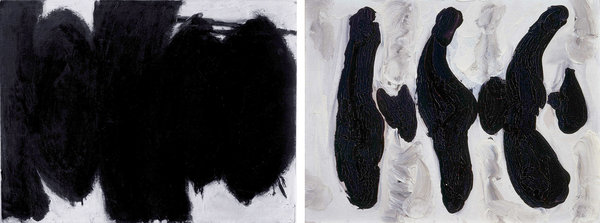
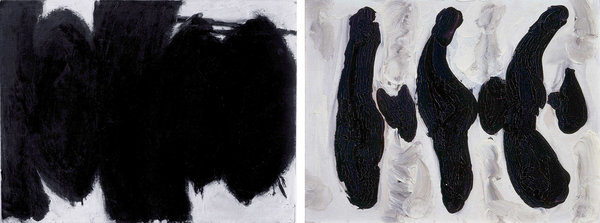
A “lost” Jackson Pollock, its drips and splatters crackling with the artist’s signature chaos. An unknown Willem de Kooning. A powerful Robert Motherwell from his famous “Elegy to the Spanish Republic” series.

In total, around 60 paintings trickled out. They were gorgeous. They were convincing. And they sold like hotcakes to the super-rich, who were eager to own a piece of history “discovered” by the most trusted gallery in America.

One collector, a former Gucci executive named Domenico De Sole, paid a staggering $17 million for a Rothko. Another painting, a supposed Pollock, sold for millions. The total haul? Over $80 million. Knoedler and Ann Freedman made fortunes in commissions. Glafira Rosales, the woman from Long Island, became a very wealthy mystery.

But while the money flowed, a few quiet alarm bells were beginning to ring. For those who bothered to listen.

The Unraveling: When Science Kills a Good Story

The art world is built on connoisseurship—the “expert eye.” But when the eye fails, science takes over. And science is brutally honest.

A few collectors, feeling a prickle of doubt, decided to have their multi-million dollar paintings analyzed. What they found was impossible.

One of the supposed Jackson Pollock paintings, dated to 1949, contained pigments that weren’t commercially available until years after Pollock was dead. Another work contained a yellow paint that wasn’t invented until the 1970s. It was the modern equivalent of finding a stainless-steel screw in a Roman chariot. A fatal flaw. A scientific smoking gun.

Experts who had initially authenticated the works based on their “feel” and style began to backtrack. The International Foundation for Art Research (IFAR) refused to include one of the Pollocks in its definitive catalog, citing the glaring lack of provenance. The whispers grew louder. The story of Mr. X was starting to sound less like a secret and more like a script.

The impossible treasure hunt was beginning to look like an impossible crime.

The Ghost in the Garage: Finding the Forger

So, if these were fakes, who made them? Who was this artistic ghost, this “preternaturally talented” forger capable of fooling the world’s top experts? The FBI wanted to know. And the trail led them not to a shadowy European crime syndicate, but to a quiet street in Queens.

There, in a modest house with a garage studio, they found him.

His name was Pei-Shen Qian. He wasn’t a master criminal. He was a 73-year-old Chinese immigrant, a classically trained artist who once taught math. He’d been discovered painting portraits on a street corner in Manhattan by Rosales’s husband, Jose Carlos Bergantiños Diaz.

They saw his talent. And they saw an opportunity.

For years, they paid him a pittance—a few thousand dollars per painting—to create “imitations” in the style of the great masters. Qian was a genius mimic. He studied their techniques obsessively. He would buy old canvases from flea markets and carefully age them, staining them with tea bags. He used vintage paints when he could. He channeled the furious energy of Pollock and the somber soul of Rothko. He was the engine of the entire conspiracy, a brilliant artist hiding in plain sight, making works that would sell for 1,000 times what he was paid.

When the FBI came knocking, Pei-Shen Qian saw the writing on the wall. He packed a bag, bought a one-way ticket, and fled back to China, where he remains to this day, beyond the reach of U.S. law.

The Empire Collapses

With the forger identified, the whole house of cards came down. Fast.

Glafira Rosales was arrested. Facing decades in prison, she confessed everything. She admitted there was no “Mr. X.” No secret Swiss collection. It was all a lie, spun to sell the forgeries made in a Queens garage. Her husband, Bergantiños Diaz, the man who found Qian, fled to Spain.

The duped collectors were furious. Lawsuits rained down on Knoedler and Ann Freedman. The De Soles, who had paid $17 million for their fake Rothko, led the charge. The gallery’s reputation, once its greatest asset, was now radioactive.

In November 2011, after 165 years in business, Knoedler & Company abruptly shut its doors forever. An email went out to the staff. It was over. The gallery that had survived the Civil War, two World Wars, and the Great Depression was killed by a story that was too good to be true.

A Mastermind, a Victim, or Something Else?

The dust has settled, but the biggest question still hangs in the air: What did Ann Freedman know?

Was she the mastermind, a willing participant who pocketed millions while knowingly selling fakes? Or was she the ultimate victim, a true believer so blinded by the dazzling story and the beauty of the paintings that she ignored every single red flag?

The case for her being complicit is strong. She made over $10 million in commissions. She allegedly ignored warnings from experts and actively suppressed doubts. The complete lack of provenance should have stopped a first-year art history student in their tracks, let alone the president of Knoedler. Was it greed? Was it ego—the desire to be the one who uncovered the score of a lifetime?

Yet, Freedman has always, and continues to this day, to maintain her innocence. She claims she was deceived just like everyone else. She points out that she even bought some of the fakes for her own collection. Her lawyers portray her as a passionate art lover who was conned by a sophisticated team of criminals.

No criminal charges were ever filed against her. She settled the numerous civil lawsuits out of court. The art world remains bitterly divided. Was it willful blindness or a grand conspiracy? We may never truly know.

The Knoedler scandal is more than just a story about fake paintings. It’s a story about the intoxicating power of belief. It shows how badly people—even the most sophisticated experts—want to believe in magic, in the idea of a hidden treasure waiting to be found. Greed played its part, but so did hope and ego. Everyone involved, from the gallery to the collectors, wanted the story of Mr. X to be real. And that desire made them the perfect marks.

Somewhere out there, a handful of these brilliant forgeries may still be hanging on a wall, their owners either unaware or too embarrassed to admit they were fooled. They are ghosts of a grand illusion, silent monuments to the $80 million lie that broke the art world.

Originally posted 2016-02-23 00:27:53. Republished by Blog Post Promoter