
Home Unexplained Mysteries UFO Mysteries Mystery of the 1947 UFO invasion

Mystery of the 1947 UFO invasion

0
62

The Summer Everything Changed: UFOs, Assassins, and the 1947 Invasion

Something broke in the sky over America in 1947. It wasn’t just a glitch. It wasn’t weather balloons or swamp gas. For a few terrifying months, the rules of reality seemed to bend. We look back now and see black-and-white photos, grainy newspaper clippings, and we think of it as ancient history. But if you were there? If you were standing on the coast of Washington State or the deserts of New Mexico? It felt like the end of the world. Or the beginning of a new one.

Most people know the name “Roswell.” It’s the brand name of alien conspiracies. But Roswell was just the finale. The real story—the violent, messy, and downright terrifying story—started weeks earlier. It started on a boat.

9228It was June 21, 1947. A man named Harold Dahl was out on the waters of Puget Sound, near Maury Island (now known as Vashon Island). He wasn’t looking for little green men. He was scavenging logs. It was a mundane, blue-collar job. Dahl had his son, another crewman, and the family dog with him. The water was calm. The sky was gray.

Then the humming started.

The Day It Rained Fire

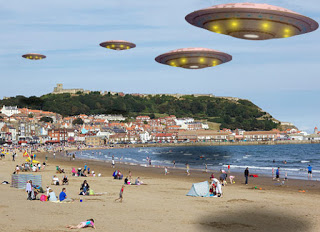
Dahl looked up. Above his boat, six massive, donut-shaped objects hovered silently. They weren’t jets. We didn’t have anything that looked like that. Five of them seemed to be circling a sixth one, which looked damaged. It was struggling. Lurching in the air.

Suddenly, the center craft shuddered. It didn’t fire a laser. It didn’t beam anyone up. It ejected tons of hot, metallic slag. Molten rock and metal rained down from the sky. The water hissed and boiled. Steam rose up, blinding them.

This wasn’t a harmless light in the sky. This was physical. Dahl’s son was hit by falling debris, his arm burned and seared. The family dog wasn’t so lucky. The poor animal was struck by a heavy chunk of the hot metal and killed instantly. Dahl, panicked and terrified, motored the boat to shore, desperate to get his injured boy to a doctor. They left the dog behind. They left peace of mind behind forever.

This is where the story usually stops. A weird sighting. Some burns. But what happened next is the part that should keep you up at night.

Enter the Men in Black

We laugh at the movies now. Will Smith. Sunglasses. Neuralyzers. But the “Men in Black” aren’t a Hollywood invention. They were born the next morning, on June 22, 1947.

Dahl hadn’t told the press yet. He hadn’t told the world. He had only told his boss, a man named Fred Crisman. Yet, the very next morning, a black Buick pulled up to Dahl’s house. A man Dahl had never seen before asked him to go to breakfast. The man wore a pristine black suit. He drove a pristine black car.

At a local diner, the stranger didn’t ask questions. He told Dahl exactly what had happened on the boat. Detail for detail. He knew about the dog. He knew about the boy. Then, the tone shifted. The man leaned in and gave a warning that chills the blood decades later:

“If you love your family, you will never speak of this again.”

Who was this guy? Government? Alien? Or something in between? This was the first recorded instance of the MIB phenomenon. They didn’t come to investigate. They came to silence.

The Era of the Flying Saucer

Silence didn’t last long. Two days after Dahl was threatened, the dam broke. Kenneth Arnold, a respected businessman and pilot, was flying his private plane near Mount Rainier. He was looking for a crashed transport plane, hoping for a reward. Instead, he found the impossible.

Arnold spotted nine glittering objects weaving through the mountain peaks. He clocked their speed. Over 1,200 miles per hour. In 1947, that was unthinkable. The fastest known aircraft struggled to hit 600. These things were moving at supersonic speeds before we had officially broken the sound barrier.

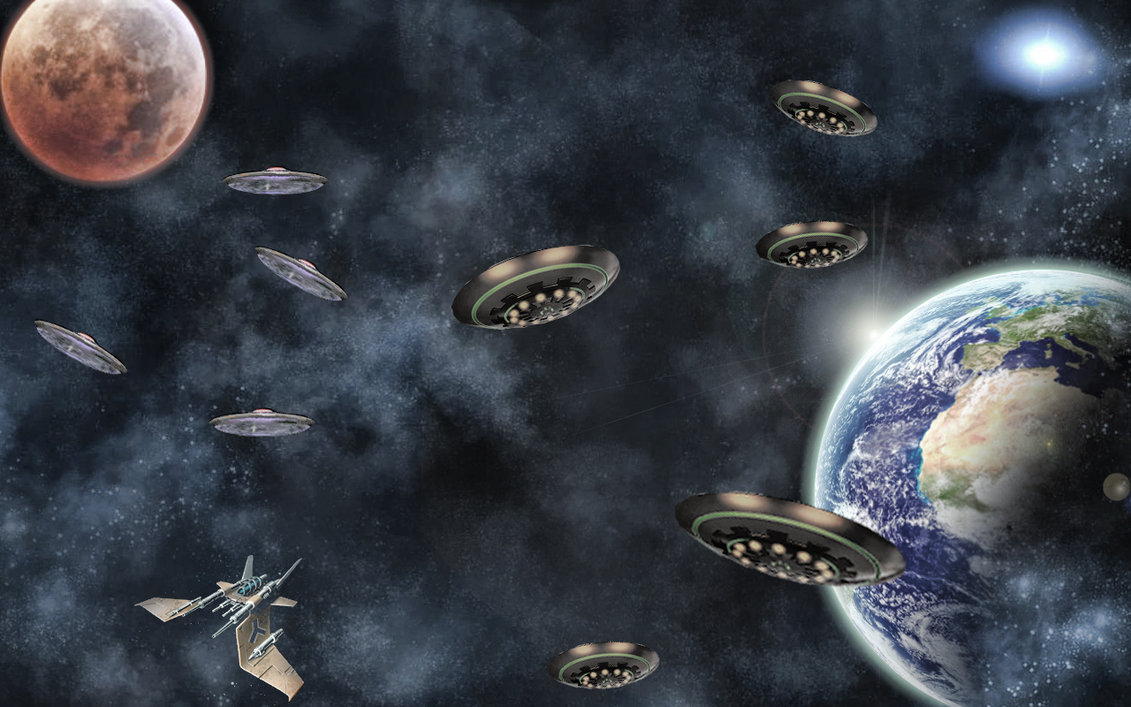
Arnold described their movement like “a saucer skipped across water.” The press grabbed that phrase. The headline writers went wild. The term “Flying Saucer” was born. It wasn’t just a local story. It went global overnight. Suddenly, everyone was looking up. People weren’t just seeing lights; they were seeing fleets.

On July 4 weekend alone, sightings exploded. A United Airlines crew saw discs. Police officers saw them. It was a mass event. The skies were busy.

The Secret Meeting at the Winthrop Hotel

Let’s go back to Dahl and his boss, Fred Crisman. Crisman is a character you could write ten books about and still not understand. Some say he was a CIA asset. Some link him to the JFK assassination decades later. In 1947, he was the guy holding the bag—literally.

Crisman had gathered the “slag”—the mysterious rocks dropped by the UFO. He contacted a magazine editor, who contacted Kenneth Arnold. Arnold, now the most famous witness in the world, flew to Tacoma to investigate the Maury Island case. It was a meeting of the damned.

Arnold checked into the Winthrop Hotel. He felt he was being watched. His room was bugged. He was nervous. He called in the military. Two Army Intelligence officers, Captain William Davidson and Lieutenant Frank Brown, flew up from Hamilton Field in California. They were young, sharp, and skeptical.

They met in the hotel room. Crisman produced a box. Inside were heavy, dark, metallic rocks. The debris from the spaceship. Davidson and Brown looked at it. They acted unimpressed. “Just slag,” they said. “Nothing to see here.”

Was it a bluff? Did they know exactly what it was? They took the box. They wanted to get it back to base immediately. They didn’t want to wait until morning. That decision would cost them their lives.

The Doom of the B-25

It was past midnight, July 31. The two intelligence officers boarded a B-25 bomber at McChord Field. They had the box of UFO debris with them. Their mission: get the evidence to California. Analyze it. Find out if the Russians had a secret weapon, or if we were dealing with visitors from the stars.

They took off into the dark. Thirty minutes later, the left engine caught fire.

This was a B-25 Mitchell. a sturdy warhorse of a plane. They didn’t just catch fire for no reason. The crew tried to fight it. But the fire spread fast. Too fast. It consumed the wing. The pilot ordered the crew to bail out. Two men jumped to safety.

Davidson and Brown did not. Maybe they were trying to save the box. Maybe they were trying to stabilize the plane to save people on the ground. The bomber screamed out of the sky, trailing flame and smoke. Witnesses in Kelso and Longview watched in horror as the fireball circled, losing altitude.

At 2:35 AM, the B-25 slammed into the ground in Rose Valley. It exploded with the force of a bomb. The officers—and the evidence—were incinerated.

Was it an accident? A mechanical failure? Or was it sabotage? Who knew what was in that box? The Men in Black had already threatened Dahl. Would they bring down a military aircraft to keep the secret?

The Reporter Who Knew Too Much

The next morning, the official story was already being written. “Tragic Accident.” “Engine Failure.” But the phone lines at the Tacoma Times were burning up.

Paul Lantz was a sharp reporter. He wasn’t buying the spoon-fed press releases. He started getting calls. Anonymous tipsters. People with inside information. They told him the B-25 was shot down. They told him it was carrying “disc secrets.” They told him the names of the dead officers before the Army even released them to the families.

Lantz ran with it. He printed the headline that shook the region: “WRECKED BOMBER CARRIED DISC SECRETS.”

The Kelsonian-Tribune followed up: “Flying Disk Investigators Die in Army Bomber Wreck.”

The cover-up was cracking. People were asking questions. Where was the debris? Why did the plane burn so fast? Why were the officers flying at night with a box of rocks?

Lantz kept digging. He was getting close to something huge. He was connecting Maury Island, Kenneth Arnold, and the military deaths. He was pulling on a thread that the government—or someone else—desperately wanted to cut.

ufo532_1546579aAnd then, the silence came for him too.

Paul Lantz was young. Healthy. Twenty-nine years old. Six months after the crash, he was dead.

The official cause? Streptococcal meningitis. A sudden, rapid infection. But the whispers in the newsroom told a different story. Rumors swirled that Lantz had received visitors. Two men. Dark suits. Dark car. They told him to drop the flying disc story. He didn’t listen.

Did they poison him? Was it a convenient biological weapon? Or just tragic timing? In the world of conspiracy, there are no coincidences. Lantz died, and the story of the B-25 sabotage died with him.

The Roswell Connection: The Summer of Secrets

While Washington State was dealing with raining fire and crashing bombers, something else was happening in the desert.

July 1947. The same exact time window. A rancher named Mac Brazel found debris outside Roswell, New Mexico. Foil that couldn’t be cut. Beams with purple hieroglyphics. The Army Air Field issued a press release: “RAAF Captures Flying Saucer On Ranch in Roswell Region.”

It was on the front page. For about four hours. Then, the weather balloon story took over. The General flew in. The press release was retracted. The photos of the “debris” showed clumsy balsa wood and tin foil.

But the toothpaste was out of the tube. Between 1978 and the 1990s, researchers like Stanton T. Friedman and Don Schmitt went back. They found hundreds of witnesses. They found the people who handled the wreckage. They found the mortician who was asked for child-sized coffins.

Documents leaked. The “Majestic 12” papers surfaced, outlining a secret group created by President Truman to manage the alien issue. Critics call them fakes. Believers call them the smoking gun.

What Really Happened in 1947?

Why did it all happen then? Why 1947?

We had just finished World War II. We had dropped the atomic bomb. We were testing V2 rockets. We were lighting up the planet with radar. Maybe we finally got noticed. Maybe the neighbors came over to see what the noise was about.

Think about the sequence:

  • June 21: Maury Island. Hostile action. Debris dropped. Dog killed.
  • June 22: The first Men in Black appearance.
  • June 24: Kenneth Arnold sees the fleet.
  • July 4: Mass sightings across the US.
  • July 8: Roswell press release.
  • July 31: The B-25 carrying evidence crashes and burns.

This wasn’t mass hysteria. This was an operation. Whether it was aliens, a breakaway civilization, or a psychological warfare campaign by our own government, the result was the same. Fear. Confusion. Secrecy.

Modern Theories: The Puzzle Reassembled

Today, the internet is buzzing with new theories. We aren’t looking at these events in isolation anymore. We are looking at the patterns.

Some modern researchers suggest the “slag” at Maury Island wasn’t part of a ship, but nuclear waste. Maybe the “saucers” were our own experimental craft, dumping radioactive byproduct illegally, and Dahl just happened to be in the way. That would explain the burns. That would explain the Men in Black—government agents covering up a nuclear crime, not an alien one.

Others point to the “Interdimensional Hypothesis.” The idea that these things aren’t traveling from Mars, but popping in from right here, from a different frequency of reality. That’s why they appear and disappear. That’s why they look different to different people.

And what about Fred Crisman? Documents released decades later show he was indeed monitored by the FBI. He was a man who existed in the shadows. Was he a disinformation agent planted to confuse Arnold? Was the whole Maury Island incident a hoax designed to hide the real crash at Roswell?

The Warning Remains

Seventy-five years later, we still don’t have the box of slag. It melted in the B-25 fire. We don’t have the bodies from Roswell. They vanished into Wright-Patterson Air Force Base.

But we have the stories. We have the dead witnesses. We have the pilot who saw nine ships gleaming against the snow of Mount Rainier. The government changed the story a dozen times. They called it balloons. They called it crash test dummies. They called it lies.

But they never explained the Men in Black. They never explained why a reporter had to die for a headline. And they never explained why, for one hot summer in 1947, the sky was full of things that didn’t belong there.

We are still watching the skies. We are still waiting for the truth. But if history has taught us anything, it’s this: when the truth finally lands, it might burn.

Originally posted 2014-03-14 02:18:52. Republished by Blog Post Promoter