Home Unexplained Mysteries Ancient Mysteries The mysterious Palpa Lines

The mysterious Palpa Lines

0
66

Everyone knows the Nazca Lines. They are the postcards of ancient Peru. The spider. The monkey. The hummingbird. We have stared at them for decades, scratching our heads, wondering how primitive people scratched giant doodles into the desert floor that could only be seen from the sky. But here is the thing nobody tells you.

Nazca is the distraction.

While the world was busy looking at the famous lines, a much older, much stranger, and far more disturbing mystery was hiding right next door. Just a few miles north, in the Ica region, lies the Palpa Valley. And what is hidden there doesn’t just rewrite history. It shreds it.

These are the Palpa Lines. And they are absolutely terrifying.

The mysterious Palpa Lines

The Forgotten Blueprint

Let’s talk numbers. The famous Nazca lines were made roughly between 500 BCE and 500 CE. That is old. But the Palpa Lines? They laugh at that timeline. Archaeologists and researchers now believe the Palpa geoglyphs were carved into the earth at least 1,000 years before the Nazca culture even picked up a rock.

Think about that. A full millennium. That is the difference between us and the Vikings. That is the gap.

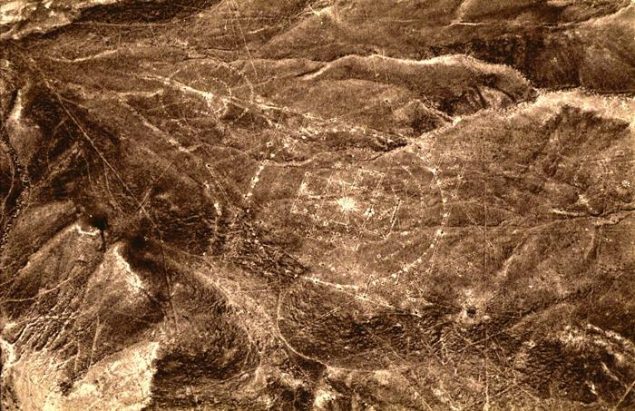
For decades, these lines were ignored. Why? Because they are hard to see. Unlike the Nazca lines, which are drawn on flat, desert pavement (pampas), the Palpa lines are carved directly into the jagged sides of mountains and the tops of hills. This isn’t just a stylistic choice. It is a tactical one.

If you draw on a flat floor, you need a plane to see it. If you draw on the side of a mountain, you are broadcasting a signal to something approaching from the horizon. Or perhaps, something hovering at a low altitude. The visibility is different. The intent is different. The builders of Palpa weren’t just copying the Nazca people. They were the original masters. They were the teachers.

So, who were they?

The Architects of the Impossible

History calls them the Paracas culture. They lived in this arid, hostile region roughly 3,000 years ago. On paper, they were a simple agricultural society. They grew beans. They fished. They wove textiles.

But that is the boring version of the story. The version they teach in school.

When you look closer at the Paracas people, things get weird. Fast. These people possessed medical knowledge that shouldn’t have existed. We have found evidence of trepanation—cranial surgery—performed with obsidian blades. And the survival rates? Shockingly high. They were cutting into brains and fixing them while the rest of the world was still figuring out bronze.

But their medical skill isn’t the main event. It’s their appearance.

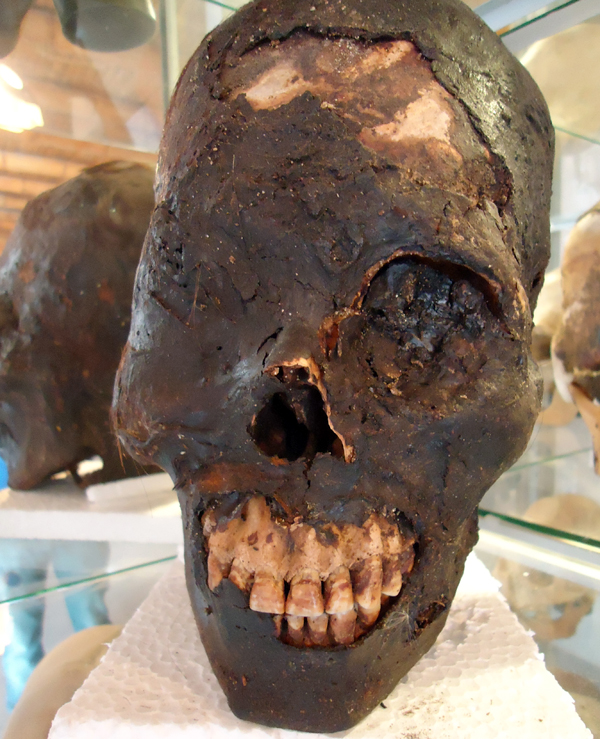
You cannot talk about the Palpa Lines without talking about the people who made them. And you cannot talk about the Paracas people without talking about the skulls. The Paracas culture is world-famous for having the most extreme cases of cranial elongation on the planet.

The Skull Mystery: Modification or Mimicry?

Look at the image below. Really look at it.

The mysterious Palpa Lines

Mainstream science has a quick explanation for this. They call it “artificial cranial deformation.” They say mothers would bind the heads of their infants with boards and cloth to force the skull to grow backward. It was a status symbol, they say. Like wearing a crown or driving a luxury car.

But does that explanation actually satisfy you?

Why that shape? Why did the royalty of this specific culture, 3,000 years ago, decide that the ultimate sign of power was to look like a humanoid from another star system? Humans usually mimic what they see. We mimic the powerful. If the “gods” looked like us, we would want to look like us.

But the Paracas elite wanted to look like that.

There are theories—controversial, dark, and fascinating—that suggest the Paracas people weren’t just binding heads for fashion. Some researchers point to the cranial volume. When you bind a skull, you change the shape, but you cannot change the volume. The brain doesn’t get bigger; it just gets squished. Yet, some anomalies in Paracas skulls suggest a cranial capacity larger than the average human. Heavier bones. Different eye sockets.

What if they weren’t modifying their bodies to look cool? What if they were trying to look like the entities they saw coming down from the sky? The entities that taught them how to irrigate the desert? The entities they drew on the mountains?

1,600 Messages in the Sand

Let’s go back to the dirt. The sheer scale of the Palpa site is overwhelming. Researchers have identified more than 1,600 Palpa Lines and geoglyphs. One thousand six hundred.

Nazca is famous for animals. The Palpa lines are different. While they have some animals, they are obsessed with geometric shapes and, more importantly, human figures. They call them the “Family.”

There are depictions of beings with strange eyes. Beings with rays shooting out of their heads. In one famous geoglyph, known as the “Star Being,” a humanoid figure seems to be waving. But who is he waving at? He isn’t waving at the guy in the next village. He is waving at the sky.

These figures were created by removing the dark, oxidized stones on the surface to reveal the lighter sand underneath. It sounds simple. A child could do it in a sandbox. But doing it on a mountain scale, keeping the proportions perfect so that the image resolves correctly from a thousand feet up? That is math. That is engineering.

Archaeologists today believe that the figures were made to please ancient gods. They say the Paracas people believed these gods controlled the forces of nature—earthquakes, drought, and floods. They drew these pictures to say, “Hey, we are here! Please send rain! Please don’t shake the ground!”

It’s a nice story. It fits in a textbook. But it ignores the precision.

The “Runway” Theory

Some of the Palpa lines aren’t pictures. They are just straight, massive lines. Some of them look like someone took a giant laser and sliced the top off a mountain to create a flat mesa. These flat-topped mountains look suspiciously like runways.

In the modern age, if you fly over Palpa, it looks like an airport. You have directional markers. You have wide, flat strips. You have complex geometric patterns that look like calibration targets for optical sensors.

Could the “Gods” have been technological? If a cargo cult in World War II could build wooden planes to mimic the American military, could the Paracas people have been building “runways” to mimic the craft they saw landing in ancient times? It sounds crazy. But then you look at the skulls again. And you wonder.

The Modern Discovery: Drones Change Everything

Here is the wildest part. We are still finding them. You would think that by 2024, we would have mapped every inch of this planet. But the Palpa lines were hiding in plain sight.

In recent years, the use of drones and satellite imaging has blown the lid off this mystery. Global Explorers and Peruvian archaeologists used low-flying drones to scan the hillsides. They found dozens of new figures that were invisible from the ground and too faint for satellites.

The Palpa lines have not been completely mapped. We are scratching the surface. Every time we send a drone up, we find another “god,” another warrior, another strange geometric trap.

This tells us that the Paracas culture was busier, larger, and more obsessed with the sky than we ever imagined. It wasn’t just a few artists. It was a civilization-wide project. Generations of people spent their lives moving rocks to draw pictures they would never see from the proper angle. Why?

Why waste that much energy? Food was scarce. Water was scarce. Survival was hard. Yet they spent millions of man-hours turning their mountains into a picture book.

Unless it wasn’t a waste.

Unless it was a requirement. Or a warning.

A Warning from the Past?

The Paracas culture vanished around 100 BCE. They were absorbed, or conquered, or they simply morphed into the Nazca culture. But they left their mark. They left the skulls, and they left the lines.

The Nazca lines that followed are famous, but they are simpler in some ways. They are on the flat ground. The Palpa lines are the older, rougher, more desperate older brother. They precede in time the Nazca lines by centuries.

When you stand in the Palpa valley, the wind howls. It’s a dry, dusty wind. It should have erased these lines thousands of years ago. But the unique geology of the region—the gypsum in the soil, the lack of rain—has glued the stones in place. It’s almost as if the land itself wants us to see this.

So, the next time you hear about the Nazca lines, remember Palpa. Remember the elongated skulls. Remember the “Star Being” waving from the hillside. And ask yourself: Were our ancestors just bored? Or were they trying to tell us that we are not alone?

The mountains are talking. We just need to learn how to listen.

Originally posted 2016-07-22 00:25:08. Republished by Blog Post Promoter

Originally posted 2016-07-22 00:25:08. Republished by Blog Post Promoter