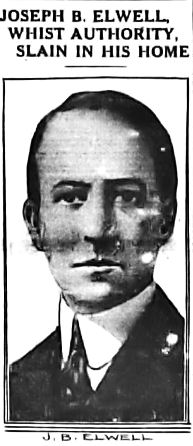
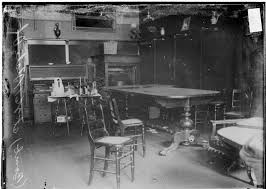
It is the quintessential “Locked Room” mystery. The kind of story that authors like Agatha Christie or Arthur Conan Doyle would kill to invent. But this wasn’t fiction. This was blood, bone, and a cold reality that hit New York City like a sledgehammer in the summer of 1920. The victim? Joseph Bowne Elwell. He wasn’t just a rich guy. He was the authority on the card game bridge. He wrote the books everyone read. He taught the aristocrats how to play. He was the “Bridge King.”
And on a warm June morning, the King was found dead. Not just dead. Executed.
Over a century later, the murder of Joe Elwell remains a gaping hole in criminal history. Zero convictions. Zero arrests. And, perhaps most terrifying of all, zero suspects that stuck. How does a celebrity get shot in the head inside a locked apartment in Manhattan without leaving a trace? Let’s crack this case open.
The Morning of the Shocker
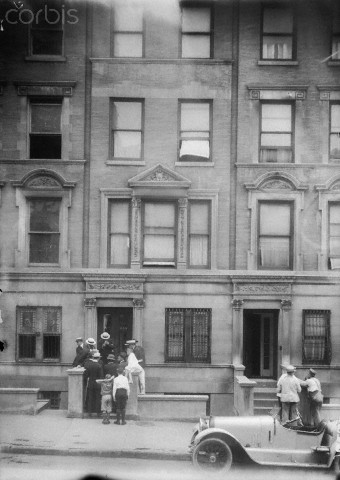
June 11, 1920. The Jazz Age was just revving up. Prohibition was turning the city into a playground for bootleggers and secret speakeasies. But inside the brownstone at 244 West 70th Street, things were quiet. Too quiet.
At 8:10 AM, Marie Larsen, Elwell’s fiercely loyal housekeeper, arrived to start her day. It was routine. Mundane. She unlocked the door, stepped into the foyer, and probably expected to hear the soft rustle of a newspaper or the clink of a coffee cup. Instead, she was hit with a wall of silence.
She walked into the living room. Then she screamed.
The sight that met her eyes was so jarring, so wrong, that it nearly sent her into a catatonic state. There, sitting in a chair, was a man. But it didn’t look like the Joe Elwell the world knew. The man in the chair was slumped over. Blood was pooling. But worse? He looked… different. Old. Vulnerable. Broken.

Marie ran into the street. She was hysterical. She grabbed the first police officer she saw, babbling incoherently about a “stranger” in Mr. Elwell’s house. She kept screaming that the stranger was dead.
When the police stormed in, they realized the housekeeper was mistaken. It wasn’t a stranger. It was Joe Elwell. But the confusion was understandable. You see, Joe Elwell was a master of illusion. In public, he was a dashing, younger-looking playboy with a full head of hair and a dazzling smile. In death, the mask had slipped.
The corpse was bald. Elwell’s collection of forty expensive designer wigs was nowhere to be found on his head. His teeth? Gone. His pristine dentures were soaking in a glass in the bathroom. He was wearing tattered, ugly pajamas.
This is the first major clue. And it is chilling.
Joe Elwell was a man of extreme vanity. He never let anyone see him without his wig or his teeth. Not his friends. Not his business partners. And certainly not the army of women he seduced. Yet, when the killer pulled the trigger, Elwell was sitting there, completely exposed, comfortable in his own skin. He wasn’t hiding his flaws.
This tells us one terrifying thing: He knew the killer. He knew them well enough to let his guard down completely. Or… he didn’t consider the killer a threat at all.
The Impossible Crime Scene
Detectives were baffled immediately. It wasn’t just the weird appearance of the body; it was the physics of the room.
Elwell had been shot point-blank in the forehead with a .45 automatic. That is a heavy, loud hand-cannon of a weapon. It’s a military gun. Yet, the neighbors heard nothing. No scream. No bang. Just silence.
And then there was the “Locked Room” aspect. The front door was locked. The back door was locked. The windows were secured. There was no sign of a break-in. No jimmying of the lock. No smashed glass.
This means Elwell let the killer in. He walked to the door, opened it, and invited his death inside.
But here is where it gets even stranger. After letting this person in, Elwell apparently sat down in his chair and… ignored them. He began opening his morning mail. When police found him, an open letter was in his lap. Unopened envelopes were scattered on the floor, seemingly dropping from his hands as the life left his body.
Why invite someone in, only to sit down and read mail? Was it a delivery boy? A servant? Or someone so familiar, so part of the furniture of his life, that he felt no need to entertain them?
The Mystery of the Bullet
If the body was weird, the ballistics were baffling. Police scoured the room for the gun. Nothing. The killer took it with them.
But they found the shell casing on the floor. And then they found the bullet. It wasn’t lodged in the wall behind Elwell’s head. It wasn’t buried in the upholstery of the chair. The bullet was sitting, neatly, on top of a table across the room.
How does that happen?
Some theories suggested it ricocheted off the wall and spun onto the table. A “magic bullet” theory decades before the JFK assassination. But others, darker minds, suggested something else. Did the killer pick it up and place it there? Was it a message? A calling card? It looked staged. It looked deliberate.
The Crouching Killer
The angle of the entry wound added another layer of confusion to this nightmare puzzle. The bullet entered Elwell’s forehead and traveled upward.
Wait. Upward?
Elwell was sitting down. For the bullet to travel upward, the gun had to be lower than his head. The police calculated that the muzzle was about three to five feet away. But the angle meant the killer was either a child, a person of extremely short stature, or—and this is the most likely scenario—they were crouching.
Picture the scene. It’s early morning. Elwell is reading a letter. The killer is in the room. They crouch down low in front of him. Why? Were they picking something up off the floor? Were they tying a shoelace? Or was it a military stance? A steadying of the aim before the final pull?
Elwell didn’t look up. He didn’t flinch. He didn’t raise his hands in defense. He just kept reading. And then—lights out.
The Suspects: High Society & Low Morals
To understand who killed Joe Elwell, you have to understand how he lived. He wasn’t just a bridge player. He was a hustler. A charmer. A man who used the card table to climb the social ladder of New York’s elite.
He had money. He had racehorses. He had a yacht. And he had women. Lots of women.
Elwell kept a “stud book.” That’s what the tabloids called it later. A list of names and numbers of his conquests. Scores of women, many of them married to powerful, dangerous men. He was playing a dangerous game, sleeping with the wives of Wall Street tycoons and Prohibition-era gangsters.

The Ex-Wife: Helen Derby
First on the list was Helen Derby. She married Elwell in 1904. She was the one who introduced him to the high society that eventually made him rich. She gave him the keys to the kingdom, and he repaid her with endless infidelity. By 1920, they were divorced.
Police dragged her in. It’s the classic move—blame the ex-spouse. But Helen was cold as ice. She had an ironclad alibi. She wasn’t anywhere near West 70th Street. She was cleared quickly, leaving the police with a fistful of nothing.
The Last Date: Viola Kraus
The night before he died, Elwell dined at the Ritz-Carlton. Fancy. His date was Viola Kraus, a recently divorced woman. They ate, they drank, they laughed. Witnesses said Elwell was in high spirits. He didn’t look like a man with a target on his back.
Viola was questioned extensively. Did she go back to his place? Did she have a jealous ex-husband stalking them? The trails went cold. She was just another name in the book.
The Deep Dive: Who Was the “Boy in the Fedora”?
Here is a detail often left out of the history books, but one that obsession-fueled internet sleuths love to analyze. A witness reported seeing a “young boy” in a fedora leaving the area around the time of the murder.
But was it a boy?
Or was it a woman disguised as a man? In the 1920s, a woman in trousers and a hat could easily pass for a slender youth from a distance. If one of Elwell’s lovers had come to confront him—perhaps a woman he had scorned, or a woman whose life he had ruined—would he have opened the door? Yes. Would he have felt comfortable enough to sit there without his teeth? Maybe, if he viewed her with contempt or indifference.
The “Crouching Killer” theory supports this. If the killer was a woman, she might not have been crouching. She might have simply been firing from the hip, causing the upward trajectory.
The Missing Evidence
District Attorney Edward Swann was convinced that Elwell knew his killer. “He was chatting in the seconds before he was shot,” Swann claimed. But the evidence contradicts the “chatting” theory. You don’t read mail while chatting with a friend unless you are incredibly rude.
Elwell was ignoring his guest. That is the key.
Nothing was stolen. This wasn’t a robbery. There were heaps of cash and jewelry in the apartment. The killer stepped over a fortune to put a bullet in Elwell’s brain. This was personal. This was hate. Or it was a professional hit meant to look like nothing at all.
One modern theory suggests the “Mailman” angle. Did the killer hand him the mail? Elwell takes the stack, sits down, and starts reading, assuming the person is just waiting for a tip or a signature. Then—bang.
Why It Remains Unsolved
The investigation was a circus. The police trampled the crime scene. They touched the mail. They moved the body. In 1920, forensic science was in its infancy. There was no DNA testing. Fingerprinting was primitive. If you didn’t catch the guy holding the smoking gun, you were often out of luck.
But there is something else.
Joe Elwell knew too much. He held the secrets of New York’s most powerful families in his head. He knew who was cheating, who was broke, and who was lying. Did the investigation hit a brick wall because someone powerful wanted it to stop? Was Elwell silenced because he threatened to talk?
The DA eventually threw up his hands. The newspapers moved on to the next sensation. The “Locked Room” remained locked.
A Ghost in the Machine
Today, the murder of Joe Elwell is considered a classic. It inspired fiction writers like S.S. Van Dine, who used the case as the blueprint for The Benson Murder Case. But for Joe Elwell, there was no fictional detective to save the day. No Hercule Poirot to gather everyone in the drawing room and point a finger.
Just a bald, toothless man in his pajamas, slumped in a chair, holding a letter he would never finish reading. The bullet on the table remains a taunt from the past. A perfectly placed piece of metal that says: We got away with it.
And they did.
Originally posted 2016-04-21 15:32:24. Republished by Blog Post Promoter