Tuesday, June 9, 2026
HomeWeird WorldSpaceMars Rover photographs water evidence

Mars Rover photographs water evidence

They tell us it is a dead rock. They tell us it is nothing but a rusty, frozen wasteland floating in the silence of the void. But the photos tell a different story. If you look closely—and I mean really look—the surface of Mars isn’t just a geological curiosity. It is a crime scene.

New images have just hit the public domain. These files, released by the European Space Agency (ESA), are supposedly just standard documentation of “natural forces.” That is the official line. They say water shaped these craters. They say wind carved these rocks. But when you start connecting the dots, the picture gets a lot more complicated. And a lot more terrifying.

We are talking about a planet that was once alive. A world that breathed. A world that drowned.

The ESA Leak: What Are We Really Looking At?

Let’s strip away the scientific jargon for a second. The European Space Agency’s Mars Express orbiter has been circling the Red Planet, snapping high-definition photos that challenge everything we thought we knew about planetary evolution. The latest batch, snapped on January 15, focuses on a very specific, very strange region.

This area is just a few degrees south of the Martian equator. Location matters. On Earth, the equator is where life thrives. It is where the jungles are. Where the civilizations began. On Mars? It is a graveyard.

The region sits slightly north of a dried-out riverbed known as Tagus Valles. To the east, you have Tinto Valles and the Palos crater. These aren’t just random names on a star map. These are scars. According to the statement released by the space agency, these craters were once filled to the brim. Sediments. Water. Mud. Life?

They admit it openly: “Only traces of their history can now be found.”

Traces. That is the key word. We are looking at the leftovers of a cataclysm. The ESA is showing us the aftermath of a flood so massive, so violent, that it scrubbed the planet clean.

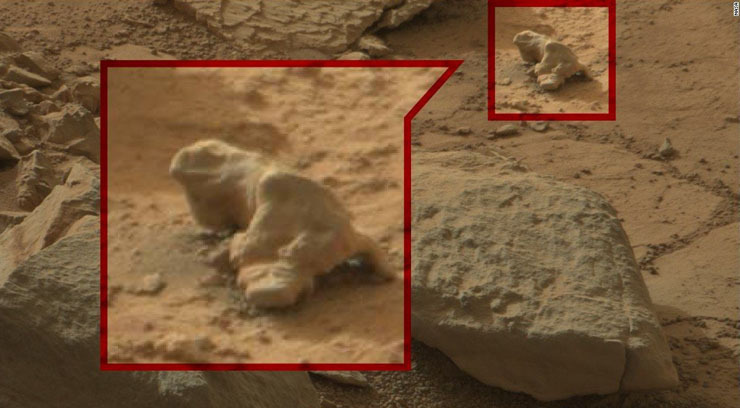
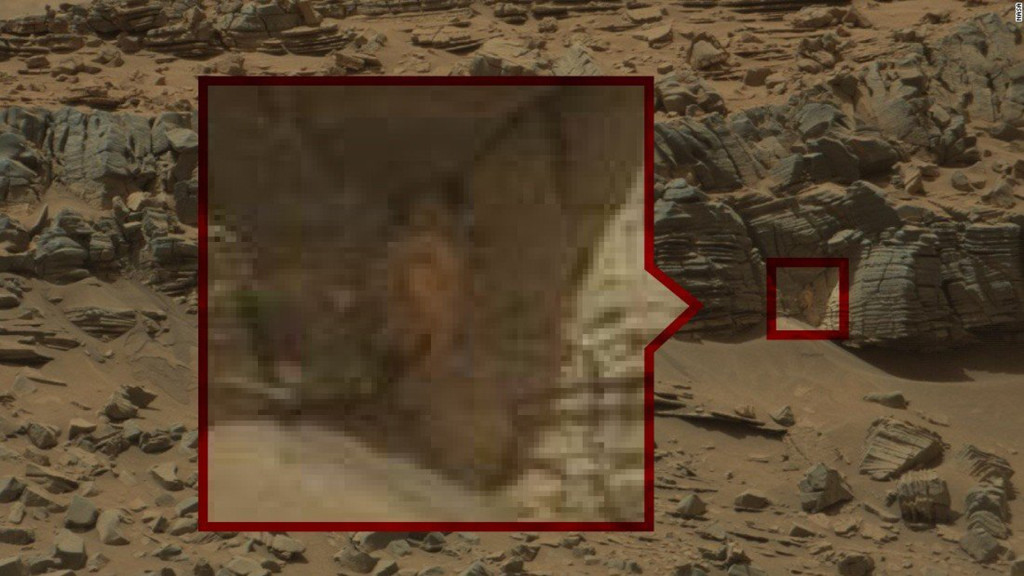
Alien hunters claim to have found evidence of life on Mars in photos taken by Curiosity rover. NASA scientist says there may be life on Mars, but only at the microbial level.

The Mystery of the Mesas: Nature or Architecture?

Here is where things get weird. Really weird.

One of the focal points in this new image dump is a 21-mile-wide crater. That is massive. To put it in perspective, that is big enough to swallow a major metropolitan city. Inside this crater, there are these bizarre, large, flat-topped blocks. The scientists call them “mesas.” Beside them, there are parallel, wind-blown features they call “yardangs.”

The official explanation goes like this: These features were carved from sediments that originally sat in the crater. They claim it was deposited there during a “flood that covered the entire region.” Then, over millions of years, the wind acted like sandpaper, eroding the weak stuff and leaving the strong blocks behind.

Okay. Sure. That is the textbook answer.

But pause for a minute. Look at the geometry. Yardangs are supposed to be streamlined ridges formed by wind. But when you look at the aerials, some of these formations look suspiciously regular. Right angles. Parallel lines. Structures that resist erosion while everything around them turns to dust.

Internet sleuths have been screaming about this for years. Are we looking at geology? Or are we looking at archaeology? If a massive flood wiped out a civilization, what would be left? The foundations. The strongest stone. The “mesas.”

Think about the Sphinx in Egypt. For centuries, it was buried up to its neck in sand. The wind eroded the limestone enclosure, creating patterns that look exactly like the yardangs on Mars. If you viewed the Giza plateau from orbit after ten thousand years of neglect, it would look just like Tagus Valles.

The Watery Grave

The agency says these blocks are the result of an “odd-shaped pattern.” That is a convenient way to dismiss the anomaly. “It’s just random, move along.”

But the water evidence is undeniable. The hints of a watery past are everywhere. About 12 miles to the east of the main site, there is another ancient crater. This one is almost gone. Obliterated. But leading right into it is a long, winding channel.

It “flows.”

You can see the movement in the rock. This wasn’t a trickle. This was a river system. A highway of water. It flows directly into the remains of the crater, suggesting that these craters might have been lakes. Or reservoirs.

And look at the walls. The crater remains show evidence of landslides. Violent ones. The agency suggests this is due to water eroding the crater walls, causing them to collapse. Ruts run down the inner walls. Massive piles of material have accumulated on the floor.

It looks like a collapse. A sudden failure of the structure.

The “Ejecta Blanket” Anomaly

One group of interconnected craters in these images has floors that are perfectly flat. Smoothed over. Like concrete. Then, there is a smaller crater in the group that contains a prominent debris residue. The scientists call this an “ejecta blanket.”

Now, this is fascinating stuff if you are into high-impact physics.

mars-life

Usually, when a meteor hits a dry planet, the dirt flies out in all directions. It is messy. It is dry dust. But here? The ejecta blanket forms a “rampart.” It has these strange, petal-like lobes around the edges.

Do you know what creates petal-like lobes? Mud. Sludge. Wet earth.

The ESA admits this. They say these shapes were formed by ejected water that mixed with the debris, allowing it to flow along the surface like thick cement. This confirms that the ground wasn’t just damp; it was saturated. Mars was soaking wet. The water was trapped right under the surface.

So where did it go?

Did it evaporate into space? Or is it still there, locked deep underground in massive aquifers? And if there is water, is there something swimming in it? NASA scientists always play it safe. “Microbial level,” they say. They love that phrase. It keeps the funding coming but doesn’t panic the public. But if you have subterranean oceans, you have the potential for a lot more than just microbes.

Volcanic Ash or Nuclear Winter?

Here is another detail the report glosses over quickly, but we are going to stop and look at it. The new Mars images show evidence of volcanic activity shaping the region. There is a dark, fine layer of ash in one of the images.

The ESA theorizes this ash may have come from the Elysium volcanic region. They say that over the millennia, wind spread this ash around. Erosion exposed pockets of buried material.

Ash covers the ground. It buries the history. On Earth, we use ash layers to date extinction events. The dinosaurs were wiped out, and we find a layer of iridium and ash. Pompeii was buried in ash. It is always the sign of a sudden, violent end.

Some alternative historians have proposed a wilder theory. What if the “ash” isn’t just volcanic? What if it is fallout? Dr. John Brandenburg, a plasma physicist, has famously argued that the isotopes of Xenon found in the Martian atmosphere mimic the signature of a nuclear explosion. He believes Mars didn’t just die naturally. He believes it was murdered.

When you look at these “natural” formations—the mesas, the yardangs, the buried craters—through the lens of a planetary war, the silence of Mars takes on a darker tone. Is this ash the remnant of a weapon that boiled the oceans and stripped the atmosphere?

Curiosity’s Long, Slow Road

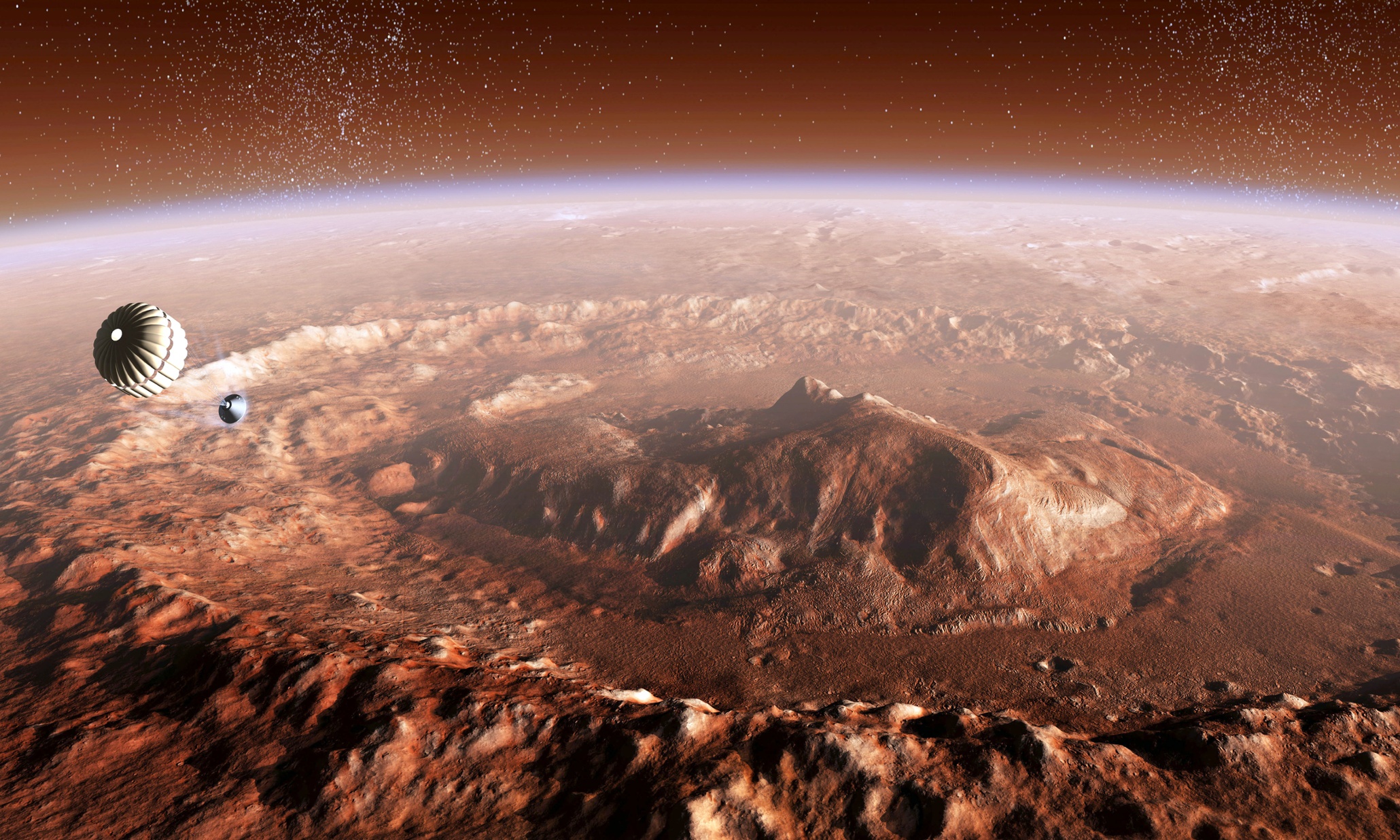
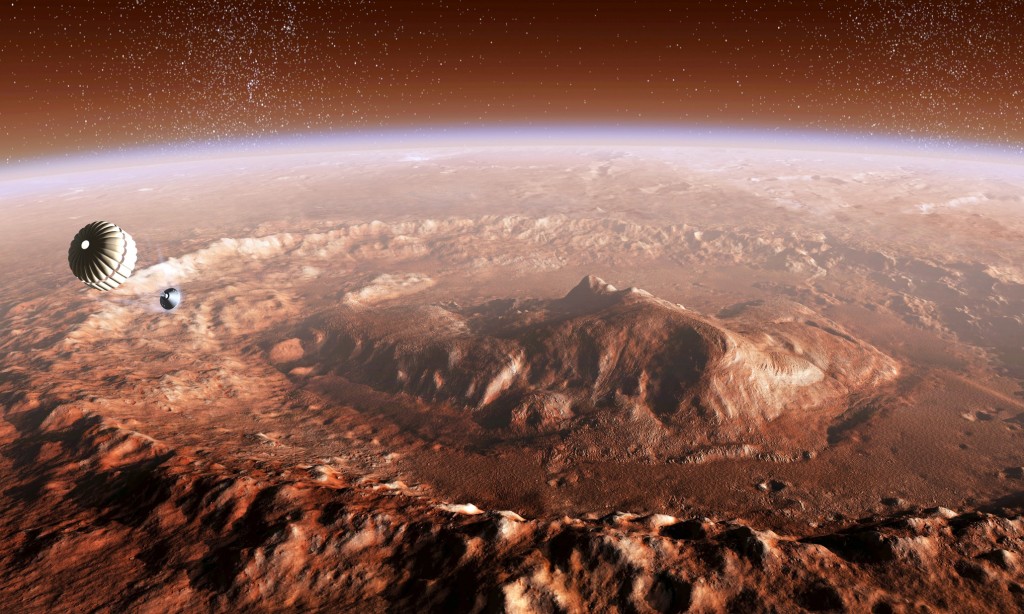
While the European orbiter is snapping photos from above, NASA’s Curiosity rover is on the ground, trudging through the dirt. It is about to complete its first full year on the Red Planet. One year. And it has barely scratched the surface.

Curiosity is currently in the middle of a “long voyage” toward Mount Sharp. This mountain is the holy grail. It is 3.4 miles high. That is huge. Taller than Mount Rainier. The Curiosity team has stated they hope to find more evidence of Mars’ watery past at the base of this mountain.

The layers of the mountain are like the pages of a history book. As the rover climbs, it travels forward in time.

But here is the kicker: NASA says they are “not in a rush.”

Why not?

They say the journey could take a year or longer. They claim it depends on how many “interesting stops” they find along the way. “Interesting stops.” That is code. That means if they find something that shouldn’t be there, they are going to stop, analyze it, and likely sanitize the data before we ever see it.

The rover is driving through Gale Crater (now Gale Crate in some typos, but we know the place). This was a lakebed. If you were going to look for fossils, for ruins, for the trash left behind by a civilization, where would you look? You would look at the bottom of the lake where everything settled. You would look at the base of the mountain.

The Disconnect Between Data and Disclosure

There is a massive gap between what the raw images show and what the press releases say. The press releases are safe. They talk about “yardangs” and “sediments.” They use passive voice. “Features appear to be carved.”

But the raw images? They show a world that was chaotic. A world of violence. Floods that moved mountains. Ash that blanketed continents. Impacts that turned the ground into liquid mud.

Every time a new photo dump happens, the internet goes wild. People spot shapes that look like statues. Skulls. Machine parts. The skeptics scream “Pareidolia!”—the psychological phenomenon where the brain sees familiar shapes in random noise. And maybe 99% of it is just rocks and shadows.

But what about that 1%?

What about the geometry that is too perfect? What about the channels that flow uphill? What about the chemical signatures that shouldn’t exist?

NASA and the ESA are dripping the truth out, one pixel at a time. They are slowly acclimating us to the idea that Mars was wet. That it was active. That it was earth-like. They are building a narrative.

First, it was “Mars is dry.” Then it was “Mars has ice.” Then “Mars had water billions of years ago.” Now it is “Mars had massive floods and complex chemistry.”

What is the next admission? “Mars had life”?

We are watching the disclosure happen in slow motion. The rover is crawling toward Mount Sharp. The orbiters are scanning the equatorial zones. The evidence is piling up in the sediments.

So, the next time you see a blurry photo of a red rock, don’t scroll past it. Zoom in. Look at the shadows. Look at the layers. Because the history of our solar system is written in that dust, and someone—or something—left a story there for us to find. We just have to be brave enough to read it.

Keep your eyes on the data. The truth is out there, red and dusty, waiting for the wind to blow the cover off.

Originally posted 2013-08-02 19:49:27. Republished by Blog Post Promoter

Amit Ghosh
Amit Ghoshhttps://coolinterestingnews.com
Aloha, I'm Amit Ghosh, a web entrepreneur and avid blogger. Bitten by entrepreneurial bug, I got kicked out from college and ended up being millionaire and running a digital media company named Aeron7 headquartered at Lithuania.
RELATED ARTICLES
- Advertisment -

Most Popular

Recent Comments

Warren Pan Abbott on The legend of the Devil Monkey !
chris davies on The McPherson Tape Mystery
Reed Reedly on ET has Internet!
Bea Houseoffashion on Proof Of Time Travellers – Gallery
Marcus2012 on ET has Internet!
Reed Reedly on ET has Internet!
LaughsAtConspiracyNuts on The 9/11 Conspiracy – Myths and Facts
Alex Sliverman on Did the ancients fly?
Doctor Wholigan on Time Traveler in 1938 film
chris davies on The McPherson Tape Mystery
Archie1954 on 10 secret UFO hideouts
chris davies on Ghosts of flight 401
Marcus2012 on ET has Internet!
jason Macdonald on Proof of Time Travel? – China
chris davies on Long-Lost Pyramids Found?
Reed Reedly on ET has Internet!
Milkman on Connected Universe
Tenmiles on Baigong Pipes Mystery
Simon Foster on Sirius – The Documentary
From the 1st April on 2013 – Alien Contact date ?
SkyWatcher on Is ET ignoring us?
I Come From The Future on Obama to make UFO Alien disclouser soon ?
ÛñK?øWn on 2013 – Alien Contact date ?
Just another person on 2013 – Alien Contact date ?
Malcolm Windowcleaner on The strange case of Rudolph Fentz
Mason Servio on Strange Things on Mars
Marke Wisdom Seeker on What will we find as arctic melts?
Andrea A Elisabeth Levyne on Aliens Captured in Varginha, Brazil
Mitch Grouyeki on Amazing Space Shuttle pictures