The Invisible Cage: Are We Trapping Ourselves on Earth?
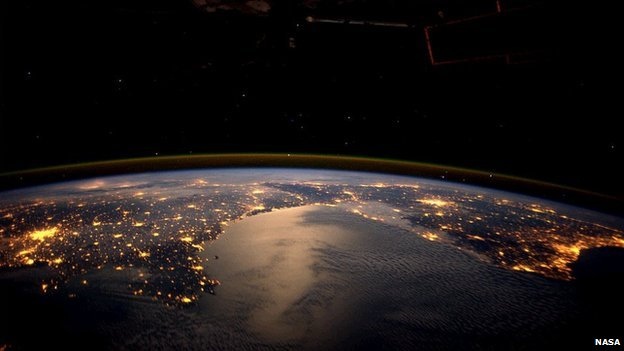
Look up. Go outside tonight and just stare at the darkness. It looks peaceful, doesn’t it? Infinite. Empty. A wide-open door to the rest of the universe just waiting for us to walk through. But that is a lie.
It’s an illusion.
Above your head, right now, a silent hurricane of metal is screaming through the void at 17,500 miles per hour. It’s a minefield. A swirling, chaotic junkyard of our own making that threatens to turn our planet into a cosmic prison cell.
We need to talk about the ” Kessler Syndrome.” We need to talk about the fact that humanity might be grounding itself forever.
The 200-Year Nightmare Scenario
Back in 2013, a warning shot was fired across the bow of the global space community. It wasn’t an alien signal. It wasn’t an asteroid. It was a spreadsheet. A study conducted for the Inter-Agency Space Debris Coordination Committee (IADC) dropped a bombshell that most of the public completely missed.
The prediction? Unless we actively start scrubbing the skies, specific satellite orbits are going to become lethal “no-go” zones within the next 200 years.
This wasn’t just some fringe blogger making guesses. This was the IADC. We are talking about the global roundtable where the heavy hitters—NASA, ESA, Roscosmos, JAXA—sit down to figure out how to stop smashing billion-dollar toys into each other. The space agencies of Europe, the US, Italy, the UK, Japan, and India all threw their data into the pot. They ran simulations using their own unique methodologies. They crunched the numbers independently.
And guess what? They all got the same terrifying answer.
The Maths of Destruction
Six different modeling groups. Six different ways of looking at the future. One conclusion.
They found that the population of space junk—specifically objects 10cm or larger—is going to skyrocket. We are looking at a steady, unstoppable 30% increase on average over that 200-year window. The low-end estimates sat at 19%, while the grim, high-end forecasts pushed toward a 36% rise. And remember, these are just the big pieces. The stuff that can tear a spacecraft in half.
But here is the kicker. This growth isn’t happening because we are launching more rockets (though we definitely are). This growth is driven by collisions.
It’s simple, brutal physics. When two satellites smack into each other at orbital speeds, they don’t just dent. They vaporize. They shatter into thousands of new shotgun pellets. Those pellets then fly off to hit other things. It creates a cascading domino effect of destruction.
The Kill Zone: Low-Earth Orbit
The study pinpointed the danger zone. They were most worried about Low-Earth Orbit (LEO)—specifically the altitude between 700km and 1,000km. Why does this matter? Because that’s the prime real estate.
That is where the spies live. That is where the weather satellites live. It’s where the missions that monitor our climate, our communications, and our borders operate. If we lose LEO, we go blind. We lose GPS. We lose the ability to track hurricanes. We lose the internet as we know it.
The simulation predicted somewhere between 20 and 40 “catastrophic collisions” over that period. That might not sound like a lot to you. “Forty crashes in 200 years? So what?”
Here is so what: A single catastrophic collision doesn’t just ruin the day for the satellite owner. It creates a cloud of debris that stays up there for centuries. It turns a safe highway into a shooting gallery.
The “Optimistic” Lie We Tell Ourselves
Here is where things get really dark. The IADC study? It was based on optimism. The terrifying numbers I just gave you were the “best-case scenario.”
The forecasting models assumed two things would happen, neither of which is actually happening in reality:
- Assumption 1: The 90% Compliance Fantasy. The models assumed that 90% of all space actors would follow the “25-year rule.” This is a “best-practice” suggestion that says once a satellite is done, you de-orbit it within 25 years. You burn it up in the atmosphere. The reality? Compliance is nowhere near 90%. It’s a Wild West up there. Companies go bankrupt. Satellites fail. Nobody cleans up the mess.
- Assumption 2: No More Explosions. They assumed we would stop having random explosions. Historically, old batteries and half-empty fuel tanks on spent rocket stages have a nasty habit of blowing up years after launch. The models pretended this would stop. It hasn’t.
The Kessler Syndrome: The Great Filter?
You have to ask yourself the big question. Why haven’t we met aliens yet? Why is the universe so quiet? There is a theory called “The Great Filter.” It suggests that civilizations eventually hit a wall that wipes them out or traps them before they can colonize the stars.
What if space junk is our filter?
In 1978, NASA scientist Donald Kessler predicted a scenario where the density of objects in LEO becomes so high that collisions generate a cascade effect. Each crash creates debris that causes the next crash. Eventually, you end up with a shell of shrapnel around the planet.
If that happens, nobody leaves. No Mars colonies. No return to the Moon. No James Webb telescopes. We become a species trapped on a single rock, cut off from the cosmos by a barrier of our own garbage.
Modern Warfare and the Satellite Swarms
The 2013 study didn’t account for one massive, game-changing factor: The Mega-Constellations.
Back then, launching a satellite was expensive and rare. Today? We have Elon Musk’s Starlink. We have Jeff Bezos’s Project Kuiper. We have OneWeb. We are talking about launching tens of thousands of new satellites into these already crowded orbits.
The sky is getting crowded. And it’s getting hostile.
Think about the military implications. If a war breaks out on Earth, the first battle won’t be fought with tanks. It will be fought in space. Anti-satellite weapons (ASATs) are real. China, Russia, the US, and India have all tested missiles that can shoot a satellite out of the sky.
When Russia tested an ASAT missile in 2021, it created a debris field so dangerous the astronauts on the International Space Station had to scramble into their escape pods and prepare for evacuation. That was one test. Imagine a full-scale conflict.
The Bullet That Never Stops
Let’s talk about kinetic energy. A fleck of paint—literally a chip of paint the size of a fingernail—hitting the window of the Space Shuttle did enough damage to require a replacement. Why? Because in orbit, speed is everything.
An object the size of a marble moving at orbital velocity hits with the force of a bowling ball traveling at highway speeds. An object the size of a softball? That’s a stick of dynamite.
Now, imagine millions of these objects. Some are big, like dead school-bus-sized satellites. Some are tiny, like bolts and screws. We are currently tracking about 34,000 objects larger than 10cm. But the small stuff? The lethal marbles and bullets? There are millions. And they are invisible to radar.
Is There a Way Out?
So, is this it? Are we doomed to be Earth-bound forever?
Engineers are trying to figure it out. We are seeing proposals that sound like they were ripped from a comic book. Giant space lasers to zap debris. Harpoons to spear old satellites. Giant nets to catch rocket bodies. Magnets. Tethers.
But here is the problem: Money. Who pays for the garbage truck? There is no “Space Force Sanitation Department.” If a piece of Russian junk hits a piece of American junk, who pays to clean it up? The legal framework is a mess.
Unless we get our act together, and fast, the night sky won’t be a window anymore. It will be a ceiling.
The 200-year clock started ticking a long time ago. And we are hitting the snooze button.
Originally posted 2013-04-23 20:47:28. Updated and Expanded for Modern Context.