Home Weird World Strange Places JP Manrow House – Most Haunted Place in San Francisco

JP Manrow House – Most Haunted Place in San Francisco

0
72

The Russian Hill Horror: San Francisco’s Lost House of Demons

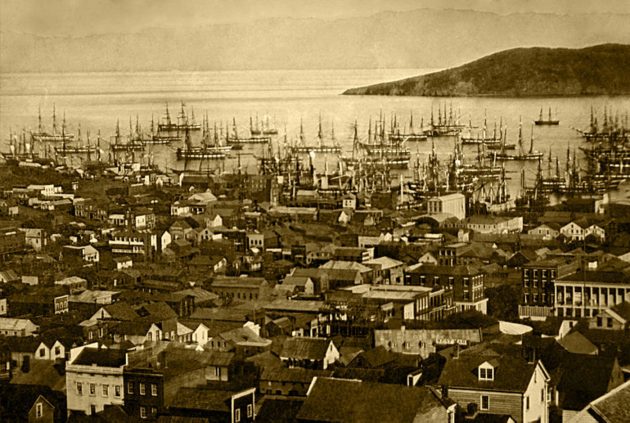
San Francisco. The mid-1800s.

A city built on gold, grit, and impossible dreams. While prospectors clawed at the earth for treasure, a new kind of royalty was rising on the hills overlooking the bay. Men of industry, of engineering, of finance. They built monuments to their success, grand houses that reached for the sky, promising a life of peace and prosperity.

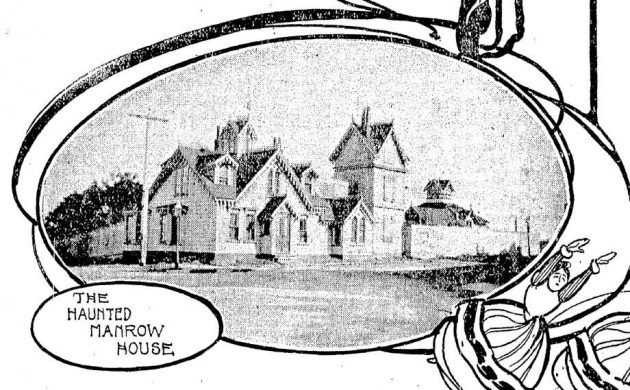
One such man was J.P. Manrow. A brilliant mathematician. A celebrated civil engineer. A man whose mind worked in straight lines, in proven formulas, in the unshakeable logic of the physical world. In 1851, on the breezy slopes of Russian Hill, he built his masterpiece. Not a stuffy Victorian like his peers, but a whimsical, almost fantastical Swiss chalet. It was to be his sanctuary. His family’s fortress of wealth and happiness.

He was wrong. So terribly wrong.

Because something else was already living in the house. Something that didn’t care about logic. Something that fed on chaos and fear. Manrow built a home, but he had unwittingly opened a door. And what came through would turn his refuge into one of the most terrifyingly haunted locations in American history, earning the chilling title: The House of Demons.

JP Manrow House – Most Haunted Place in San Francisco

A Swiss Chalet on a Hill of Horrors

From the very first day, the house felt… off. It began subtly. Almost playfully. A misplaced set of keys. A favorite book vanishing from the mantelpiece, only to reappear days later in the pantry. Annoying, yes. But explainable. Manrow, a man of cold, hard facts, surely dismissed it all as forgetfulness. A side effect of a busy life in a booming city.

But the pranks grew more pointed. More personal. The sounds started next. Rapping. Tapping from deep within the walls, at all hours of the day and night. It wasn’t the settling of a new house; it was rhythmic. Deliberate. An intelligent drumming that seemed to follow them from room to room. Sleep became a luxury the Manrows could no longer afford.

Mrs. Manrow often bore the brunt of the activity. She would return from a shopping trip downtown, place her new purchases on a table, and turn her back for a mere second. When she looked again, they would be gone. Vanished into thin air. Hours of frantic searching might reveal a new hat stuffed under a bed, or a bolt of fabric inexplicably resting on a high shelf in the kitchen. Then came the salt in the sugar bowl. A classic, childish prank. But who was the prankster? There was no one there.

The family grew weary. The constant, low-level psychological warfare was exhausting. They were living with an invisible, mischievous roommate who refused to pay rent and delighted in their distress. For years, they simply endured it. What other choice did they have? Who would believe them? It was a strange, unsettling secret held within the walls of their beautiful home. But the playful phase was about to end. The entity was just warming up.

An Unwanted Souvenir from the Sandwich Islands

The year was 1856. The quiet hum of strange activity in the Manrow house was about to become a deafening roar. The catalyst? A family visit. Mrs. Manrow’s sister and niece arrived in San Francisco after an extended trip to Hawaii, then commonly known to Americans as the Sandwich Islands.

They brought with them tales of volcanic landscapes, ancient traditions, and a culture pulsing with a spiritual energy the West could barely comprehend. They also, it seems, brought something else. An unseen passenger. A spiritual stowaway with a grudge.

Almost immediately, the phenomena in the house changed. The poltergeist was no longer just a prankster. It was angry. Vicious. Items didn’t just move; they flew. Vases would launch themselves from shelves, shattering against the opposite wall. Doors would slam with impossible force, shaking the entire house. The raps in the walls became violent bangs, like a giant fist trying to punch its way through the plaster.

The most alarming incident happened in the kitchen. As Mr. Manrow walked through the room, a heavy wood-chopping axe suddenly lifted itself from its place by the hearth. It hurtled through the air, aimed directly at his head. He ducked just in time, the blade embedding itself deep in the wall where his skull had been a second before. He was left panting, his heart hammering against his ribs, staring at the quivering handle of the axe. Thrown by no one.

This was no longer a game. This was an attack.

The Séance: Answering the Door to a Demon

Desperate, Manrow confessed his family’s torment to a few trusted friends, a Mr. Paul and a Mr. Rhodes. Far from dismissing him as a madman, they were intrigued. In an age where spiritualism was becoming a fashionable, if controversial, parlor activity, they saw an opportunity. They suggested a séance. A controlled attempt to communicate, to understand what they were dealing with. It was a terrible idea.

One evening, the six of them gathered around a heavy wooden table in the Manrow’s parlor: Mr. and Mrs. Manrow, her sister and niece, and the two investigators, Paul and Rhodes. The mood was thick with anticipation.

Paul, trying to lighten the air, asked Mrs. Manrow if she was frightened. Her reply was telling.

“No,” she said, a weariness in her voice. “It was rather terrible at first, but we’re used to it now. In fact, I confess I am rather more annoyed and indignant than terrified. These spirits, or whatever they are, seem so childish and petulant… Today I bought an expensive bonnet downtown. When I got home I laid it upon the piano. The next moment I turned to look at it again, and just while my back was turned for an instant every feather had been plucked from the bonnet!”

Her words hung in the air, a testament to years of bizarre harassment. Then, as the six joined hands, the manifestations began.

“Cannot Ye Discern the Signs of the Times?”

It started with knocks. From the ceiling. The floor. The walls. All at once. The table beneath their hands began to tremble, then vibrate, and then, impossibly, it levitated a full foot off the ground, held there by an unseen force.

Then, the room exploded into chaos.

The front doorbell began to ring, not a gentle chime but a frantic, violent jangling that didn’t stop. Sofa cushions were ripped from their places and hurled across the room. All six people felt invisible fingers pinch their skin, grab their limbs, and maliciously pull their hair. Books flew from the shelves like startled birds, one striking one of the women hard on the shoulder. Paul broke the circle for a moment to retrieve it—a travel guide. As he placed it on the levitating table, it shot open to a random page. He slammed it shut. It flew open again. A single passage was revealed, a stark verse from the Bible: “Cannot ye discern the signs of the times?”

A Murder Victim and a Hawaiian Ghost

Gathering their courage, they began to ask questions, using a system of knocks for yes and no. “Who are you?” they asked.

The spirit rapped out a name that would have sent a chill through any San Franciscan in 1856: James King of William.

This wasn’t just any name. James King of William was a famous, crusading newspaper editor who had been publicly assassinated on the streets of San Francisco just months earlier. His murder was the biggest, most sensational news story of the year. The entity in their house was claiming to be the ghost of a freshly murdered local celebrity. The group immediately called it a fraud, a liar. The energy in the room soured.

They asked again. This time, a new identity emerged, one that made Mrs. Manrow’s sister gasp. Capitana. An old, dead Hawaiian woman. The sister admitted she had known a woman by that name in Honolulu—a thin, ugly, and deeply unpleasant person.

Still skeptical, the group issued a challenge. “If you are truly Capitana, show yourself to us! Appear in a physical form!”

Silence.

And then, outside the parlor window, a large bush began to shake violently, its branches thrashing against the glass as if caught in a hurricane, though the night was perfectly still. The moon cast an eerie glow on the scene. A shape began to form next to the bush. A flicker of something dark. It was there for an instant, then gone.

The Face at the Window

Everyone rushed to the window, peering into the moonlit garden. Disbelieving, Mr. Manrow, the man of science, threw down another gauntlet. He challenged the spirit to prove its power. “If you are real,” he shouted into the night, “wake the servant! Wake him in his quarters!” The servant’s room was in a separate building across the yard.

The words had barely left his mouth when the kitchen door burst open. The servant, a grown man, stood there, pale and trembling, his eyes wide with utter terror. He babbled about being shaken awake by an unseen, powerful force.

As the group turned from the terrified servant back to the window, it happened. A figure rose from the ground outside. It wasn’t a flicker this time. It was solid. It was human-shaped. And it was the most horrifying thing any of them had ever seen.

A local newspaper would later describe the reports, stating: “If all the fiends in hell had combined their features into one master-piece of ugliness and revolting hideousness of countenance, they could not have produced a face so full of horrors.”

The men later described it as a “naked wraith, tattooed and dusty.” Its face was a mask of pure malevolence—black, cruel, and radiating a palpable hatred that froze them where they stood. For a heart-stopping moment, it stared in at them. Then, with a scream that was more feeling than sound, the entire party fled the room in horror.

As they scrambled away, objects flew behind them. The entity didn’t stay outside. It shot through the solid wall of the house and out into the front yard, where it tore the heavy front gate clean off its iron hinges and flung it ten feet down the street with a sickening crash.

JP Manrow House – Most Haunted Place in San Francisco

Kinder Spirits or a Cruel Deception?

Shocked, rattled, but impossibly, still curious, the group eventually regrouped. They decided to try one more time, but this time they would change their request. They sat down, joined hands again, and asked to be joined only by “kinder” spirits. The response was as bizarre as it was immediate.

The atmosphere shifted. The oppressive malevolence was gone, replaced by a strange tranquility. Then, they felt touches. Soft caresses on their arms and cheeks. Gentle hands smoothed their hair. The touches grew stronger, and the hands began to slowly manifest, becoming visible in the dim light. They were described as pale, ethereal, and numerous. “Sometimes a dozen were seen about a single person,” the report claimed.

Was this a genuine change of guard in the spirit world? Or was it Capitana, the demonic wraith, playing a new, more insidious game? Lulling them into a false sense of security before the next attack?

Paul and Rhodes weren’t satisfied. They returned for two more nights. The phenomena continued. More figures were seen outside, shadowy forms that seemed to whisper at the edge of hearing. The final night ended in violence. As Paul sat in a chair, he was suddenly and brutally thrown from it by an invisible force. He tried to fight back, grabbing the arms of the chair to pull himself back in, but he was no match for the spirit’s strength. It ripped him away again and slammed him onto the table.

The investigation was over. They had their proof. The Manrow house was not just haunted; it was infested.

Modern Theories on the House of Demons

The story of the Manrow haunting has echoed through the internet age, a chilling piece of paranormal history that refuses to die. But what was really going on in that Swiss chalet on Russian Hill?

Skeptics, of course, might point to a hoax. Could the sister and niece, fresh from their travels, have orchestrated the entire thing using clever tricks to scare their hosts? It seems unlikely, given the sheer scale and violence of the reported phenomena, including a heavy gate being ripped from its hinges.

Could it have been a case of mass hysteria? A group of people, primed by the spooky atmosphere of spiritualism, convincing themselves they were seeing and feeling things that weren’t there? This could explain some of the subjective experiences, like pinching and hair pulling, but it struggles to account for the physical manifestations like levitating tables and flying axes.

Then there are more esoteric explanations. Some modern paranormal theorists suggest the entity wasn’t a ghost at all, but a Tulpa—a thought-form. A being created and given life by the collective belief and intense emotional energy of the people in the house, particularly the sister who knew of the “real” Capitana. Did her fear and memory literally manifest a monster?

The Hawaiian connection is the most fascinating part. The spirit identified itself as being from there, and its appearance—tattooed and dark—seemed to align with a non-Western origin. Was this a disturbed ancestral spirit, an *‘aumakua*, or something darker from Hawaiian lore, unwittingly attached to the sister and brought across the ocean to a place it did not belong?

What Became of the House on the Hill?

The Manrow family, having had their home turned into a supernatural battleground, did not flee. In a strange testament to human resilience, they simply… stayed. They put up with the ghostly intrusions for the rest of their time in the house, living with the unexplainable as a daily fact of life.

But what about the house itself? The famous “House of Demons” that so terrified San Francisco?

Its ultimate fate is perhaps the most fitting end to this story. The house stood on Russian Hill for decades, a landmark of high strangeness. But it would not survive the city’s greatest trial. On April 18, 1906, the Great San Francisco Earthquake struck, followed by fires that consumed the city.

The Manrow Mansion, the Swiss chalet that housed a Hawaiian demon, was devoured by the flames. It was wiped from the face of the earth, its secrets and its spirits turned to ash and smoke, scattered to the winds over the very bay it once overlooked.

The physical location is gone. But the story remains. A chilling reminder that when you build your dream house, you never truly know who—or what—might have been there first. And sometimes, when you travel, the most dangerous thing you can bring home isn’t a souvenir. It’s a ghost.

Originally posted 2016-11-09 10:13:38. Republished by Blog Post Promoter