Tuesday, May 12, 2026
HomeWeird WorldArchaeologyHundreds of mysterious balls found beneath Mexican temple

Hundreds of mysterious balls found beneath Mexican temple

temple

Deep beneath the dusty, sun-baked earth of Mexico, something has been waiting. It sat there in the dark. In the silence. For nearly two thousand years.

It wasn’t a body. It wasn’t a weapon. It was a room filled with hundreds of mysterious, glowing yellow orbs.

Archaeologists working at the legendary Teotihuacan site—specifically under the Temple of the Feathered Serpent—stumbled upon a discovery that defies logic. These aren’t just artifacts. They are anomalies. They look like something out of a science fiction movie, scattered across the floor of a secret tunnel that humans haven’t walked in for nearly two millennia.

This isn’t just about pottery shards or old bones. This is about a civilization that disappeared without a trace, leaving behind a “City of the Gods” and a subterranean chamber filled with “golden” spheres that scientists still can’t fully explain.

What are they? Why were they hidden? And what were the people of Teotihuacan trying to recreate in the pitch-black belly of the earth?

The City of Ghosts

Before we get to the spheres, you have to understand where we are. Teotihuacan.

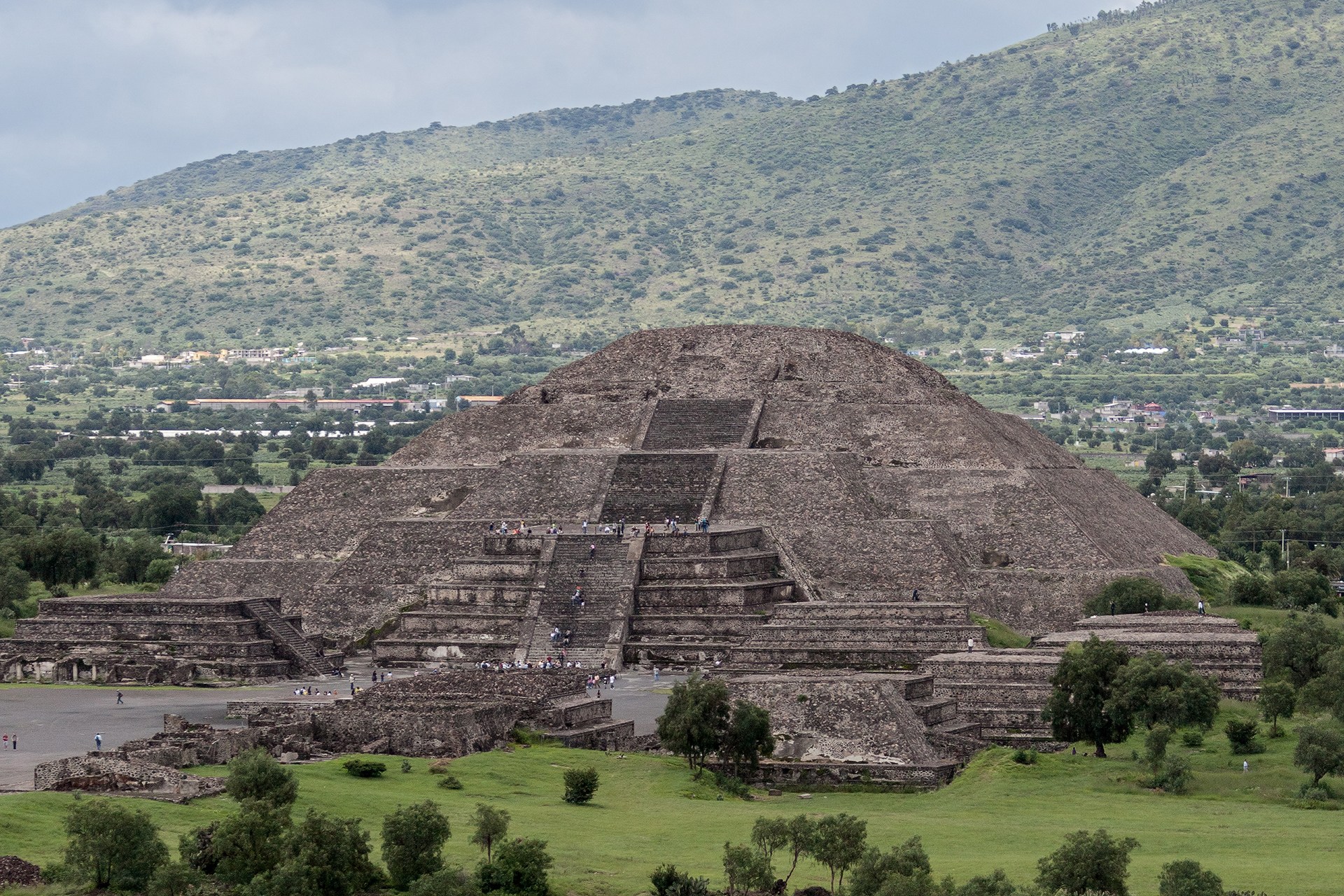
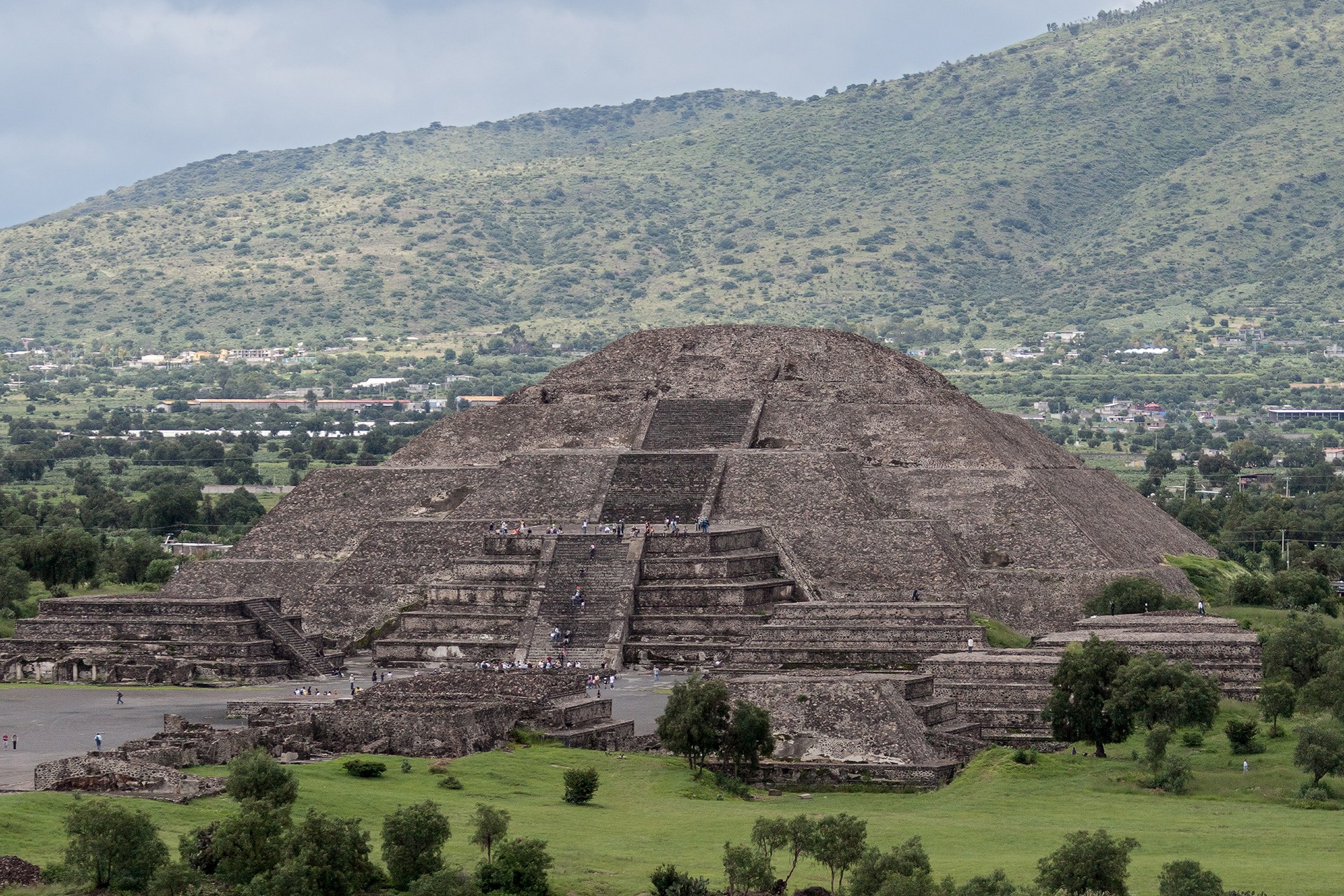
If you visit today, it’s a tourist site. You climb the Pyramid of the Sun. You take a selfie. But strip away the tourists, and you have one of the most unnerving places in the Americas. At its peak, this was one of the largest cities on the planet. Over 100,000 people lived here. It was a metropolis of stone, lime, and blood.

But here is the kicker: We don’t know who they were.

The Aztecs didn’t build it. When the Aztecs arrived in the 1400s, the city was already in ruins. It was a ghost town. The Aztecs were so terrified and impressed by the massive structures that they named it Teotihuacan, which roughly translates to “The Place Where Men Become Gods.” They believed the gods themselves had gathered there to create the universe.

The original builders? Gone. No written language left behind. No name. Just stone and silence.

The Accidental Discovery

For decades, archaeologists walked right over the top of the biggest secret in Teotihuacan. Literally.

It happened in 2003. It wasn’t high-tech scans that found it. It was rain. A massive storm soaked the ground, and the earth gave way right in front of the Temple of the Feathered Serpent (Quetzalcoatl). A sinkhole opened up.

Sergio GĂłmez, an archaeologist with Mexico’s National Anthropology and History Institute, didn’t wait. He grabbed a rope. He tied it around his waist and had his colleagues lower him into the darkness.

Imagine that moment. You are dangling in a pit. Your flashlight cuts through dust that has been settling since the days of the Roman Empire. GĂłmez realized he wasn’t just in a hole. He was in a perfectly cylindrical shaft.

He had found the entrance to a tunnel that had been intentionally sealed by the Teotihuacanos around 200 A.D. Massive boulders and debris blocked the way. It took years—literal years—of back-breaking labor to clear the path. They removed nearly a thousand tons of earth.

But they couldn’t get everywhere. The tunnel was unstable. It was dangerous. They needed eyes where humans couldn’t go.

Enter Tlaloc II-TC: The Robot Explorer

They called in the heavy machinery. Well, the small, remote-controlled machinery.

Researchers deployed a wireless robot named Tlaloc II-TC. Named after the Aztec god of rain, this little rover was equipped with infrared cameras and a laser scanner. Its mission was to crawl into the final chambers of the tunnel, the “Holy of Holies,” where no light had entered for eighteen centuries.

The team huddled around the monitors. The robot trundled over the uneven, rocky floor. The feed flickered.

Then, the screen lit up.

Jorge Zavala, an archaeologist on the team, described the confusion. On the screen, scattered everywhere, were yellow spheres. They weren’t rocks. They were shaped. Intentional. Hundreds of them.

“They look like yellow spheres, but we do not know their meaning,” Zavala told Discovery News at the time. “It’s an unprecedented discovery.”

Unprecedented is a polite way of saying: We have absolutely no idea what we are looking at.

The “Golden” Anomalies

Let’s look closer at the objects themselves. These aren’t tiny beads. They range in size from about 1.5 inches (3.8 cm) to 5 inches (12.7 cm) in diameter. Think baseballs and softballs.

The core of the spheres is clay. But the Teotihuacanos didn’t want clay balls. They wanted them to shine. They coated every single one of them in jarosite.

Science lesson: Jarosite is an oxidized form of pyrite. You know pyrite by its other name—Fool’s Gold.

Today, after sitting in a damp, sealed tunnel for nearly 2,000 years, the pyrite has oxidized into jarosite, turning the spheres a matte yellow. But back then? When the tunnel was operational? These things would have been brilliant.

Picture this scene:

A priest descends into the underworld tunnel. He carries a torch. The flickering firelight hits the floor. Suddenly, the ground explodes with light. Hundreds of golden orbs reflecting the flame, glittering like stars, or eyes, or pure gold.

It would have been a visual trick of the highest order. A special effect designed to blow the mind of anyone lucky (or unlucky) enough to enter the chamber.

Deep Dive: What Was the Tunnel For?

To understand the balls, we have to look at the tunnel. This wasn’t a sewer. It wasn’t a storage closet.

The tunnel runs nearly 330 feet long. It represents a journey. In Mesoamerican mythology, the universe has three levels: The Heavens, the Earth, and the Underworld.

Archaeologists believe this tunnel was a physical recreation of the Underworld. A literal path to the land of the dead.

The ceiling of the tunnel was coated in a powder made from magnetite and pyrite. When light hit the ceiling, it sparkled like a night sky. So, you have a starry sky above, and a floor covered in golden spheres below. You are walking through space. You are walking through the cosmos.

Theory 1: The Sun in the Underworld

Some theorists suggest the spheres represented the sun traveling through the underworld at night. In many ancient mythologies, the sun “dies” at sunset, travels through the land of the dead, and is “reborn” at sunrise. The golden spheres could be symbols of that solar energy, keeping the light alive in the darkest place on earth.

Theory 2: Seeds of the Gods

Were they offerings? The spheres were found in the north and south chambers. These rooms might have been used for royal burials. If you are burying a king who is also a god, you don’t send him off with nothing. You send him with “seeds” of gold. Perhaps they believed these clay and pyrite balls would grow into something else in the afterlife.

Theory 3: The Metallic River Connection

This gets even crazier. Later explorations in the same tunnel system found traces of large quantities of liquid mercury. Yes, mercury. Highly toxic, shimmering, liquid metal.

The Chinese Emperor Qin Shi Huang (the Terracotta Warriors guy) famously had rivers of mercury in his tomb. Now, we find mercury in Mexico? Across the ocean? Thousands of miles apart?

The mercury likely represented water—a supernatural river running through the underworld. Combine that with the golden spheres. You have a landscape made of liquid metal and “gold” orbs. This was a terraformed environment designed to look like an alien world.

Why “Fool’s” Gold?

Skeptics might ask: If they were so powerful, why use fake gold? Why pyrite?

The answer is simple: The Shine. The Teotihuacanos valued green stone (jade) and quetzal feathers more than gold. But they understood the theatrical power of something that glittered.

Pyrite is brilliant. It looks metallic. In the flickering light of a torch, it looks magical. It wasn’t about the monetary value; it was about the *optical* value. They were building a stage set for the gods.

The fact that they made hundreds of them implies a massive effort. Someone had to roll the clay. Someone had to grind the pyrite. Someone had to apply the coating. This was mass production for a ritual that perhaps only a handful of people would ever see.

The Mystery Remains

Here is the frustrating, beautiful part of archaeology. We can stare at the spheres. We can analyze the chemical composition of the jarosite. We can send robots named Tlaloc down there to take pictures.

But we can’t ask them why.

The people who placed these spheres sealed the tunnel and vanished. They left no instruction manual. They left no manifesto.

Was it a star map?
Was it a representation of raindrops (Tlaloc’s domain)?
Was it a high-tech ancient energy device that has since decayed into clay and dust?

Or were they simply pretty objects meant to impress the spirits of the underworld?

“They look like yellow spheres, but we do not know their meaning,” the archaeologists admitted. And years later, that statement still holds up.

We are looking at a message in a bottle, but the ink has faded. We see the gold, but we missed the show. All that remains are the props, scattered on the floor of a damp cave, waiting for an audience that died 1,800 years ago.

Why This Matters Today

Discoveries like this shake up our timeline. They force us to respect the ancients—not just as people stacking rocks, but as engineers, chemists, and theatrical masters.

They built a cosmos underground. They played with mercury. They synthesized gold out of dust.

Every time a robot like Tlaloc II-TC rolls into a new chamber, the history books get a little bit thicker, and the mystery gets a little bit deeper. What else is down there? What lies behind the next wall?

If there are hundreds of golden spheres in the hallway, imagine what they kept in the bedroom.

The Temple of the Feathered Serpent hasn’t given up all its secrets yet. It’s just teasing us.

Amit Ghosh
Amit Ghoshhttps://coolinterestingnews.com
Aloha, I'm Amit Ghosh, a web entrepreneur and avid blogger. Bitten by entrepreneurial bug, I got kicked out from college and ended up being millionaire and running a digital media company named Aeron7 headquartered at Lithuania.
RELATED ARTICLES
- Advertisment -

Most Popular

Recent Comments

Warren Pan Abbott on The legend of the Devil Monkey !
chris davies on The McPherson Tape Mystery
Reed Reedly on ET has Internet!
Bea Houseoffashion on Proof Of Time Travellers – Gallery
Marcus2012 on ET has Internet!
Reed Reedly on ET has Internet!
LaughsAtConspiracyNuts on The 9/11 Conspiracy – Myths and Facts
Alex Sliverman on Did the ancients fly?
Doctor Wholigan on Time Traveler in 1938 film
chris davies on The McPherson Tape Mystery
Archie1954 on 10 secret UFO hideouts
chris davies on Ghosts of flight 401
Marcus2012 on ET has Internet!
jason Macdonald on Proof of Time Travel? – China
chris davies on Long-Lost Pyramids Found?
Reed Reedly on ET has Internet!
Milkman on Connected Universe
Tenmiles on Baigong Pipes Mystery
Simon Foster on Sirius – The Documentary
From the 1st April on 2013 – Alien Contact date ?
SkyWatcher on Is ET ignoring us?
I Come From The Future on Obama to make UFO Alien disclouser soon ?
ÛñK?øWn on 2013 – Alien Contact date ?
Just another person on 2013 – Alien Contact date ?
Malcolm Windowcleaner on The strange case of Rudolph Fentz
Mason Servio on Strange Things on Mars
Marke Wisdom Seeker on What will we find as arctic melts?
Andrea A Elisabeth Levyne on Aliens Captured in Varginha, Brazil
Mitch Grouyeki on Amazing Space Shuttle pictures