Imagine your own kitchen floor turning against you.
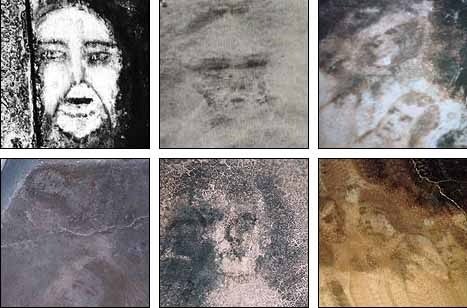
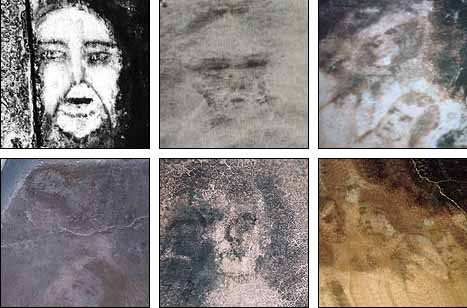
Not a creaking floorboard. Not a leaky pipe. But a face. A human face, screaming in silent agony, rising up from the solid concrete to watch you cook dinner.
This isn’t a scene from a Stephen King novel or a jump-scare in a Hollywood slasher. This is a documented, historical event that started in a small, dusty house in southern Spain. It is widely considered the single most important paranormal event in European history. They call them the Bélmez Faces. And despite decades of acid tests, jackhammers, and skepticism, nobody—absolutely nobody—has been able to explain them away.
The Day the Concrete Came Alive
Let’s go back. August 23, 1971. A scorching hot summer day in Bélmez de la Moraleda, a tiny village in Andalusia, Spain. The heat in this part of the country is oppressive. It sits on your chest.
María Gómez Cámara was a normal housewife. She wasn’t looking for fame. She wasn’t looking for trouble. She was just in her kitchen, stirring a pot on the stove, minding her own business. Then, she noticed a stain on the floor near the hearth.
She ignored it. It was an old house. Stains happen.
But later that day, she looked again. The stain had changed. It wasn’t just a blob of grease or water anymore. It had eyes. It had a mouth. It was looking right at her.
Panic. Pure, unadulterated panic.
María tried to scrub it off. She got down on her hands and knees with bleach and a brush. She scrubbed until her knuckles were white. The face didn’t fade. If anything, its expression became clearer. More sorrowful. More terrified. It was the face of a man, etched into the very minerals of the cement.
The Pickaxe Solution
Fear spreads fast in a small village. María called her husband, Juan Pereira, and their son, Miguel. They were simple, pragmatic men. They didn’t believe in ghosts. They believed in sledgehammers.
Juan looked at the face. He didn’t like the way it stared. He didn’t like that it wouldn’t wash away. So, he made a decision that any terrified homeowner might make. He grabbed a pickaxe.
Whack. Whack. Whack.
They destroyed the floor. They smashed the face into dust and rubble. Problem solved, right? They mixed new concrete, smoothed it over, and let it dry. The kitchen was brand new. The demon was gone.
But the house wasn’t done with them.
One week later. The concrete was dry. María walked into the kitchen for her morning coffee. She stopped cold. In the exact same spot, pushing up through the fresh, hard cement, a new face was forming. It wasn’t the same one. It was different. Older. Sadder. And this time, the details were even sharper.
The “Hell Pit” Under the House
You can’t keep a secret like that. Not in a village where everyone knows everyone’s business. The neighbors whispered. Then they shouted. Soon, the news reached the Mayor of Bélmez.
This is where the story shifts from a “spooky anecdote” to a full-blown historical mystery. The Mayor didn’t laugh it off. He forbade the family from destroying the face again. He realized something strange was happening. He ordered the concrete to be cut out—intact—for scientific study.
But then, they decided to dig. If the faces were coming from the floor, what was under the floor?
Surveyors and workmen broke ground beneath the Pereira kitchen. They dug down, past the foundation, into the earth below. What they found stopped the town in its tracks.
Bones.
Lots of them. It wasn’t just dirt down there. The house, built around 1830, was sitting directly on top of an ancient burial ground. We’re talking about layers of history—Roman graves, Spanish Muslim remains, and Medieval Christian burials. Some skeletons were decapitated. Others were jumbled together in mass disorder.
The workmen excavated the remains. They gave the bones a proper Catholic burial in the local cemetery. Everyone breathed a sigh of relief. The spirits had been appeased. The haunting was over.
Wrong.
The Invasion Begins
After the excavation, the floor was repaved again. The family thought they could finally sleep at night. They were mistaken. The faces didn’t stop. They exploded.
It wasn’t just one face anymore. It was a crowd.
Over the next few months and years, the floor of La Casa de las Caras (The House of the Faces) became a canvas for the impossible. Images of men, women, and children appeared. Unlike the first face, these didn’t just appear and stay still. They morphed.
Witnesses claimed they saw the eyes move. Some faces would smile one day and scream the next. They would fade out in the morning and return with high-contrast intensity by twilight. It was fluid. Organic. Alive.
By Easter of 1972, the line of tourists stretched down the street. Hundreds of people flocked to see the impossible floor. María Gómez Cámara, a woman who just wanted to cook in peace, became the reluctant guardian of a gateway to the other side.
The “Pava” and the impossible chemistry
One of the most famous images to appear was known as “La Pava” (The Turkey/The Female). It was incredibly detailed. But here is where the skeptics hit a wall.
For decades, debunkers have screamed “FAKE!” They claimed María or her son Diego painted them. They suggested silver nitrate (which reacts to light) or acid spills. It sounds plausible, doesn’t it? Just a hoax for money.
Except for one problem: The Science.
Samples of the concrete were sent to the Institute of Ceramics and Glass (ICV) in Spain. They ran X-ray diffraction. They used laser micro-analysis. If someone had used paint, there would be pigments sitting on top of the concrete. If they used acid, the chemical structure of the cement would be eaten away.
The results? Baffling.
Some tests showed traces of external elements, but no clear “paint” that explained the phenomenon. The images weren’t on the surface. They were inside the concrete. The coloration went deep. It was as if the molecular structure of the floor had rearranged itself to form a picture. How does an uneducated village woman in the 1970s manipulate the molecular density of concrete without anyone noticing?
Theory #1: The Thoughtography Hypothesis
This brings us to the most mind-bending theory of all. It’s a concept called “Thoughtography” or “Teleplastie.”
Parapsychologists who studied the case noticed a pattern. The faces seemed to react to María. When she was stressed, they got darker. When she was sick, they faded. When she was happy, their expressions softened.
The theory suggests that María Gómez Cámara was a powerful, unconscious psychic. She wasn’t painting with a brush; she was painting with her mind. The trauma of her life, or perhaps a latent ability, was leaking out of her brain and physically altering the matter around her.
She was the projector. The floor was the screen.
This explains why the faces were often described as “expressive.” They were mirroring her internal emotional state. It was a psychic tantrum etched in stone.
The Sound of Hell?
It wasn’t just visual. It was auditory.
Investigators brought in high-sensitivity audio equipment to capture EVP (Electronic Voice Phenomena). In a quiet room, with nobody speaking, the tape recorders picked up voices coming from the floor.
Chilling whispers.
- “El infierno empieza aquí” (Hell begins here).
- “Germán.”
- “Matadlos” (Kill them).
- “Mama.”
These recordings have been analyzed by audio engineers. They aren’t radio interference. They are distinct, human-sounding voices, often answering questions asked by the researchers. If this was a hoax involving some paint, where did the voices come from?
Theory #2: The Skeptic’s “Hoax”
We have to look at the other side. We have to be rational. The main argument against the paranormal is the involvement of María’s son, Diego Pereira.
Skeptics argue that Diego was an artist—or at least artistic enough to pull this off. The motive? Money. Although María allegedly didn’t charge for entry initially, the family eventually accepted “tips” and sold photos. The tourism boom saved the town’s economy.
Researchers claimed to find traces of oxidizing agents in some later faces. The idea is that they used a mixture of vinegar, soot, and vinegar to create stains that would darken over time. They say the “moving” faces were just the result of moisture wicking up from the damp ground, changing the contrast of the stains.
But here is the hole in the skeptic’s theory: The Timeline.
María lived in that house until she died. She was scrutinized by scientists, police, and journalists for 30 years. Nobody ever caught her painting. Nobody found the brushes. Nobody found the buckets of chemicals hidden under the sink. And the faces appeared in locked, sealed rooms that had been taped shut by notaries.
The Death of María: Did it Stop?
In October 2004, María Gómez Cámara passed away. She was 85 years old. She died in the house, surrounded by the faces that had defined her life.
If this was all a hoax orchestrated by María, the faces should have stopped. The “projector” was broken. The artist was dead.
But they didn’t stop.
In fact, new faces appeared. And they appeared in a different room—the room where María was born. Skeptics say this proves her son Diego just carried on the family business. Believers say it proves the energy of the house—or María’s spirit—is still active.
A Modern Mystery
Today, the house is still there. You can visit it. The floor is covered in glass to protect the images, but you can see them. They are faint now, ghostly outlines of a time when the world looked at a kitchen floor and trembled.
We live in an age of 4K cameras and AI. We think we know everything. But the Bélmez Faces remain a glitch in our understanding of reality. Was it the spirits of decapitated medieval knights trying to communicate? Was it a grieving woman projecting her soul into the cement? Or was it the greatest, most enduring long-con in history?
The next time you spill coffee on your kitchen floor, don’t just wipe it up. Look at it. Look closely.
Because sometimes, the floor looks back.
Originally posted 2013-04-02 20:31:44. Republished by Blog Post Promoter
![belmez-faces[1]](https://coolinterestingnews.com/wp-content/uploads/2013/04/belmez-faces1.webp)