Saturday, June 6, 2026
HomeWeird WorldArchaeologyArchaeologists find elongated skulls in Maya underwater cave !

Archaeologists find elongated skulls in Maya underwater cave !

Alien Skulls? The Terrifying Secret of the Sac Uayum Cenote

Deep in the steaming jungles of southern Mexico, there is a hole in the ground that the locals refuse to look at. They won’t swim in it. They won’t drink from it. They barely even whisper its name.

For centuries, the villagers of Telchaquillo have passed down a warning: Stay away from the water. Stay away from the cavern.

Why? Because something is down there. Something watching. Something waiting.

But modern science doesn’t always listen to ancient warnings. A team of daring underwater archaeologists recently decided to crack this mystery wide open. They strapped on their tanks, checked their regulators, and descended into the black, flooded depths of the sinkhole known as Sac Uayum. What they found wasn’t just rocks and mud.

It was a graveyard. A crime scene. A puzzle that defies logic.

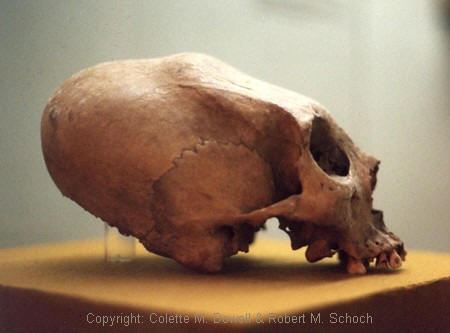
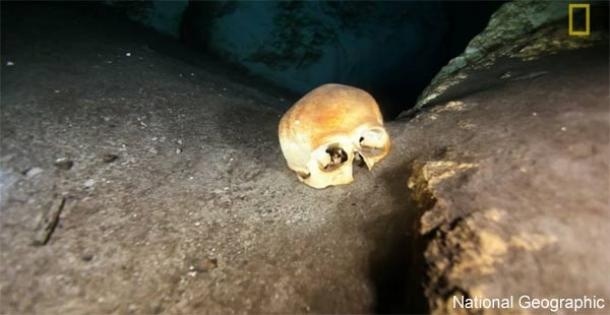
Scattered across the floor of the submerged chamber were bones. Lots of them. But it was the skulls that made their blood run cold. They weren’t normal. They were stretched. Warped. Elongated.

20140206-151557

Look at that image. Really look at it. Does that look human to you? The discovery has sparked a firestorm of theories, ranging from lost Maya rituals to biological anomalies, and yes—even the possibility of extraterrestrial influence.

The Forbidden Zone: What is Sac Uayum?

To understand why this discovery is so unsettling, you have to understand the location. The Yucatán Peninsula is Swiss-cheese. The ground is made of limestone, and underneath the jungle floor is a massive network of underground rivers and caves. Occasionally, the roof of a cave collapses, creating a pit. A window into the dark water below. These are called cenotes.

For the ancient Maya, these weren’t just swimming holes. They were sacred. They were the literal mouths of the earth.

Sac Uayum is located just outside the crumbling stone walls of Mayapán, an ancient city that once ruled this region with an iron fist. From the 12th to the 15th century AD, Mayapán was a powerhouse. A political juggernaut. It was home to roughly 17,000 people. Within the city walls, archaeologists have counted around 40 different cenotes. These were the lifeblood of the city, providing fresh water to the population.

But Sac Uayum is different. It sits outside the walls. It was excluded. Ostracized. Why would a thirsty city ignore a massive source of fresh water? Why leave it outside the protection of the great stone barrier?

The answer might lie in the bones.

The Monster in the Water

Before we talk about the skulls, we have to talk about the beast.

You can’t walk into the village of Telchaquillo and ask about the cenote without seeing a flicker of fear in the elders’ eyes. They don’t talk about bacteria or algae. They talk about a monster.

Local folklore claims that Sac Uayum is the lair of a supernatural entity. This isn’t your standard ghost story. The details are bizarrely specific. The legend speaks of a “feathered, horse-headed serpent.”

Think about that image. A snake with feathers? That sounds like Quetzalcoatl or Kukulkan, the Feathered Serpent god of Mesoamerica. But a horse head? That is a nightmare combination. Witnesses—actual living residents of the nearby village—swear they have seen this thing. They tell stories of a creature perching in the branches of the trees overhanging the pit. It waits. It watches. Then, it leaps.

The stories say it spins around exactly three times in the air before diving seamlessly into the black water. It’s a guardian. A warden. And the villagers believe that if you get too close, the horse-headed serpent won’t just scare you. It will snatch you.

This fear is so palpable, so thick, that when the archaeological team arrived, they couldn’t just jump in. The locals wouldn’t allow it. The vibes were off. The spiritual danger was considered higher than the physical danger of cave diving—which is already one of the deadliest activities on Earth.

The Shaman’s Deal

Bradley Russell, the lead archaeologist, knew he couldn’t ignore the local customs. You don’t just walk into a haunted house without knocking. Before a single flipper touched the water, they brought in a shaman.

Teodormio San Sores, a local spiritual leader, had to perform a ritual known as jeets’ lu’um. In English, this roughly translates to “calming the earth.”

Imagine the scene. The humidity is 100%. The jungle insects are screaming. A shaman is chanting, burning incense, and pleading with the ancient gods. He isn’t asking for good weather. He is asking permission. He is asking the Feathered Serpent to stand down. He is bargaining for the lives of the divers.

Only after the smoke cleared and the shaman gave the nod did the team dare to descend.

Into the Abyss

The dive itself was a descent into a forgotten world. The team spent two weeks mapping the submerged reaches of the cavern. Cave diving is terrifying. It is silent. It is dark. You are floating in a void, your flashlight cutting a thin beam through water that has been still for centuries.

From the very first day, the team realized the villagers were right to be afraid. Maybe not of a horse-headed snake, but of what the cave represented.

It was a tomb.

The archaeologists found two main chambers connected by a narrow, submerged tunnel. It wasn’t empty. The floor was littered with debris. But as they got closer, the debris took shape. Femurs. Ribs. Vertebrae.

And then, the skulls.

In the first chamber, they identified ten skulls. In the second chamber, five more. But who knows how many more are buried under the silt and rocks? The team believes they have only scratched the surface.

But the numbers aren’t the story here. The shape is the story.

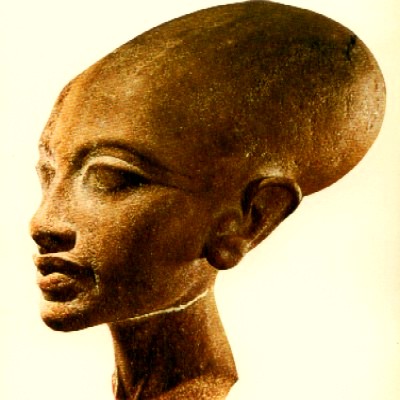
16egyptianprincessHowever, Sac Uayum is not a typical cenote. These skulls are not round. They are long. They slope backward at an extreme angle. They look, for lack of a better word, alien.

The Mystery of Cranial Deformation

This brings us to the most controversial part of the discovery. The skulls found in Sac Uayum display severe artificial cranial deformation. This is a practice where an infant’s head is bound tightly with boards or cloth to force the skull to grow into a specific shape.

We know the Maya did this. We have proof. But the question that keeps researchers up at night is: Why?

Why would a mother do this to her child? It’s risky. It’s painful. It changes the person forever.

Mainstream archaeology says it was a status symbol. A way to show beauty or nobility. Like wearing a permanent crown of bone. But look at the image above of the bust of an Egyptian princess. We see this same elongation in ancient Egypt, thousands of miles away. We see it in the Paracas skulls of Peru. We see it in nearly every corner of the ancient world.

Is it just a coincidence? Or were they trying to mimic someone? Or something?

The “Ancient Astronaut” Theory

This is where the internet goes wild, and honestly, can you blame them? The resemblance is uncanny.

Alternative history researchers and enthusiasts have long pointed to these elongated skulls as evidence of contact with non-human intelligences. The theory goes like this: In the ancient past, beings came from the stars. They had large, elongated heads. They were the “gods.”

Humans, wanting to be like the gods, began binding their children’s heads to mimic that divine shape. It’s the ultimate form of cargo cult behavior. We couldn’t be them, so we tried to look like them.

Brien Foerster, a famous researcher of the Paracas skulls, has suggested that not all elongated skulls are artificial. He argues that some show genetic anomalies—cranial volume that is too large, eye sockets that are too big—that cannot be explained by board binding alone. If you bind a skull, you just change the shape, not the volume. You can’t squeeze a liter of water into a pint glass just by changing the shape of the glass.

While the skulls in Sac Uayum are officially classified as artificially deformed, the lack of DNA testing leaves the door open for speculation. Were these people hybrids? Were they a special caste of priests who claimed to speak to the “Star People”?

We don’t know. And the bones in the cave aren’t talking.

The Outcasts of Mayapán

Let’s step back from the aliens for a second and look at the cold, hard facts on the ground. The context of this find is just as weird as the shape of the heads.

Bradley Russell and his team noticed something very specific about the bodies. They weren’t sacrifice victims. Usually, when the Maya sacrificed someone to the cenote gods, you find marks of trauma. Broken necks. Hearts cut out. Violent endings.

These bones? No marks. No trauma. They just… died.

Furthermore, they weren’t rich. In Maya burials, the elite are usually found with jade beads, pottery, gold, or obsidian. These guys had nothing. No bling. No tools. Just bones in the dark.

And the demographics are all over the place. Men. Women. Teenagers. It wasn’t a warrior caste. It wasn’t a priesthood. It was a random assortment of people.

So, what were they doing in a water hole that everyone was terrified of?

Theory 1: The Plague Pit

Russell has a theory that is terrifying in a very human way. He suggests that Sac Uayum wasn’t a temple. It was a quarantine zone.

“You wouldn’t want them near the rest of the population. And you wouldn’t want to drink the water either,” Russell said in an interview.

Imagine a plague hits Mayapán. People are dying. Their bodies are contagious. You can’t bury them under the floorboards of your house (which was the standard Maya tradition) because they will infect the family. You can’t dump them in the city water supply.

So, you take them outside the wall. You take them to the south—the direction of death. You find the scary hole in the ground that nobody uses. And you throw them in.

This explains why the cenote is outside the city. It explains why there are no treasures. It explains the mix of ages and genders. It was a mass grave for the diseased.

Theory 2: The Portal to Xibalba

But there is another possibility. A more spiritual one.

To the Maya, the universe was a giant tree. The roots of that tree were the Underworld, known as Xibalba. The Place of Fright. Caves and cenotes were the physical doorways to this realm. It was a wet, dark, scary place filled with trial and torture.

Sac Uayum lies to the south of the city. In Maya cosmology, South is the direction associated with the Underworld and humanity’s mythical origins. It is the direction of the dead.

Perhaps these people weren’t sick. Perhaps they were “waiting.”

Russell wonders if the bodies were placed there to await the next cycle of creation. The Maya believed heavily in cycles. Time was a wheel. Maybe these specific people—the ones with the elongated heads—were special. Maybe they were “planted” in the earth like seeds, waiting to sprout in the next world.

The fact that the skulls are elongated connects them to the divine. Even if they weren’t rich, their heads marked them as different. Maybe they were the designated messengers to the gods of Xibalba.

The DNA Question

We are living in the golden age of genetics. We can sequence the DNA of a Neanderthal from a toe bone. So, why haven’t we sequenced the DNA of the Sac Uayum skulls?

This is the frustrating part for modern mystery hunters. Science moves slow. Funding is tight. And sometimes, people just don’t want to know the answer.

If we tested these skulls, what would we find? Would we find markers of a local plague? Would we find familial relationships proving they were all related? Or would we find something anomalous? Something that doesn’t quite fit the standard human genome?

Until those tests are run, we are left with the silence of the cenote.

Conclusion: The Secret Remains

The divers have packed up their gear. The shaman has gone home. The water in Sac Uayum has settled back into a glassy, black mirror.

But the mystery hasn’t gone away.

We have a submerged cave guarded by a mythical monster. We have a collection of cone-headed skeletons. We have a city that built a wall specifically to keep this place out.

Were they aliens? Were they plague victims? Were they pilgrims on a one-way trip to Xibalba?

The only thing we know for sure is that the Maya knew something we don’t. They knew to stay away. They knew that some places on this Earth are not meant for the living. And looking at those hollow, stretched eye sockets staring up from the silt, it’s hard to argue with them.

Some doors should remain closed. Some waters should remain undisturbed.

Originally posted 2014-02-06 14:18:31. Republished by Blog Post Promoter

Amit Ghosh
Amit Ghoshhttps://coolinterestingnews.com
Aloha, I'm Amit Ghosh, a web entrepreneur and avid blogger. Bitten by entrepreneurial bug, I got kicked out from college and ended up being millionaire and running a digital media company named Aeron7 headquartered at Lithuania.
RELATED ARTICLES
- Advertisment -

Most Popular

Recent Comments

Warren Pan Abbott on The legend of the Devil Monkey !
chris davies on The McPherson Tape Mystery
Reed Reedly on ET has Internet!
Bea Houseoffashion on Proof Of Time Travellers – Gallery
Marcus2012 on ET has Internet!
Reed Reedly on ET has Internet!
LaughsAtConspiracyNuts on The 9/11 Conspiracy – Myths and Facts
Alex Sliverman on Did the ancients fly?
Doctor Wholigan on Time Traveler in 1938 film
chris davies on The McPherson Tape Mystery
Archie1954 on 10 secret UFO hideouts
chris davies on Ghosts of flight 401
Marcus2012 on ET has Internet!
jason Macdonald on Proof of Time Travel? – China
chris davies on Long-Lost Pyramids Found?
Reed Reedly on ET has Internet!
Milkman on Connected Universe
Tenmiles on Baigong Pipes Mystery
Simon Foster on Sirius – The Documentary
From the 1st April on 2013 – Alien Contact date ?
SkyWatcher on Is ET ignoring us?
I Come From The Future on Obama to make UFO Alien disclouser soon ?
ÛñK?øWn on 2013 – Alien Contact date ?
Just another person on 2013 – Alien Contact date ?
Malcolm Windowcleaner on The strange case of Rudolph Fentz
Mason Servio on Strange Things on Mars
Marke Wisdom Seeker on What will we find as arctic melts?
Andrea A Elisabeth Levyne on Aliens Captured in Varginha, Brazil
Mitch Grouyeki on Amazing Space Shuttle pictures